

Save this storySave this storySave this storySave this story
In “Renegades,” a new collection by the photographer Chloe Sherman, even a largely unpopulated image evokes a rich social atmosphere. The book, published by Hatje Cantz, draws from Sherman’s archive of thousands of pictures that she took in the nineties among the queer community in San Francisco’s Mission District, a site where rebels of gender and sexuality coalesced and cross-pollinated. In “Dinner at Fountain St. House,” taken in 1995, long tables set with mismatched plates and silverware stretch across and nearly fill a living room. The space is exuberantly busy, with walls painted mint green and scarlet red, a patterned curtain over the window, multicolored lanterns hanging from the ceiling, a fern placed on a bench in front of a wooden piano, and an alluring array of weathered chairs. Glass candlestick holders (a tiny drink umbrella teeters from one of them), breezily arranged flowers, and pieces of produce decorating the tables suggest an unfussy but intentional hominess.
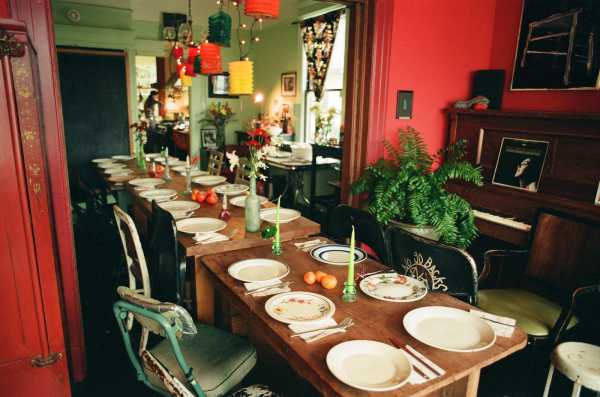
“Dinner at Fountain St. House,” 1995.
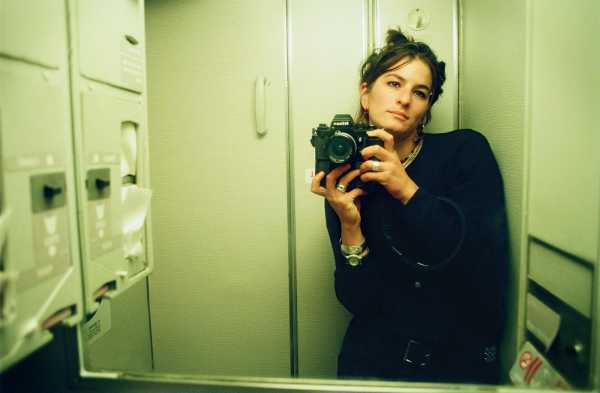
“Self-Portrait Flying Home,” 1997.
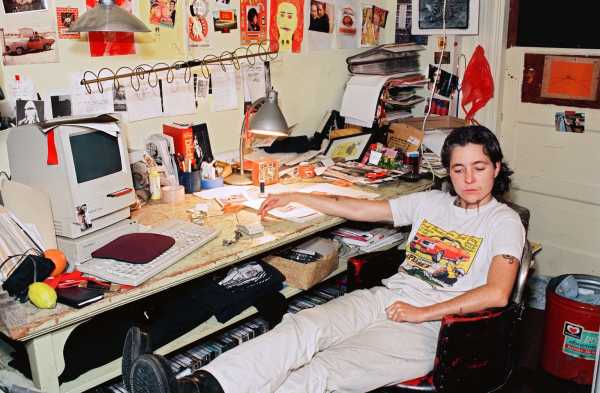
“The Desk,” 1996.
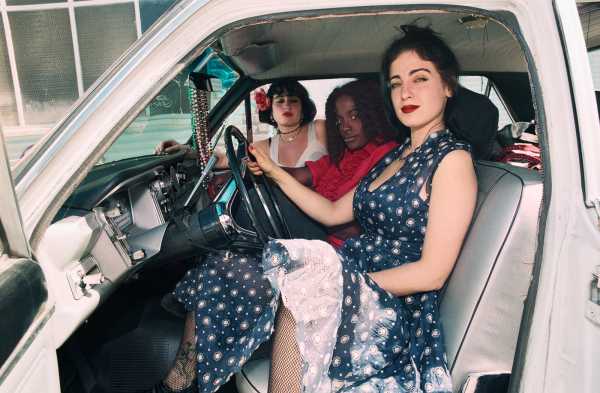
“The Mission,” 1996.
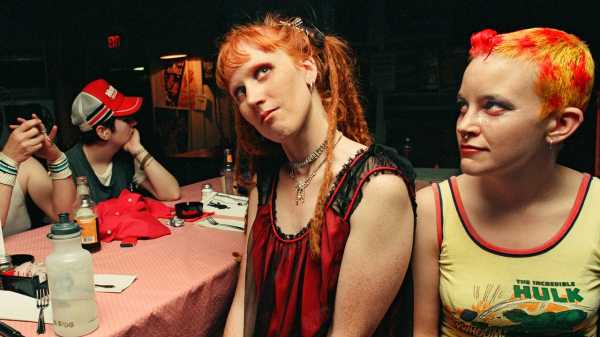
“People did not fit around that table,” Sherman told me when I spoke with her about “Renegades.” “We’d sit down, but then there’s overflow to the couches, in the kitchen, and walking around, and someone stood up, and someone sat in their spot, and you sat on laps.” She took the photo when she was living at the house with a rotating cast of four or five people who would extend a general invite to gaggles of friends and acquaintances for events: holidays, birthday parties, memorials, “Pride Christmas” in June. The book is replete with the faces, the outfits, the environments, and the attitudes of people who hung around the house on Fountain Street and the many nearby businesses owned and patronized by queer people.
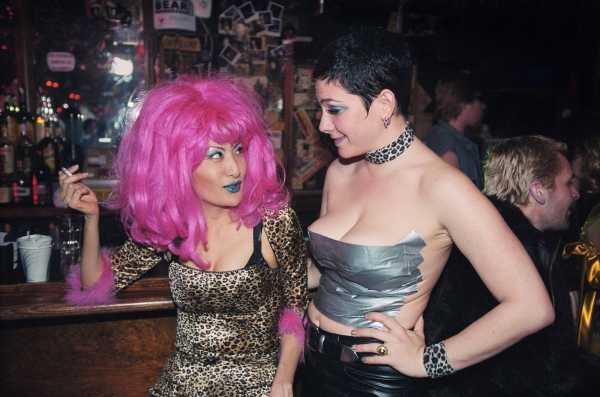
“Pink Wig and Duct Tape at Hole in the Wall,” 1999.
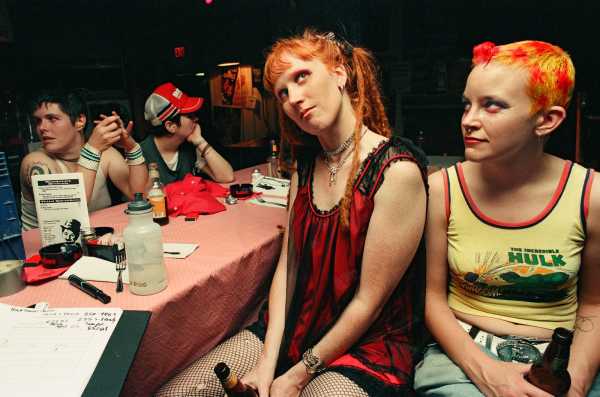
“Before the Gig,” 1997.
Looking back on that era, Sherman describes the atmosphere as similar to that of a college campus, where close proximity permits spontaneity and exchange. The small size of San Francisco proper—and, crucially, the cheap real estate that permitted her and her friends to live and own businesses there—meant that the Mission, the Castro, and Dolores Park could serve as their bohemian playground. People tended to have three housemates or more, and a typical day might start with heading to one of the places where friends could reliably be found. One hub was the Bearded Lady café, which shared a patio with Black & Blue Tattoo. “People just began to congregate there throughout the day and socialize and make plans,” Sherman said. “You end up at happy hour at the Lexington bar, you make your way to the Stud or the Cat Club or Josie’s Cabaret.” There was a general agreement that, if there were a big earthquake, everyone would meet at the Bearded Lady.
Two of the owners of the Bearded Lady, Harry Dodge and Silas Howard, who would go on to make the experimental film “By Hook or by Crook” together and pursue fruitful artistic careers, were among the many luminaries of the scene who dot the photos. The writer Anna Joy Springer, the musician Lynn Breedlove, and the photographer Catherine Opie, all members of Sherman’s circles, wrote introductions to “Renegades” that invoke not only nostalgia but a sense of the generative nature of the time and place. “We turned to each other,” Springer writes, “for the kind of protection that would allow us to explore varieties of creative play and risk that few women-centered populations had ever been safe enough to try publicly.”
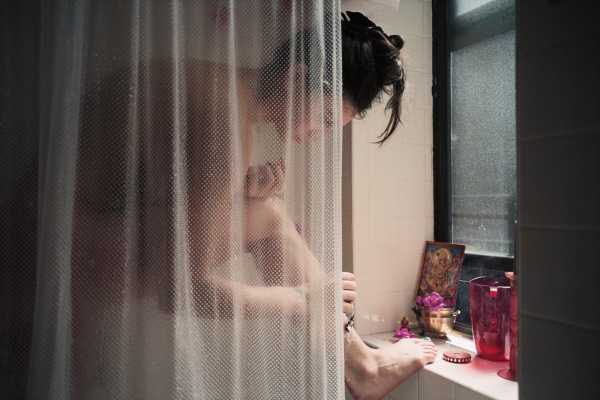
“Lightwell,” 1997.
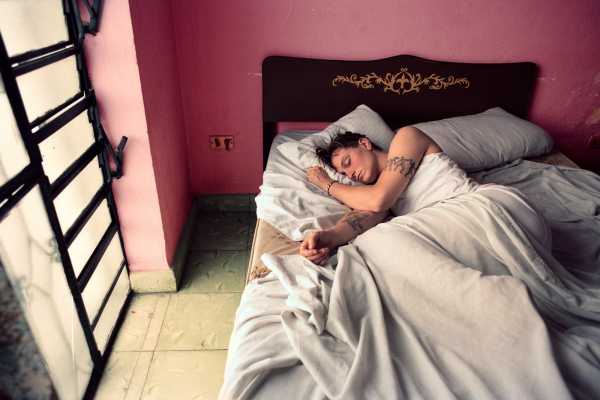
“Sleeping in Pink Room,” 1997.
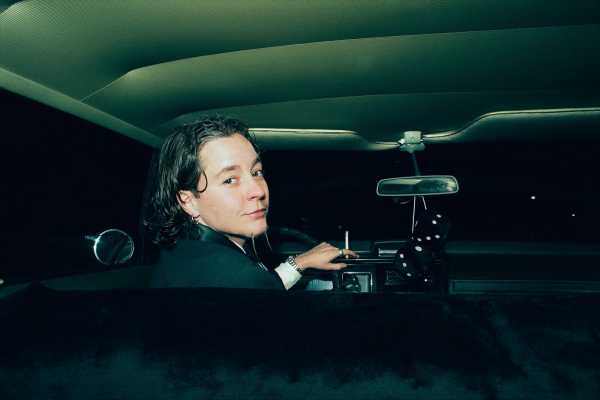
“View from the Backseat,” 1997.
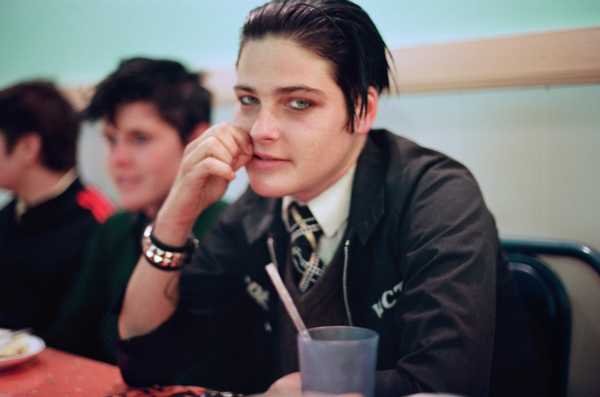
“Daniel Sea,” mid-nineties.
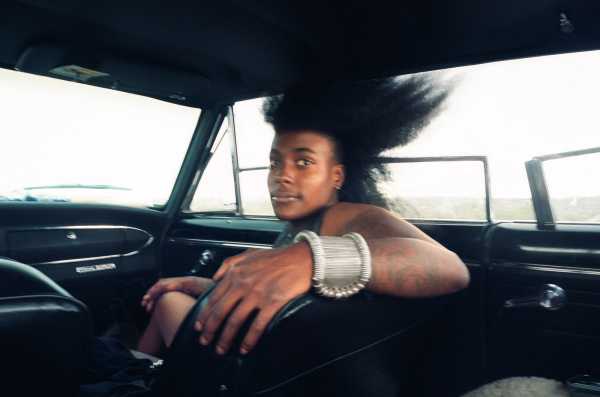
“Elitreo in the Desert,” 1998.
Though the idiosyncratic fashions in the photos are undeniably of their age, their magpie referentiality makes the pictures seem contemporary. The images abound with vintage cars, suits, and dresses, rescued from old-timeyness by their juxtaposition with the punk aesthetics of brightly colored hair, tattoos, piercings, leather, and spikes, and by a general sense of gender anarchy. There is subversion afoot in campy iterations of butch and femme archetypes, a sense that exaggerating and remixing femininity and masculinity past the point of recognition is more fun than any futile attempt to discard them. In one image, someone in a voluminous pink wig, blue lipstick, and a leopard-print dress chats at a bar with someone in leather pants, a leopard-print collar and wrist cuffs, and a backless bustier made of duct tape. In another, called “The Dodge Brothers,” Dodge and Howard, with two other friends, gaze with ironic defiance at the camera while wearing purposefully unkempt suiting—including tuxedo shirts with ruffles—and playfully sleazy pencilled-on facial hair.
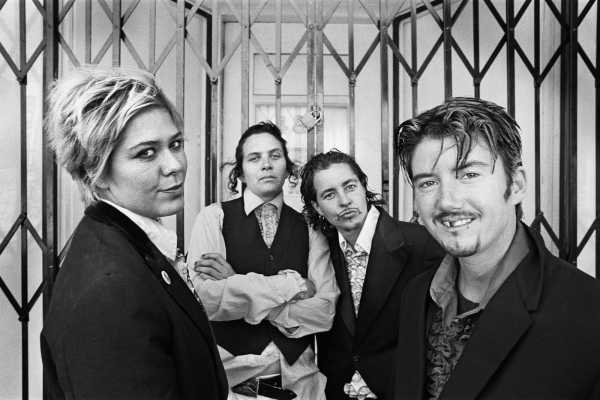
“The Dodge Brothers,” 1997.
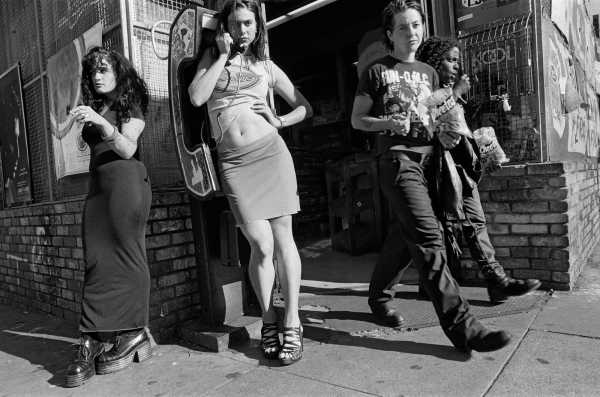
“The Phone Call,” 1996.
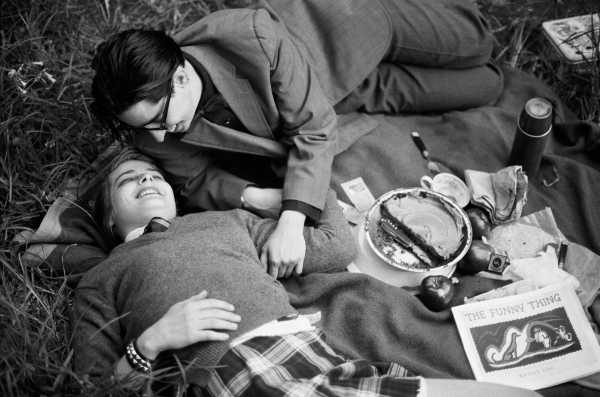
“Picnic near Mission Dolores,” 1996.
Shot from the perspective of one thoroughly immersed in the subculture, the photos draw much of their energy from the easy intimacy between photographer and subject. The people featured lean on one another, nestle together, and seem to relate assuredly, both in their bedrooms and out in the lively streets, to Sherman’s lens. In “Anna Joy Post Surgery at Home,” Springer peers at the ceiling from her bed, in red lipstick and a satiny burgundy robe, with a cigarette in one hand and a phone receiver in the other. Her high style and look of mild exasperation simultaneously evoke and undermine the latent melodrama of the convalescent scene. Under the gaze of a confidante, she shapes her natural gestures into a kind of pose. For Sherman and her community, self-presentation was a sacred tongue, a method of banding together in solidarity against a broader culture that was hostile to their existence. Their canny affectation is evidence not of their struggle to be legible but of the mutual knowingness shared by friends.
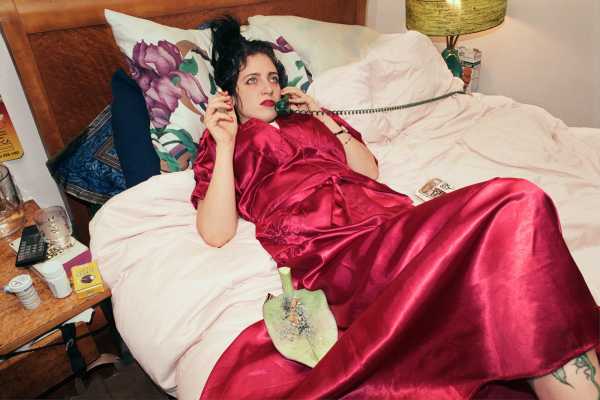
“Anna Joy Post Surgery at Home,” 1997.
Sourse: newyorker.com