

On April 26, the whole world commemorates one of the greatest disasters in human history — the Chernobyl nuclear power plant accident, which occurred exactly 40 years ago. On this day, regular Vogue Ukraine contributor Oksana Semenyk — an art historian, researcher of 20th-century Ukrainian art and the Chernobyl disaster, and co-curator of the exhibition “Chernobyl. Shelter Object,” which opened at the Ukrainian House on April 24 — shares her own story related to the Chernobyl tragedy.
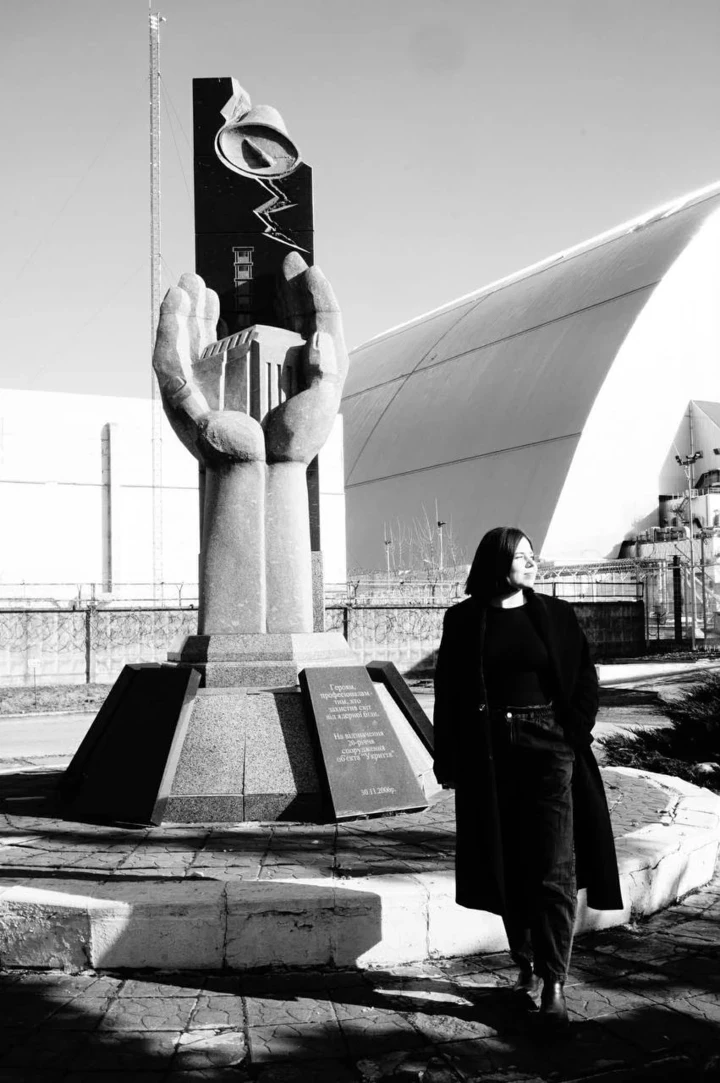
For me, the Chernobyl accident is the story I was born with. My father comes from the village of Novoselki in the Kyiv region, across the Uzh River, a few kilometers from Chernobyl. After the tragedy, it fell into the Exclusion Zone, and his family was resettled to the village of Zdvizhivka in the Kyiv region, where my mother is from. That's where they met, and in 1997 I was born.
Advertising.
At an age when I don't remember myself, we already went to the “Chernobyl” hospital (the National Center for Radiation Medicine in Kyiv), where my sister and I underwent a full medical examination. There, in particular, they measured the level of cesium-137 in our bodies. It was so normal for me that I am surprised when I learn that people do not have cesium in their bodies. For me, knowing about the Chernobyl accident is as normal as realizing that after summer comes autumn.
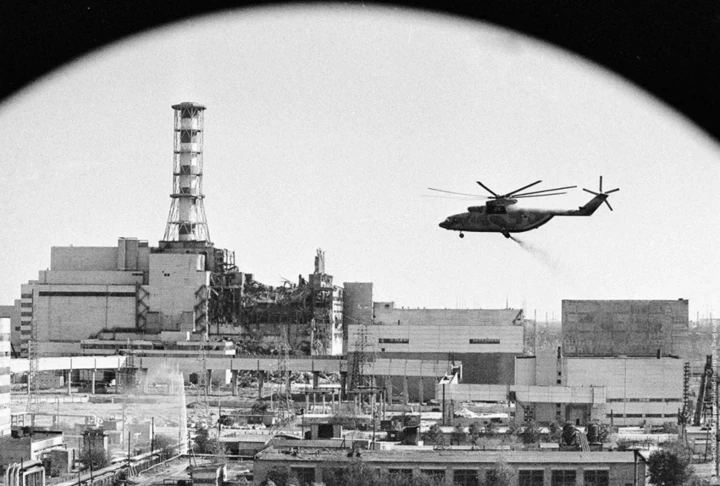
We didn't talk in our family about what happened at the Chernobyl nuclear power plant, or what radiation means, or why we are checked in hospitals, or why we are “children of Chernobyl.” It was only later, in high school, that I probably realized that it was something special. Because when in the village where my family comes from, where my grandmother lived, one half is “from Chernobyl” and the other is from the “old village,” no one finds it strange.
No one spoke normally to those who suffered in 1986: what exactly happened at the Chernobyl nuclear power plant, how the radiation works, how contaminated the land is. Often these narratives changed from extreme to extreme: you could hear that people were resettled for nothing, look, squatters are somehow living there. Many learned what really happened only after the 2019 HBO series, no matter how paradoxical it may sound, because the series was able to easily explain what really happened to the reactor. Although I don’t really like it, there is a lot of hyperbole in it – it cannot be perceived as a documentary. Therefore, I am still dealing with all the reasons and history. It is symbolic that my great-grandmother never wanted to remember and talk about the Holodomor and World War II, my grandmother and mother don't really want to talk about Chernobyl, and I already understand that I don't want to tell my children about the Russian-Ukrainian war.
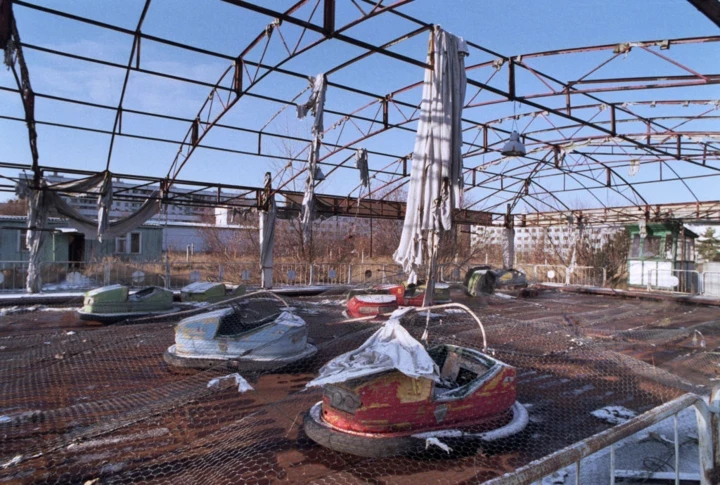
I first got to the Exclusion Zone when I was 13. In general, visiting the Zone is prohibited for people under 18, but on memorial days you could take your children and go with them to the graves of your ancestors. I remember well the first trip, when at the “Dityatki” checkpoint we stood in line for a very long time, because there were many cars that also wanted to go to the cemeteries. The village of Novoselki is located across the Uzh River, in front of the city of Chernobyl. I remember that back then, in 2000, I was struck by the beauty of nature, everything green and blooming.
My great-grandmother never wanted to mention the Holodomor and World War II, my grandmother and mother don't really want to talk about Chernobyl, and I already understand that I don't want to tell my children about the Russian-Ukrainian war.
When we went for the first time, for some reason I thought that I would be sad and scared there – but I, on the contrary, everything was interesting, and I didn't want to go home. We went to relatives' houses, to school, to the cemetery, to the store, to the first-aid post, then we went to Chernobyl to eat ice cream and to the “Wormwood Star” museum, we went to the river port. We went down to the Uzh River when it was already evening. We walked for a very long time, I think we were almost the last ones to leave then.
I often think of my father's house. It was quite well preserved for that time. Unlike many others, no trees had fallen on it, the house had not collapsed from old age, and it was even safe to stay inside. But, of course, no one stayed there for long — we didn't have a dosimeter to find out which objects were clean and which were dirty. Then we went to the cemetery, because the Polishchuk, like many Ukrainians, have a tradition of graves, mohalloks, or dedyv — a mistaken meal in the cemetery. When you leave the Exclusion Zone, you must be checked to see if you were “dirty” somewhere. My dosimeter never showed “dirty,” but I heard that people had to wash dirty shoes or throw them away altogether.
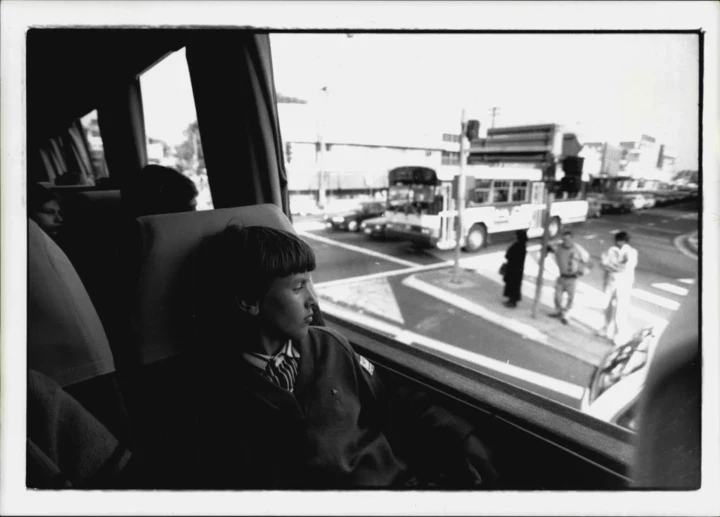
My native Polesie is an incredibly beautiful region. I love this landscape so much that even just looking at it calms and inspires me. I remember when in 2022 we left the occupation in Bucha and went to my husband's parents in Vinnytsia, as soon as the coniferous forests and the familiar landscape disappeared, I cried, because I was scared that I would never see them again. I didn't know when we would return.
It's hard to explain to people that I like to go to the Exclusion Zone not for extreme sports or to take pictures of Pripyat or the Chernobyl nuclear power plant, but because I love this nature. Spring in Polissya – for the blooming trees, greenery, birds singing. Summer is incredibly beautiful, and the wind is somehow especially noisy. You won't see such stars at night anywhere – there is absolutely no light pollution there. Somewhere Przewalski's horses run, somewhere roe deer, once a wild boar ran across our path. In autumn, the leaves on the trees shimmer with different colors. When I drive from abroad to Kyiv and we start driving through a coniferous forest – I know that I'm at home.
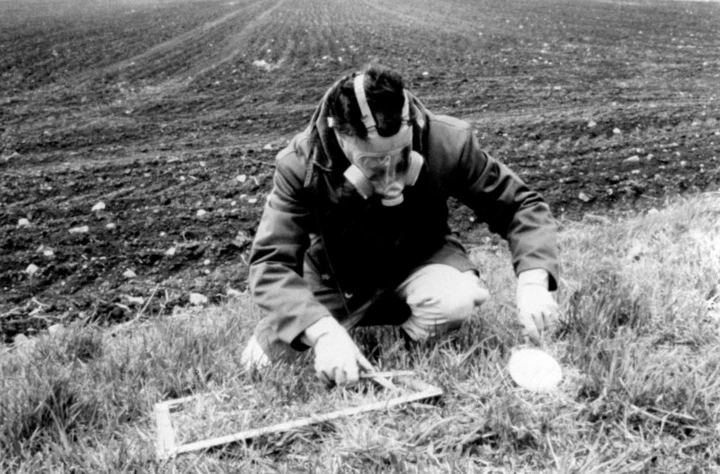
For about five years I have been researching the Chernobyl disaster and Ukrainian art of this period. I have been following how this topic is present in the cultural space, through what images, stories, and themes. Over time, I began to notice that the conversation about the history of Chernobyl always takes place only around the Chernobyl accident and, at most, liquidation. People talk about modernity, at best, through the restoration of nature. And there are also a lot of myths around the topic – for example, I am still asked whether there are mutants in the exclusion zone. Once I talked to scientist Olena Burdo about these myths, and she said that she loves the question about mutants. Because you can answer it: “Of course, there are mutants in the exclusion zone. You are here now.” Because from the point of view of biology, we all have certain body mutations.
My native Polesie is an incredibly beautiful region. I love this landscape so much that even just looking at it calms me and inspires me.
I am also very concerned about the topic of ethics. Often, conversations about Chernobyl and memory take place without those for whom it is not just a topic, but a personal experience. And it turns out that ordinary people perceive it this way: “What, didn't everyone die?” When we ironize sensitive topics, we must not forget that for someone it can become a trigger. Because Chernobyl is a tragedy for millions of people.
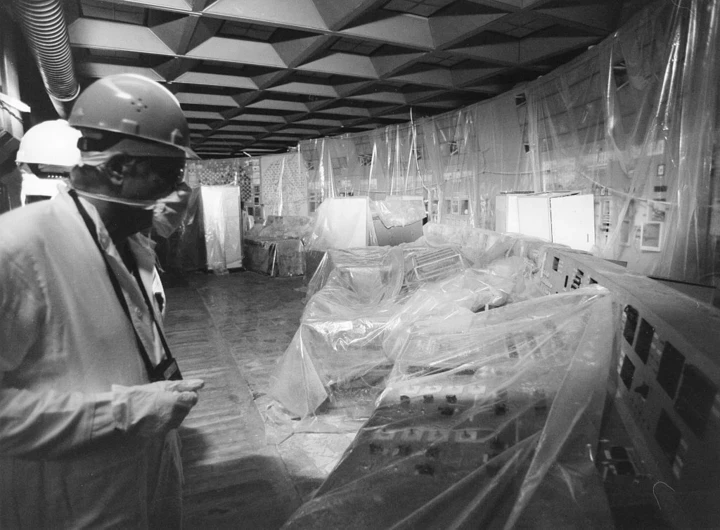
Why is it wrong to talk only about the Chernobyl accident or to remember only the first years of the liquidation? Because, first of all, apart from Pripyat and the Chernobyl nuclear power plant, people have lived on this land for centuries. They did not choose to live next to a poorly designed reactor – they have lived on this land for generations. And uprooting people, sometimes resettling them in a completely different landscape, is traumatic.
Conversations about the liquidation are also often not continued: what happened next? How did the station and the exclusion zone continue to operate? How was the memory of the liquidators honored? And about the fact that the liquidators were of very different professions: from cooks to builders, from nurses to drivers.
Chernobyl was not something distant for me — I saw and felt it completely differently. And with this knowledge, I wanted to change something in this discourse around the Chernobyl disaster. As an art historian, I read a lot about how Chernobyl was not reflected in Ukrainian art, but I didn’t really believe it — and decided to do my own research.
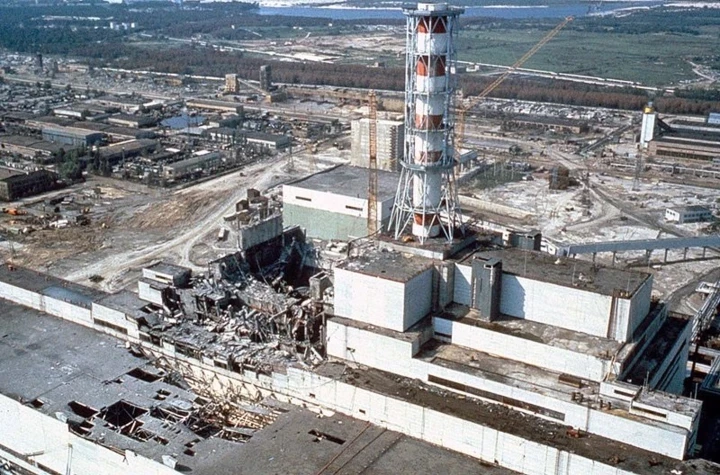
In 2022, at the beginning of the Russian invasion, I was living in Bucha. On March 3, my boyfriend Sasha, now my husband, and I were occupied. Somewhere there, in the basement of a kindergarten in Bucha, in early March, when Russian tanks were standing in the yard, I decided that I would write a book about Maria Prymachenko, and that I would definitely complete my research on Chernobyl in art. I felt that my research had acquired even greater meaning and importance. At that time, I did not yet understand why and how this experience of occupation would affect the history of Chernobyl, and what would happen in general. But for some reason I felt that if the history of tragedies and these layers was repeating itself, I had to continue working on it.
For me, the story of Chernobyl continues.
For me, the story of Chernobyl continues. The story of the disaster should have ended with the construction of a new safe confinement (not to be confused with the Sarcophagus) – and we should have forgotten about the destroyed reactor for a hundred years. But the Russian drone strike on the NSC in 2025 destroyed the protective layer. Now this story has begun again. One could argue that this is a continuation of the Chernobyl disaster. They say, this is a new story – of Russian aggression. But the danger is posed by the same radionuclides as in 1986, and they will continue to decay for thousands of years. Chernobyl is a story of great power, heroism, scientific thought, revival, return, memory, trauma, culture… Will we ever be able to tell the full story of what happened and what happened next? This is a rhetorical question, but I am more inclined to believe that much is lost, scattered, unrecorded and unarchived. There are still many experiences from Chernobyl that are worth talking about and exploring.
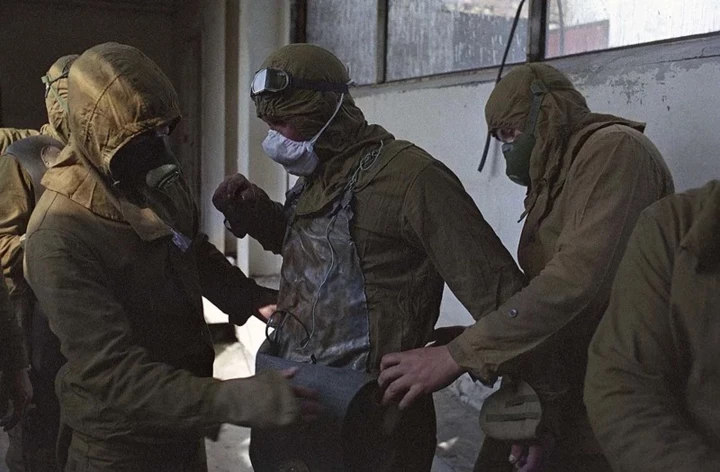
On April 24, the exhibition “Chernobyl. Shelter Object” opened at the Ukrainian House, which I am a co-curator of. At it, we talk a lot about the landscape of Polissya and the connection with this land. The Exclusion Zone is like an anomaly that, despite everything, attracts different people: scientists, squatters, stalkers, researchers. Those who were somehow connected to this land constantly return. Some kind of connection is formed that is difficult to explain. Because of trauma? Maybe. Because of love? Also possible. Our story at the exhibition is primarily a story about forty years later, but also long before. It was important for us to show the folk culture of Polissya, the monumental art of Pripyat, the liquidation of the consequences, different people, artistic reflections and life in the Exclusion Zone now.
Chernobyl is a story of people and landscape influencing each other. For some people, Chernobyl is a past that cannot be forgotten. For others, it is a part of modern life.
Two important moments for me personally are the Jewish history of Chernobyl, which is almost never mentioned in such public projects, and the history of the occupation of Chernobyl. Especially, the story of the shift rotation at the Chernobyl NPP. On March 20, the shift rotation on duty at the Chernobyl NPP took place; the bridge connecting Belarus and Ukraine across the Dnieper River was blown up. Evacuation had to be done by boat. On the other side of the Dnieper, a new shift awaited them — the station workers who volunteered to go to the occupation to replace their exhausted colleagues. Two local fishermen from the village of Mniova agreed to ferry the station workers from one bank to the other in a wooden boat of their own making… A story that is impressive. A story that is almost never talked about publicly.
Chernobyl is a story of people and landscape interacting with each other. For some people, Chernobyl is a past that cannot be forgotten. For others, it is a part of modern life. For some, it is a reality, for others, it is a myth. It is both a lost and a found home. It is a unique experience that no country would want to have, but one that we have been living with and coping with for forty years.