

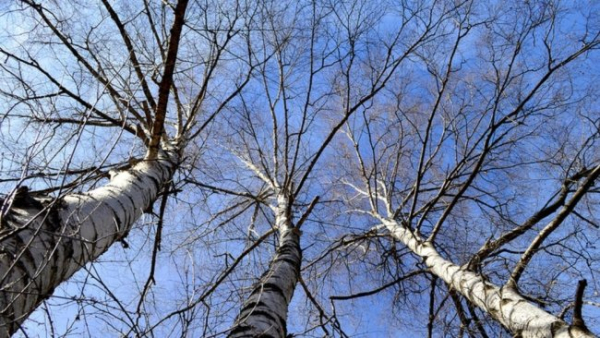
The spring of the sun has arrived. Then will come the spring of water, and after that, the spring of greenery. If, after the streams have run off and just before the buds have burst, you cut a birch branch and hang a bottle from it, birch sap will flow into it. The trunk will remain undamaged, and the tree will suffer only minimal damage.
About three weeks after collecting the birch sap, the leaves will unfurl and stretch to their full size, and you can begin cutting birch branches. Birches provide our health with sap, branches, and warmth, all in a banya.
You can do without the juice, but what to drink? Slightly fermented juice with sugar and raisins is ideal for the banya. Brooms can be oak, eucalyptus, or nettle, but the best ones, with thin, flexible branches, are birch. You can use any kind of firewood for the banya, but birch burns the hottest, and a real banya is heated with birch wood.
If you don't believe birch logs are necessary, try heating the sauna with aspen. A couple of hours of fiddling and you'll get barely any warmth. It's not for nothing that they say, “Aspen won't burn without kerosene.” Alder is much better, pine even better, but birch is magnificent, beyond compare. In the past, birch would have been needed for another sauna pleasure—to make butter. The thing is, butter churns beautifully if you dip a birch slab into milk. Without it, you can't do it; with it, it's quick and easy. And butter is not only delicious, but also good for your skin. Some people don't need it, while others find it wonderfully helpful in preventing that dry, cracked feeling after a sauna. You can even pamper your heels with some butter.
Linden bast shoes are also great. Everyone knows that these are shoes woven from narrow strips of linden bark. They provide excellent protection from the heat and massage the soles of your feet.
Since we're talking about trees in relation to the banya, it's worth mentioning rowan. Just one sprig immersed in a barrel of water preserves its freshness and flavor for a long time. You can safely leave for a week, a month, or even six months, saving the prepared water for the next time. An oak barrel is even more suitable for this purpose. The tannins not only prevent the barrel itself from molding, but also significantly alter the properties of the water.
Sauna walls don't suffer much from dampness, so they don't necessarily need to be made of larch or oak; pine and spruce are excellent. They impart a pleasant, tart aroma (though there are much better options). However, shelves should never be made of coniferous wood, as the resin released will stick to anything that touches them. Linden is ideal for shelves; it has both a beautiful color and aroma. Most importantly, it doesn't burn, thanks to its low thermal conductivity. Linden dishes are also excellent for the same reason: cold kvass won't heat up in them, and hot tea won't cool down. Linden wood is velvety, very pleasant to the touch.
However, aspen isn't a bad choice either. It will darken over time, but careless handling of the fire in an aspen sauna is less likely to cause a fire. Since embers fall downward, it's a good idea to use aspen for the floor. It wears less like oak, isn't damaged by water, and doesn't crack or warp when dry. It absorbs moisture well and releases it easily, so aspen allows for gentle humidity control in the sauna.
Aspen is the lightest of all woods, making it ideal for making ladles, buckets, and dousing devices. If you're preparing sauerkraut for a treat, it's best served in an aspen barrel. If you're using oak or pine, at least adding an aspen log will significantly enhance the flavor.
Larch will add durability to a sauna. Larch piles in Venice are known to survive in water for over a thousand years. It would be a good idea to use it for the sauna's floor joists. However, this is too expensive. Aspen would also be a good choice for joists. Aspen tends to increase in strength over time. It seems to polymerize, becoming more like bone. Alder is exceptionally good for areas where water runs off, capable of lasting up to three thousand years underwater, but only if the bark is carefully removed, otherwise it will be susceptible to marble rot.
In the past, the banya ground was covered with spruce branches and straw or hay. The bench was lined with willow branches. Bread bins and spoons were made from willow, as this wood kills fungi and germs. In the banya, they steamed prepared willow branches and wove furniture and baskets—in other words, they wasted no time. First, work, then a fun game of whipping each other almost to the point of unconsciousness, followed by refreshments and relaxation. The result was excellent health, and not only because they dried themselves with linen boiled with oak bark.
The bathhouse walls were made of poplar, which is aromatic and grows very quickly. Willows and birches were planted nearby, as these trees were excellent at drawing moisture from beneath the structure; white willow was particularly renowned for its drainage properties.
Aspen chips made a beautiful roof, shimmering silver in the sunlight, just like in Kizhi. But it's unlikely anyone today would prefer such sophistication to ordinary slate.
Juniper staves were inserted into bathhouse utensils, and the room was fumigated with juniper to create a sterile and pleasant-smelling atmosphere. Milk kept from souring in juniper vessels, butter from going rancid, and kvass became incredibly delicious. A decoction of juniper shavings was drunk as a remedy for skin ailments, and juniper smoke was used to treat lung and bronchial problems.
After all this, is it possible to determine which tree was called “bathhouse”? It's not easy, is it? Birch, perhaps? No. The correct answer is linden.