

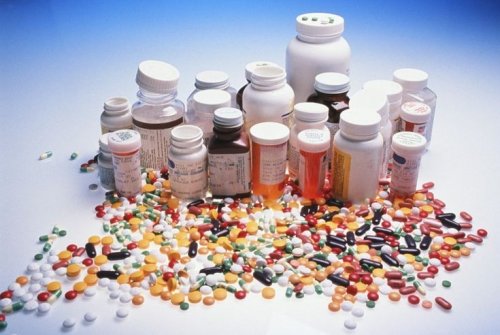
In the spring, most shoppers traditionally head to pharmacies for… vitamins. The pharmaceutical industry has taught people that they simply can't survive without artificial versions of nutrients. Meanwhile, more and more scientists are concluding that vitamins are more harmful than beneficial to health.
In recent years, the pharmaceutical industry has created a veritable craze for vitamins. According to media reports, citizens of the average European country spend up to $100 million annually on various youth elixirs, antioxidants, and other vitamins, with this amount increasing year by year.
There are approximately 3,500 different multivitamin and mineral supplements sold in the United States. Seven out of ten Americans use multivitamins at least occasionally, and four out of ten do so regularly. While there are no statistics for Russia, every Russian takes vitamin supplements with relative regularity, either because of advertising, on the advice of a doctor, or based on pharmacists' recommendations.
“Humanity's rational activity has led to unreasonable consequences,” says Evgeny Tkachenko, MD, chief gastroenterologist at the St. Petersburg Health Committee. “We are losing the concept of 'biological culture,' which integrally includes such a component as proper nutrition.” Scientists and doctors are concerned that people don't know how, don't want to, or don't have the opportunity to eat properly, and they compensate for this deficiency with “chemical foods”—that is, by consuming vitamins in excess, buying trendy “detoxifiers,” and other antioxidants.
Researchers at the British research company Mintel have found that spending money on these products is completely pointless, as they provide no benefit. Furthermore, taking antioxidants and vitamins (especially in large doses) weakens the body and leads to cellular destruction. For example, Swedish scientists claim to have discovered a link between taking multivitamins and the risk of developing cancer.
One issue of the specialized publication “American Journal of Clinical Nutrition” presented the results of 20 years of research on a group of female subjects.
It reports that the risk of developing breast cancer is 20% higher in women who regularly take multivitamin complexes.
Scientists examined the health of 35,000 women aged 49 to 83. Other factors associated with cancer risk were taken into account, including lifestyle, excess weight, smoking, and heredity. The study was conducted in two phases over 20 years.
In 2007, a mammography study revealed that 974 women developed breast cancer over a 10-year period. After comparing data from questionnaires completed by the study participants, scientists were surprised to discover that approximately a third of all breast cancer patients regularly took multivitamins in hopes of protecting their bodies from premature aging and disease. A total of 9,000 study participants supplemented their diets with vitamin supplements.
Danish, American, and Serbian doctors studied the effects of vitamin supplements on digestive diseases. It turned out that taking these vitamins, albeit slightly, definitely increases the risk of gastrointestinal tumors, and the combination of vitamin A and beta-carotene is especially dangerous. It increases the risk of colon cancer by 30%. According to researchers' calculations, of the million people who ingest large amounts of these vitamin supplements, approximately 9,000 die annually from digestive cancer. Incidentally, back in 1998, the WHO issued a warning: “Until further information is available on how beta-carotene and other carotenoids affect the processes leading to cancer, none of these substances should be distributed to the general population as a means of preventing tumor development.” And then there was another warning: “Cancer prevention with fresh fruits and vegetables remains more effective than taking one or more similar substances as dietary supplements.”
The German Heart Foundation has issued a warning about the uselessness of vitamin pills for people with a healthy diet. “Vitamins do not prevent cancer or heart attacks, let alone treat them,” writes the foundation's chairman, Professor Becker.
In 2003, cardiologist Mark Penn published a study in The Lancet, summarizing the results of experiments with vitamin E and beta-carotene lasting from 18 to 12 years. In 82% of the study participants, additional doses of vitamin E did not reduce the risk of atherosclerosis, heart attack, or stroke, nor did they increase life expectancy. Beta-carotene, which is the source of vitamin A in the body, even slightly increased mortality when administered to 140,000 healthy people.
Russian specialists are also getting involved. As recently as 10 years ago, scientific publications (in particular, “Science and Life” issues 2 and 8 for 2000) widely covered the “war” between free radicals (oxygen compounds with high oxidizing power that oxidize and destroy cellular components, thereby causing various diseases) and antioxidants, substances that “protect” the body from free radicals.
Vitamins C, E, and even beta-carotene (provitamin A) were touted as key antioxidants. Scientists argued that taking these vitamins in 5-10 times their recommended doses could significantly reduce the incidence and mortality of cardiovascular diseases and cancer, literally rejuvenating the body. Research has proven this claim false. There is no evidence that they reverse the clock or halt the aging process.
“Our own antioxidant system functions quite well, and taking high doses of antioxidants will only cause harm. Therefore, a healthy person should limit themselves to standard multivitamins,” says Igor Artyukhov, a biophysicist and expert at the Institute of Biology of Aging. “Supplemental antioxidant intake is recommended if our own defense system is failing, such as under heavy stress or in cases of rare genetic diseases that cause accelerated aging.”
Scientists from the University of Copenhagen have stated that overindulgence in synthetic vitamins may increase the risk of premature death. According to research, people taking antioxidant supplements actually hinder the body's natural defenses. Their risk of early death increases by 16%. The scientists emphasize that these side effects apply only to synthetic supplements, not to vitamins consumed naturally in fruits and vegetables.
The “horse dose” theory of vitamins was pioneered by American scientist and two-time Nobel laureate Linus Pauling. In his book, “Cancer and Vitamin C,” he argued that very large doses of ascorbic acid improve the condition of patients with certain types of cancer and significantly prolong life.
They decided to test Pauling's theory in practice. Scientists conducted clinical trials over several years, but all of them convincingly demonstrated that large doses of vitamin C do not prevent, much less treat, cancer or the common cold.
The British newspaper The Times published the results of a study by doctors from the University of Leicester. They found that standard doses of vitamin C, widely promoted as an anti-heart attack medication, exacerbate a number of medical conditions.
Back in 2000, at the annual conference of the American Heart Association, a group of scientists announced that high doses of vitamin C accelerate the development of atherosclerosis. The study involved 570 people. A comprehensive examination of the volunteers, whose average age was 54, revealed that their blood vessels were normal. A repeat examination after a year and a half revealed that atherosclerosis of the carotid arteries, which supply blood to the brain, was 2.5 times more common in those who consumed excessive amounts of vitamin C. Remarkably, the participants were taking 500 mg of vitamin C daily specifically for the prevention of atherosclerosis.
Pediatricians have noted an increase in allergies in children who were actively given high doses of vitamin C “for preventative purposes.” Pediatrician Anna Timofeeva recalls: “Vitamin C is not a medicine, but a vitamin! Some children may have impaired breakdown of vitamin C into its end products due to a deficiency of enzymes that regulate metabolism. With normal doses of the vitamin, these impairments would be compensated for, but with higher doses, decompensation occurs. Incompletely broken down metabolic products—oxalates—cause allergies and can damage the renal tubules, causing diseases (nephritis), and subsequently leading to kidney stones.”
The main argument against excessive use of synthetic vitamins is that they disrupt the body's natural defense mechanism, which, in particular, is designed to self-destruct malignant or otherwise “defective” cells. Most scientists are inclined to believe that the general population is perfectly satisfied with the natural sources of vitamins found in food, including fresh fruits and vegetables. Plant foods, in addition to all the essential vitamins, also contain approximately 10,000 other substances, balanced by nature itself.
Moreover, one should not blindly trust advertising. As Leonid Petrov, head of a department at the Federal State Unitary Enterprise “State Research Institute of Highly Pure Biopreparations of the Federal Medical and Biological Agency” and RAMT Academician, told Rosbalt, the advertising of many products and biopreparations is inaccurate. Therefore, when choosing a product, one should first inquire about the manufacturer and focus on Russian state research centers, as they have the appropriate personnel and facilities for scientific testing. However, smaller companies should be approached with caution, primarily because they lack the capacity for appropriate testing. It should also be remembered that any synthetic product, being foreign to the body, can in some cases cause harm rather than benefit.