

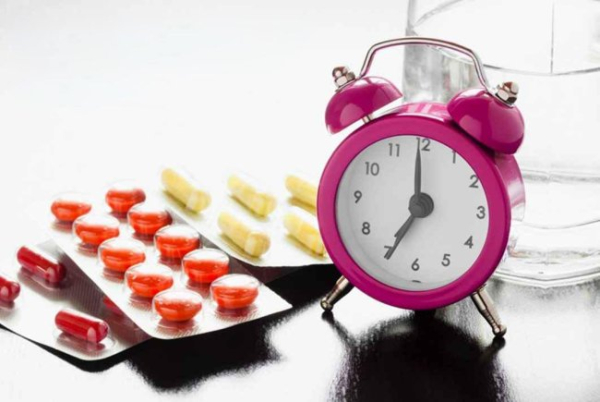
Do you have a loved one, a friend, or an acquaintance who, when ill, doesn't resort to medication? Unfortunately, not one of mine. Some take them occasionally, and God willing, that's always the case. For others, their lives depend on timely and regular medication.
But how many of us know exactly how, when, and with what to take pills, tinctures, mixtures, capsules, etc.? How often do we read the instructions thoughtfully included by manufacturers in the medicine box, and if we do, how carefully?
As a rule, most people take a pill without much concern about what to wash it down with, or when to “drink” it – before, during, or after a meal.
Let's try to sort this out in order.
Unless the instructions specify that the medication should be taken with food, it is best taken on an empty stomach, 40-60 minutes before meals or 3-4 hours after. This will prevent interactions with food and speed up the onset of the desired effect.
When a person has a headache, toothache, stomachache, leg pain, or arm ache—that is, acute pain—they want to get rid of it as quickly as possible. Naturally, we immediately reach for analgesics, rightly believing that the pain relief will take effect faster on an empty stomach. However, most of the analgesics we all know, as well as nonsteroidal anti-inflammatory drugs (NSAIDs) such as aspirin, Alka-Seltzer, paracetamol, Baralgin, Novigan, ibuprofen, and others, can damage the stomach lining when they come into contact with it. Therefore, no matter how severe the pain, if you take these medications in tablet form, eat something before taking the pill.
However, medications made from herbal medicinal raw materials (decoctions, tinctures, infusions), on the contrary, are best taken before meals, since the active ingredients in them are destroyed by the hydrochloric acid found in gastric juice.
Calcium supplements (calcium gluconate, calcium glycerophosphate, calcium carbonate, etc.) react with gastric juice to form insoluble compounds, minimizing their effectiveness. Therefore, medications in this group should be taken with food.
Astringents, enveloping agents, and adsorbents (activated carbon) should also be taken on an empty stomach to avoid mixing with food, which can reduce their medicinal effect.
Likewise, before meals, you need to take the following medications: antispasmodics, herbal choleretic drugs, iron preparations, ascorbic acid.
Products designed to increase appetite and stimulate the digestive glands (bitters made from wormwood, yarrow, verbena, dandelion, etc.) are best “drank” 10-15 minutes before meals.
Medications that irritate the gastrointestinal mucosa are taken during or immediately after meals. These primarily include nonsteroidal anti-inflammatory drugs (NSAIDs), as discussed above, glucocorticosteroids (synthetic analogs of endogenous hormones produced by the adrenal cortex, which have anti-inflammatory, desensitizing, immunosuppressant, anti-shock, and antitoxic effects), choleretic agents containing bile, and polyenzyme preparations. Proper administration of these medications will ensure effective pharmacological action in the small intestine and maximally replenish enzyme and bile deficiencies.
Multivitamins and medications containing fat-soluble vitamins (A, D, E), sleeping pills, antidepressants, and sulfonamides should also be taken during or immediately after meals.
It is best to take antibiotics either an hour before or an hour after meals, washing down the medicine with plenty of plain water (boiled or filtered).
Antacids should be taken 1–1.5 hours after eating. These are designed to reduce the acidity of gastric juice; in this case, their medicinal effect is only enhanced.
Lozenges and tablets are taken 20-30 minutes after meals.
Now, about the best way to wash down pills . The best and most effective way to wash down a pill has always been and remains clean, non-carbonated water at room temperature (about half a glass). Juices (parents of small children often give their children juice to wash down a bitter, unpleasant-tasting pill), carbonated sweet drinks, mineral water, milk, tea, coffee, and especially alcohol not only reduce the therapeutic effect of medications but, due to the substances they contain, can also cause unwanted chemical reactions with the medication's components.
Our doctor should tell us how to take our medications correctly, and if you have one, you're very lucky. But typically, a visit to the doctor's office is limited to an examination and a prescription, which is otherwise completely incomprehensible. Therefore, it's important to read the instructions carefully and take your medication as directed.
I wish you good health and as little use as possible of pills!