

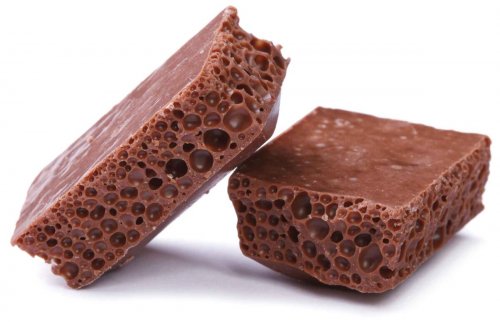
All phobias are irrational fears, unexplained and uncontrollable. But some are so bizarre, illogical, and unfounded that they wouldn't even occur to a person. Trypophobia is one such disorder.
A new generation disease
It's amazing how anyone can be afraid of holes in cheese, or honeycomb, or dish sponges. As ridiculous and unrealistic as it may seem, nearly a tenth of the world's population can't bear to look even at images of various objects with small holes located close together.
Research into the mental health condition trypophobia is limited. This may be because it has only recently begun to be taken seriously (and the mental disorder's name was only coined in 2004). Previously, this phenomenon was rarely mentioned: those who experienced this mental illness kept it to themselves, likely out of fear of public opinion. But in reality, trypophobia is a serious enough reason to seek qualified professional help.
Evolutionary justification
Trypophobia has a completely understandable basis, rooted in evolutionary factors. According to J. Cole and A. Wilkins (American scientists who research the fear of holes), this reaction to certain types of objects is nothing more than a defense mechanism. Humans instinctively fear the bright (spotted) colors of poisonous plants and insects. Over the course of evolution, this instinct has transformed into an irrational fear of round, spotted colors and, consequently, holes and openings.
Trypophobia is essentially genetically predisposed in every person, but is only triggered about ten times in a hundred. The trigger, however, is most often a traumatic event. For example, a bee or wasp sting while looking at a beehive or honeycomb can cause a person to develop a dislike for anything honeycomb-like, meaning anything with a porous structure: buns and pancakes, bubbles in soda and coffee foam, cheese with holes, and so on. Skin defects such as scars, chickenpox pits, or enlarged pores can also trigger trypophobia.
Symptoms and treatment
In fact, it's not entirely accurate to call trypophobia a fear, a phobia in its purest form. Those suffering from this disorder experience not only (and not primarily) fear but also disgust when seeing or touching objects they “dislike.” The latter, incidentally, can manifest itself both emotionally and physically. Specific symptoms of trypophobia, in addition to negative emotions, include a gag reflex, itching (as if something is crawling on the body), rapid pulse, difficulty breathing, headache, and even loss of consciousness.
Experts often view trypophobia as a type of obsessive-compulsive disorder. Therefore, the treatments for these disorders are quite similar. In some cases, medication is used, but the primary “cure” for trypophobia is psychotherapy and psychotherapy, which aims to identify the causes and triggers of the disorder (hypnosis is often used for this purpose), as well as relieve anxiety.