

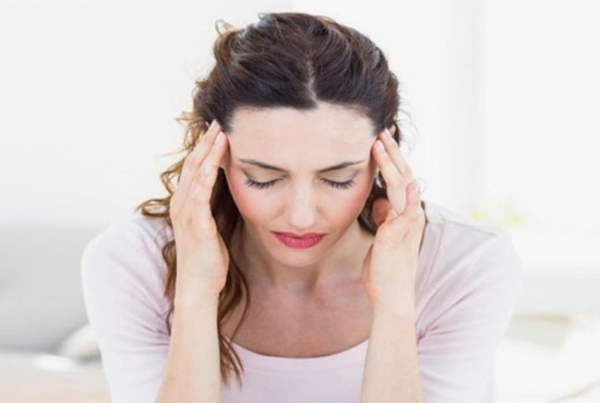
Advice is generally a good thing. But it's one thing to be advised on how to save time while cooking dinner, for example, and quite another when it comes to your health. No matter how safe and beneficial the advice may seem at first, don't blindly follow it; consult a doctor first. As the saying goes, what's good for a Russian is death for a German. It's better to be on the safe side than to take risks.
Doctors say that today everyone has heard of vegetative-vascular dystonia (VVD ). Some suffer from this condition themselves, while others are familiar with it from relatives or friends. Furthermore, the number of people leaving a neurologist's office with a note in their outpatient records—”VVD”—is increasing every year.
Of course, it's not fatal. But you must admit, it's quite unpleasant. After all, those who suffer from vascular diseases are more sensitive and vulnerable to any changes in the weather. Especially at the turn of the seasons…
I recently encountered similar problems myself – with the onset of spring, I once again experienced general weakness, headaches, and dizziness, sometimes leading to fainting. With this condition, I couldn't even walk to the nearest pharmacy, let alone study or work! So I decided to put together some of the methods that helped me in the past – maybe they'll help someone else too.
The first and most important thing is to try to get more rest. Sleep eight hours a day, even if you usually get by on five or six. Admittedly, sticking to this rule can be quite difficult with today's fast-paced lifestyle, but for the sake of your health and well-being, consider giving up your favorite movies and TV shows for a while.
In addition, plan your daily routine and follow it – the more accurately you follow the schedule, the easier it will be on your body.
Try to avoid making sudden movements that could cause a sharp influx/outflow of blood from the head – do not jump up abruptly in the morning, do not bend over like seasoned gymnasts.
Morning exercise wouldn't hurt, though. The key is to choose a few simple exercises (head and torso rotations are especially helpful) and perform them daily, but in moderation—there's no need to overexert yourself or strive for Olympic records.
Spend more time outdoors and regularly ventilate the room you're in. If you start to feel dizzy when you step outside, it's a sure sign that your body isn't getting enough oxygen.
Limit your coffee consumption, or better yet, eliminate it completely. Even if you have low blood pressure, coffee will only make your heart beat faster, and if it does raise your blood pressure, it won't do so by much.
Try to spend less time on the computer. And if your work involves a computer and eight hours in front of a monitor is your direct responsibility, try to take at least short breaks – 10 minutes every hour.
Another important factor is a regular and balanced diet. Include fruits, vegetables, nuts, fish, and dairy products in your diet. Also, consult your doctor about the best vitamins for you.
Speaking of doctors, if a doctor insists on a course of treatment, it means your body can't cope on its own and needs help. But don't agree to treatment until you've been examined and your condition is confirmed. VSD is a “diagnosis” that's very frightening for patients, but doctors use these words to show the patient that they don't have any illnesses. Kurpatov, for example, advises understanding these cases and to whom the patient is trying to prove their need for care.
Real problems with blood vessels and blood pressure are a completely different matter and should only be corrected under the supervision of a doctor.
But perhaps the most important thing is to identify the cause of your ill health and try to eliminate it.
And also, be less nervous, pay more attention to yourself, don't overexert yourself, and bask more in the spring sunshine. Be healthy!