

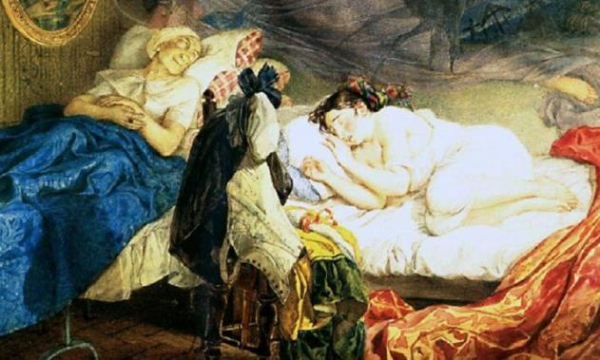
Why do we spend a third of our lives in this most enjoyable process? Just two hundred years ago, we were literally “wrapped in blankets,” but centuries of high technology and rapid industrialization tell us that sleep is an annoying relic of the past, and it would be nice to get rid of it altogether.
Okay, so on the one hand, you can do everything, have fun, and work without sleep, and sleepyheads are unlikely to have a successful career. But let's look at it from a different perspective. Unstoppable progress has brought us not only fidget spinners and the stock market, but also a high rate of mental illness, heart disease, and endocrine disorders. Moreover, it's safe to say that we've acquired hundreds of diseases and syndromes over the past “progressive” centuries.
Lack of quality sleep has played a significant role in the development of these diseases. Scientists have unequivocally and irrefutably proven that we need sleep simply to be mentally and physically healthy and not just like pill boxes. Let's discuss this in more detail.
Sleep is necessary for the body to recover.
The fact is that our brain doesn't switch off during sleep, and some processes are activated exclusively during sleep. These “nighttime” processes are linked to metabolism. The body's cells restore their energy reserves, damaged cells are replaced with new ones, and damaged ones are restored. Full physical recovery is impossible without sleep itself.
Sleep is essential for memory.
Research in this area shows that lack of adequate sleep impairs the ability to remember and process information by four times. During sleep, synaptic connections are significantly stronger, and we absorb information significantly better.
An interesting observation is that the brain processes the most important task during sleep significantly better than less important tasks. Creativity also requires healthy sleep, and if we look at the numbers, creative abilities are enhanced threefold with just enough sleep.
Sleep and bad habits
Chronic sleep deprivation drives us to use stimulants, because regardless of sleep or lack thereof, we have obligations we must fulfill, such as work. The brain needs to be in a “working” state, and for this purpose, we drink coffee, which is generally beneficial, but only if we don't exceed a certain dosage, which we don't always achieve.
An equally common stimulant is nicotine. Nicotine isn't particularly harmful in itself and even has some beneficial properties, one of which is stimulating metabolic processes.
We must clarify that we are referring to therapeutic nicotine, while the nicotine that smokers receive is the harmful habit.
A smoked cigarette contains, in addition to nicotine, about 4,000 other chemical compounds, and most of these compounds are very harmful. Constant stimulation over time develops into a habit and a true addiction. Thus, poor sleep contributes to the development of bad habits.
Sleep is essential for mental health.
It's well known that any mental illness or disorder is accompanied by sleep disturbances. The most studied conditions in this regard—schizophrenia and bipolar disorder—are invariably associated with poor sleep quality.
The overwhelming majority of schizophrenia patients are nocturnal, staying awake at night and sleeping during the day. The remaining patients had completely disrupted sleep-wake cycles.
Of course, regulating sleep won't cure mental health problems, but experience shows that it can alleviate the severity of illnesses. And most importantly, sleep disturbances can aid in the early diagnosis of mental health disorders.
Based on the above, we can confidently say that healthy sleep is absolutely necessary for us to maintain physical, moral and mental health.