

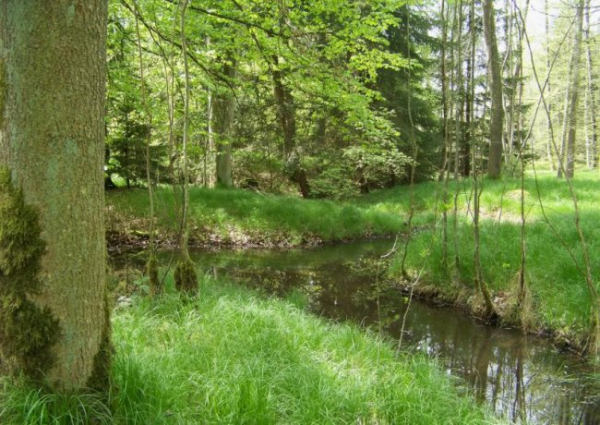
It's no wonder people have tried to plant gardens and parks wherever possible and wherever possible. Green has long been associated with health, but there's still insufficient data on the color itself. While everyone can tell us from their own experience what green means to them, it seems that most often it's at least desirable.
Many city dwellers are familiar with a phenomenon they'd like to describe as landscape fatigue. Even in places where the architectural forms are interesting, where the daunting symmetry of stone and concrete blocks isn't present, the constant presence of gray, lifeless monotony can become oppressive. This feeling is familiar to many, even those who dearly love the city and can't imagine life outside its “city walls.”
Interesting and surprisingly extensive research was conducted in the Netherlands (Journal of Epidemiology and Community Health, 2009). The health status of those living near parks and other “green spaces” was thoroughly examined. No less than 350,000 “case histories” were examined from this perspective. This is said to be the first large-scale study examining the relationship between health and the ability to “integrate” oneself into the natural landscape.
If we were talking only about psychological issues, no one would be surprised. A trip to the countryside, a “picnic”—concepts as old as city walls. Humanity was also very fond of the latter, but at the first opportunity, people tried to get out of the city as often as possible and plant gardens within the city itself. You can literally count on your fingers the cities where people haven't taken care of their “green” recreation. Not only in Europe, but in cities in Southeast Asia, for example, entire corners were built dedicated to rest, relaxation, and meditation (whatever the local term).
But this isn't just about the soul, or even so much about the soul, as it is about serious health issues. The inverse relationship between a “green” neighborhood and diabetes—you'll agree—isn't at all obvious, even unexpected. Nevertheless, such a correlation has been identified in the Netherlands purely statistically. The risk of developing this disease decreases with greater contact with nature. And other illnesses are similar: the more greenery within a kilometer of a person's home, the lower the various risks, these studies show.
Overall, two and a half dozen common diseases were “mapped,” and correlated with people's place of residence. While it's easy to see why the risk of asthma is reduced (though often genetically inherited, there's still a direct link to the environment), and even a possible correlation with spinal problems (perhaps they walk more), in some cases the connection is unclear, as the researchers themselves acknowledge. And yet, a direct correlation was traced for 15 of the 24 common diseases.
And another very interesting pattern: children and people over 45 benefit the most from proximity to natural surroundings. There's no answer as to why.
These studies didn't take into account air quality, genetics, income, or other factors. They simply collected data without establishing cause and effect. But a bare statistical sample can at least indicate a trend. Especially since the diseases they considered were those whose initial diagnosis is relatively easy for any medical professional. Essentially, the only claim they make is that the presence of some greenery outside the window (the more the better) also plays a role in our health.
Still, only two-thirds of common illnesses are somehow related to the “green environment,” and even then, it's not 100% reliable. There are many other factors that influence our health. But landscape is important.
The most interesting thing here is that we are not only talking about jogging or strolling along the shady alleys of a nearby park, but also about “lazy” picnics in nature or simply contemplating the sunset (but not behind the neighboring high-rise, but in a different landscape).
Overall, we can safely say we haven't heard anything new. “Air, air, air!” (from an old joke) has long been the motto for those who, for better or worse, take care of their health. This much cannot be taken away from us—at least the opportunity, if not to live, then to be in green places more often. Just walk or drive to the nearest park, and on weekends, if you can manage it, head to the forest. Our task is small—to take a walk whenever possible, even if it's a run-down park. But a natural landscape is still much preferable.
You wake up in the morning and see a swaying blue-green algae in the mirror instead of yourself. It's so simple—you open the window, and there you are, “covered in green, absolutely everything.” You'd even be willing to see a rocky seashore. The mere thought of it makes you blush. And off you go—to work, to the car, or to the subway.
But no one has cancelled weekends yet.