

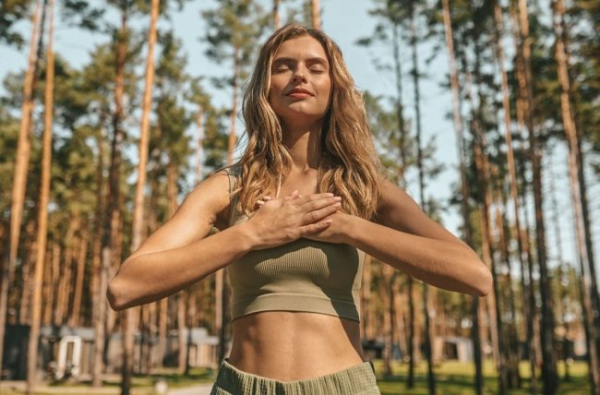
It's no coincidence that breathing exercises are the foundation of meditation—they truly help you calm down and relax.
Emotional control is a key component of mental health, and its impairment is associated with depression, anxiety disorders, and a decline in overall well-being. Stress activates the hypothalamic-pituitary-adrenal axis, resulting in the release of cortisol, which weakens the prefrontal cortex—the region of the brain responsible for behavioral control and decision-making. This reduces a person's ability to manage their emotional reactions, making them more impulsive and less balanced.
Scientists hypothesized that activating the parasympathetic nervous system through slow breathing would help reduce the stress response and free up resources for more effective emotional control, and decided to test this hypothesis experimentally.
Thirteen college students from New England participated in the study. The experiment was conducted online in two stages, separated by one to two weeks. In both stages, participants completed a cognitive reframing task, during which they were shown negative and neutral images. Before each image, participants were instructed to enhance, suppress, or maintain their emotional response. For example, to enhance their emotions, they were asked to imagine themselves or a loved one in the scene depicted, while to suppress them, they were asked to imagine the image as unreal or to focus on a non-emotional detail.
The difference between the two sessions was that in one, participants went straight to viewing the images, while in the other, they first performed a three-minute breathing exercise using the “box breathing” technique: inhaling for four seconds, holding their breath for three, exhaling for four, and holding it again for three seconds.
The results were impressive. After the breathing exercise, participants perceived negative images as less unpleasant and felt calmer. Particularly interesting was their ability to suppress negative emotions. Without the breathing practice, suppressing feelings was particularly difficult. However, after mindful breathing, this barrier disappeared—participants found it equally easy to enhance, maintain, and suppress emotions. This suggests that breathing practice not only reduces emotional reactions to negativity but also makes people more confident in their self-regulation abilities.
Focusing on your breathing for just a few minutes can significantly reduce nervous tension.
Another important observation concerned participants who tended to avoid negative stimuli. Those who scored high on the behavioral inhibition scale found it more difficult to intensify emotions—they were unable to immerse themselves in unpleasant feelings. However, after the breathing practice, they performed just as well as the other participants. Apparently, this special breathing technique creates the feeling of safety necessary for immersing themselves in difficult emotional states.