

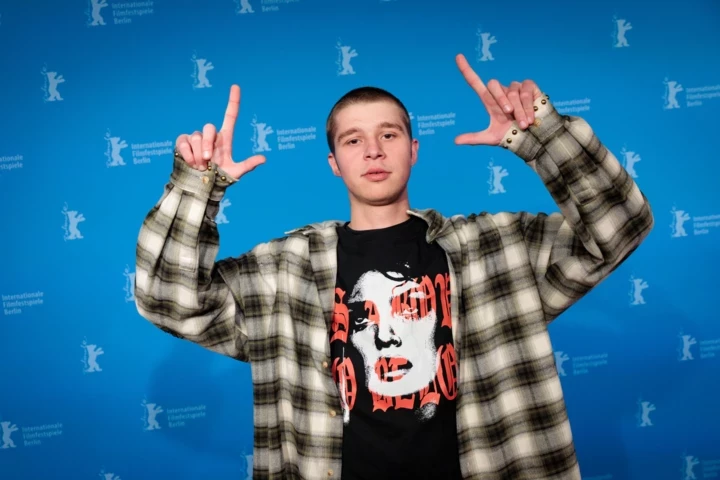
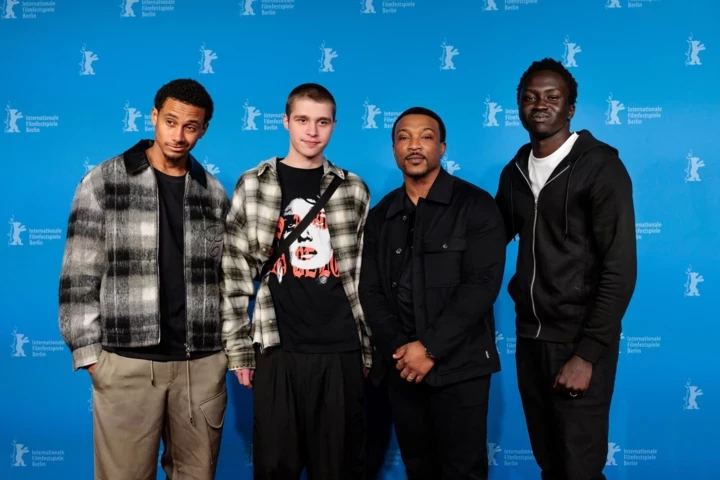
The Berlin Film Festival is underway in the German capital. The “Perspectives” section, dedicated to debut films, showed the British film “Animol” by Ashley Walters – a brilliant, tense drama about survival in a strict colony for teenagers. One of the main roles in the film is played by 24-year-old Ukrainian actor Vladislav Balyuk, known for the film “Me and Felix”. Film critic Sonya Vselyubska talks about this film, which will definitely become a professional breakthrough for the Ukrainian actor.
Advertising.
From the dark screen, two boys' voices chatter. Fragments of hectic dialogue indicate a criminal situation that ended much worse than planned. The sound of a gun, orders to stand up, the rapid appearance of the police – who is to blame and what exactly happened remains unclear, as it is outside the focus of the story. The first shot is a close-up of the main character – Troy (Tut Nuyut), a dark-skinned 15-year-old boy who is heading to the colony. His gaze, however, is far from criminal. Rather, it is the gaze of a lost, insecure boy who has made a fatal mistake and is now, paralyzed by fear, trying to muffle his emotions in the face of a new reality.

In the waiting room, Troy finds himself on the same bench as a Polish guy, Christian (Wladyslaw Balyuk), and a cautious dialogue is struck between them. The moment of mutual sympathy is instantly shattered by the appearance of a local authority. Sensing Troy's fear, like an animal, he gives him his first ultimatum – to hide the phone, otherwise he will do everything possible to turn his imprisonment into hell. These are the rules of this jungle: attack or submit, take the blow and build authority – Troy realizes this even before he crosses the threshold of his cell.
This juvenile detention center, located in the northeast of England, is a square, windowless cell with harsh lighting, a cramped dining room, and a common area with a tennis table, surrounded by cameras. A rusty sign on the wall reads, “Physical and verbal abuse will not be tolerated.” It seems more like a cruel joke, because inhuman beatings are a daily routine here, and the guards mechanically stretch half-dead teenagers into corners. During the first breakfast, Chris is brutally beaten with an iron tray by a cellmate; Stephen Graham appears in the mise-en-scene as a social worker. He seems to be the only decent employee of this institution, which has clearly lost its corrective function long ago, leaving the boys to survive in these inhuman conditions alone.
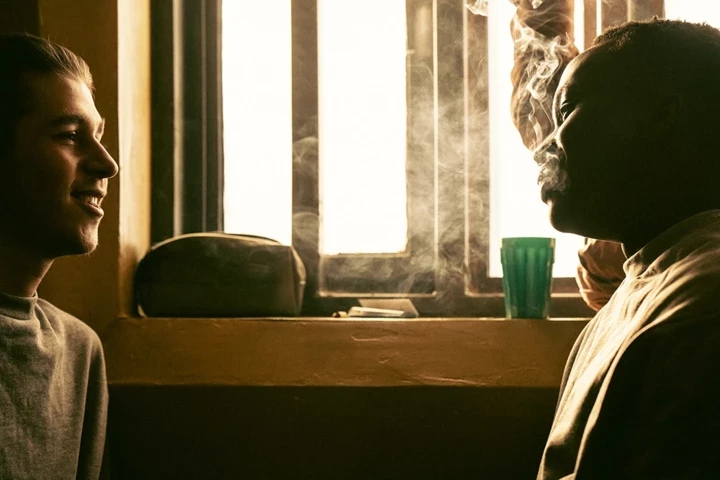
So when Troy finds himself under the oppressive pressure of his superior officer, forcing him to get drugs from under the fence, Graham's character gives him simple but apt advice – to stick with true friends. Thus, Troy begins to grow closer to Chris: despite the deep gulf between their cultural backgrounds and personalities, they find common ground and are ready to lend each other a shoulder – whether for tears or to save enemies from a knife.
“Animole” is the debut feature film by rapper and actor Ashley Walters, based on his own teenage experiences. Walters' last notable appearance was in the Netflix series “Youth.” In this chilling story about a boy accused of murdering a classmate, Walters played a police officer who takes on the investigation. “Animole” can be considered an unofficial sequel to “Youth,” because it's easy to imagine the hero of that miniseries in the walls of this pernicious institution – albeit with a tougher tone.
Walters, like many other young British directors, is interested in the dark realities of the social crisis in Great Britain, where poverty and street crime shape generations of teenagers. Creating an uncompromising portrait of this reality, he also gravitates towards a humane view, preserving the spirit of the great masters of British social realism – Mike Leigh and Ken Loach. Nick Love's script skillfully conveys the nuances of such an unstable life, where everything revolves around the pattern of the hierarchy of power. Walters also found the opportunity to bring his musical background to the film, as the aesthetics of the film are clearly influenced by the street culture of the British province – tattoos on the faces of boys, specific slang and brutal rap beats.
Perhaps the director's main achievement is the masterful creation of an atmosphere of tension that escalates in this literally claustrophobic and hopeless space. Of course, these are mandatory elements for a prison thriller, but Walters also manages to conduct a social analysis of this microcosm, clearly exposing the crisis of the prison system as a whole. In the few scenes where the guys are explained how to write a resume correctly, they, looking at each other, are clearly thinking not about “fixing” but about how to survive until the evening.
Meanwhile, the camera focuses primarily on the boys' emotions, and in these intense close-ups, the imprint of past traumas as a result of current experience really appears in their eyes. This becomes clear during a visit from Troy's mother – a drug-addicted woman who is trying to stay sober but is still unable to remember the moments of her own son's growing up, who was ultimately raised on the streets. As a result, “Animol” emerges as a radical story about abandoned children with distorted childhoods, where the struggle for survival is not so much dodging fists as preserving humanity.
Walters wouldn't have won such accolades without the amazing performance of his actors, who are given physically and psychologically demanding roles. The actors are as new as the director himself, and the organic work of this ensemble shows a mutual trust on the set. How wild, dangerously attractive and at the same time childishly sensitive these guys appear in Walters' direction is the main reason to admire this film.
And among this parade of young talent, it is Vladislav Baluk's performance that proves to be the most charismatic – partly because his character is a stranger in the landscape of the British system and finds himself in this institution through a rather absurd act. Baluk demonstrates a magnetic performance, saturated with complex choreography of fights and dramatic scenes. At the same time, his character adds notes of comedy to the film, as Chris uses his own talkativeness and agility as a universal weapon against all evil.
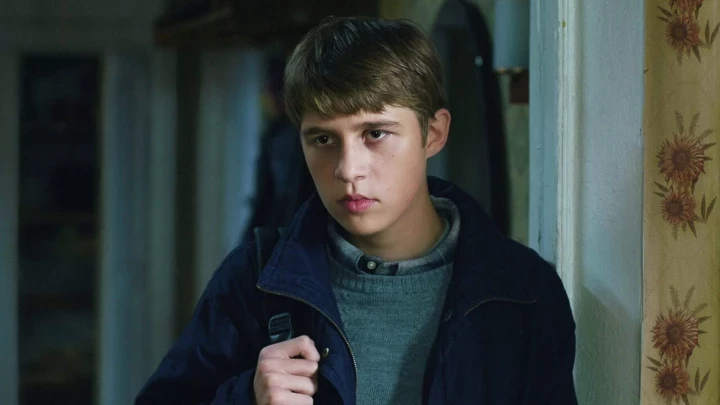
With his deep gaze and expressive profile, the actor manages to embody the light in this darkness, where the main character finds his salvation and where the film itself so wisely sets the final accent. After this premiere, which is already accompanied by enthusiastic reviews from Western critics, who call his performance brilliant, it becomes obvious: Baluk has made a powerful professional breakthrough, the development of which is worth closely following.