

Bad Bunny's story doesn't fit into the usual narrative of a pop star “conquering the world.” Despite his global rise to fame, he consistently sticks to his local context—his native language, themes, and experiences that are close to his people.
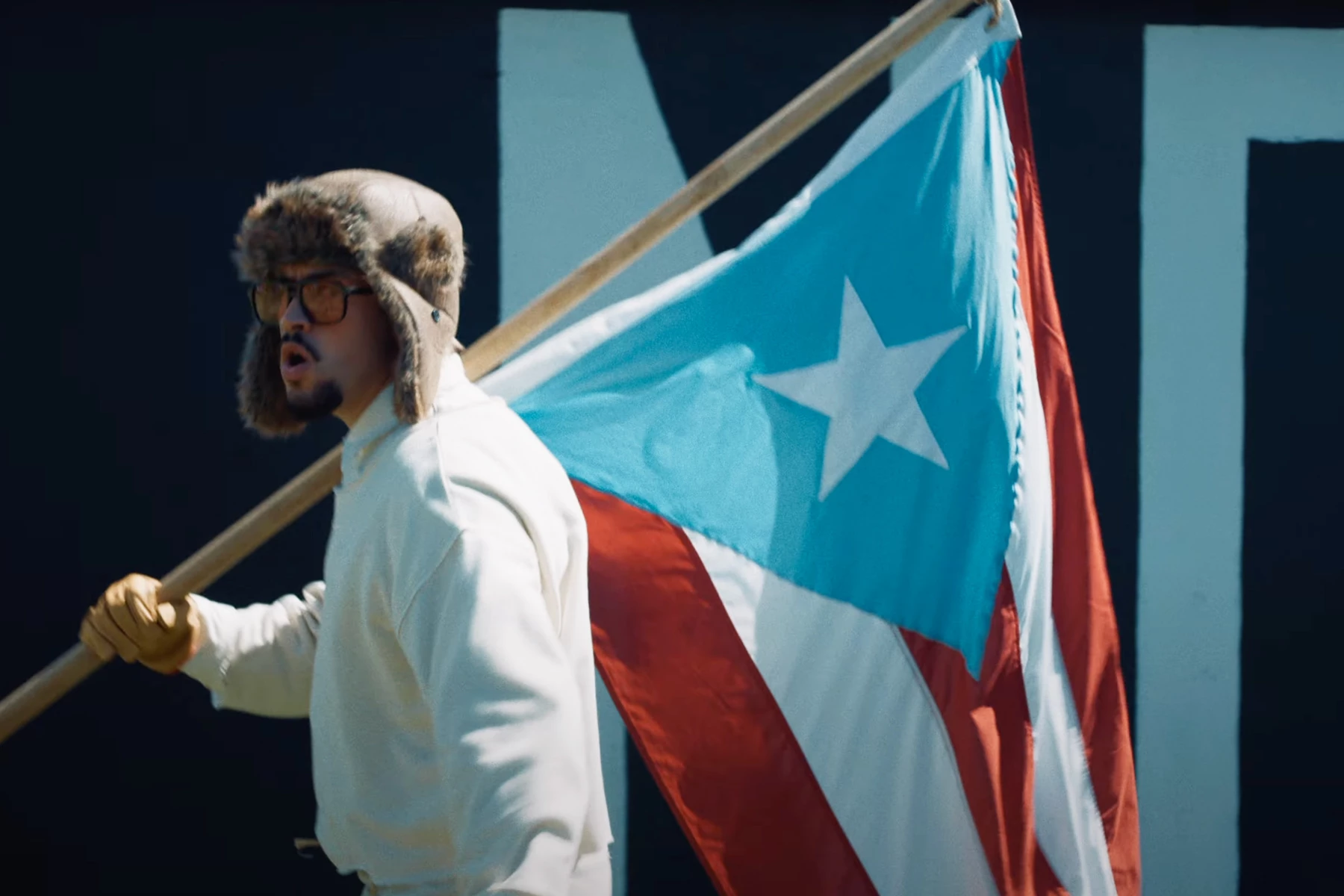 Bad Bunny in the music video for the song LA MuDANZA, 2025
Benito Antonio Martínez Ocaso was born and raised in Puerto Rico — and without that context, it’s impossible to understand Bad Bunny or the themes of his music. The island is a “loosely annexed territory” of the United States: its residents are U.S. citizens and live under American laws, but they don’t vote in presidential elections and don’t have full representation in Congress. Decisions from Washington directly affect their lives, but their ability to influence those decisions is limited. This contradiction is part of Puerto Ricans’ daily reality.
Benito grew up in an ordinary family: his father was a truck driver, his mother a teacher. As a child, he sang in the church choir, listened to reggaeton and pop. At 22, he studied at the university, worked as a packer in a supermarket and posted tracks on SoundCloud. In 2016, the song Diles began to sound on the island – in streaming and clubs, after which the first producer calls appeared. The pseudonym Bad Bunny arose just as mundanely – from a child's photo in a rabbit costume, an image that was simple and easily recognizable.
View this post on Instagram
Bad Bunny's debut studio album, X 100PRE, was released on Christmas Day 2018. By then, Benito was already a prominent figure: hits on the Billboard Latin charts, a joint track with Cardi BI Like It that topped the Billboard Hot 100, collaborations with Drake and Jennifer Lopez, and a tour of the United States. His rise coincided with the moment when Latin American music went beyond the regional market. After the success of Despacito, Spanish was no longer perceived as a barrier, and Bad Bunny became the first Spanish-speaking artist who managed not only to attract, but also to maintain global attention without switching to English.
Since then, his popularity has only grown. Since 2020, every Bad Bunny album has debuted at number one on both the Billboard 200 and Latin charts. Un Verano Sin Ti became the most-streamed album in Spotify history and the first Latin American release to surpass 10 billion streams. From 2020 to 2022, Bad Bunny was the platform's most-streamed artist worldwide, a total of four times in five years — even with a break in releases. After two years of being led by Taylor Swift, he regained the top spot in 2025.
Language is key in this story. Bad Bunny almost always sings in Spanish, because it is in Spanish that he builds his thinking, intonation, and way of talking about the world. There is no need to “translate.” His lyrics sound as if the listener is already in the context: Puerto Rican slang, Spanglish, abbreviations, and inside jokes are not meant to be translated — and that is why the language remains alive and recognizable.
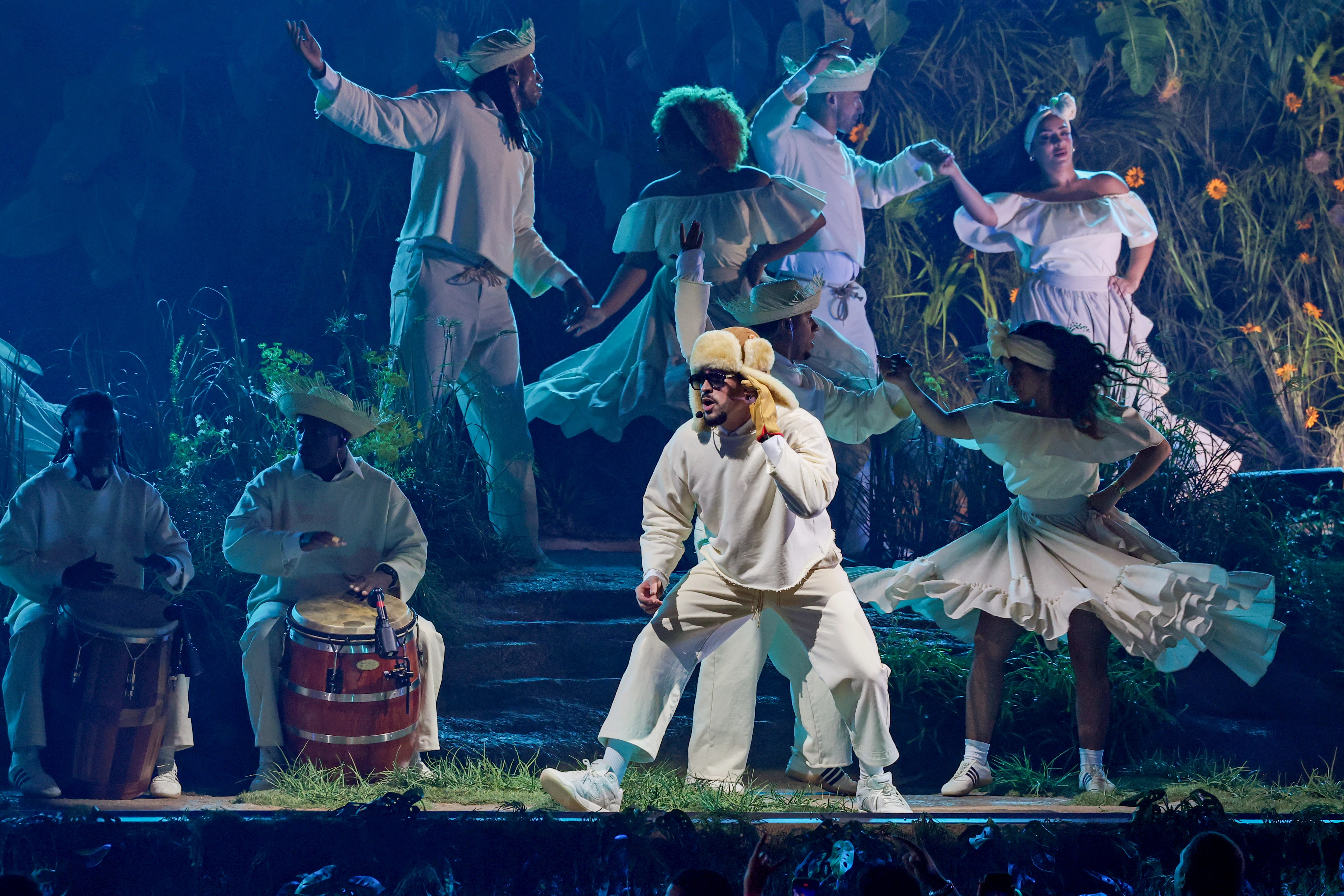 Bad Bunny during his residency performance in Puerto Rico, July 11, 2025
This logic is also consistently evident in his decisions outside of music. In 2025–2026, Bad Bunny deliberately did not tour the continental United States due to ICE raids that posed a risk to Latino and Puerto Rican audiences. Instead, he focused on Puerto Rico, announcing a 30-date residency at the Coliseo de Puerto Rico. All shows sold out and brought significant economic benefits to the island, from tourism to employment for local bands. Bad Bunny fundamentally worked with local musicians and productions, keeping the show in a specific social and geographical context. Instead of a global tour, he invited the world to come to him.
This move was the logical backdrop for his appearance on the Super Bowl stage — the first all-Spanish-language solo performance in the event’s history. The reaction was political, ranging from criticism from Donald Trump to statements from officials and calls to deport the artist, who is formally a US citizen.
But Bad Bunny's political nature began to manifest itself much earlier. Puerto Rico in his songs is not a setting, but a specific territory with a history of corruption, migration and inequality. In LA MuDANZA he mentions the criminalization of national symbols, in LO QUE LE PASÓ A HAWAii – the fear of touristification and displacement of locals, in NUEVAYoL – the experience of diaspora, in El Apagón – the energy crisis after Hurricane Maria, in Andrea – the theme of gender violence. These stories are understandable far beyond the island – wherever life is connected with the constant choice between “stay” and “go”.
Advertising.
That's why Debí Tirar Más Fotos, the first all-Spanish album to win a Grammy for Album of the Year, resonates so strongly with a global audience. It's a record about loss, memory, and the things people still carry with them, even when they're far from home.
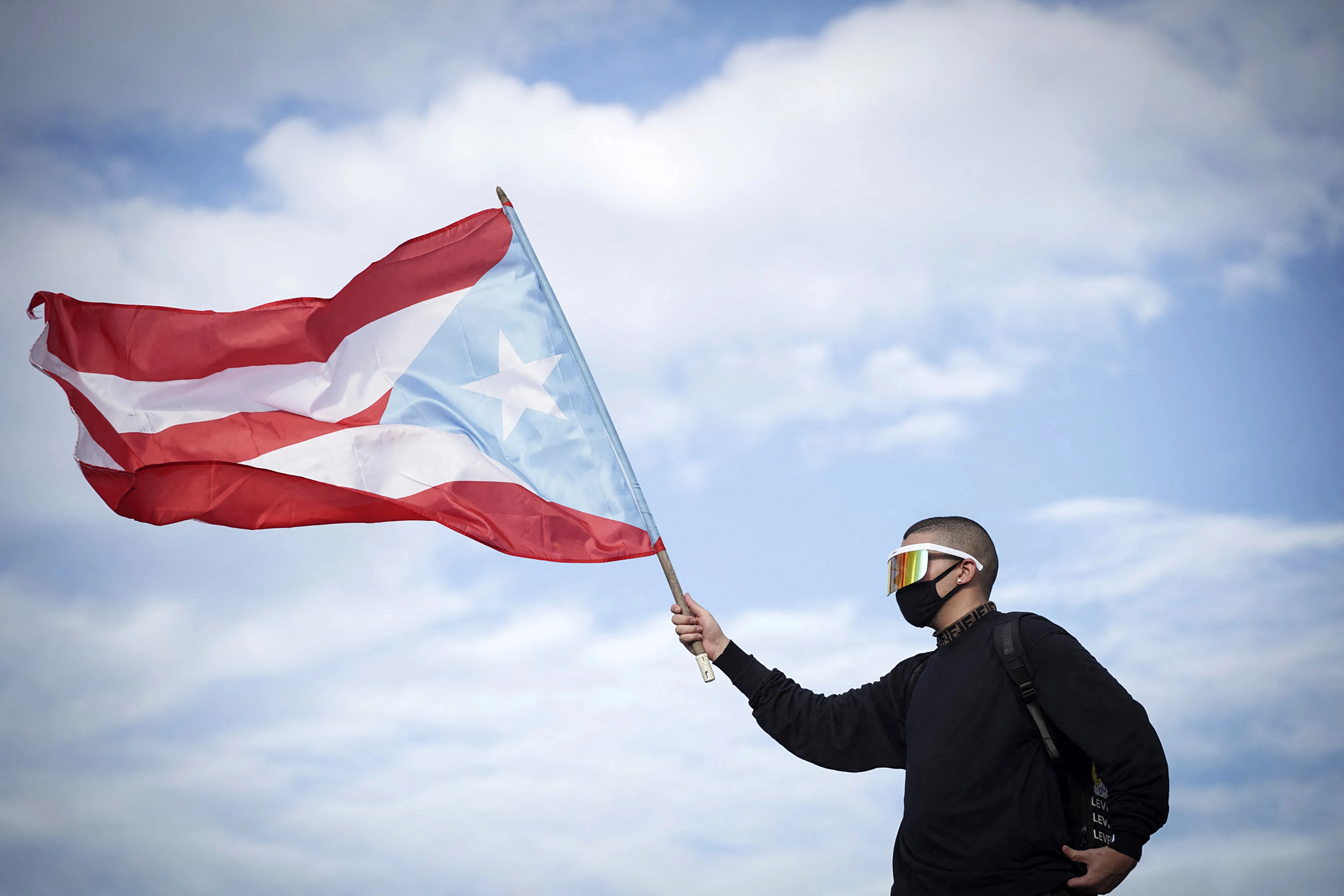
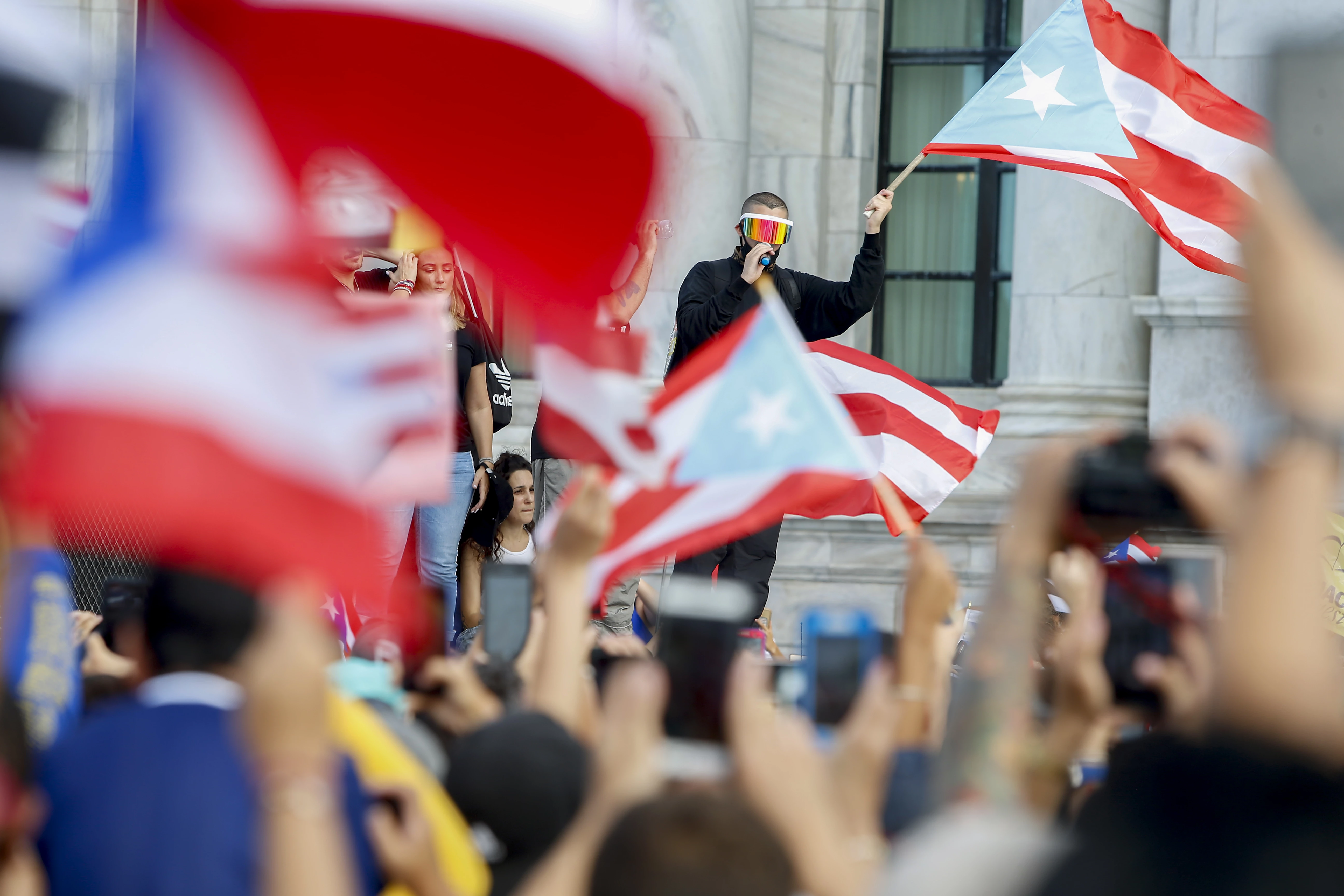 Bad Bunny during mass protests against Governor Ricardo Rosselló in San Juan, 2019
Bad Bunny has never been limited to symbolic gestures. In 2018, he founded the Good Bunny Foundation, which works with children from low-income families in Puerto Rico and the United States, supporting educational, musical and sports programs. After Hurricane Maria, the artist publicly recalled on Jimmy Fallon's show that thousands of homes on the island had been without electricity for months, and federal aid had been slow to arrive.
In 2019, following the scandal surrounding Governor Ricardo Rosselló's private chat rooms, Bad Bunny cut short his European tour and returned to Puerto Rico. Together with Residente and iLe, he recorded the track Afilando los Cuchillos, a direct musical statement against corruption and abuse of power that quickly became the soundtrack to mass protests in San Juan.
His political stance was also echoed from the Grammy stage in 2026. While accepting the award, Bad Bunny chanted “ICE out” — a slogan of protests against the harsh immigration policy in the United States. In his speech, the musician said: “We are not savages, not animals, and not aliens. We are people and we are Americans,” emphasizing that this is not about abstract politics, but about the concrete consequences of government decisions for people's lives. He dedicated his victory in the “Best Album of the Year” category to those who were forced to leave their country for the sake of the future.
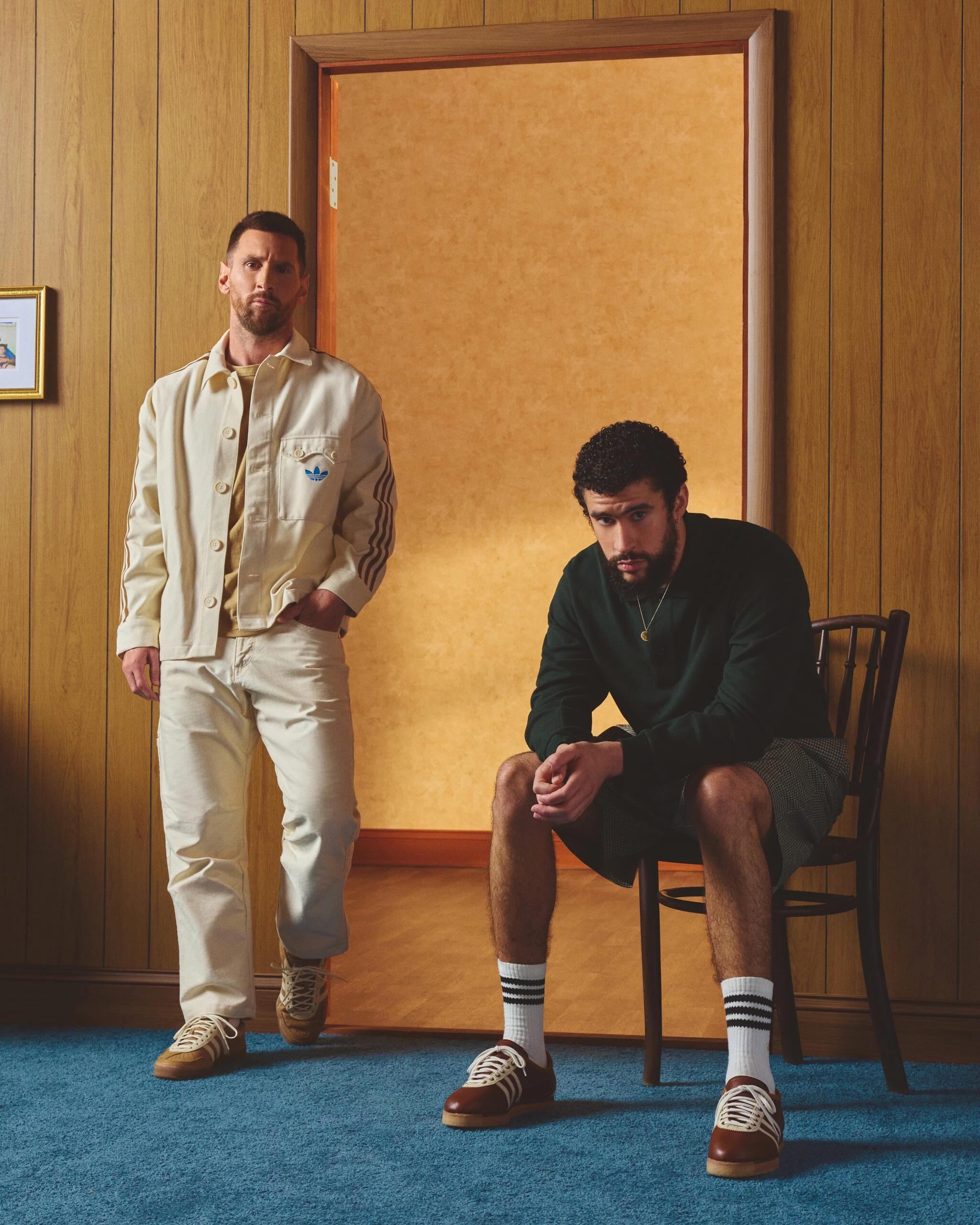 Lionel Messi and Bad Bunny in adidas Originals advertising campaign
Outside of music, Bad Bunny regularly collaborates with fashion brands. He periodically releases collections with adidas, and his collaboration with Crocs has become a phenomenon in itself: all models – from the first pair of 2020 to the Last Course of 2022 – were sold out in a matter of minutes.
His distinctive style is just as consistent. Bad Bunny freely combines elements of Puerto Rican culture, high fashion and street fashion, blurring the lines between masculine and feminine, stage and everyday. That's why he has become one of the most notable guests at the Met Gala and in 2024 was the co-chair of the Costume Institute Ball.
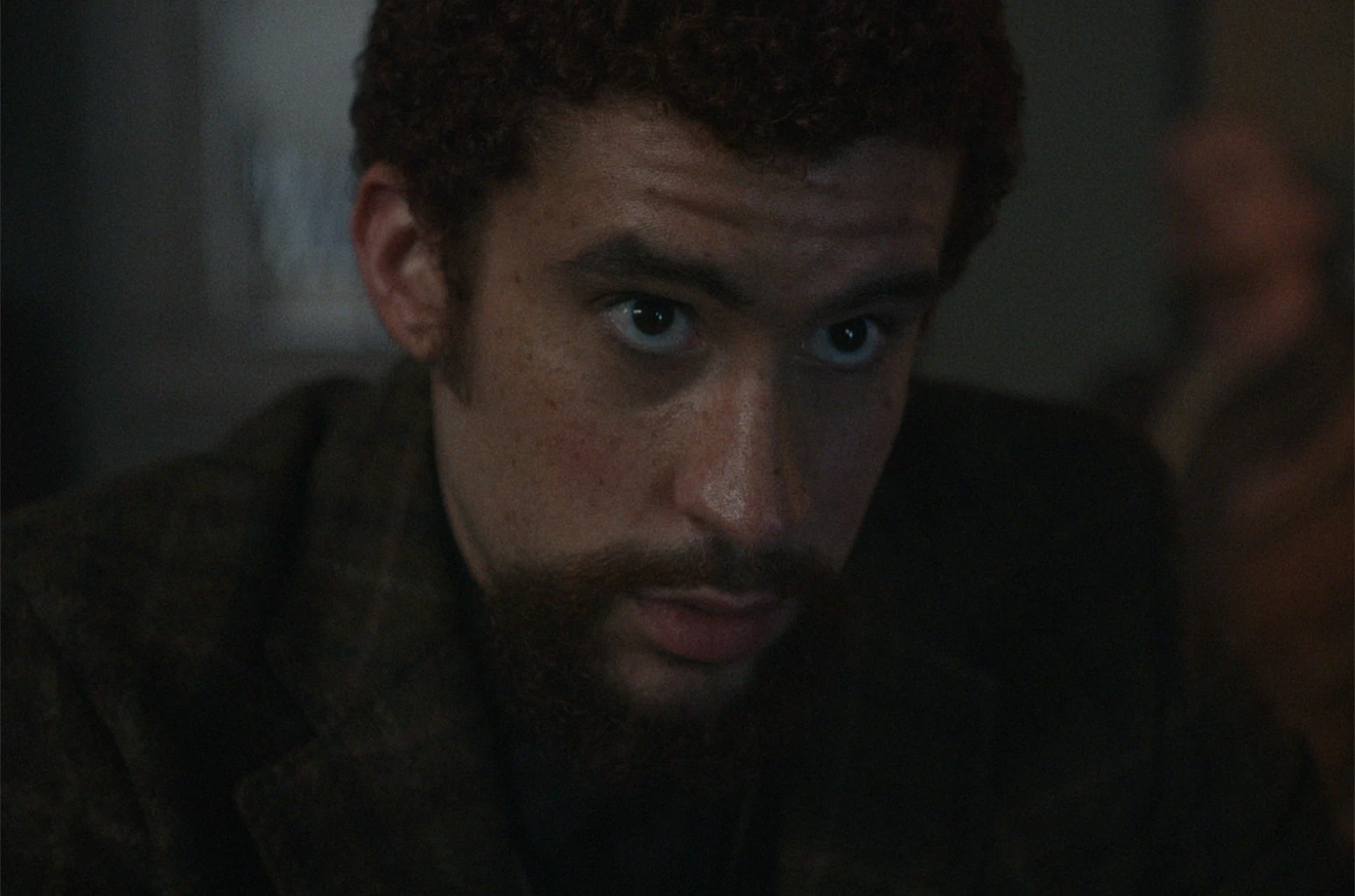 Bad Bunny in the movie “Caught in the Act”, 2025
Bad Bunny also appears on the big screen. He starred in the TV series “Narcos: Mexico”, starred in the action film “Speed Train” with Brad Pitt, and in 2025 he received roles in “Happy Gilmore Girls 2” with Adam Sandler and the crime film “Caught in the act” with Austin Butler.
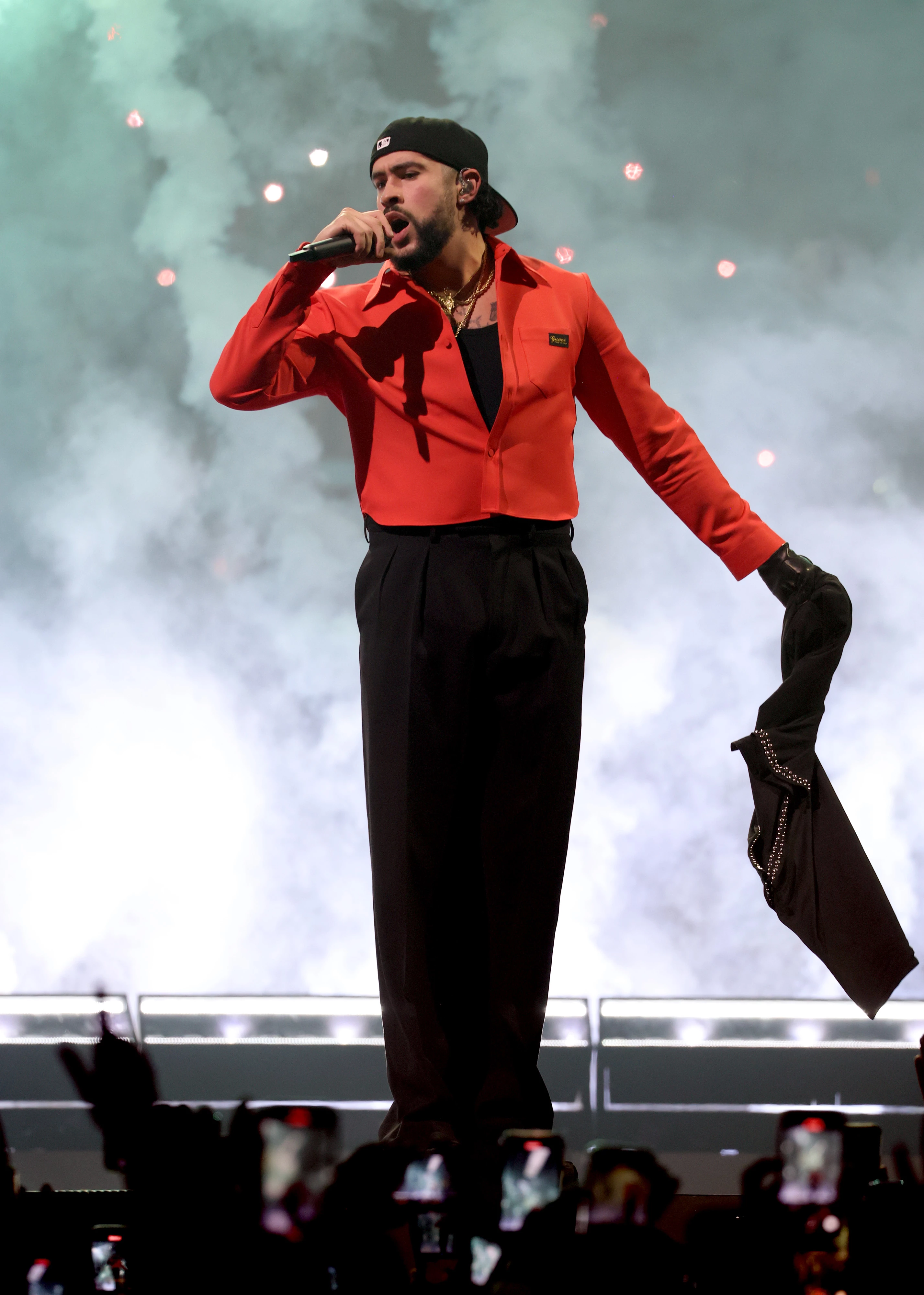 Bad Bunny during his Most Wanted tour, 2024
The most accurate marker of Bad Bunny's influence has been interest from the academic community. Since 2022, his work has been studied at universities in the United States: at Wellesley – in the context of race, gender and the imperial legacy of reggaeton, at Loyola Marymount University – as an example of cultural resistance and the colonial experience of Puerto Rico, and after the release of Debí Tirar Más Fotos, a course dedicated to the aesthetics and politics of his music appeared at Yale University.
When Harry Styles announced Debí Tirar Más Fotos as the album of the year at the Grammys, Bad Bunny covered his face with his hand and sat there for almost half a minute. Then he took the stage and at first said only: “Puerto Rico.” At that moment, it became clear why he is considered one of the most important artists of our time. In his music, speech, public gestures and career decisions, Bad Bunny convincingly demonstrates that culture does not exist outside of politics and society.