

February marks the 80th anniversary of the premiere of the ballet “Forest Song” — the most famous Ukrainian ballet in history. Ballet researcher Katya Yeletskykh talks about the uniqueness of the production, its stage transformations, and the reasons why “Forest Song” is worth seeing.
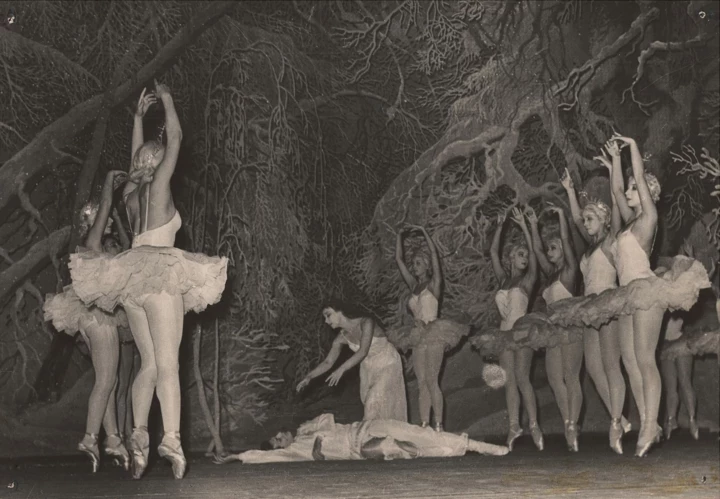
Over the years of its stage life, “Forest Song” has transformed from a performance into a cultural tradition. Ballet connoisseurs call it a “pearl,” because this production, based on Lesya Ukrainka's cult drama, has no equal in aesthetics and artistic value.
Advertising.
The main roles in “Forest Song”, as the artists themselves affectionately call it, have been performed by the brightest Ukrainian dancers in different years. Today, the recognizable stage face of “Forest Song” at the National Opera of Ukraine is formed by prima ballerina Tetyana Lyozova, premier Yaroslav Tkachuk and first soloist of the ballet Iryna Borisova. It is with their names that the modern life of the performance is associated, and the images of Mavka, Lukash and Kylina have acquired an almost canonical sound. For each of these artists, “Forest Song” has become a part of their personal biography – an experience that has accumulated over the years and comes to life every time they go on stage.
The ballet premiered in post-war Kyiv in 1946. The idea for the production was born in the young ballerina Natalia Skorulska, fascinated by the dramatic poem by Lesya Ukrainka. It was she who convinced her father, composer Mykhailo Skorulsky, that this plot should be expressed in the language of dance. From the first performances, the performance was met with enthusiasm. The ballet was conceived not only as a stage embodiment of Lesya Ukrainka's masterpiece, but as an independent work of art. In this performance, the classical form is organically combined with Ukrainian mythological thinking, and folklore intonations become part of the dramaturgy of the dance.
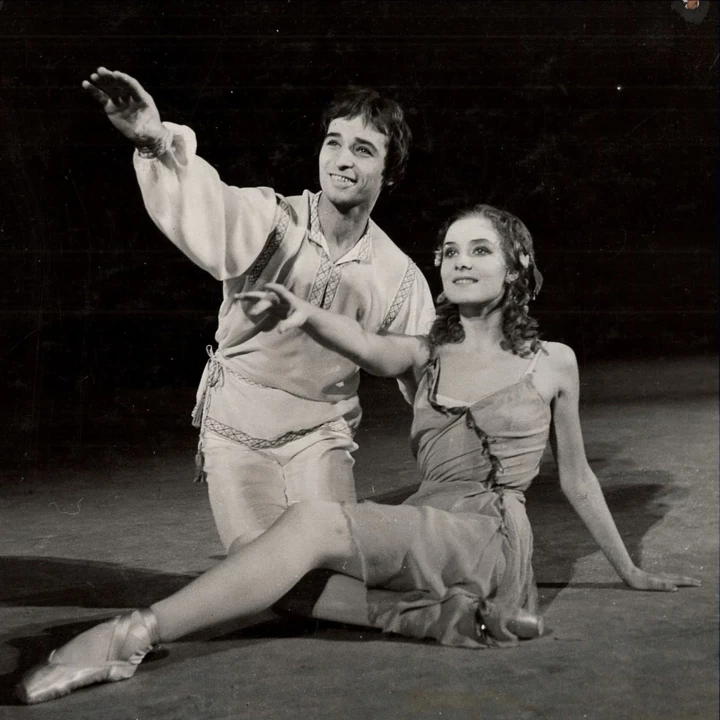
For Tatyana Lyozova, the performer of the part of Mavka, this performance is an example of how original Ukrainian classics can be. The ballerina speaks of “Forest Song” as an academic production with all its key components – a lyrical “white” act, pas de deux (French: pas de deux – “step for two”, i.e. a duet), complex technique and classical costumes. At the same time, she emphasizes that along with this, there is always a tangible Ukrainian character, which cannot be confused with any other. “For me, this performance is a standard of Ukrainian ballet classics,” she says. “There is everything that we are used to calling classical ballet, but at the same time – national costumes, everyday scenes, in particular weddings, traditions and elements of folk dance, images of nature, the land from which all history grows.”
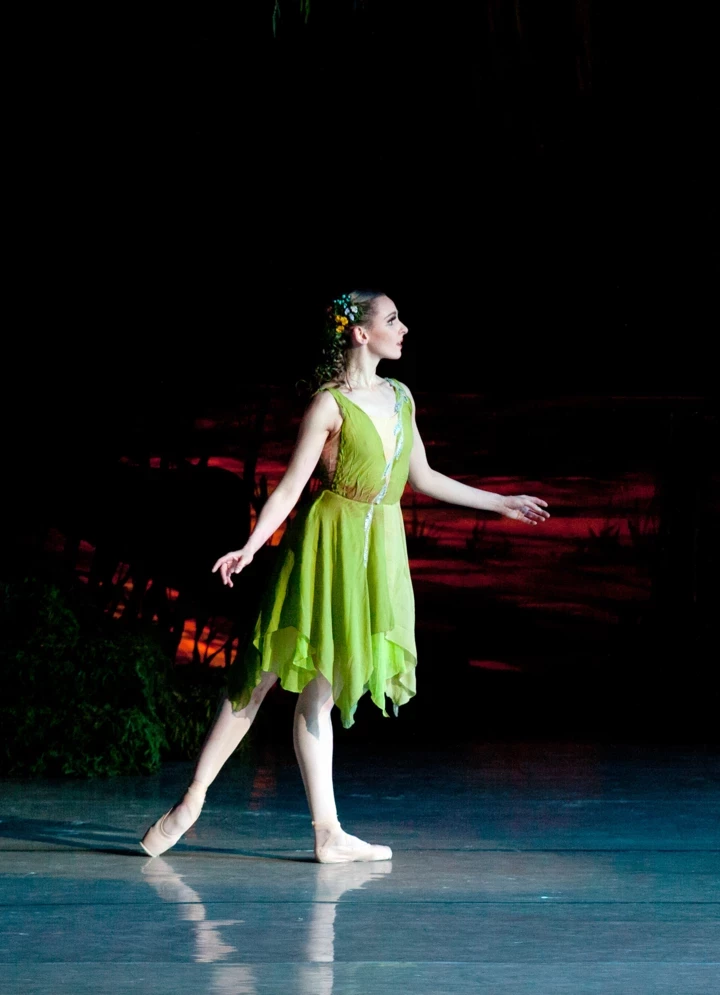
The ballet recreates the metaphorical confrontation between the world of people and nature. This is especially clearly traced in the development of Mavka's image. She is not an abstract figure, but a living being, whose body language changes along with the space and circumstances in which she finds herself. At the beginning of the performance, her movements are born from the forest – light, full of the joy of being. “When she wakes up in her kingdom, in the forest, she is very natural, rejoicing in every twig, every leaf,” explains Tetyana. Meeting Lukash becomes Mavka's first experience of a different corporeality – touch, closeness, gestures that are familiar to him, but new and incomprehensible to her. When Mavka enters the human world, her plasticity changes even more noticeably: a different weight, tension appears, even the positions of the hands and turns acquire a new character. “When she comes to the village and takes up the sickle, she becomes completely different,” says Lyozova. “Both her perception and the content of her movements change. She tries to adapt.” In this transformation lies one of the key dramas of the play: the world of people demands the renunciation of natural freedom, and the body is the first to react to this loss.
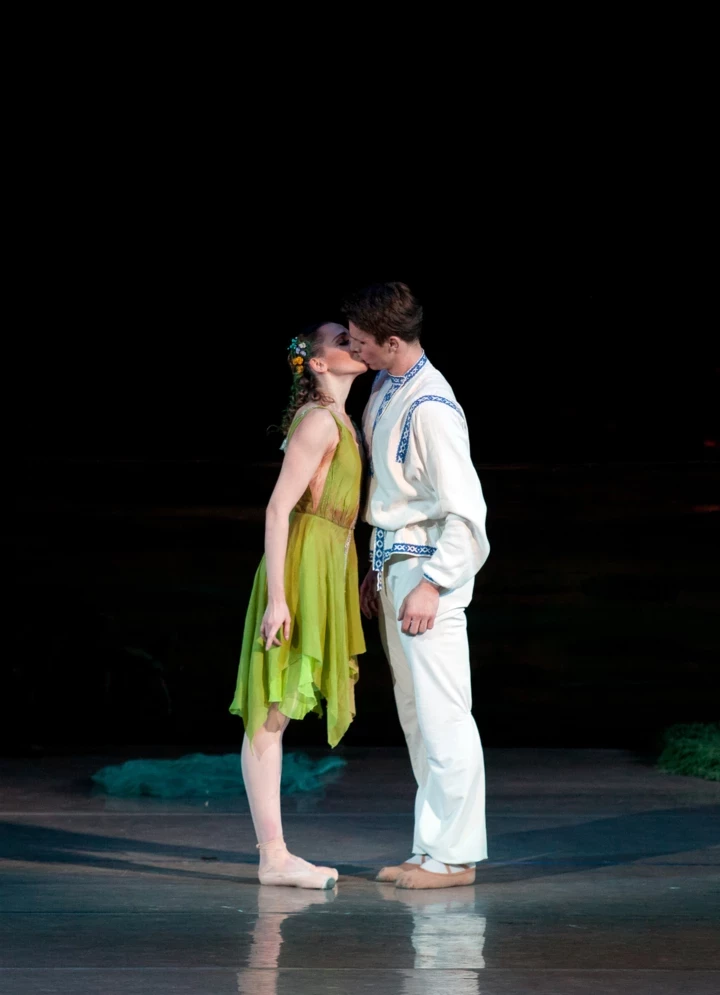
Prime Minister Yaroslav Tkachuk, the performer of Lukash's part, speaks of his role as the existence of three Lukashs at once. The first is a young man who lives in the moment, without reflection, open to miracles and the forest. The second is a person who returns to the usual social space and gradually begins to live by its rules again, pushing everything related to freedom to the background. The third is Lukash, devastated after loss, after realizing his betrayal.
“The most difficult thing is not the technique, but being in all these images,” admits Tkachuk. “The wedding scene holds a special place in this evolution – the moment of a sharp break, which becomes key in the ballet. After this celebration, a striking contrast sets in. When Lukash sees Mavka and realizes what he has done. He has offended not only her – he has lost himself. I never go backstage without tears after this scene.”
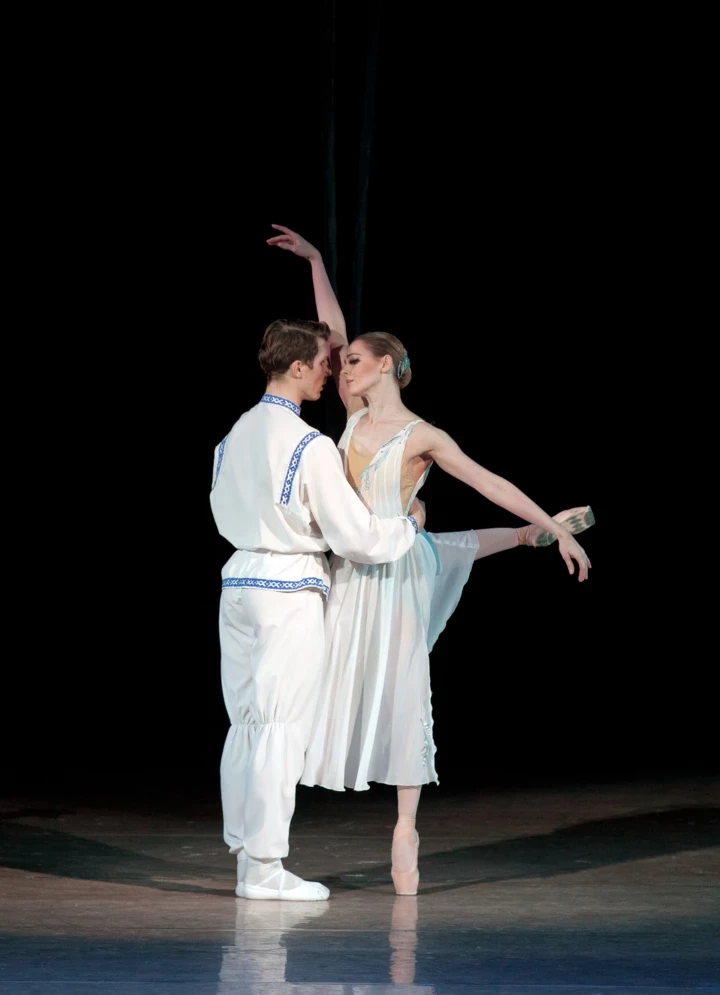
An important role in this story is played by Kylina, a character who in many readings appears negative, but in Irina Borisova's performance she acquires a different depth. For the ballerina, her Kylina is not the embodiment of evil, but a woman with her own painful story. “She is not evil,” says the first soloist. “She is unhappy. She wants a family, a home, support. She strives to live, like everyone else, a normal, understandable life.” It is this down-to-earthness, according to Borisova, that comes into tragic conflict with Mavka's world, where romantic love reigns. “Kylina is a turning point in this story,” emphasizes Irina.
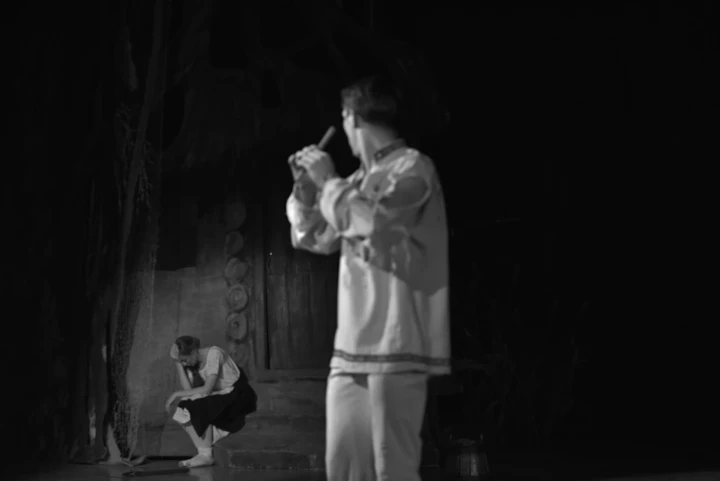
Tetyana Lyozova, Yaroslav Tkachuk and Iryna Borisova are the bearers of the choreography, which was passed down primarily through the lived experience of teachers and tutors who remembered previous editions of the ballet. Yaroslav reminds that the current stage version comes from the 1991 revival edited by Viktor Litvinov, but the history of the production is much broader. After the premiere in 1946, “Forest Song” repeatedly returned to the stage in new readings. “Every ten to twenty years, a certain renewal took place,” explains the premiere. “Generations, artists, choreographic art itself change. The performance lives and develops, exists as a living tradition, passed down from generation to generation.”
Of course, this requires a careful and responsible attitude to the material and a willingness to let it pass through the modern body. “Even today, after many years of performance, we continue to discover new colors: pauses, accents, a different sense of space.”
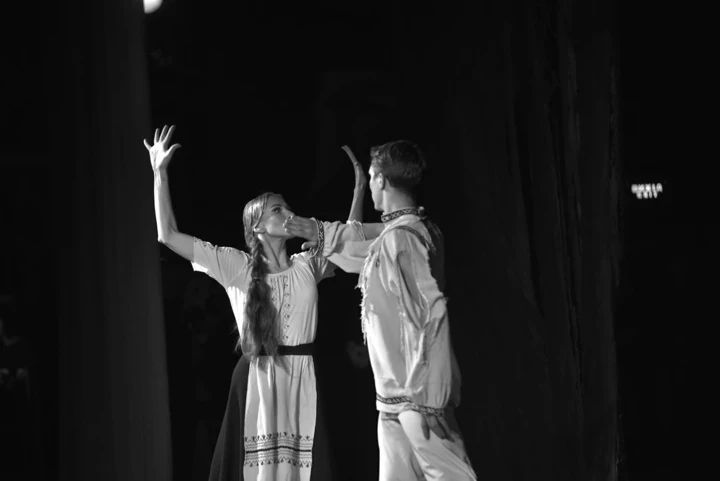
It is thanks to this that “Forest Song” did not become a museum exhibit, but remained a living performance, notes Tetyana. She recalls the teachers who were responsible for the purity of the performance, followed the logic of the choreography, and at the same time understood: ballet cannot remain frozen. Tetyana adopted this performance, as they say in ballet, “from toe to toe” from the legendary Potapov sisters – Elena and Varvara. The ballerinas not only transmitted the movements, but also shared their own experience of the stage. “They told how they danced themselves,” recalls Tetyana. “And then they said: you can do not one pirouette, but two. Try it!”
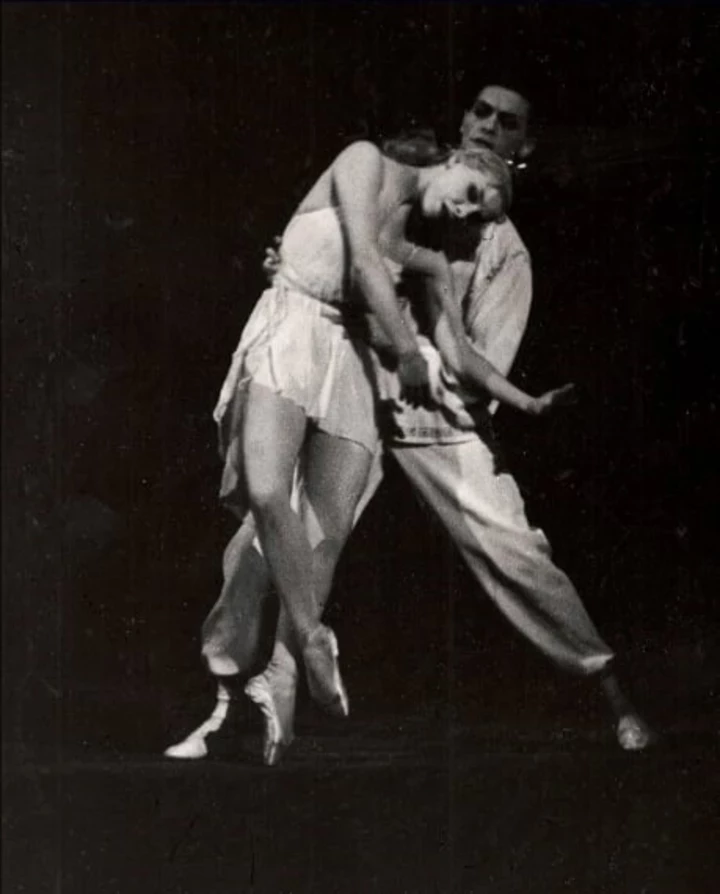
provided by the archive of the National Opera of Ukraine
The geography of the ballet “Forest Song” has long gone beyond the borders of Kyiv. In different years, the performance was shown on the stages of Donetsk, Odessa, Kharkiv, and Dnipro. It has all the grounds for a full-fledged international stage life.
“Yes, this is a purely Ukrainian product,” says Tetyana Lyozova, “but it is read through the music, scenery, and costumes. Here everything is clear without words.”
This is precisely what makes “Forest Song” unique: it tells about Ukrainian culture in the language of dance. The performance requires neither adaptation nor simplification and has every chance of representing Ukraine in the world with dignity.
Text: Katya Yeletskikh, author of the Ballet Maniac project
The author thanks Larisa Tarasenko, editor of the information and publishing department of the National Opera of Ukraine, for her assistance in preparing the material.