

Sylvia Plath is a famous American writer and poet who had a significant influence on the classical literature of the 20th century, although during her lifetime she published only one collection of poems, “The Colossus and Other Poems,” and her only almost autobiographical novel, “Under the Glass Cap.” In October 1962, four months before taking her own life, she wrote to her mother: “I am a brilliant poet, I have everything, I am writing my best poems, they will bring me fame.” We will tell you about the poet's difficult creative path, through depression and personal dramas, below.
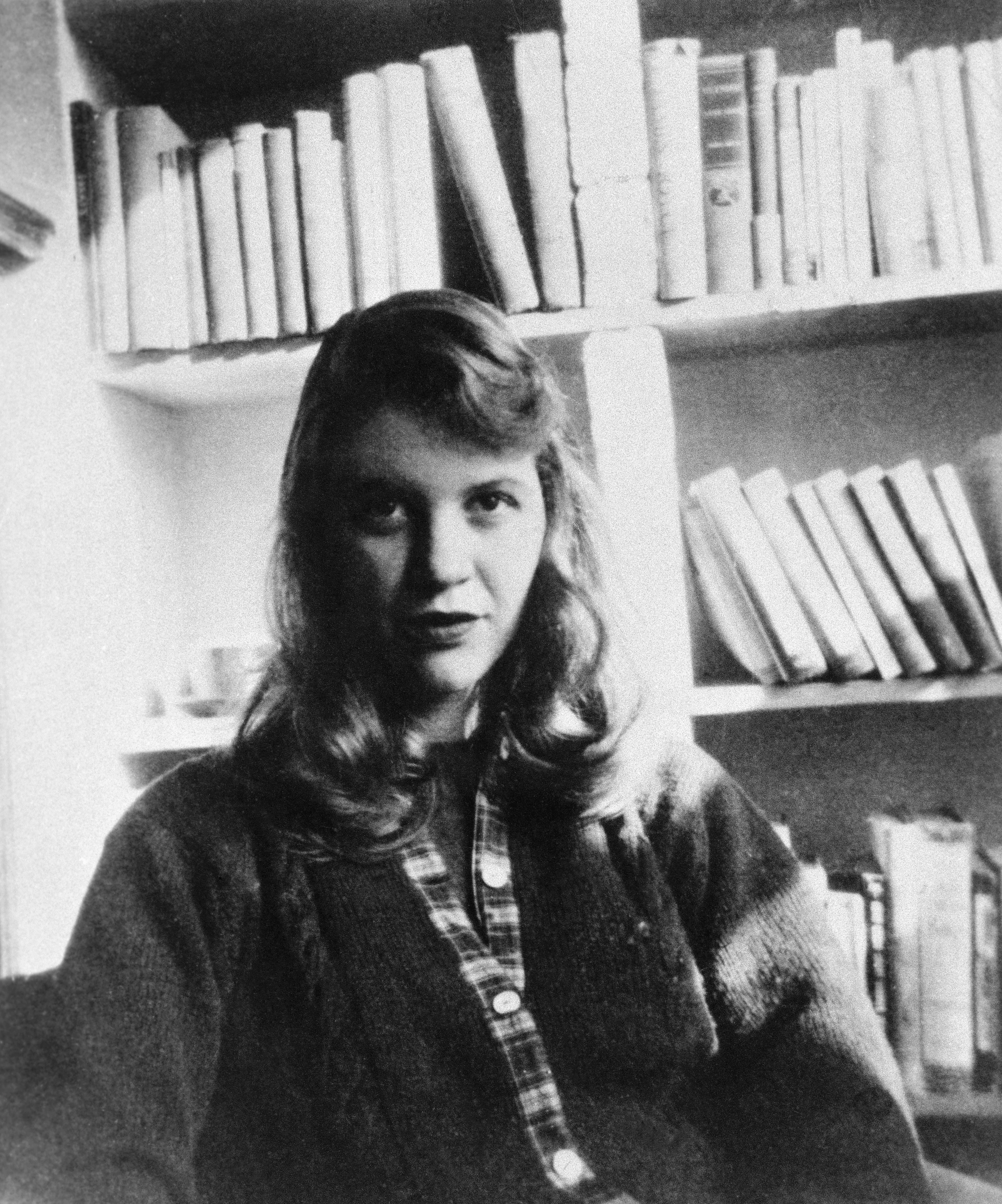 Sylvia Plath
Advertising.
Under the influence of his father
Sylvia Plath was born on October 27, 1932 in Boston to a family of immigrants. Her father, Otto Plath, a German, was a famous scientist, bee researcher, and professor at Boston University. Her mother, Aurelia Schober, an Austrian, 21 years younger than her husband, taught German at school and worked part-time at the university. Sylvia felt the strong influence of her father from childhood, loved him very much, although she suffered because of his strict upbringing methods. And as befits a professor's daughter, she always studied diligently to be an excellent student and meet Otto's expectations.
When Sylvia was 8 years old, her dear father passed away. She took this loss extremely painfully. And from that moment on, Plath began to write poems and publish in a local magazine. For almost the rest of her life, she tirelessly tried to comprehend the image of her father.
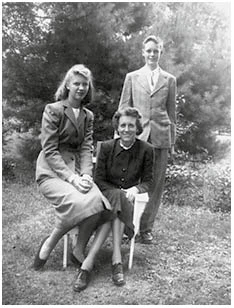 Sylvia Plath with her mother and brother
The poet's relationship with her mother was tense. Aurelia always paid more attention to her sickly son Warren, and after her husband's death she worked hard to provide for the children. Sylvia, on the other hand, found solace in science and art, never overcoming the syndrome of the excellent student. And although her father was no longer around, she tried to be the first everywhere: at the Bradford school she received the highest scores, tirelessly published poems and stories, won prizes and grants, was the editor of the school newspaper, entered the prestigious Smith College, played in amateur performances and even took up painting. Yes, Sylvia skillfully drew with pen and ink.
Internship
One of the greatest achievements of 20-year-old Sylvia Plath was winning a creative competition and an internship at the fashion magazine “Mademoiselle” in New York. The events of that summer of 1953 she would later describe in detail in her only almost autobiographical novel, “Under the Glass Cap.” The frequent mood swings that appeared after her father's death only intensified. In the end, after spending a busy and emotionally exhausting month in New York, the girl returned home completely broken.
Depression
Extremely upset, Sylvia withdrew into herself, lost her desire to create, stopped keeping a diary (which she had kept since the age of 12), and began planning suicide. In the novel, she recalls how she initially made unsuccessful attempts to cut her wrists, hang herself, and drown herself. Her attempt with a sleeping pill also failed.

Sylvia was placed in the elite McLean psychiatric clinic in Belmont, which was paid for by a wealthy benefactor. The poet was diagnosed with bipolar affective disorder, which at that time was treated with electroshock therapy (these sessions are very vividly described in the novel). After a year in the clinic, Sylvia nevertheless returned to her studies: she graduated from college with honors, received a Fulbright scholarship and admission to Cambridge. In Britain, Plath had to study a lot, suffered from the cold climate, was often ill, and also suffered from a breakup with her lover Richard Sassoon. Against the background of these eventful events, she again developed depression.
Love and more
In February 1956, at one of the literary parties, Sylvia met the talented English poet Ted Hughes. She wrote about him in a letter to her mother: “I have fallen mortally in love. This love can cause me terrible pain… I feel that everything that has happened to me in life – reading books, relationships with people, poetry – all this was work to prepare me for these feelings.” After a few months of a stormy romance, the young poets got married and went on a honeymoon to Spain.
The success of Hughes's first collection, “The Hawk in the Rain,” allowed the couple to move to the United States for two years. Plath found a job in the registry office of a psychiatric clinic (where she had been treated at one time), and also attended a creative workshop at Boston University. In 1959, the poetess became pregnant and the couple returned to England. The following year, her first collection of poems, “The Colossus and Other Poems,” was published, and on April 1, their daughter, Frieda, was born. In addition to her maternal duties, Sylvia also acted as a secretary, helped her husband with publications, but did not give up her own creativity. Perhaps the most important problem of their couple was that both artists were self-sufficient and did not want to give up their ambitions. A film was even made about their difficult relationship, “Sylvia” (2003), with Gwyneth Paltrow and Daniel Craig in the lead roles.
Later, Plath learned that Ted was having an affair with the lodger's wife. Her name was Asya Gutman, she was married for the third time, she was engaged in translations, painted and wrote poetry. In the end, Ted left the family, Sylvia and the children returned to London. And at the end of 1962 they filed for divorce. These difficult times in the poet's life turned out to be surprisingly productive: in 70 days she wrote the novel “Under the Glass Cap”, in a few months – a collection of poems. Sylvia Plath's poetry of the last period – became a classic of American literature of the 20th century.
 “Under the Glass Cap”, Sylvia Plath
Early in the morning of February 11, 1963, Sylvia brought the children sandwiches and two glasses of milk, left a note in the hallway asking them to call a doctor, and then locked herself in the kitchen, stuck her head in the oven, and turned on the gas. The poetess was 30.
The Sylvia Plath Effect
The Sylvia Plath effect is the name given by psychologist James S. Kaufman to the pattern according to which, of all the creative professions, poets are most prone to mental disorders. In 2001, The Journal of Creative Behavior published his large-scale study — Kaufman analyzed the lives of more than 1,620 writers of various genres and 520 biographies of female artists. The psychologist concluded that among the creative professions available to both sexes, women, in particular poets, are most prone to mental illness.
Text: Oksana Bagriy