

For Crimean Tatars, unity is not just a word, but a survival strategy, tempered by decades of exile and the struggle for the right to be at home. Today, in the conditions of a new “hybrid deportation”, preserving traditions becomes an act of resistance and a form of preserving one's own identity. Leviza Dzhelialova, wife of the Ukrainian ambassador to Turkey, shares a personal story about how family holidays, coffee rituals and an unbreakable connection with Crimea help her people remain themselves, wherever they are.
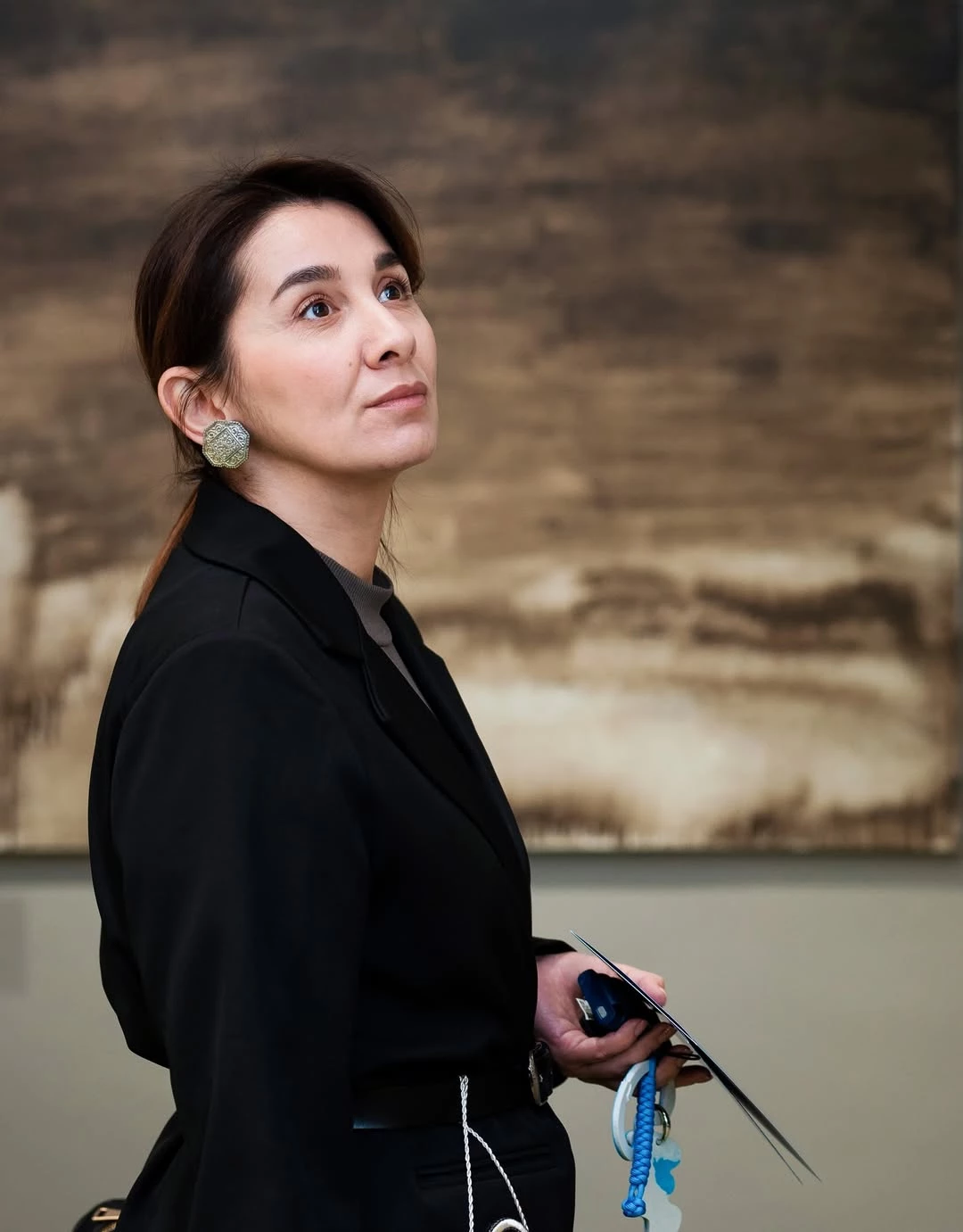 Leviza Dzhelialova
Unity as a survival strategy
For the Crimean Tatar people, unity is not just a beautiful symbol. It is a vital necessity that has been formed over centuries. In the most tragic times – during the deportation of 1944, during the years of exile and during the return home – it was unity that helped us not to dissolve, to preserve our language and culture. It is a daily tradition to be together in joy and in trials, despite all attempts to separate us.
Crimea is our only place of strength
Crimea is not just a geographical point or a historical homeland. It is a deep, almost intangible connection that holds us together. Our grandparents in places of exile described Crimea as a paradise. When we returned in the 90s, the reality was different: they did not wait for us, they feared us because of Soviet myths. But despite the hostility and difficult conditions, we were infinitely happy, because we were finally standing on our own land. Today, being forcibly separated from Crimea, we feel the loss of this inner support especially acutely.
A house open to everyone
Hospitality in our culture is inextricably linked to family life. We grew up in large families where three generations lived together, and this taught us respect for our elders. Among the Crimean Tatars, it is unacceptable not to show respect to someone who crossed the threshold. There is a legend: the prophet descended to people in the guise of a poor man. He blessed those who helped him selflessly. Therefore, we meet every guest with an open heart. This support was my salvation when Nariman was arrested. (Nariman Dzhelal is a Ukrainian Crimean Tatar politician who was arrested in occupied Crimea in 2021 – ed. note). For three years, there was not a single day without guests in our house. This continuous presence of people gave me the strength to continue the fight.
The magic of Crimean coffee: ritual and psychotherapy
Coffee is the heart of our hospitality. Even in the most difficult times, when coffee was expensive, people roasted chickpeas to preserve this ritual. We have coffee for every occasion:
-
Saba qavesi — morning, for plans;
-
Aqşam qavesi — evening meal, for the family circle;
-
Köz aydın qavesi — coffee on the occasion of good news.
The process of preparation itself is a kind of “silent psychological session.” While the father slowly ground the grains in a hand mill (dehirmen), the guest had the opportunity to speak out, to be heard. And when the coffee was finally served, the pain had already been shared, and thoughts had been put in order.
Holidays as a bridge between generations
Our national holidays, Qurban bayram and Oraza bayram, are a time of absolute family unity. I remember as a child we would walk for kilometers through the fields to greet our older relatives. A special tradition is qoqu çırarmaq (“to take the smell of food out of the house”): we make chebureks and take them to our neighbors, sharing the joy. Children learn the main thing on these days – respect. They kiss the hands of their elders, placing them on their foreheads, and receive blessings. This is not just a ceremony, it is the transfer of the strength of the family.
Memory of May 18
Attending rallies in memory of the victims of deportation is something that has been etched in our DNA since childhood. We do this to never forget the crime against our people. After 2014, the occupiers banned mass gatherings, removed monuments, but they cannot remove memory. Now we gather in small groups, read prayers (dua) and continue to remember, wherever we are.
Life in “hybrid deportation”
Today we are again scattered around the world due to political persecution and pressure from the occupiers. We call this hybrid deportation. Crimean Tatars have ended up in different countries, and Turkey occupies a special place in this context.
One of the largest and oldest Crimean Tatar communities has formed here. It is very diverse: there are families who have been living in Turkey for several generations, and there are those who arrived very recently – after the occupation of Crimea and the start of Russia's full-scale war against Ukraine. Despite this diversity, the community remains active and united. Crimean Tatar societies, cultural centers, youth initiatives, Sunday schools, dance and music groups operate in Turkey. For decades and even centuries, they have preserved the language, traditions and memory of Crimea, while at the same time sensitively reacting to everything that is happening around Ukraine.
The Embassy of Ukraine, for its part, is trying to be close to this community. We support cultural and memorial events, join initiatives aimed at preserving the Crimean Tatar identity, work with youth, promote dialogue between Crimean Tatar organizations and Turkish partners, as well as between the Crimean Tatar and Ukrainian diasporas. For us, this is not just a matter of culture — it is a matter of solidarity, historical justice, and a common future.
Even far from our homeland, we maintain our way of life: we fast during the month of Ramadan with our children, drink coffee with friends via video call, maintaining closeness at a distance, and prepare traditional dishes – my son in Kyiv immediately asked to bake qurabiye cookies, because it's a taste of home. And preparing chebureks on the eve of Qurban bayram and Oraza bayram is another tradition that we preserve: the whole family helps with the preparation, molding, and frying. We also constantly discuss memorable dates for our people with our children, explaining their significance so that they never forget our history and pain and, upon returning to their homeland, can continue these traditions.
Culture as a tool of de-occupation
Crimean Tatar culture should not be an “exotic holiday item.” It is a living, organic part of Ukrainian identity. The state should support education in the language, cultural projects, and work with youth who are currently under occupation. This is the way to strengthen Ukraine's sovereignty. The more we show our culture as modern and open to the world, the stronger both Ukraine and the Crimean Tatar people will be.