

The Berlin Film Festival's main competition featured the drama “Rose” by Austrian director Markus Schleinzer. Sandra Güller played a veteran of the Thirty Years' War who hides her female identity for the sake of freedom. Film critic Sonya Vselyubskaya talks about how this film goes beyond queer drama and becomes a monument to women with a fate similar to Rose's.
Austrian Markus Schleinzer established himself in the European film industry long before he made his directorial debut. Working as a casting director for Michael Haneke on The White Ribbon, he apparently wasted no time in drawing inspiration from the European arthouse legend. For his films, he chooses stories that explore the darker side of humanity—Michael was about a pedophile who kidnaps a 10-year-old child, and Angelo was about the 17th-century European slave trade. These films also combine the rigor of form with the emotional alienation of their characters. His new film, presented in the main competition at the Berlin Film Festival, places a woman at the center of the plot for the first time. Schleinzer transports the viewer to the brutal social context of the Anglo-Saxon lands at the end of the Thirty Years' War, telling an extraordinary story about the historical price of women's freedom.
Advertising.
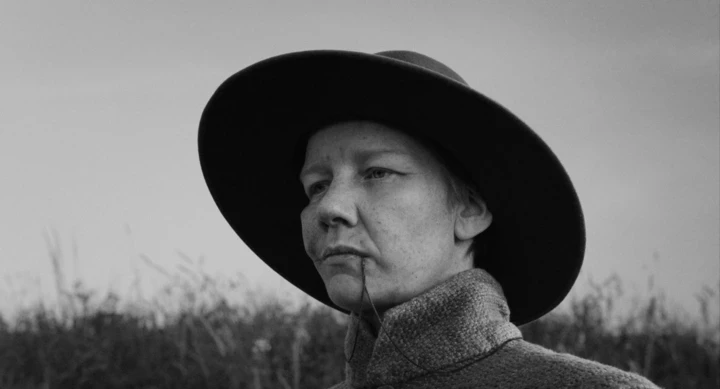
The main character, Rose, is a war veteran who has been hiding her female identity for years. The right side of her face is disfigured by a wound – during one of the battles a bullet passed through her cheek, leaving a frozen grimace of a half-smile, far from feminine. She wears this bullet as a pendant around her neck, having taken to chewing it in her mouth – as one of the mechanical adaptations of masculine mannerisms.
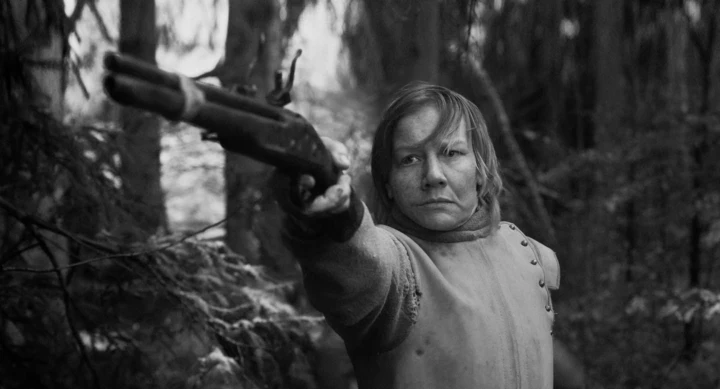
After the service, she settles in a small Protestant community in the village. With money and even a document giving her the right to a plot of land, she stays there until one of the residents offers her to marry one of his daughters. This is how Susanna appears in the film – a young girl who is frightened by the rather threatening image of Rose as her companion. She gets used to Rose's strange figure with no less surprise than the other locals. The women in the church look at Rose with curiosity, as if sensing her feminine energy combined with such an atypical status – she seems to beckon. The cold restraint in the attitude towards the wife, who, due to the lack of pregnancy after the wedding, risks losing her already low social status, becomes the central dramatic thread of the film. The development of their strange relationship relentlessly moves the narrative towards the predictable finale, emphasizing each careless decision that works like a domino effect.
Schleinzer, who also wrote the screenplay for the film, drew inspiration from real-life archival accounts and artistic depictions of women like Rose, figures who have appeared in countless historical accounts around the world since the Trojan War. “There's more freedom in pants,” Rose explains at one point in the film, a line that is indicative of the rural community's allegory for the position of women in Europe at the time. Men did not have to endure forced marriage, slavery, and rape to the same extent, but instead were able to study, work, and exercise freedom of choice—something women could never even dream of.
Exploring gender privilege through the historical lens of aesthetic cinema is not uncommon on festival screens, but it is often limited to queer love stories in a modern way. Rose goes far beyond this, demonstrating that adopting a different gender role was not only a libidinal whim, but also a desperate attempt to gain freedom – at the cost of war, breast binding and loneliness as a result. There is a scene early in the film when Rose is building some kind of structure in the forest, and a bear appears from the bushes. She freezes like a stone statue, suppressing fear with an air of stern confidence – and thus survives. Presumably, this is how women in the struggle against fate, fighting for the privileges of male autonomy, from Mulan to Joan of Arc, felt. In this sense, “Rose” works convincingly as a political drama—as a story of nonconformity, open to numerous interpretations.
The unobtrusive voice of the narrator creates the effect of a tragic parable, elevating Rose's story to a collective portrait dedicated to many other fates similar to hers. The fields of picturesque expanses of Austrian nature, shot in black and white, resemble realistic paintings that, like the heroine herself, are ahead of their time. And even when the film's drama gains tension, its slow, contemplative rhythm remains true to itself.
German star Sandra Güller continues to outdo herself. Only a few years ago, having played the creepy role of a Nazi's wife in “Zone of Interest” and received an Oscar nomination for the family drama “Anatomy of a Fall”, she is receiving more and more interesting offers. In an interview with the Hollywood Reporter, she admits that she was attracted to “Rose” by the unusual script, in which she saw the idea of creating a kind of monument to such women: “It was really difficult for me to play someone who disguises herself like that and has such a difficult life story. I had never done this before.”
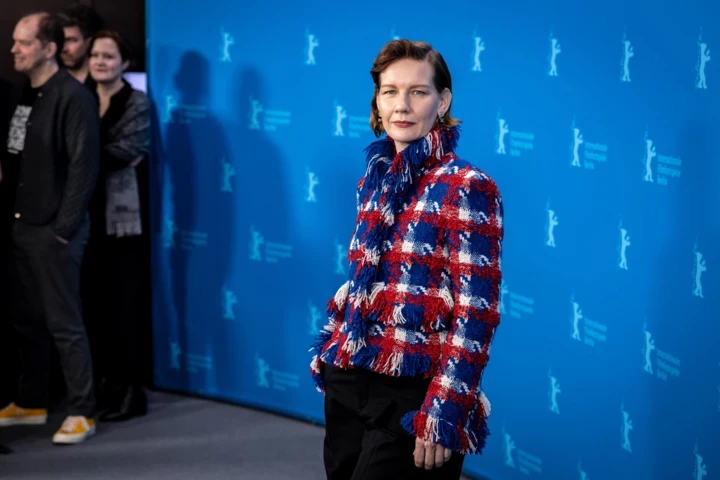
And yet, it seems that Guller is up to any role, because with the performance of Rose she only expanded her acting spectrum, demonstrating a fascinating mastery of facial expressions and body language, which takes precedence over dialogue. Guller believes that such films are not made today for no reason, because now the freedom of people who do not fit into certain frameworks is again under threat: “I do not want this – not for myself, not for anyone on this planet. Every person has their place in this world and this is a universal human right. That is why we made this film.”
Although the actress prefers European independent cinema, we will soon see her in international projects – including with Tom Cruise in Iñárritu's new film “Digger” and in the sci-fi film “Project Hail Mary” with Ryan Gosling.