

For Valentine's Day, Vogue Ukraine's editorial team offers its own selection of the best films about love and sex: here is a sophisticated story about vampires by Jim Jarmusch, an aesthetic film by Wong Kar-wai, and the erotic “Dreamers” by Bernardo Bertolucci. Love is a feeling that is beautiful in its diversity – as are the films about it.
“Only Lovers Left Alive”, 2013, directed by Jim Jarmusch
Advertising.
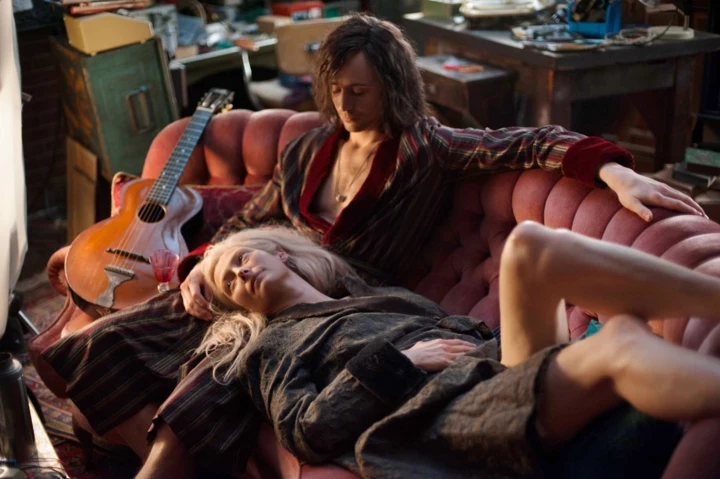
This film is a sophisticated meditation on love, art, and eternity. At the center of the plot are Adam and Eve (the incomparable Tilda Swinton and Tom Hiddleston), two immortal lovers who exist outside of time, watching the world around them decay. Yet they maintain their passions – for music, literature, walks in the night city, and for each other.
Jarmusch creates a special cinematic alchemy: nighttime Detroit and Tangier shimmer like fragments of the past, and love here is perceived as a ritual, as a codependent existence of “two.” And if this film could be listened to instead of watched, it would still be enchanting – a hypnotic soundtrack with guitar riffs and deep melancholy enhances the feeling of infinity, the ghostliness of existence and gentle decadence. This is a film about love that survives despite everything, even when the world around it falls apart.
Yulia Kostetska, publisher of Vogue Ukraine
“Secretary”, 2002, directed by Steven Sheinberg
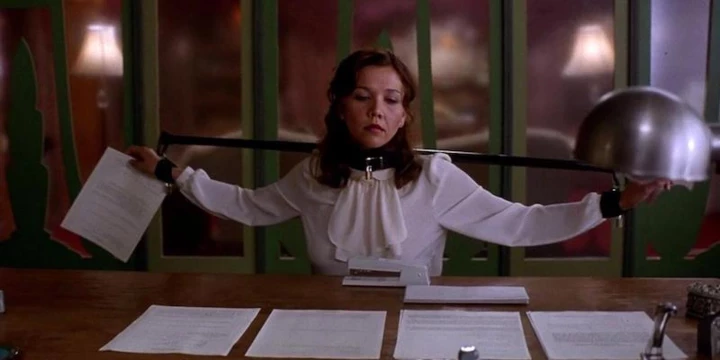
This story of acceptance, submission, and dominance won numerous awards at international film festivals, including Sundance, and actress Maggie Gyllenhaal, who played the lead role in it, received a ticket to big cinema.
The genre of “Secretaries” is defined as a dramedy: indeed, there is a lot of irony and humor here, however, the story does not become less resonant from this. The main character, Lee Holloway, who is discharged from the hospital after rehabilitation due to self-harm, completes speed typing courses and finds a job as a secretary in Mr. Grey's office. This name is not an homage to “50 Shades of Grey”, which appeared much later, in 2015, but an appeal to the “grey” spectrum, to which psychiatrists and sexologists attribute BDSM preferences.
Mr. Grey turns out to be a perfectionist with dominant tendencies, and the obedient Lee quickly finds solace in the fact that someone is finally taking control of her life. The metal box in which the girl keeps her sharp blades to cut her own thighs and a kit for sterilizing them soon flies off a bridge into the river – because Mr. Grey decided so, and Lee obeyed – and it turns out to be a complete liberation for her.
The film is captivating in how accurately and tenderly it demonstrates the evolution of the main character – when a young woman discovers her own sexual preferences, her wardrobe and posture change accordingly. But what captivates me most about “Secretary” is not the disclosure of the topic of BDSM (I generally think that hitting people is a bad idea). What fascinated me most was how this story reveals acceptance – of yourself and your unconventional sexuality, your partner for who they are. And the willingness to make sacrifices for the sake of a relationship.
Despite scenes of male and female masturbation, self-harm, and whipping, this is a very moving movie that appeals to the best in you.
Alena Ponomarenko, beauty editor of Vogue Ukraine
“Call Me by Your Name”, 2017, directed by Luca Guadagnino
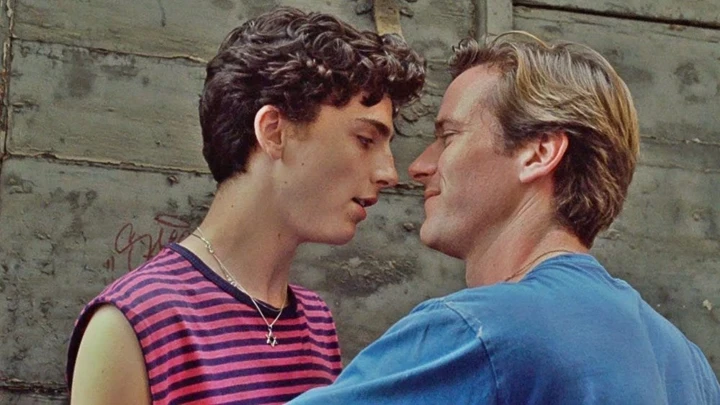
Summer 1983. A small town in northern Italy, where time slows down. Morning light filters through the wooden shutters, the water in the old stone pool is always a little warmer than you'd expect. The dining table is set with fresh fruit and wine, dust rises under the wheels of bicycles, and cigarette smoke hangs in the air during the long evenings. In this cozy, almost pastoral world lives seventeen-year-old Elio – a young man who spends the summer on a bohemian estate with his family. But when Oliver – a charismatic, self-confident student who becomes Elio's father's assistant – joins them, the very rhythm of this summer changes subtly.
Luca Guadagnino doesn't just tell a love story – he captures its elusiveness, beauty and the pain that remains after. There are no sharp plot twists or excessive drama – just the natural rhythm of feelings that ripen like peaches on local trees. And as this summer comes to an end, at the most crucial moment, the silence is filled with the words of Elio's father. It is one of the most sensual and wise scenes in cinema about the acceptance and value of feelings, no matter how fleeting they may be. And in the finale, to the song Visions of Gideon by Sufyan Stevens, you realize: some of the best moments in life may last only one summer, but their echoes are enough for a lifetime.
Maryna Shulikina, editor of Vogue Ukraine
“The Dreamers”, 2003, directed by Bernardo Bertolucci
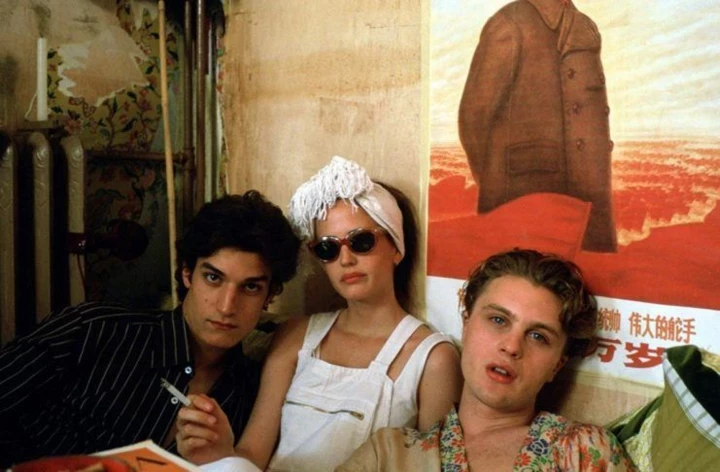
Sensual Eva Green in a red beret and velvet minidress, ironic Louis Garrel with a cigarette in his mouth, and a naive American tourist played by Michael Pitt looking for adventure in Paris: anyone who has seen Bertolucci's “The Dreamers” at least once in their life will hardly be able to forget this sensual film about the sixties, youth and sex.
The film is set in Paris in 1968 and tells the story of the relationship between three friends: an American student named Matthew (Michael Pitt), who has come to France, and young Parisians, brother and sister Theo and Isabelle (played by Louis Garrel and Eva Green). The trio of young and beautiful people are swept up in the whirlpool of the student revolution, but no less passions take place in Isabelle and Theo's apartment, where they invite Matthew. The friends watch movies, take baths together, eat and make love, demonstrating that when you are young and free, there are no limits to discovering yourself.
“The Dreamers” is the penultimate film at that time by the 63-year-old legend of world cinema Bernardo Bertolucci, shot long after his masterpieces “The Conformist”, “Last Tango in Paris”, “The Last Emperor”. Bertolucci made a complex, intellectual, deep film in which he reflects on history and revolution, culture and philosophy, but in “The Dreamers” extraordinary sensuality and sometimes undisguised, sharp eroticism come to the fore. It is this combination that makes the film interesting both to a wide audience and to cinephiles who appreciate “The Dreamers” for the challenges the director poses to the viewer: to reflect on Godard and the revolution while looking at the openly sexy Eva Green or Louis Garrel.
By the way, the film was actually the film debut of Eva Green, who was 23 at the time, whom Bertolucci saw on the stage of a Parisian theater. In “The Dreamers”, she was not afraid of nude scenes, which immediately cemented her reputation as one of the most daring actresses of her generation.
Daria Slobodianyk, culture editor, Vogue Ukraine
“In the Mood for Love”, 2000, directed by Wong Kar-wai
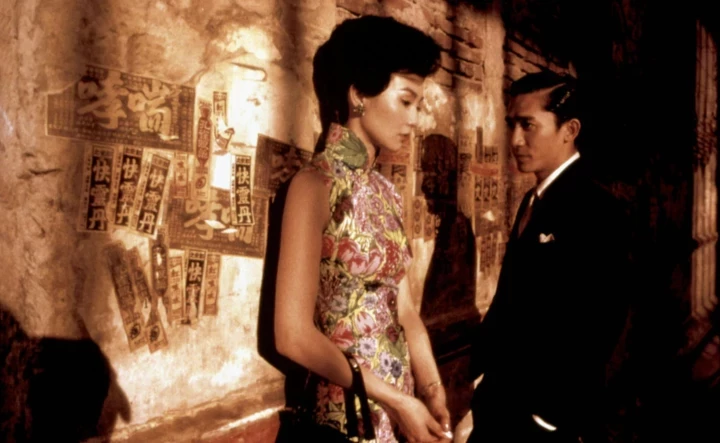
Wong Kar-wai's “In the Mood for Love” was released in 2000, when the world was watching rom-coms like “Bridget Jones's Diary” or “Notting Hill,” and here he was offered a completely different perspective on how to talk about love. In the frame, we do not see not only sex, but even the main characters' embraces, but we feel the depth of their feelings.
With his trademark poeticism, Karwai tells the story of journalist Chow Mo Wan (Tony Leung) and Su Li Zhen (Maggie Chung), who become neighbors. Both are married and their partners are often late for work. Chow and Su are often bored alone in their rooms and begin to communicate with each other. Soon a friendship develops between them, and then more romantic feelings. A separate pleasure of the film is its visual content.
Using the play of light, Karwai demonstrates the changes in the feelings of the main characters, their development and the understanding that this is a path to nowhere. The same role is played by the images of Su Lizhen, who changes as many as 46 qipao dresses throughout the film. Closer to the end of this love story, they become more and more pale….
Violetta Fedorova, editor-in-chief of vogue.ua
“Lobster”, 2015, directed by Yorgos Lanthimos
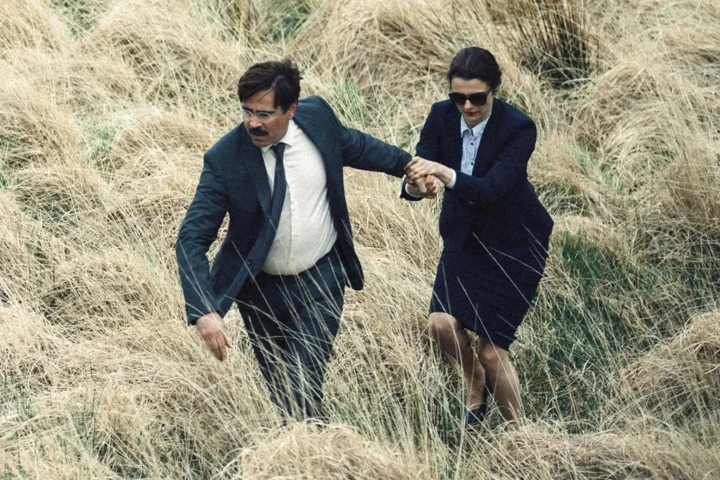
If you want a love movie that will knock you off your feet, The Lobster is the one. It's a dystopia where single people are forced to find a partner in 45 days or they'll be turned into animals. The main character, played by Colin Farrell (my personal crush), ends up in a hotel where strict rules dictate what a “real relationship” should be.
Lanthimos shows love not as something sublime and romantic, but as a social mechanism, where choices are limited and feelings are regulated. But even in this cold, mechanical reality, the real breaks through – something that does not obey the rules. This film questions everything we know about love, forces us to rethink its nature, and leaves in its wake a slight shock and a lot of reflection.
Like in these films, for me love is about a bond that transcends time, about the trials it endures, about how love takes the most unexpected forms, about devotion and about what cannot be explained in words. Perhaps these films will not give you a feeling of lightness and love, but they will be remembered and, perhaps, will leave a mark on your heart and touch something deep, real.
Yulia Kostetska, publisher of Vogue Ukraine
“The Life of Adele”, 2013, directed by Abdelatif Kechiche

In 2013, Abdellatif Kechiche's “The Life of Adele,” based on Julie Marot's graphic novel “Blue is the Warmest Color,” won the top prize at the Cannes Film Festival and broke my young heart, becoming the most moving film I had ever seen.
The touching picture outlines the great love between two women – from the first kiss to the fatal separation. Keschis created the most frank love story, and it's not just about the iconic sex scenes. The heroine Adele Exarchopoulos fantastically got used to the role of a confused girl. Her love, confusion, happiness and pain – all this Keschis captures with merciless tenderness, turning the story into a confession.
Léa Seydoux as Emma is magnetic and mysterious. She appears in Adele's life as an inevitability. It's just as difficult to leave her – Adele and Emma's breakup has become one of the most poignant scenes in the film.
“Women”, 2008, directed by Diane English
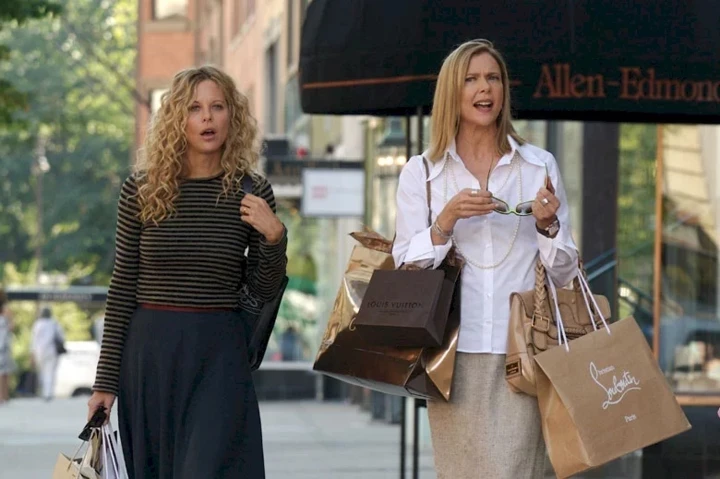
In my opinion, this comedy is a wonderful guide to love. Love first of all for yourself. Actresses Eva Mendes and Meg Ryan demonstrate two female images that are archetypal. I do not suggest that we take all the actions of these women as a model, but some moments will definitely resonate in the soul of each of us. After all, everyone is familiar with the feeling of ignoring yourself and your own needs, as Meg Ryan's heroine did in the first part of the film, and the arrogant behavior of Eva Mendes' heroine. But what you should definitely take to heart is the latter's phrase: “How can you not like me? Everyone adores me!”
And this film is exclusively about women and women's stories. There will be no men here.
Anastasia Yavorska, editor of vogue.ua