

On March 21, the world celebrates International Poetry Day. This is a great opportunity to immerse yourself in the world of Ukrainian poetry, especially that which is underappreciated and undiscovered by us. Especially for Vogue Ukraine, literary critic Vira Ageeva, professor at the National University of Kyiv-Mohyla Academy, laureate of the Shevchenko Prize, co-author of the podcast “Crazy Authors”, chooses poets about whom we should talk more – those who today sound especially modern, unanimous, and frank.
Mykola Bazhan
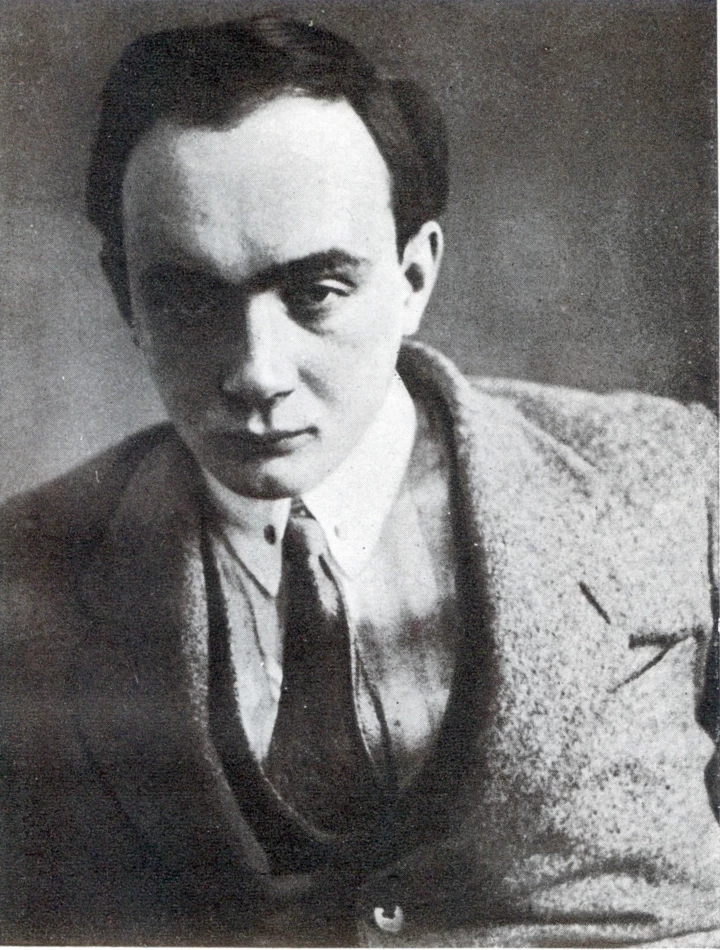
Mykola Bazhan is one of the most prominent poets of the 20th century, who in 1970 was nominated by Harvard University for the Nobel Prize.
Advertising.
If you want to get acquainted with Bazhan's legacy, you should pay attention to the new collection “Mykola Bazhan. Selected Poems”, published last year by Vivat. It brings together poetry created over 60 years, from “the revolutionary breath of the 1920s to the mature reflection of the 1980s.”
“Here you will meet a lyrical hero who fearlessly looks at life, an ideologist who seeks harmony in chaos, an artist whose words are an attempt to understand the eternal,” the publishing house says.
“Dandelion”
From under the eyelashes – a blue shadow, a sign of uncertainty,
And a pink mark remained on my chest here and there,
And he has already put his foot in the stirrups,
And his Basque horse is already spinning its mane.
Left alone, the nameless lover,
And looks at the path where the dust will fall.
One evening, like a whole day's work
It's over, she'll bring the child…
Vera Ageeva:
Bazhan is one of our strongest poets of the 20th century (along with Maksym Rylsky, Bohdan-Ihor Antonych, and Vasyl Stus). Today, it is Bazhan, with his understanding of the catastrophism of the era, who resonates with us the most. It was he who did the most in the 20th century to create a new language of poetry.
Volodymyr Svidzinsky
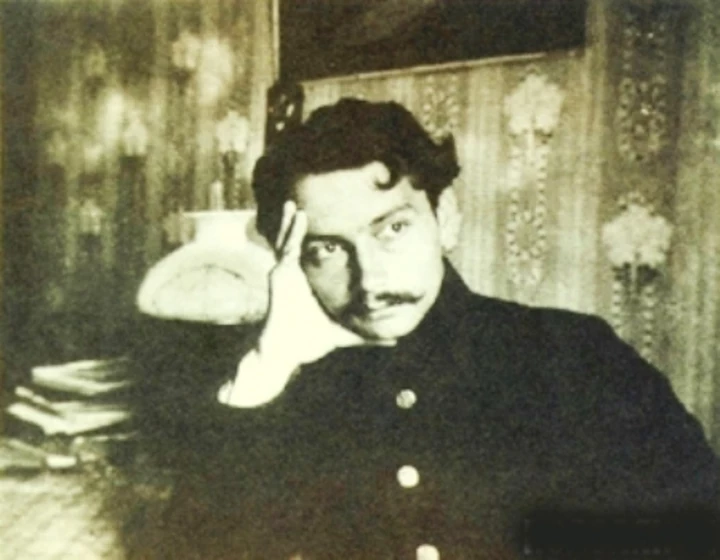
Ukrainian poet of the period of the Shot Revival, translator, literary critic. He grew up in the Vinnytsia region in the family of a priest, was fond of weaving, and traveled on expeditions throughout Ukraine.
The first collection was published in 1922. Svidzinsky was criticized for the absence of civic motives in his poetry, which, according to contemporaries, led to the poet's self-isolation. “This position is his only salvation and hope for survival. To close himself off in order to preserve himself. To shrink so as not to make a mistake in his own essence. To stand aside so as not to be an accomplice…” – wrote Vasyl Stus about Svidzinsky.
Svidzinsky's lyrics are intimate, surprisingly original, and hermetic. His last collection of poems during his lifetime, “Poetry,” was published in Lviv in 1940. The following year, Svidzinsky, who was then living in Kharkiv, was arrested on charges of anti-Soviet propaganda. The poet was killed in Kharkiv on October 18, 1941.
Many of Svidzinsky's poems were taken abroad, where his collection “Honey Picking” was published in 1975.
Transparent January opened the sky
And again he revealed light to the world.
The horizon is silvered in a gentle mist;
The day spread its brilliant facets widely,
And I look – and all the happy days,
That were burned to ashes in the sun's fire,
Like a fan, with a secret hand
Unfolded, they stand before me.
And the original hidden love
It floods the sluggish heart again.
Above the sprout, above the spring stream
I bow down and cry alone…
Who destroyed him? Whose hand?
The Danube River flows untouched.
Where is the fire in the dreamy twilight?
Where is the figure of a soap in white?
Vera Ageeva:
Svidzinsky is a chamber poet, but very sophisticated and profound.
Igor Rymaruk
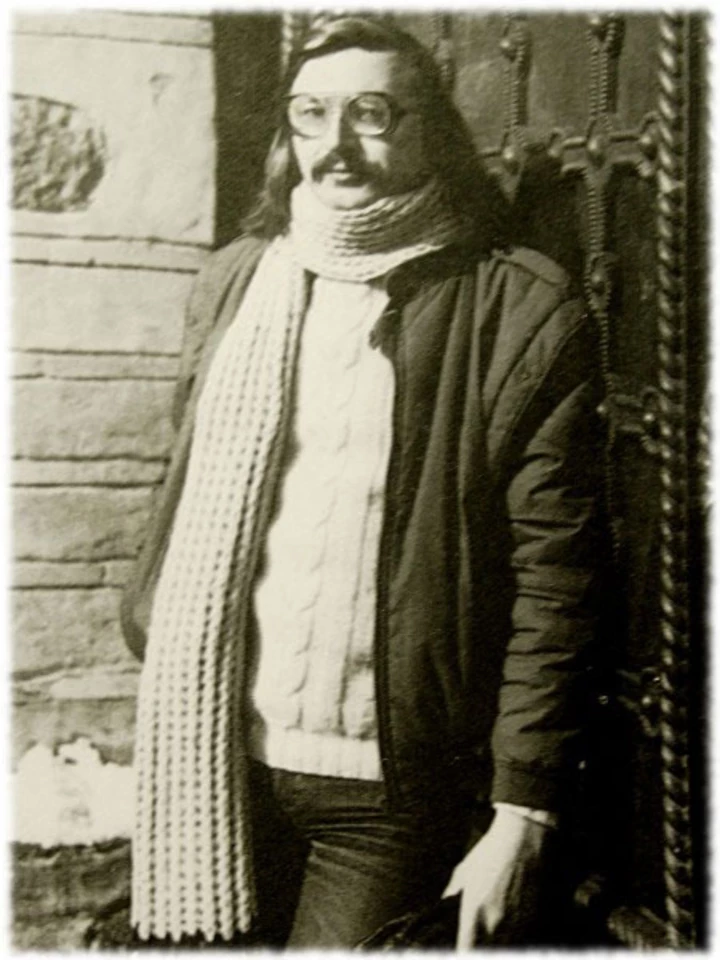
A bright modernist poet, philosopher; worked as a journalist and editor for most of his life. A follower of Mykola Zerov, an important figure in Ukrainian literature and culture of the 1980s, whose life was connected with Kyiv and Lviv.
Rymaruk's first collection, “High Water,” was published in 1976, and poet Viktor Neborak said of it: “A thin book of 70 pages, which easily fits in the palm of your hand, has set a new bar of quality in Ukrainian poetry. In literature, this phenomenon can be called a qualitative leap — a work (book, collection) appears that does not deny the previous high tradition, but raises it to one more level.”
In 1996, the collection “Golden Rain” was published in Ukrainian and German; and for the collection “Diva Obida”, which was published by the Ivano-Frankivsk publishing house “Lileya-NV”, in 2000 Rymaruk won the Shevchenko Prize. Rymaruk's lyrics are complex, filled with symbols and at the same time transparent and clear.
we will live
on a quiet, quiet shore
in the nursery, not yet scared
heresies as if in Foros
In eros, our watchman is awake.
our endless August
the imprints of your tanned body
will print on warm sand as
on a xerox, a secret document
sweet cuneiform knee
and elbows and knots
resounding with prophetic signs
hives still in honey haze
In exhaustion, I am our unreal past
like I'm digging up Troy
reads a sand angel by the moon
your photocopy.
Vera Ageeva:
It was Volodymyr Svidzinsky who was Rymaruk's favorite poet, a classicist and master of form.
Vasyl Holoborodko
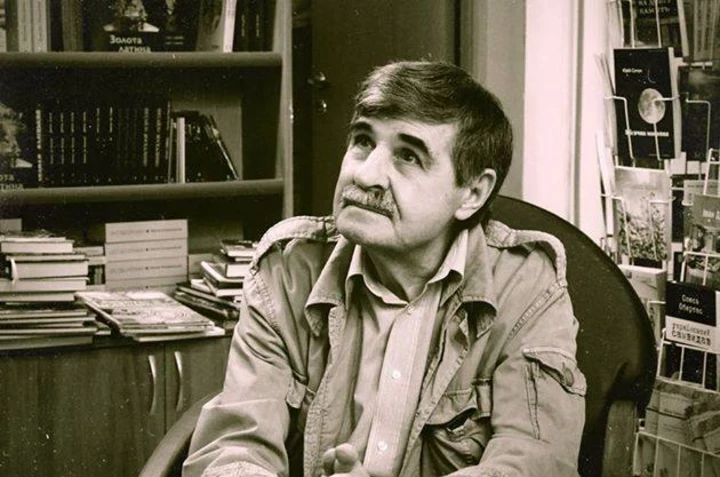
Poet of the sixties, laureate of the Shevchenko Prize. Vasyl Holoborodko, originally from Luhansk region, was once expelled from Donetsk Pedagogical University for distributing Ivan Dzyuba's work “Internationalism or Russification” among students. Holoborodko is a passionate connoisseur and researcher of Ukrainian folklore, which is reflected in his poetic language – figurative, metaphorical. The world in Vasyl Holoborodko's poems is strange, charming, magical.
Holoborodko was persecuted, he was not published for a long time, and his first poetry collection “Flying Window” was published in 1970 in Paris by the publishing house “Smoloskyp”. The first publication in Ukraine took place only in 1988. In 1990, the collection “Icarus on Butterfly Wings” was published, in 1992 – the collection “Kalyna about Christmas”, for both the poet received the Shevchenko Prize.
Among Holoborodko's admirers are writer Serhiy Zhadan, who calls him one of the “most original” Ukrainian poets, and Oksana Zabuzhko, for whom he is a poet whose “name was stolen.”
Just yesterday I would never have agreed to your departure,
You know how painful it would be for me to watch.
on the departing bus,
a bus, glazed by the gaze of my eyes.
It is a small consolation to know,
that you're not leaving forever.
And today
I happily place my right palm
by bus on the road,
the palm rises on four wheels,
the door opens,
you get on the bus,
you buy a ticket,
you sit by the window —
and my hand carries you to the stop,
Where should you go, where is closer to home?
How do you decide to come back?
get off at the same stop,
The bus will be waiting for you there.
from both my hands.
Vera Ageeva:
Among modern poets, Vasyl Holoborodko is perhaps the king of metaphors.