

Fluffy green moss, which usually grows on forest floor, is the new obsession of global brands.
At the autumn-winter 2026/2027 shows in Paris, Miu Miu, Hermès and Louis Vuitton used moss or grass to decorate the space. At London Fashion Week, the brand Thevxlley, whose creative director Daniel del Valle is not only a talented designer but also an experienced florist, presented a top decorated with plants, like a portable florarium.
Advertising.
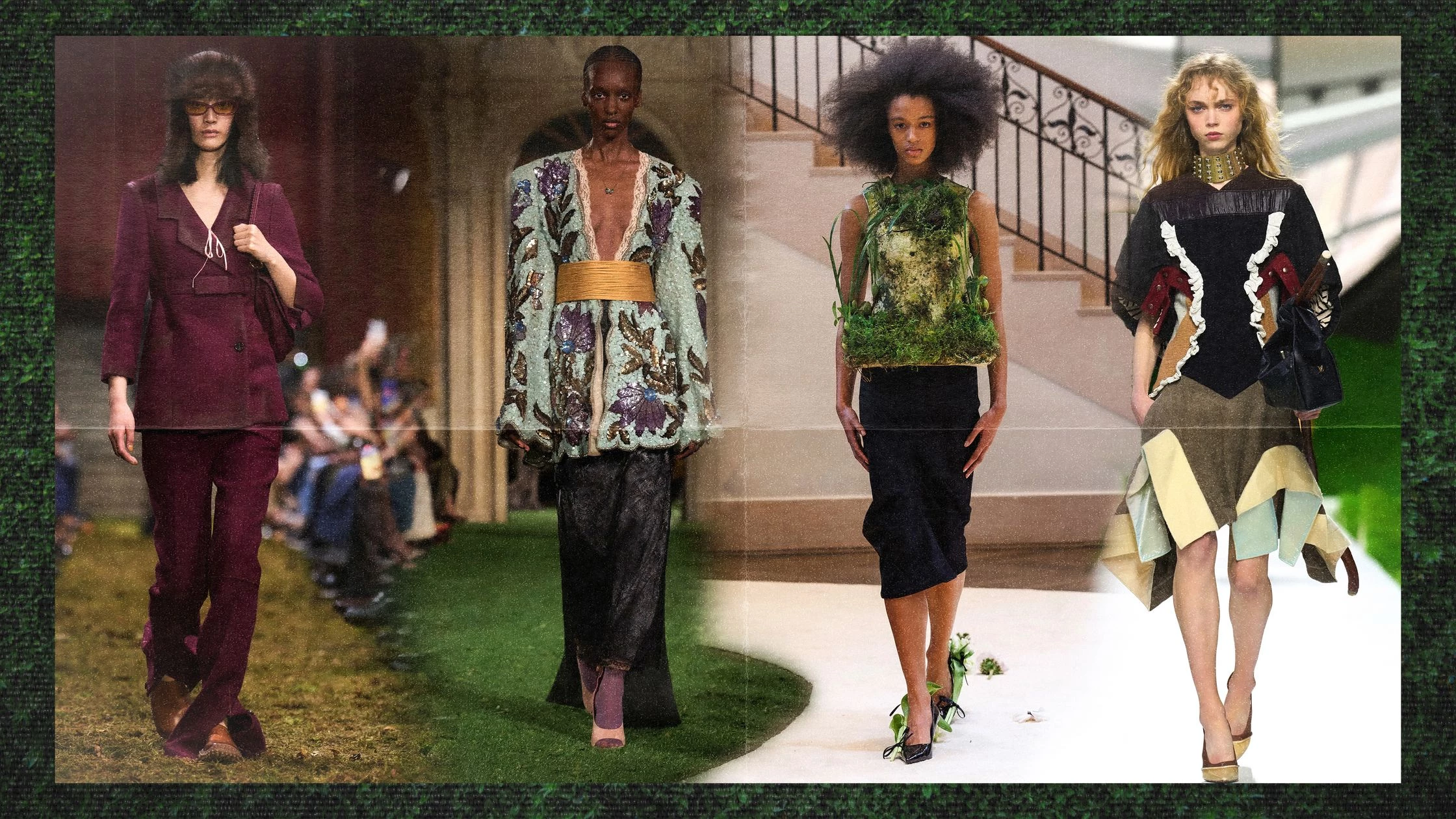
All this vegetation could be a sign of the internet's joke that we all collectively feel the need to “touch the grass,” meaning to get out of the house, turn off our phones, and be outside and surrounded by nature. It could also be brands' attempt to create a whimsical version of the real world. Whatever the case, fashion's love of greenery is particularly pronounced right now. Of course, as Vogue senior editor Laird Borrelli-Persson says, this isn't the first time a designer has held a show amidst the wild.
 Photo: Villa Eugénie, courtesy of Hermès
Here are just a few examples: Chanel’s spring/summer 2010 show was decorated like a barn, with models walking on grass and hay. For Dries Van Noten’s spring/summer 2015 show, models walked on a carpet by Argentinian artist Alexandra Keaioglu, specially created to resemble moss-covered forest floor. Dior built an elaborate garden maze for its spring/summer 2017 couture show, and Collina Strada held its spring/summer 2022 show at Brooklyn Grange, a rooftop farm.
However, moss is not only being considered by fashion designers these days. In recent years, moss seems to be becoming an increasingly prominent trend in floristry, interior design and landscape design as well. While many people previously perceived it as an annoying problem in the backyard, it is now being deliberately added to gardens, used in interiors in the form of moss carpets, both from live plants and textiles, and in such art forms as kokedama, or Japanese moss balls.
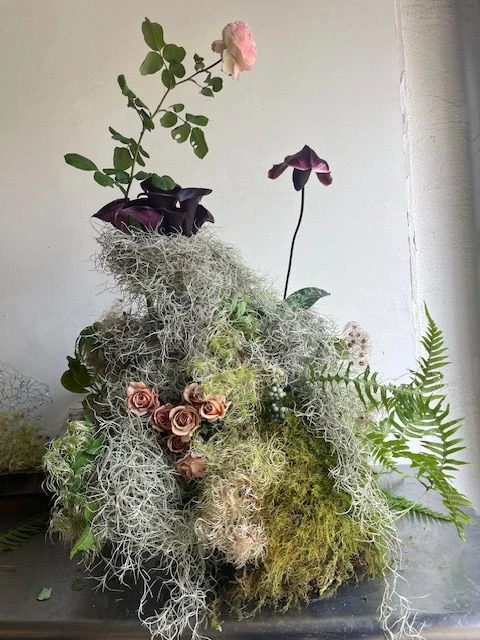 Photo: Courtesy of Brittany Asch
“Moss is definitely having its moment,” says florist Brittany Ash, founder of Brrch, who has created work for Adele, Rihanna’s 2018 Savage x Fenty show in New York, Mansur Gavriel, Glossier, Sandy Liang, Gucci, and more. “I’ve worked with moss a lot over the years, more in set design than in individual compositions; creating a forest landscape, a secluded mountain space, or a memory of both. I’ve even used it as a tablecloth,” Ash tells Vogue. “I work with moss to create a sense of grounding and a return to nature. My dream garden is a garden filled with moss, and I feel an instant sense of peace when I see it, be in it, or touch it.”
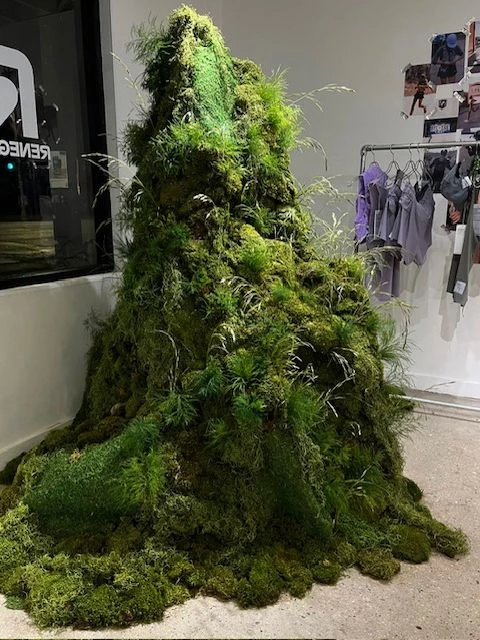 Photo: Courtesy of Brittany Asch
Landscape architect Marissa Angel agrees that moss is now ubiquitous. She notes that there are more than 12,000 known species. Angel primarily associates the plant with Japanese gardens, where, she says, moss is “the main character.”
“Moss is a plant that takes a long time to mature and grow,” says Angel. “So it’s a plant that makes you think about all the existential questions that people have.” Angel notes that the fashion world has long been inspired by nature, but interest in plants, and moss in particular, seems to be on the rise recently: “Our natural resources are under threat, and I think people are increasingly turning to the idea of biophilia, or an innate attraction to nature.” Angel’s work focuses on gardens and landscapes that coexist with nature, rather than trying to shape or control it excessively.
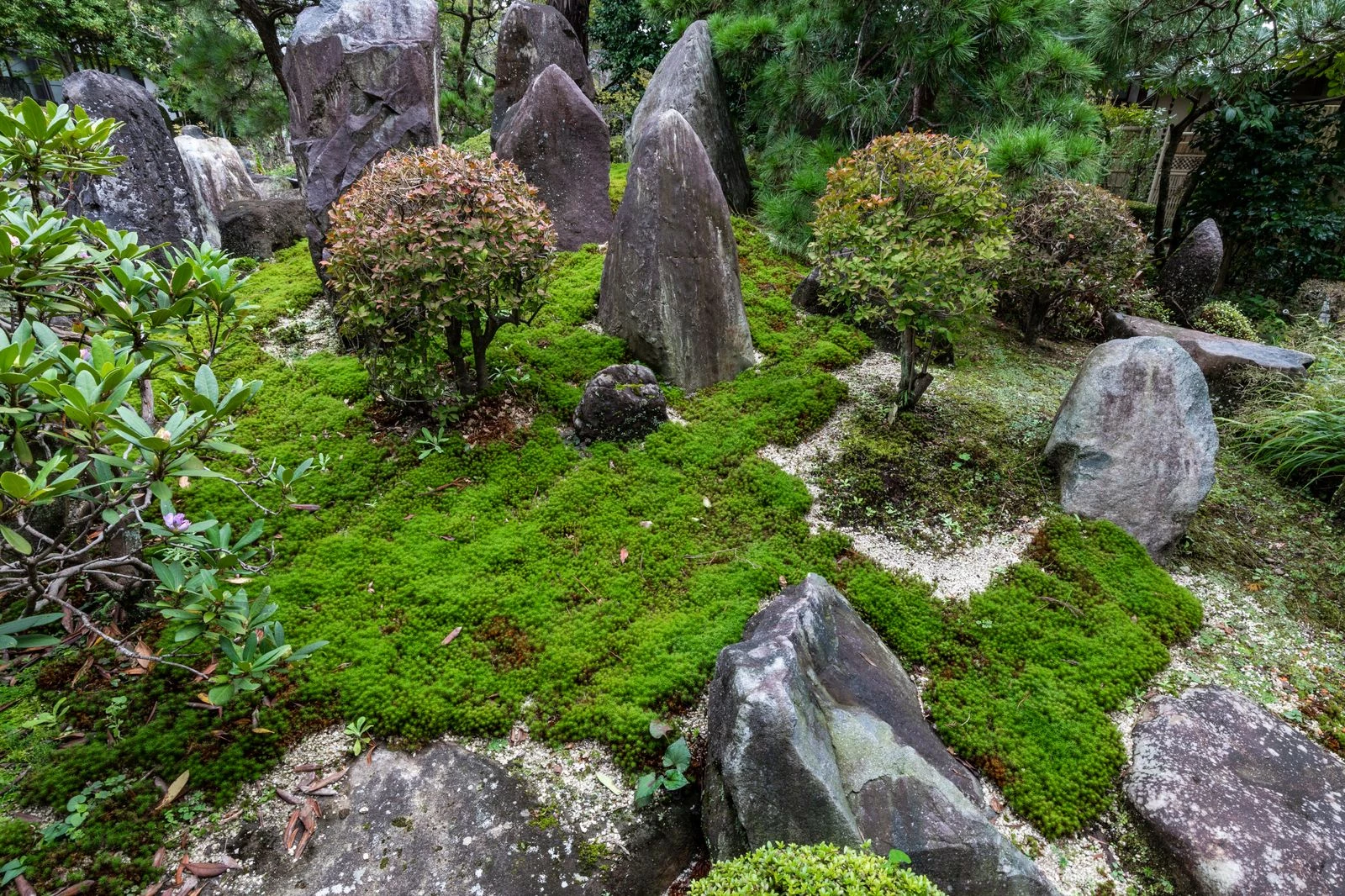 The garden of Gyokurinji Temple in Taito, Japan
She also adds that moss has long been a material of interest to artists, citing examples such as Olafur Eliasson's Moss Wall (1994) at Tate Modern, Meg Webster's moss carpets and Lily Kwong's moss sculptures at Grand Central. Moss, she says, “adds a layer of mystery” and “creates a patina of time where there is none.”
Both Angel and Ash also cite Robin Wall Kimmerer’s book Gathering Moss: A Natural and Cultural History of Mosses as an influence on their perception of moss. Angel notes Kimmerer’s definition of moss as “forests in miniature” and connects the idea to fashion: “A big part of fashion is creating a microcosm of a certain mood or feeling and putting it into just a few looks.” Ironically, Angel says, moss doesn’t survive the crowds. She wonders about the fate of this moss, and hopes it was collected responsibly and not left to die after the show.
 Photo: Courtesy of Marissa Angell
Based on material from vogue.com