

A “gallerina” is a female gallery owner or professional working in the fine arts. In recent months, this image has once again found itself in the spotlight of the fashion industry, as designers increasingly turn to the style of women from the artistic community. In particular, an example of a modern “gallerina” is Sotheby's auctioneer Phyllis Kao, whose image during auctions attracts no less attention than the lots she sells under the hammer. This raises the question: how does a woman who curates art and shapes aesthetic guidelines build her own wardrobe? In this context, Alexandra Leclerc (née Saint-Mélio), a graduate of the École du Louvre with a degree in art history and an art project coordinator, analyzes the “gallerina” archetype, explains its mythology and meaning, and also tells how this image is interpreted by designers today.
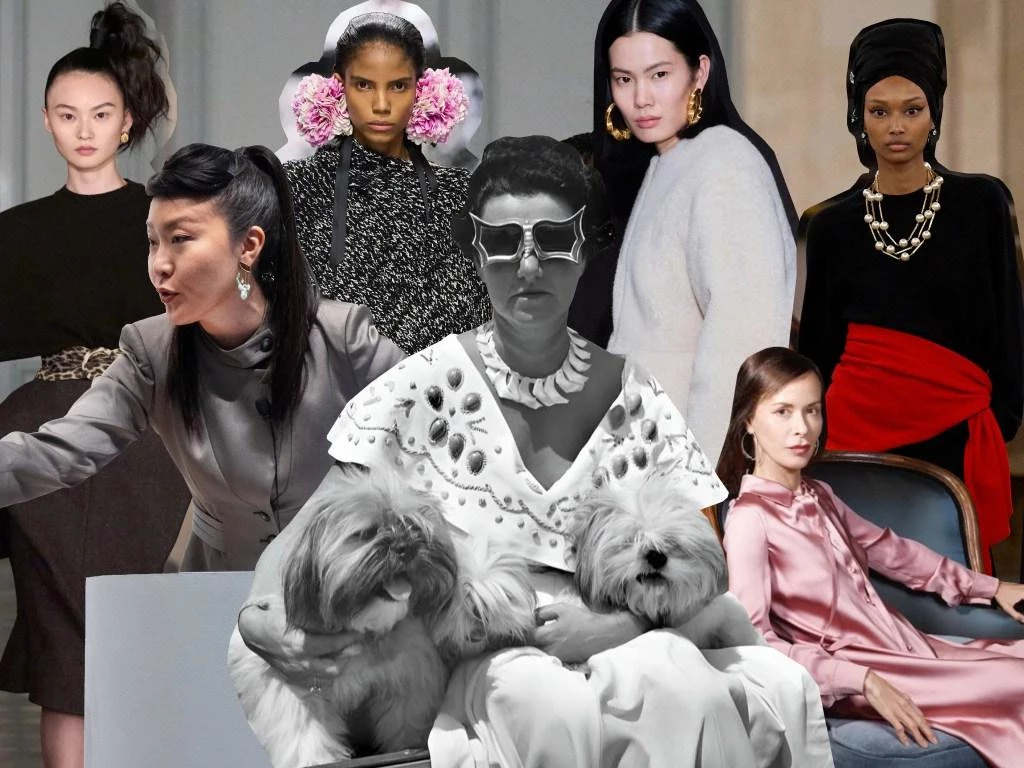
The gallerina style existed long before fashion and social media gave it a name. Its early embodiment was Peggy Guggenheim, a renowned New York art collector. Her style was intellectual, bold, and deeply personal. She dressed to emphasize her own taste as a separate phenomenon. Her wardrobe was part of her role as a patron and an extension of her curatorial mindset.
Guggenheim understood that patronage was not limited to collecting art, but also manifested itself through appearance. She was friends with Elsa Schiaparelli and often appeared in her surrealist works – thus supporting the same avant-garde ideas as the artists she collected. By choosing Schiaparelli, Guggenheim was not just wearing clothes, but demonstrating her belonging to this milieu. Her wardrobe became an extension of the curatorial approach. In her case, the gallery and the studio spoke the same language.
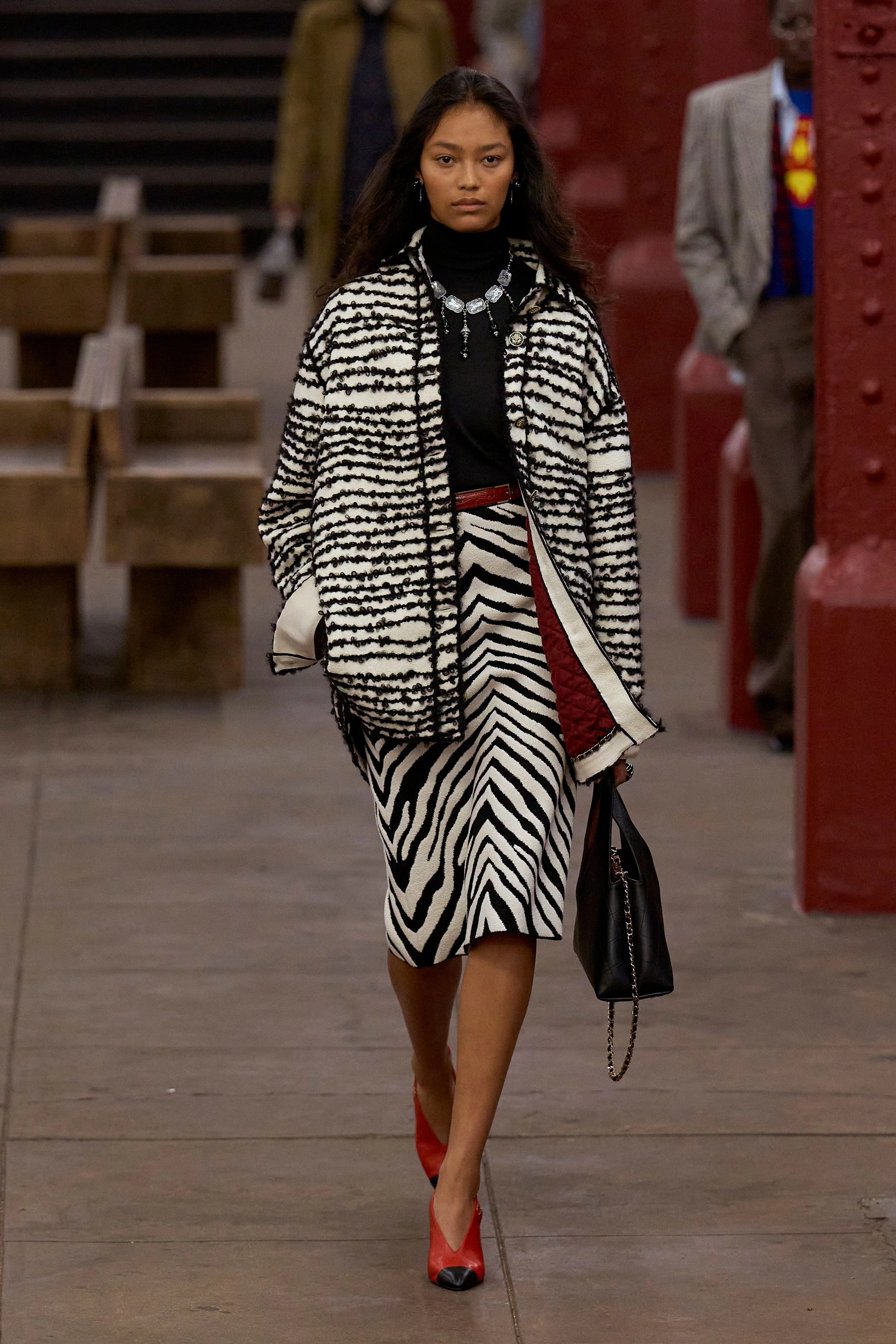 Chanel Pre-Fall 2026
This approach is continued by contemporary women in the art world. Almin Rech and Victoria Miro work with wardrobe as well as with exhibitions – through selection and precision. They choose clear silhouettes and restrained colors. There are no random decisions in their clothes. Each thing looks appropriate and has its own function. Such a wardrobe does not depend on trends and is designed for a long time. Phyllis Kao has become a new reference point for the “galerina” style. She works as an auctioneer and represents works of art. Her appearance is often connected to what she shows during the auction. She chooses clothes that echo the colors or composition of the painting. In this way, her wardrobe reinforces the context of what is happening. Her clothes are an integral part of her professional role. This is how the modern idea of the “galerina” style is formed – through a combination of taste, function and environment.
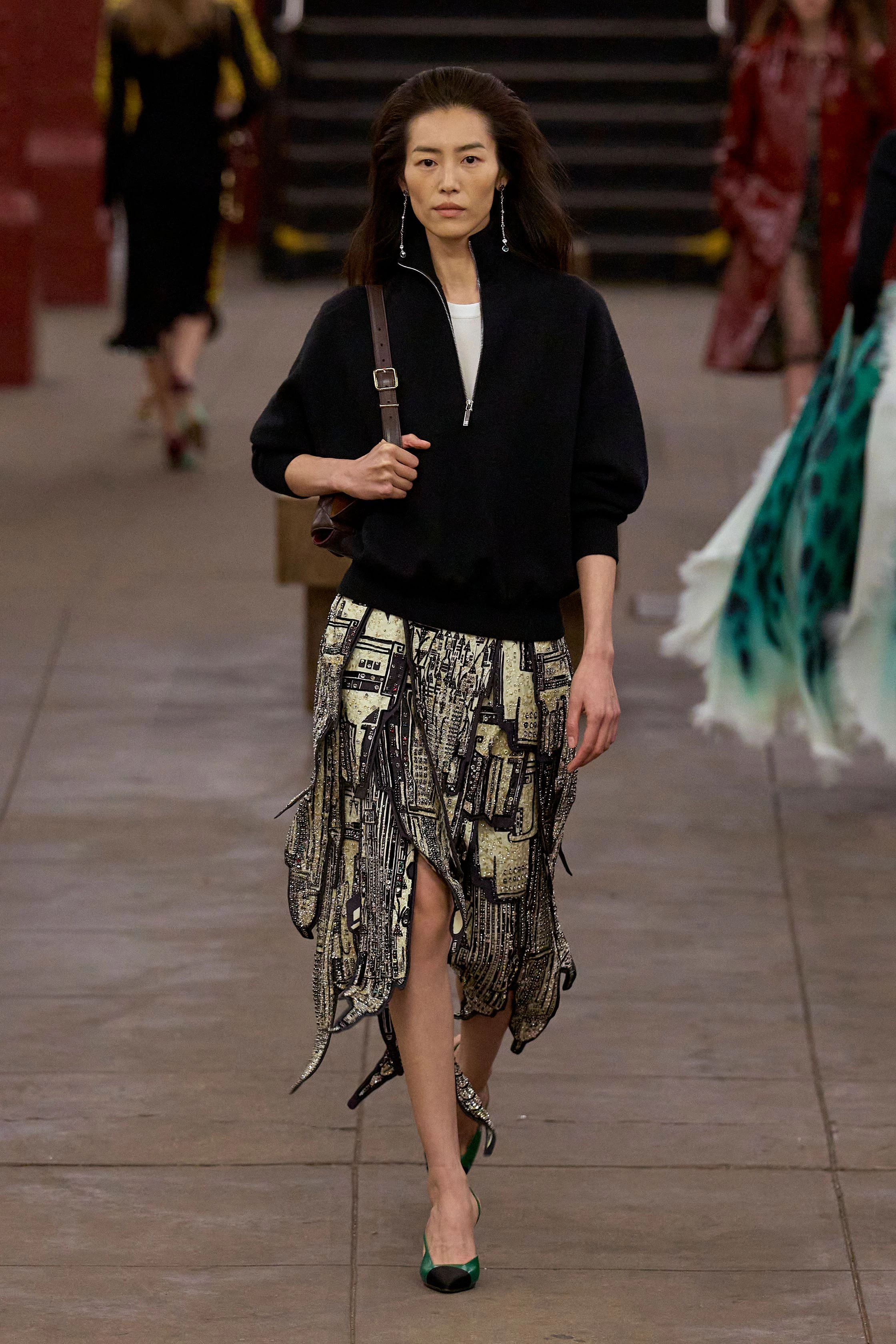 Chanel Pre-Fall 2026
Advertising.
Today, fashion is actively reflecting this approach. Under the leadership of Mathieu Blasi, the Chanel brand plays on the aesthetics of the gallerina. The clothes have a natural, intelligent and comfortable look. They correspond to the rhythm of city life. This style suits the woman who gets off the subway and heads to the gallery in Chelsea. She does not seek to blend in with the crowd or attract attention. She looks appropriate in her environment.
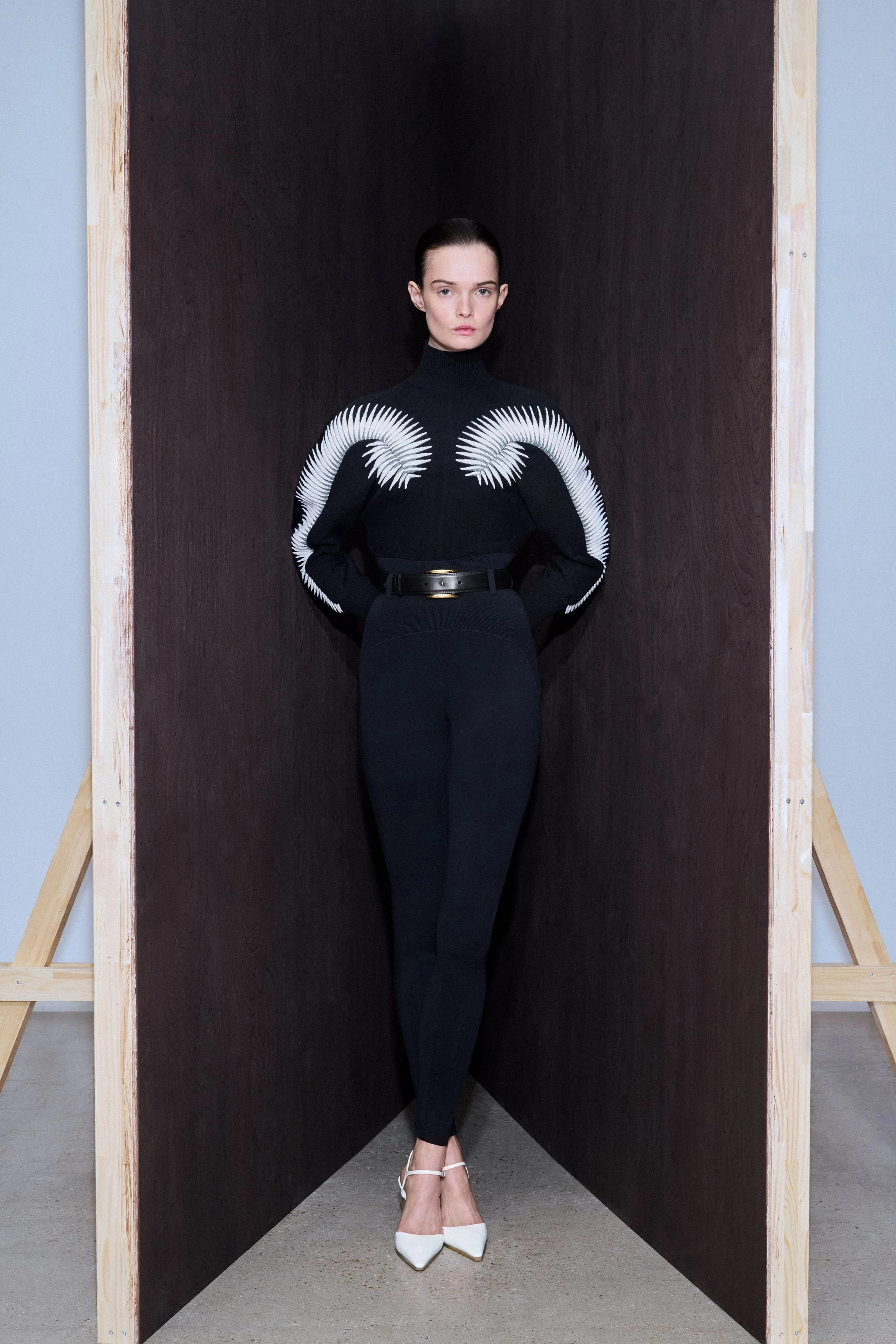 Alaïa Resort 2026
In modern fashion, this connection with art is read more and more clearly. At Alaïa, the image of the “galerina” is presented through form: the silhouettes look almost sculptural, they clearly outline the body. At The Row, this approach develops differently – through elongated classic items (coats, skirts, dresses) and restrained proportions, which have long become part of the everyday wardrobe of women in the artistic environment. At Schiaparelli, there is a different intonation – more expressive and associated with surrealism. This reminds us that the “galerina” can be not only restrained, but also conceptual.
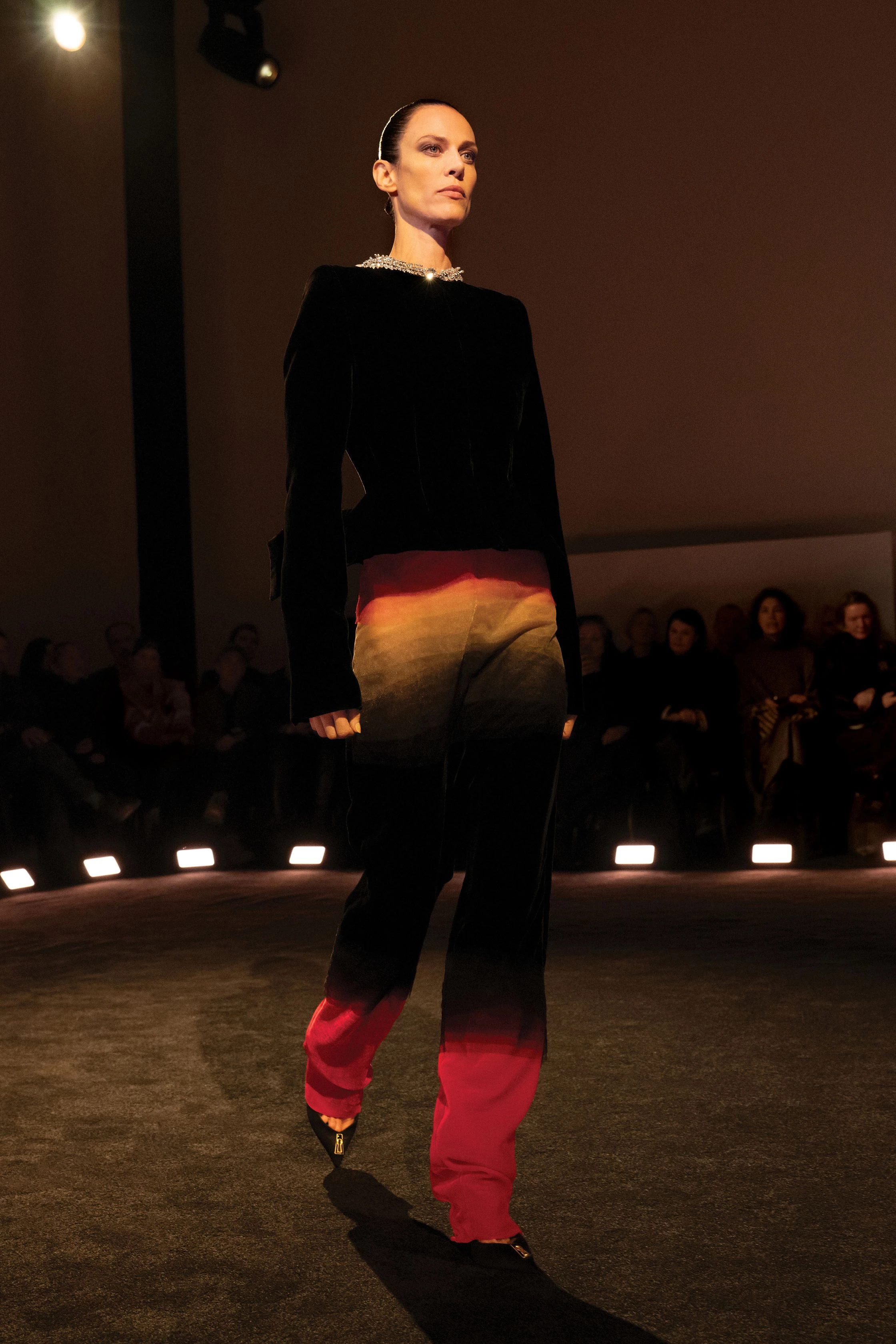 Schiaparelli Couture spring-summer 2026
At Jacquemus, this connection between fashion and art is expressed literally. The autumn-winter 2026/2027 show took place at the Musée National Picasso-Paris, right next to the works of Pablo Picasso. In this environment, clothes were perceived differently: not as a separate seasonal collection, but as part of an exhibition. The things seemed like objects that could be viewed in the same way as paintings.
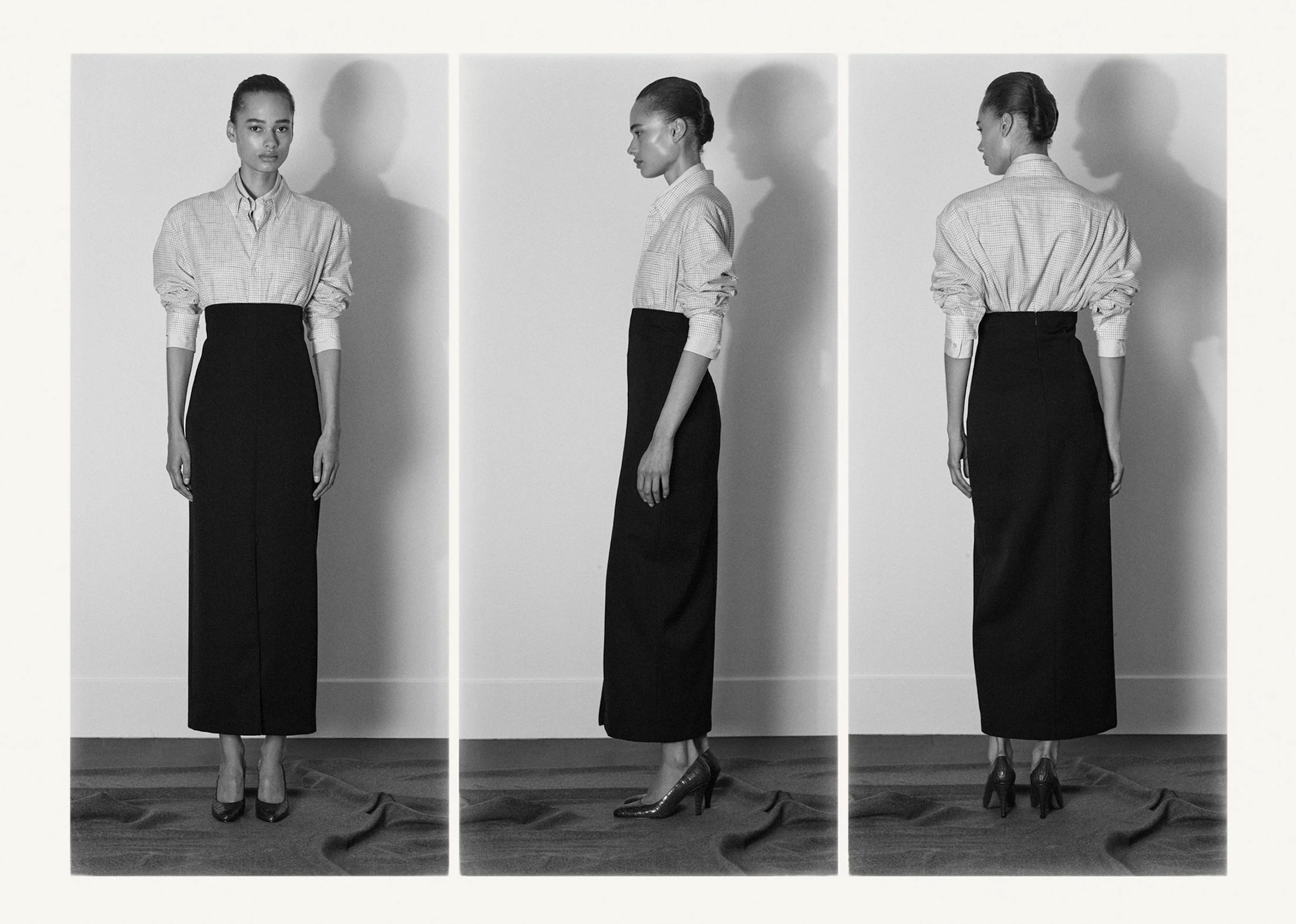 The Row Pre-Fall 2026
Jonathan Anderson used a similar logic at Dior. The brand’s spring-summer 2026 couture show took place at the Musée Rodin, and the space immediately set a different level of perception. Here, the connection between art and fashion was not decorative, but personal and thoughtful. Anderson turned to the ceramics of Magdalena Odundo and transferred its flowing, organic forms to the silhouettes of clothes and accessories. The jewelry referenced Rosalba Carreira’s 18th-century portrait miniatures.
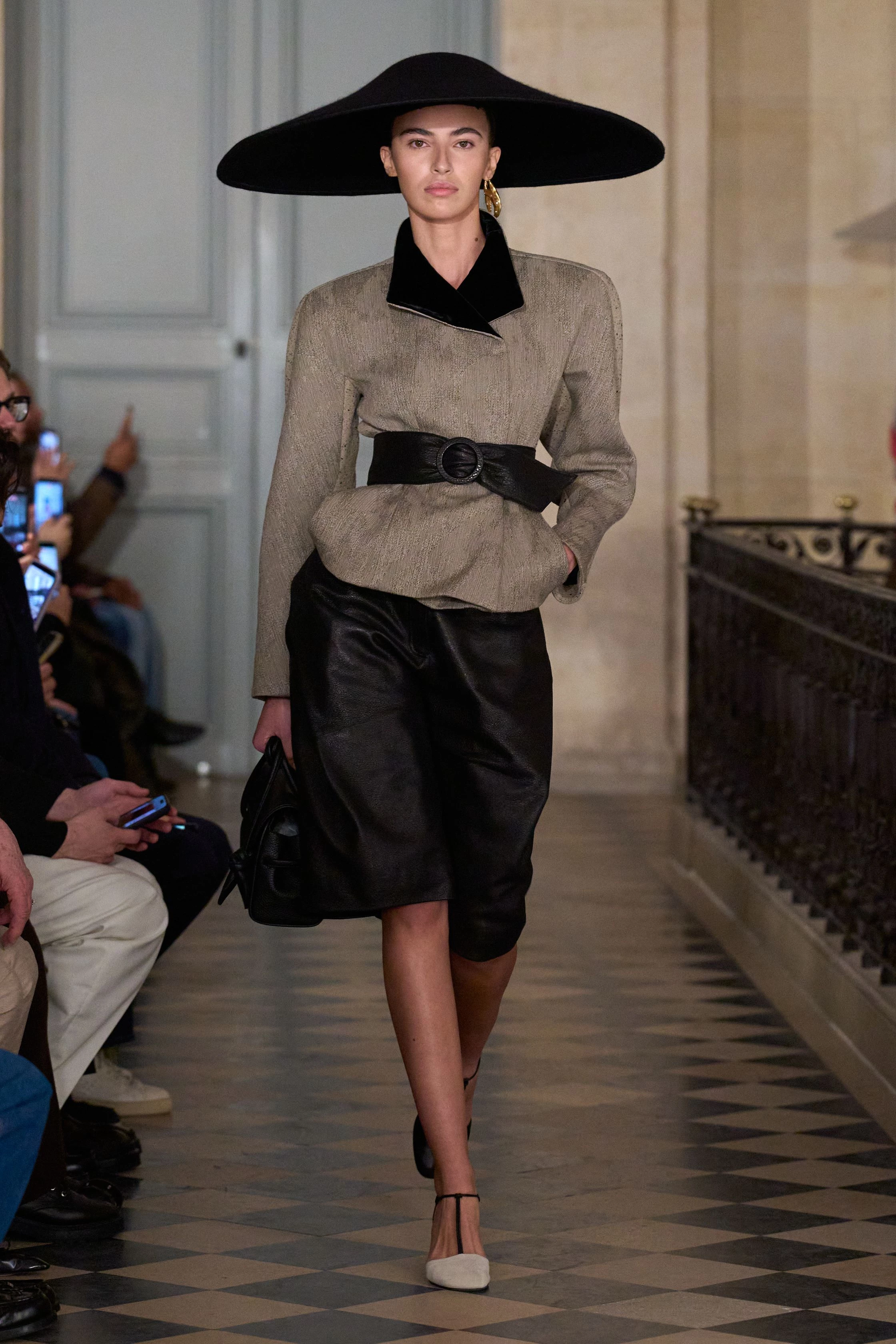 Jacquemus fall-winter 2026/2027
Fashion is increasingly oriented towards how galleries work. At the heart of this process is a real profession and a clearly formed image. The “gallery” style is based on a precise sense of taste and a thoughtful approach to clothing. Such a wardrobe corresponds to the daily tasks of women in art: working with artists, presenting their works, being present at openings, fairs and auctions. Therefore, clothing should be comfortable, discreet and appropriate in different situations. It is this functionality that forms the elegance of this style. It is both practical and aesthetic.
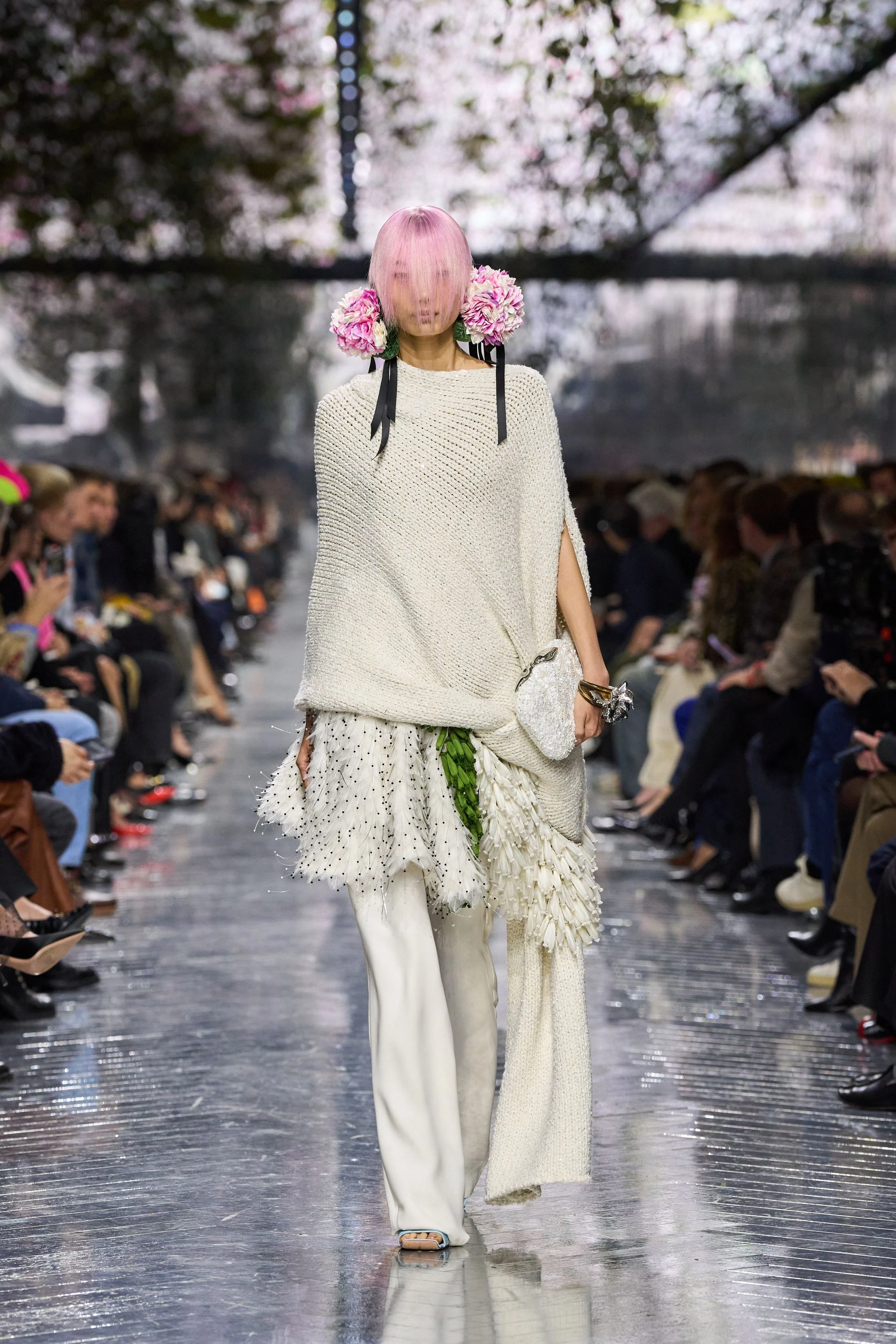 Christian Dior Couture spring-summer 2026
Based on material from vogue.com.au