
Valentino Garavani died on January 19, 2026 in Rome at the age of 93. His death marked the end of an era in fashion history. As a tribute to the designer, the Valentino show opened with a clip from Matt Tyrnauer's documentary “Valentino: The Last Emperor.” In this video, Garavani, on the eve of the end of his career in 2008, recalls how he fell in love with magazines, cinema and fashion as a child and teenager. “I dreamed of movie stars, of everything beautiful in the world. My mother said: 'You are a dreamer. You are always dreaming, dreaming, dreaming, dreaming.'” These words very accurately convey the worldview that has shaped the aesthetic of the Valentino brand for decades. At the same time, they could easily describe the creative approach of Alessandro Michele.
Advertising.
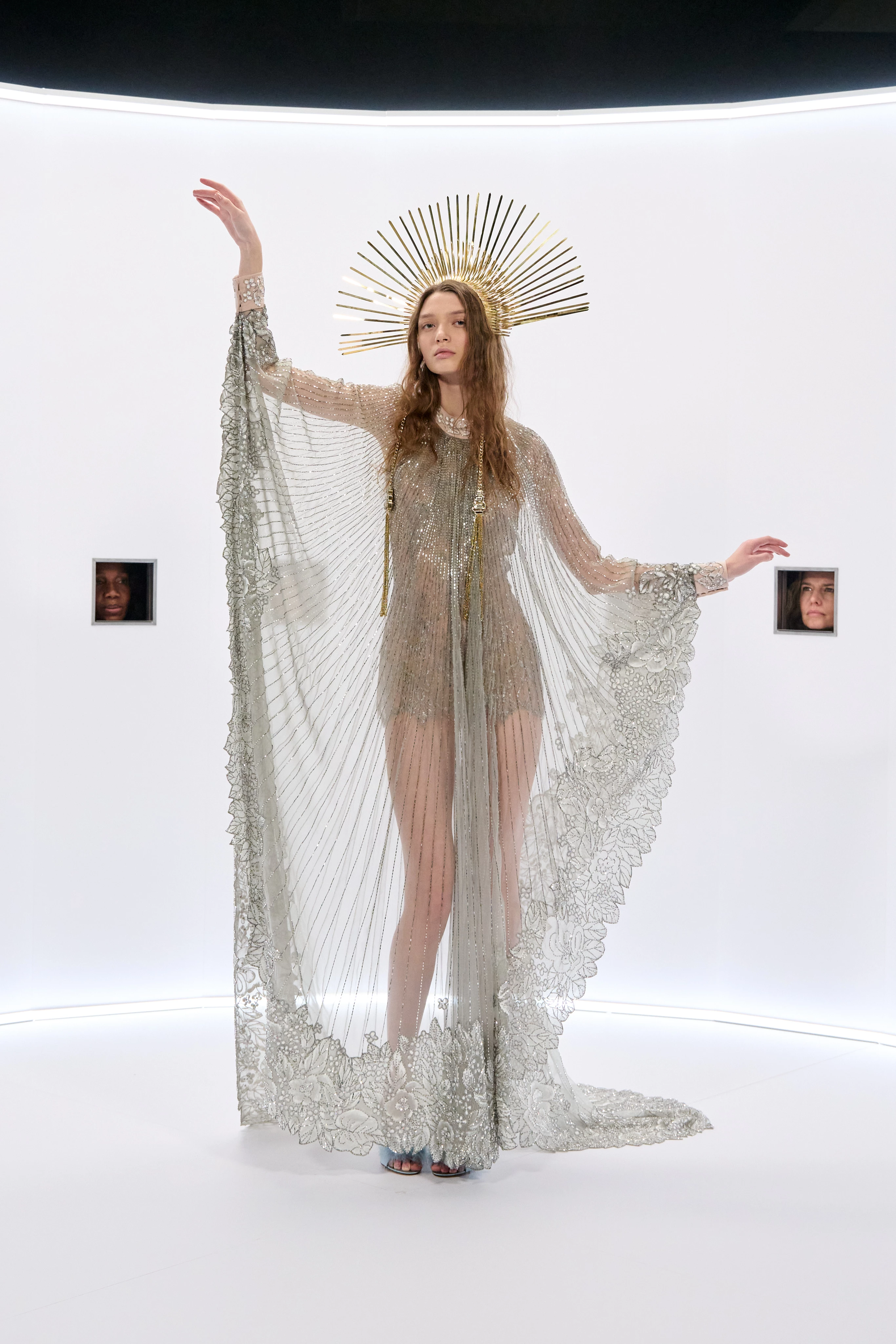
Alessandro Michele is well known for his attention to dreams, fantasy and cultural images. Anyone who has followed his career since his time at Gucci knows this trait. His collections have always been built around stories, symbols and strong visual images. During the Valentino Couture Spring-Summer 2026 show, it was difficult not to recall the Gucci Love Parade 2021 show on Hollywood Boulevard. Then the models paraded along the Walk of Fame, transforming the city space into a catwalk. At the Valentino show, Alessandro Michele proposed a different format, which can be considered one of the most original solutions of the modern fashion industry. The show took place at the Tennis Club de Paris and was built around a series of circular “Kaiserpanoramas”. The models appeared one after the other, and the audience watched them through small square windows built into the walls.
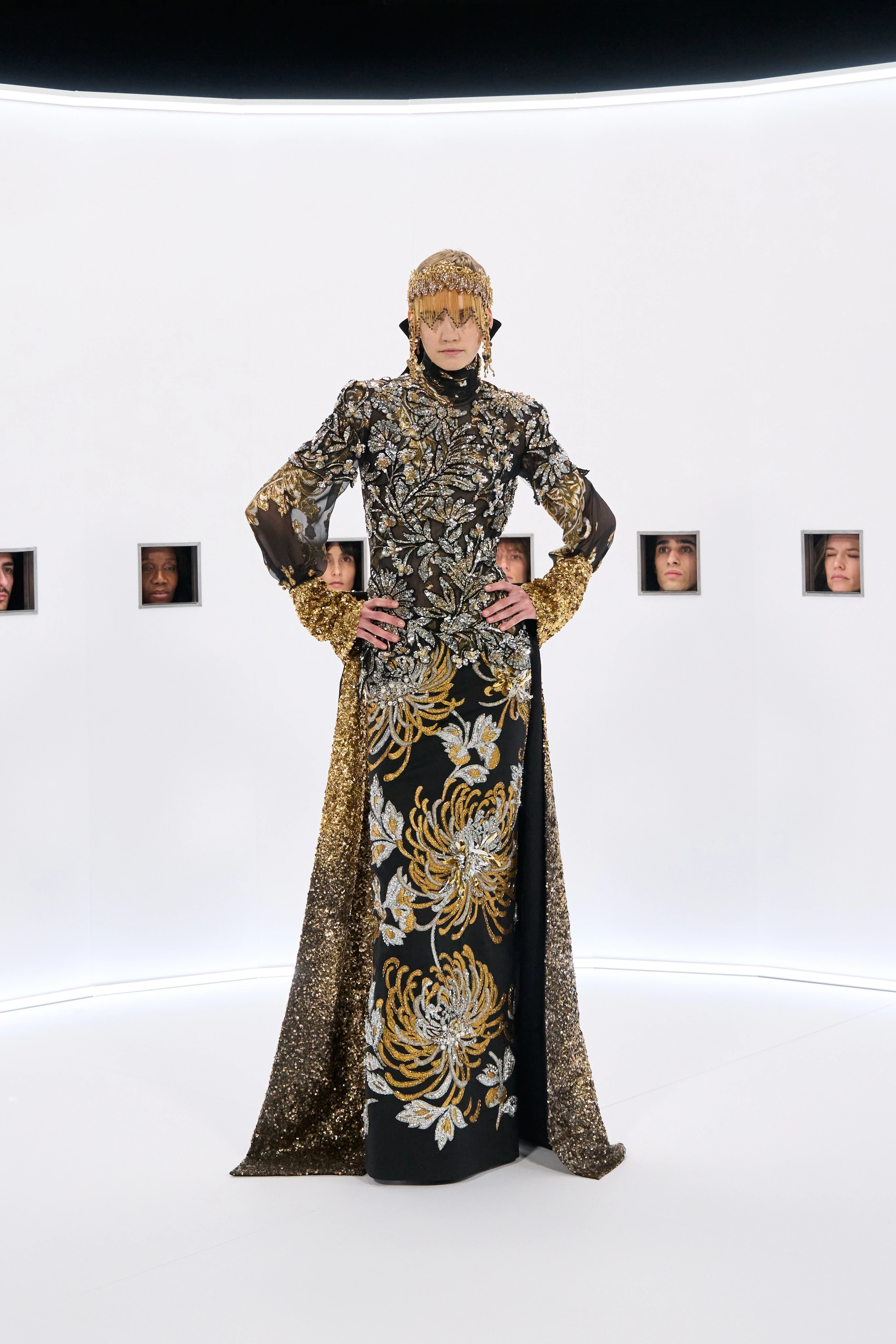
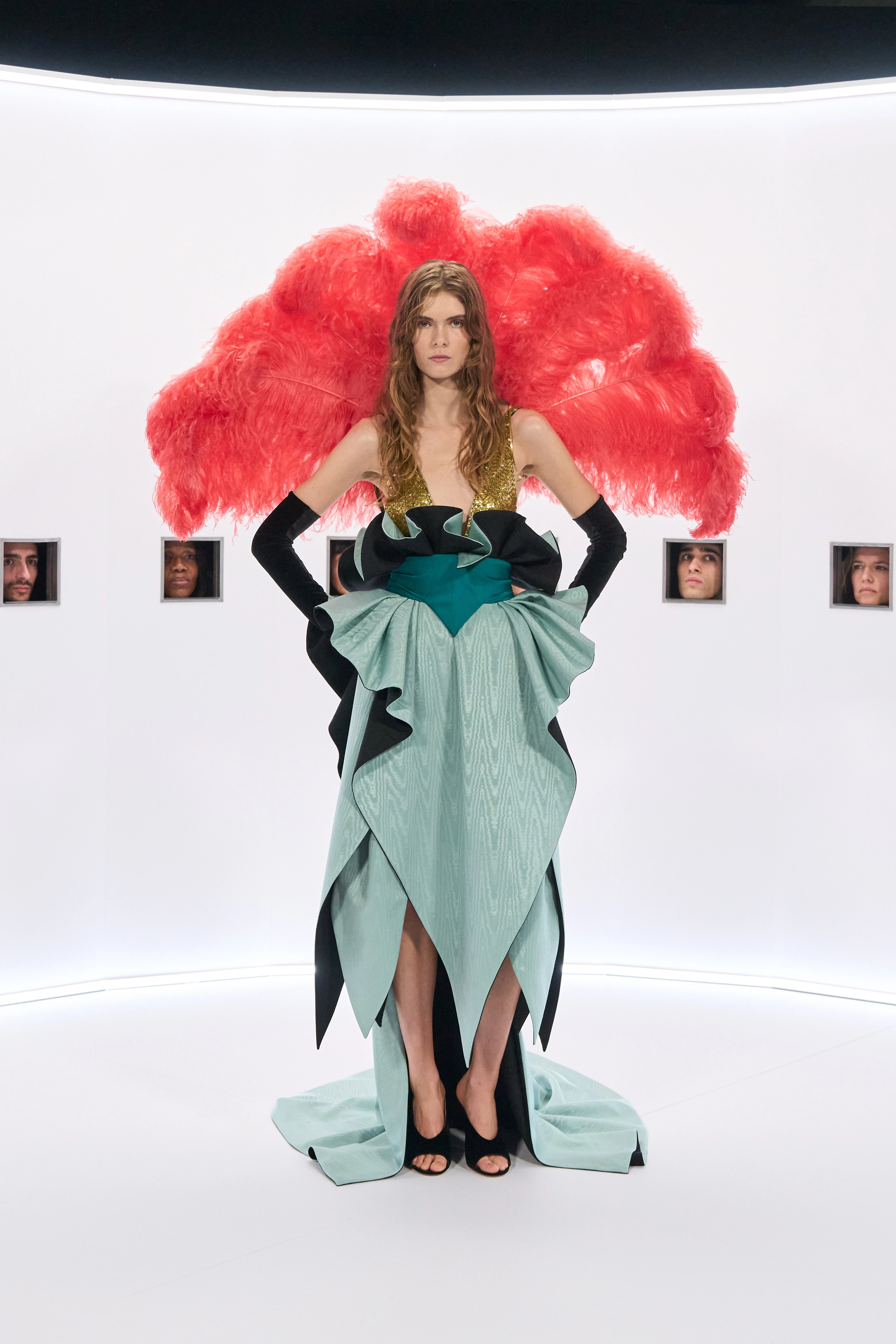
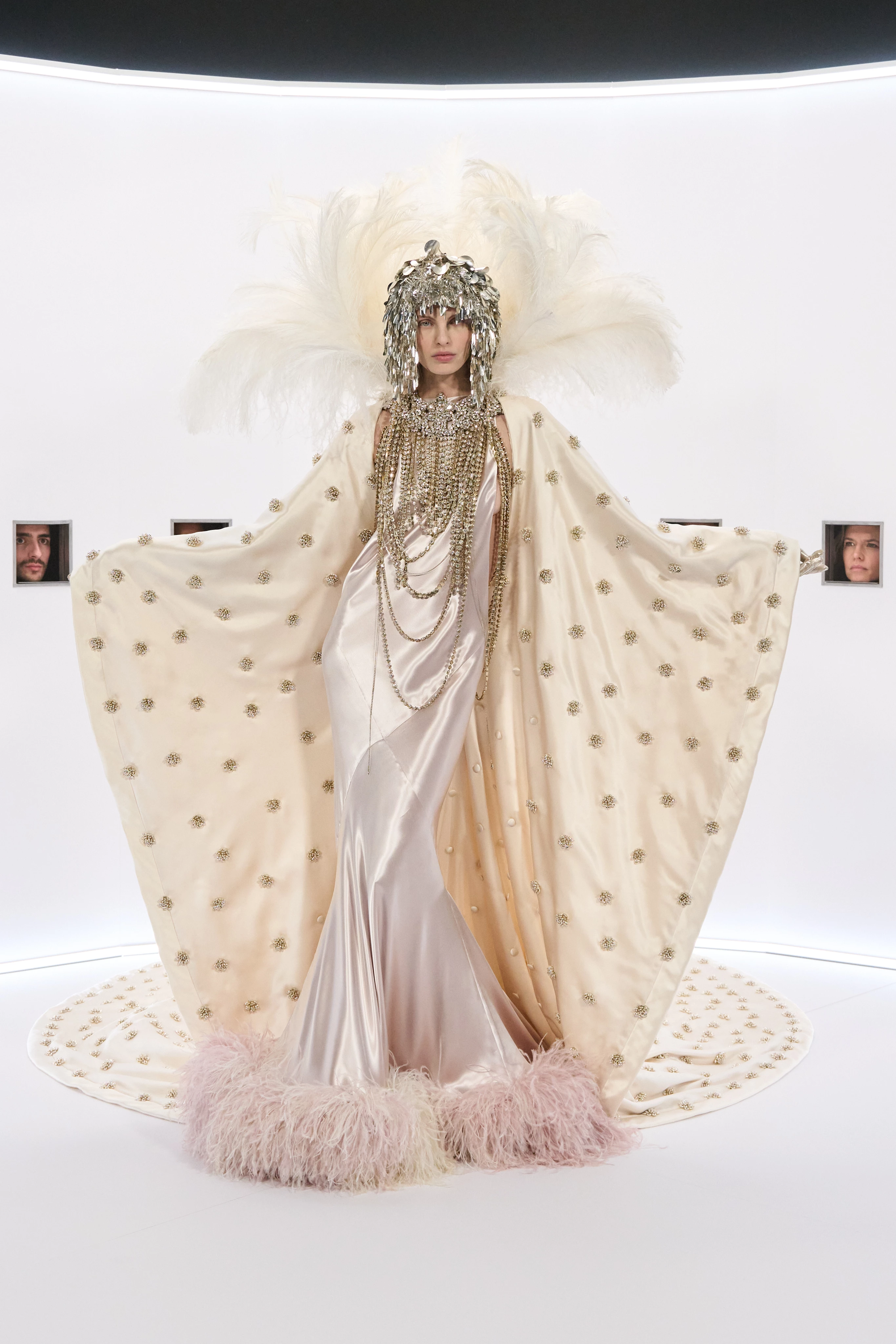
The Kaiserpanorama was created in 1890. It is a form of stereoscopic entertainment that predates the advent of cinema. In this format, viewers viewed images that changed one after another. During the Valentino show, this historical principle was reinterpreted and adapted to modern fashion. Once viewers got used to this way of viewing, the effect became almost hypnotic. The square windows and restrained white walls helped to focus on each image. The space darkened every time one model disappeared and another appeared in the light. This construction of the show created a sense of theater and tension of expectation. The models were asked to actively interact with the camera. They willingly fulfilled this task. In the photos, faces can be seen in the windows, but during the show itself, most viewers were looking at the models through smartphone screens. Everyone tried to get their own shot. Alessandro Michele has a clear sense of scenography and visual effect. At the same time, his original dream was costume design. In this collection for Valentino, he allowed himself maximum theatricality and decorativeness. Feathered headdresses became one of the key elements of the images and enhanced the sense of drama and grandeur.
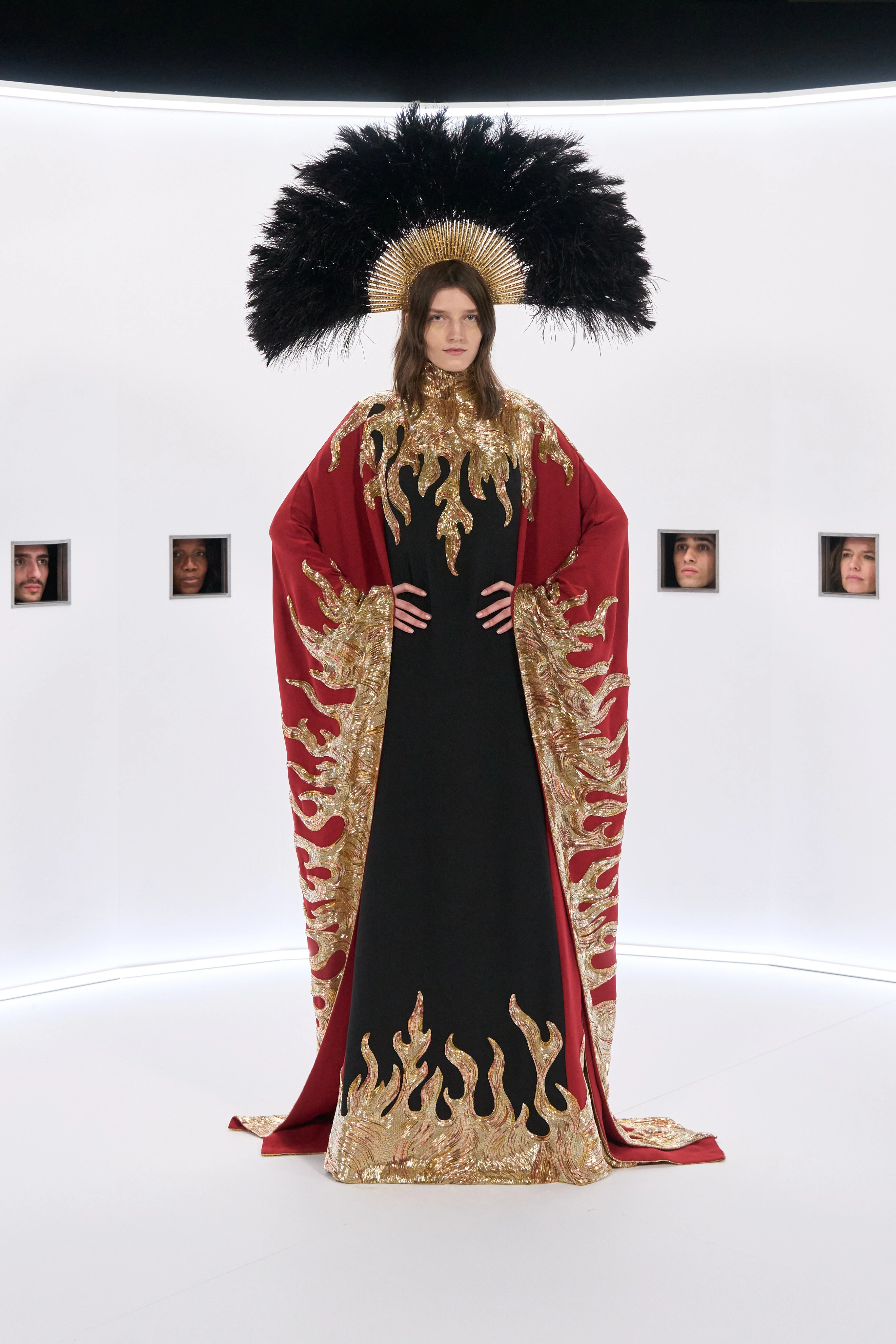
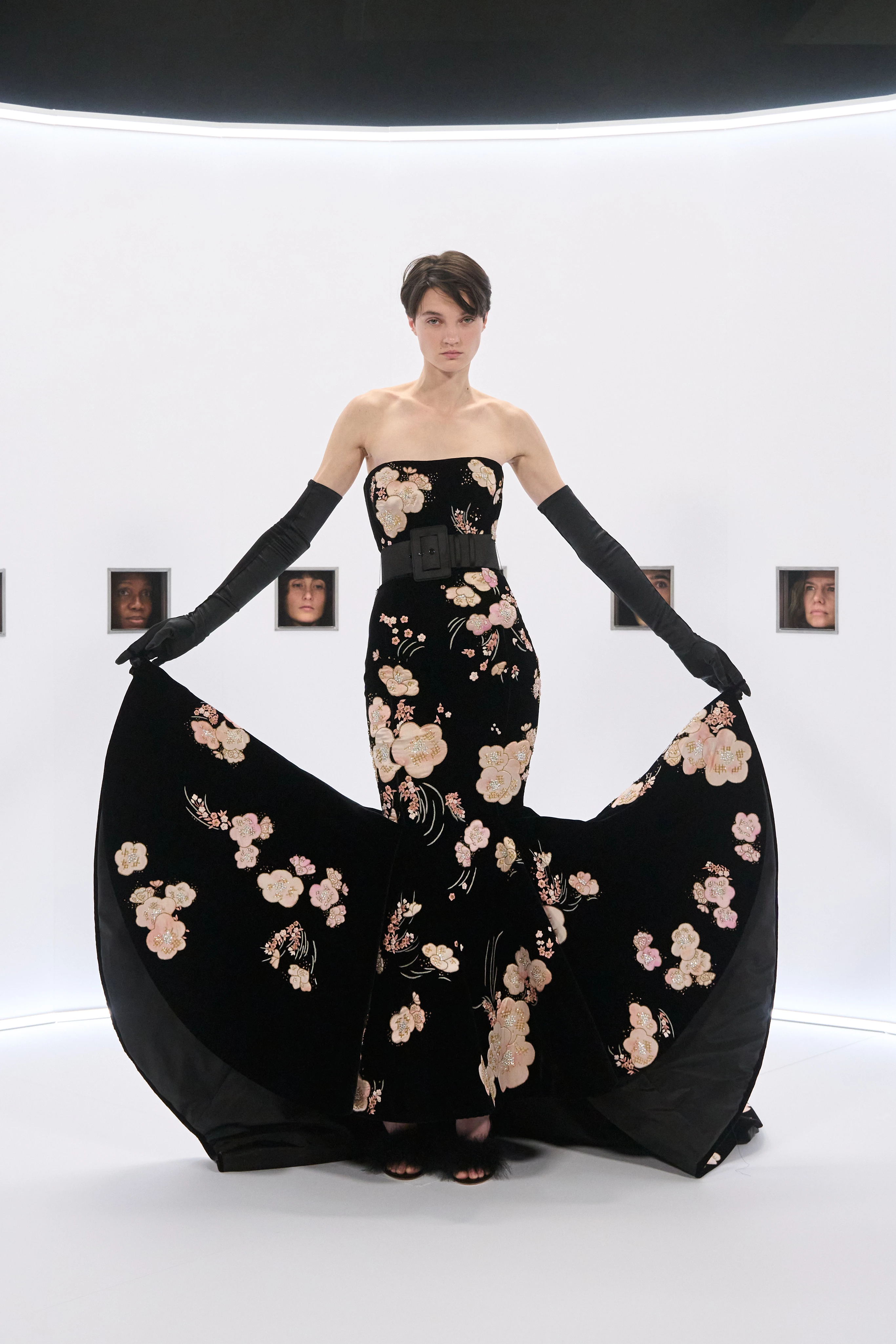
Due to the special structure of the show, each Kaiserpanorama opened in a different way. Some viewers were the first to see a quilted skirt suit. It resembled vintage outfits from the 1940s and was made in a muted pink shade. Others drew attention to a draped black silk velvet dress. This look referred to the fashion of the 1910s and the work of Paul Poiret. Recently, a major exhibition dedicated to Poiret was held in Paris, and it was he who became one of the important sources of inspiration for Jonathan Anderson's collection for Dior Men. Some saw a cream satin dress-combination with an embroidered cape. This look reminded Greta Garbo in the role of Mother Harry. From the seats where the Vogue editorial staff sat, another look opened. It was a caftan embroidered with gold lace. The outfit was complemented by an elaborate feather headdress. The collection also featured Katharine Hepburn's black and white striped dress from the film “Raising a Baby.” It was reinterpreted with respect for the original, but in a modern context.
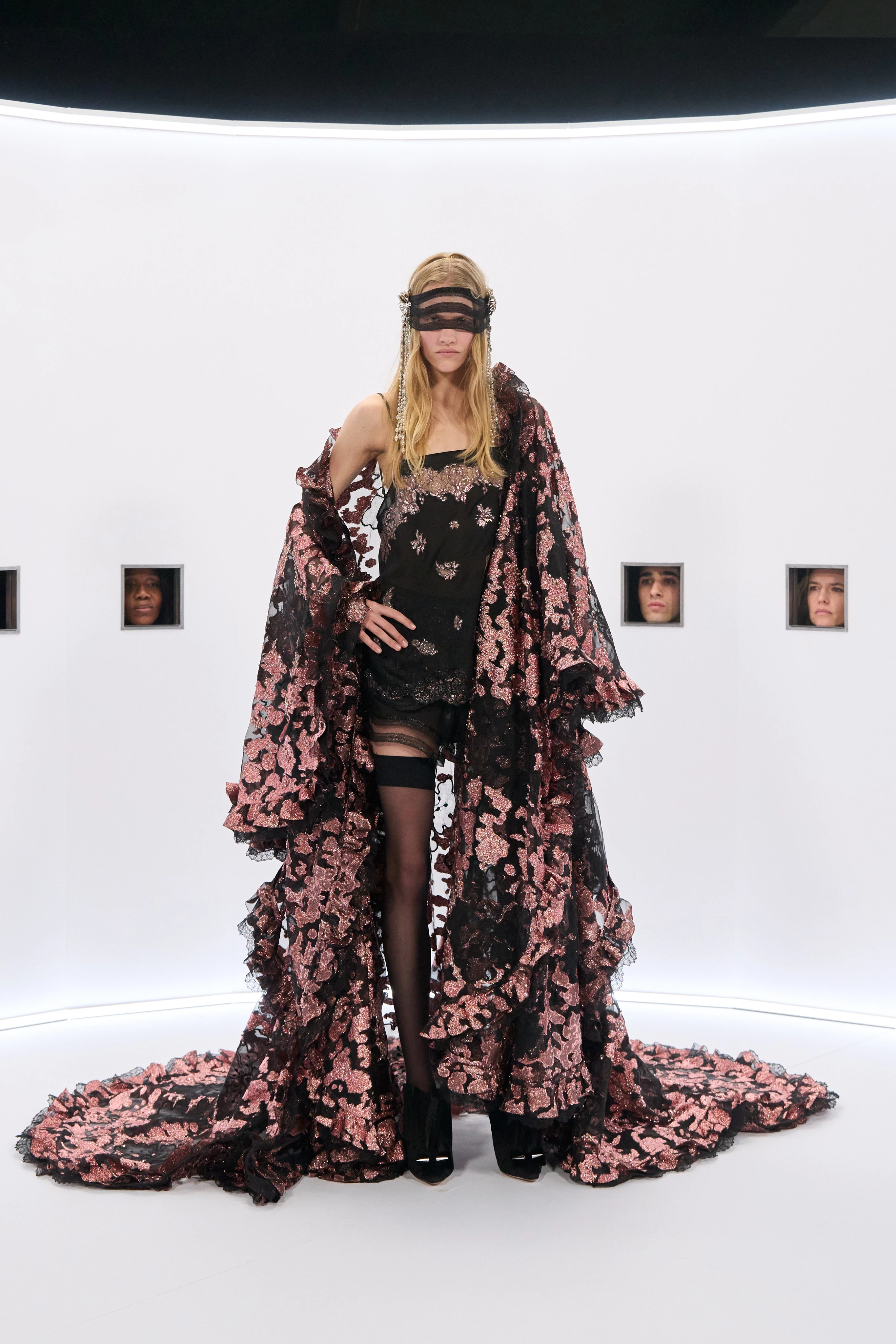
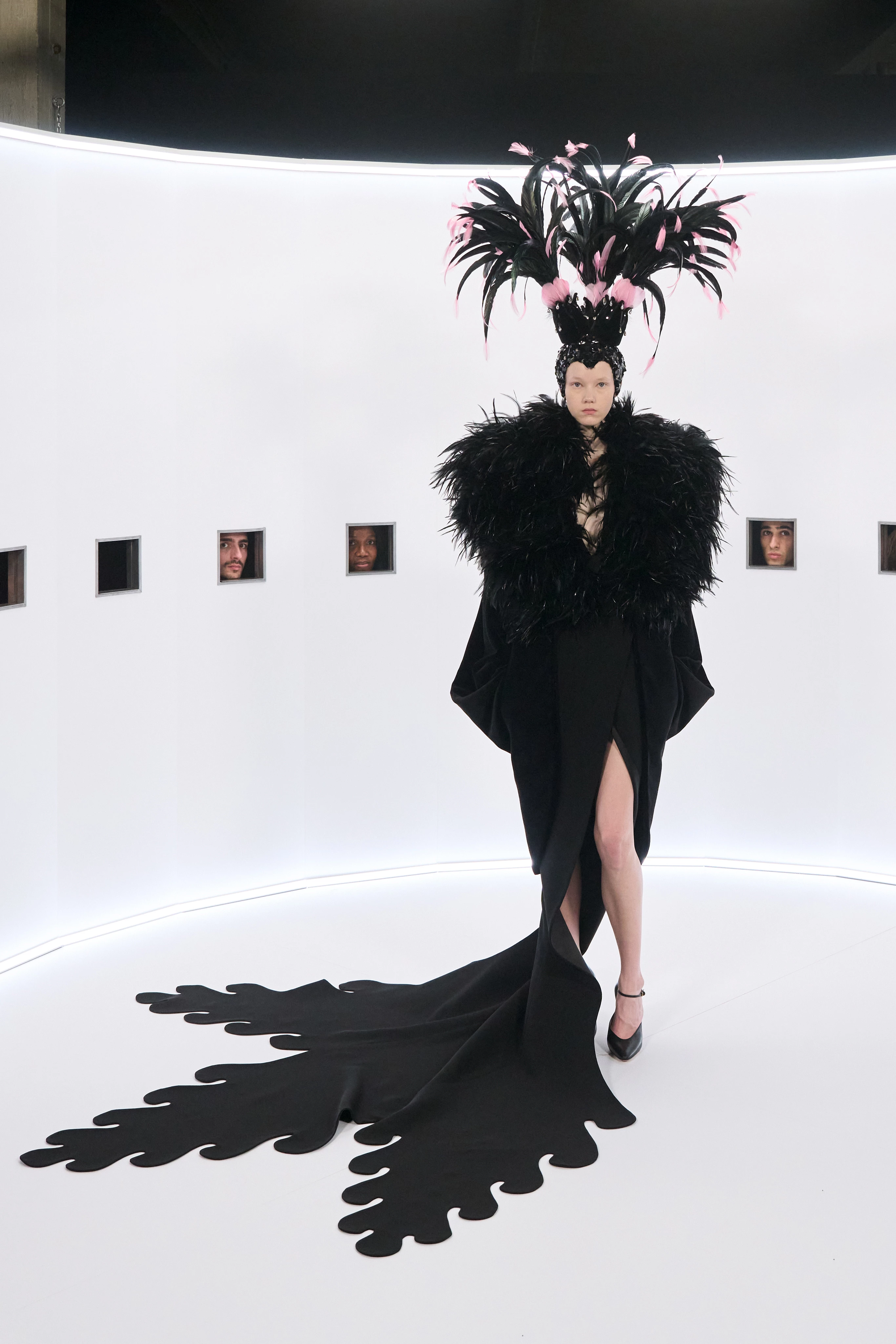
Alessandro Michele worked freely with different decades and styles. He effortlessly combined elements from different eras and was not limited by a clear theme. This approach is rarely possible in the ready-to-wear format, which is usually aimed at the commercial market and stores. In the case of Valentino, the collection was united by a stage presence, a love of fashion history and an attention to the emotional impact of clothes.
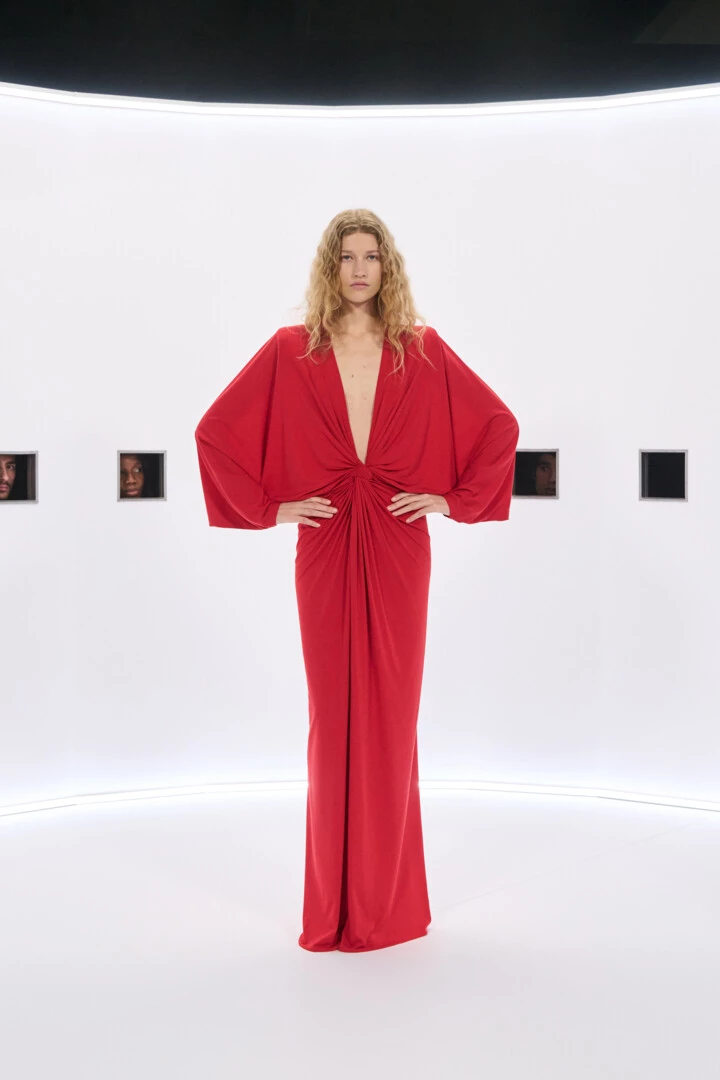
After all the models had walked through the Kaiserpanorami, they took to the catwalk for their final exit. First up was a 1980s-style draped dress with a plunging neckline tied in a knot at the navel and voluminous sleeves. The final accent was color—Valentino Red, of course.