

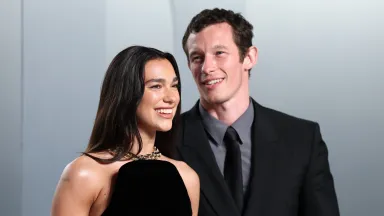
Image Credit: WireImage
Dua Lipa shared a kiss with Callum Turner at a London event this past weekend, and the internet, predictably, reacted with excitement. Attention was paid to the dress, and the timeline of their relationship, from its subtle beginnings to a potential “I do.”
The “Physical” singer and the “Eternity” actor appear to be a perfect match. They share similar tastes in independent films, possess a comparable intellectual vibe, and have displayed effortless chemistry at every red carpet event they’ve attended together since 2023.
And here’s the aspect that many would rather not be reading about on their phones right now: the wedding ceremony itself is the simpler part.
The real challenge emerges around the fourteenth month of marriage, when the idealized versions of each other they initially fell for begin to fade, prompting a deep-seated question that no glossy magazine feature can address: “Are you truly present for me?” and “Am I truly sufficient?”
The wedding is a ritual. The work is biological.
A wedding ceremony transcends a mere celebration; it’s a formal declaration to two individuals’ nervous systems, signifying that this partner is now their primary source of security, their refuge, and their anchor.
This represents a significant biological commitment. From birth to death, humanity is fundamentally an interdependent species. We are intrinsically designed to require emotional connection to feel secure in the world, and the individual we marry becomes the person our nervous system prioritizes, constantly scanning for presence and reassurance.
In the nascent stages of a romantic relationship, both individuals often embody “protector personas.” This might include the Charmer, the Effortlessly Cool Partner, or the Idealized Boyfriend. You present the version of yourself you believe is most appealing, as it can feel safer to captivate than to reveal vulnerability at that juncture.
Dua and Callum have experienced two years of this dynamic. Two years of understated public appearances and shared literary recommendations, of being photographed looking effortlessly put-together. This isn’t disingenuous; it’s a natural progression of falling in love.
However, shortly after the wedding day, the performance inevitably yields to the realities of daily life. In this everyday context, partners encounter each other’s unresolved emotional wounds. When one partner perceives emotional distance, the other’s nervous system doesn’t interpret it as a minor logistical inconvenience; it registers as a threat to their fundamental well-being.
This is when the cycle of protest and withdrawal typically commences. One partner reaches out, while the other pulls away. Both experience distress, and both react in ways that unintentionally cause pain to the other. I refer to this as the “Waltz of Pain,” a dance that every couple I’ve counseled has performed.
The trap waiting for couples who look this perfect
Here lies a particular peril for couples who present such a flawless image on their wedding day.
When a couple’s external life appears immaculate, an unconscious expectation often develops that their internal relationship should be equally seamless. They perceive themselves as having “arrived” and achieved a certain status, solidifying their idealized image. Consequently, any instance of normal relational friction can be interpreted as a catastrophic failure.
I frequently observe this dynamic in high-achieving clients. These are executives, artists, and performers whose sensitivity to perceived slights often increases with their success. They sit in my office, perplexed as to how they can manage complex professional responsibilities yet struggle to navigate a simple Tuesday evening dinner without one of them becoming emotionally withdrawn.
It becomes more complicated. Intelligent, successful individuals are adept at intellectualizing emotional pain. When conflict arises, they deploy “The Representative”—their polished, articulate, and well-presented public persona. They engage in relationship discussions as if they were in a boardroom, becoming experts on their partner’s perceived shortcomings while deftly avoiding their own raw emotions.
Beneath this veneer of competence often lies a fearful individual, quietly overwhelmed by the dread of either being a perpetual disappointment or experiencing profound isolation. This is also the point at which fans and media outlets project idealized, parasocial fantasies onto the marriage, potentially distorting intensity into a semblance of intimacy. If you’re curious about your own relational patterns, understanding your attachment style before a conflict arises can be highly beneficial.
Conflict is proof, not pathology
Mainstream narratives and online commentary often suggest that any sign of discord in a celebrity marriage is indicative of a dysfunctional relationship. The prevailing notion is that healthy love should appear flawless, effortless, and carefully curated.
I hold a different perspective.
Emotional volatility is the nervous system signaling the profound importance of the partner. Couples engage in conflict because their mutual affection is so strong that the pain of disconnection becomes biologically unbearable. If Callum weren’t significant to Dua, her body wouldn’t react; similarly, if she weren’t important to him, he wouldn’t withdraw as a protective measure. These defensive responses are, in fact, evidence of the bond.
When couples arrive after enduring a severe conflict lasting several days, I sometimes suggest they celebrate with champagne. The intensity of their argument serves as proof that their connection is substantial enough to elicit such profound emotional responses.
There are no villains in these scenarios. Instead, there are two distinct perspectives, a recurring pattern of interaction, and two individuals grappling with the fear of losing each other. Labeling a partner as toxic or narcissistic offers a false sense of resolution and perpetuates the cycle. Genuine compassion recognizes the underlying fear driving problematic behavior, which also explains phenomena like breadcrumbing and other patterns frequently scrutinized by the gossip industry.
What I’d actually tell them
If Dua and Callum were to seek my guidance a year from now, feeling weary from the pressures of maintaining their public image as “The Couple,” this is where I would begin.
Abandon the aspiration of never experiencing conflict. The true magic lies not in avoiding disagreements, but in the speed and sincerity with which you reconcile.
Subsequently, cultivate what I term the “Sovereign Us.” The ideal of radical individualism, wherein a marriage consists of two independent individuals leading parallel lives, crumbles under the weight of genuine intimacy. Authentic love involves three distinct entities: the individual, the partner, and the shared bond. The “Us” is a living entity with its own requirements, and its preservation is more crucial than winning a dispute over who responded to a text message first.
The underlying action required is simple yet profound. Recognize when you are ensnared in a narrative focusing on your partner’s perceived faults. Shift your focus inward. Move beyond anger to access the underlying vulnerability—the longing, the shame, the fear. Then, articulate that vulnerability openly, without any trace of criticism.
This is the genuine demonstration of effort in a marriage, not the wedding photographs.
The line worth screenshotting
A wedding represents a beautiful pledge. A marriage, however, is the ongoing practice of two individuals choosing to connect with each other during challenging times, long after the wedding attire has been cleaned and the guests have departed. Dua and Callum have just made their promise. Now, they have the remainder of their lives to discover the true commitment required to uphold it. This isn’t a cautionary note; it’s the most encouraging news.
_______________________________________________________________________________________________
Figs O’Sullivan and his wife Teale are marriage counselors based in San Francisco, serving as relationship experts for prominent figures in entertainment and the tech industry. They are the founders of Empathi and creators of the Figlet platform, an AI-powered relationship coach developed from their clinical experience.