

The landscape of digital entertainment is undergoing a seismic shift as traditional slot machines face stiff competition from a new generation of “instant-win” experiences. For decades, the iGaming industry relied on the passive spinning of reels, where players watched symbols align with little to no influence over the outcome. However, modern audiences—raised on interactive video games and fast-paced social media—are demanding more agency and excitement from their gaming sessions.
This demand has birthed the “Crash” game phenomenon, a genre characterized by rising multipliers and the constant threat of a sudden “bust.” Unlike the fixed cycles of older titles, these games place the power of the exit strategy directly in the player’s hands. Among the most prominent examples of this evolution is chicken road, a title that blends nostalgic arcade aesthetics with high-stakes decision-making, signaling a new era of interactive gaming.
The Psychological Appeal: Adrenaline vs. Strategy
The primary driver behind the success of crash-style mechanics is the delicate balance between raw adrenaline and calculated strategy. In traditional gaming, the player is often a spectator to their own luck. In contrast, crash games create a psychological “tug-of-war” where the user must decide exactly when to bank their winnings before the round ends. This “manual cash-out” feature transforms a simple game of chance into a test of nerves, making every second feel consequential.
Furthermore, the “near-miss” effect in these games is uniquely powerful. When a player sees a multiplier climb to 10x or 50x just after they cashed out, it triggers a desire to refine their strategy for the next round. This feedback loop keeps engagement high, as players feel they are learning a skill rather than just spinning a wheel. The shift from passive consumption to active participation is precisely why this genre has captured the attention of the casual gaming market.
- Real-Time Decision Making: Players control the volatility by choosing their own exit point.
- Social Competition: Many crash games feature live leaderboards, showing when others “jump out.”
- Transparent Fairness: Most modern titles use “Provably Fair” algorithms to ensure trust and verifiability.
Why Real Stakes Add a Layer of Engagement
While casual mobile games have used similar “infinite runner” or “survival” mechanics for years, the introduction of real stakes adds a layer of intensity that free-to-play apps cannot match. When a player’s own capital is on the line, every pixel movement and every second of delay carries weight. This heightened state of alertness creates a more immersive experience, turning a three-minute break into a high-octane event.
The integration of real-world value also bridges the gap between gaming and finance. Modern players often view these sessions as a form of high-speed risk management. The ability to turn a small stake into a significant payout through a combination of timing and luck provides a sense of accomplishment that is missing from purely recreational apps. This evolution has made titles like chicken road a staple for those who value both entertainment and the potential for tangible rewards.
The Main Features of Game Chicken Road
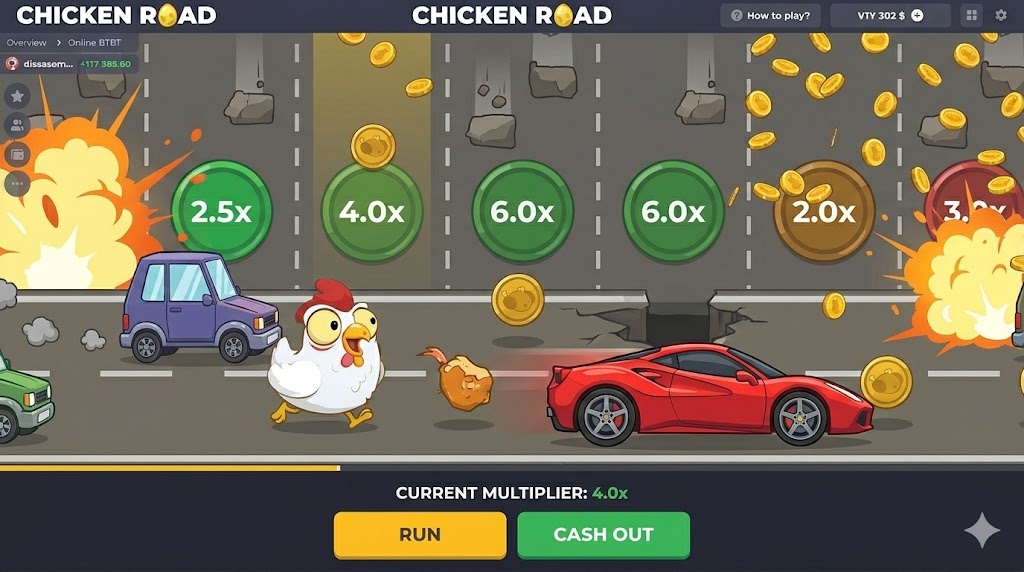
As the genre matures, developers are moving beyond simple rising graphs to more thematic experiences. The chicken road game is a prime example of this trend, utilizing a “risk-ladder” mechanic inspired by classic arcade themes. Instead of watching a line move across a screen, players guide a character across a dangerous path. Each successful step increases the potential payout, but a single mistake results in the loss of the accumulated progress.
This “cross the road” theme is intuitively easy to understand, making it highly accessible to newcomers while maintaining depth for experienced players. The game features various difficulty settings, allowing users to customize the number of hazards they face. This level of interactivity ensures that no two rounds feel exactly the same, providing a fresh experience every time the player hits the start button.
- Adjustable Difficulty: Players can choose the level of risk they are comfortable with before the round starts.
- Interactive Elements: The game requires active clicks for each step, increasing the feeling of personal agency.
- Visual Storytelling: The theme provides a clear narrative of “getting to the other side” safely, which is more engaging than abstract symbols.
The Payouts of Chicken Road: Multipliers and Volatility
The financial appeal of chicken road lies in its transparent and explosive multiplier system. As the character progresses further across the hazards, the multiplier grows exponentially. This creates a high-volatility environment where players can choose to play it safe with frequent, small wins or aim for a “moon shot” payout by reaching the final stages of the path.
Understanding the relationship between volatility and the payout structure is key for any modern gamer. Because the game allows for such a wide range of outcomes, it caters to different “player personas.” Whether someone is a conservative player looking for steady growth or a high-roller hunting for a massive multiplier, the mechanics of chicken road accommodate both styles seamlessly. This versatility is a hallmark of the modern iGaming revolution, proving that the “crash” mechanic is here to stay.
- Exponential Growth: Payouts increase significantly with every successful move across the road.
- Custom Risk Profiles: High-risk paths offer larger rewards, while safer paths offer higher consistency.
- Instant Gratification: Winnings are calculated and available for withdrawal the moment the player decides to stop.