

British journalist and author Purna Bell explains in her column for Vogue why the phrase “you look good for your age” no longer sounds like a compliment. At first glance, these are friendly words about appearance, but behind them often lie ageism, the fear of aging and the cult of youth that still defines attitudes towards female beauty. Bell writes about women after 40, dating, self-awareness, cosmetic procedures and the right not to see your age as a problem. Her text is an honest and accurate look at why compliments about “looking young” often only support outdated ideas about beauty.
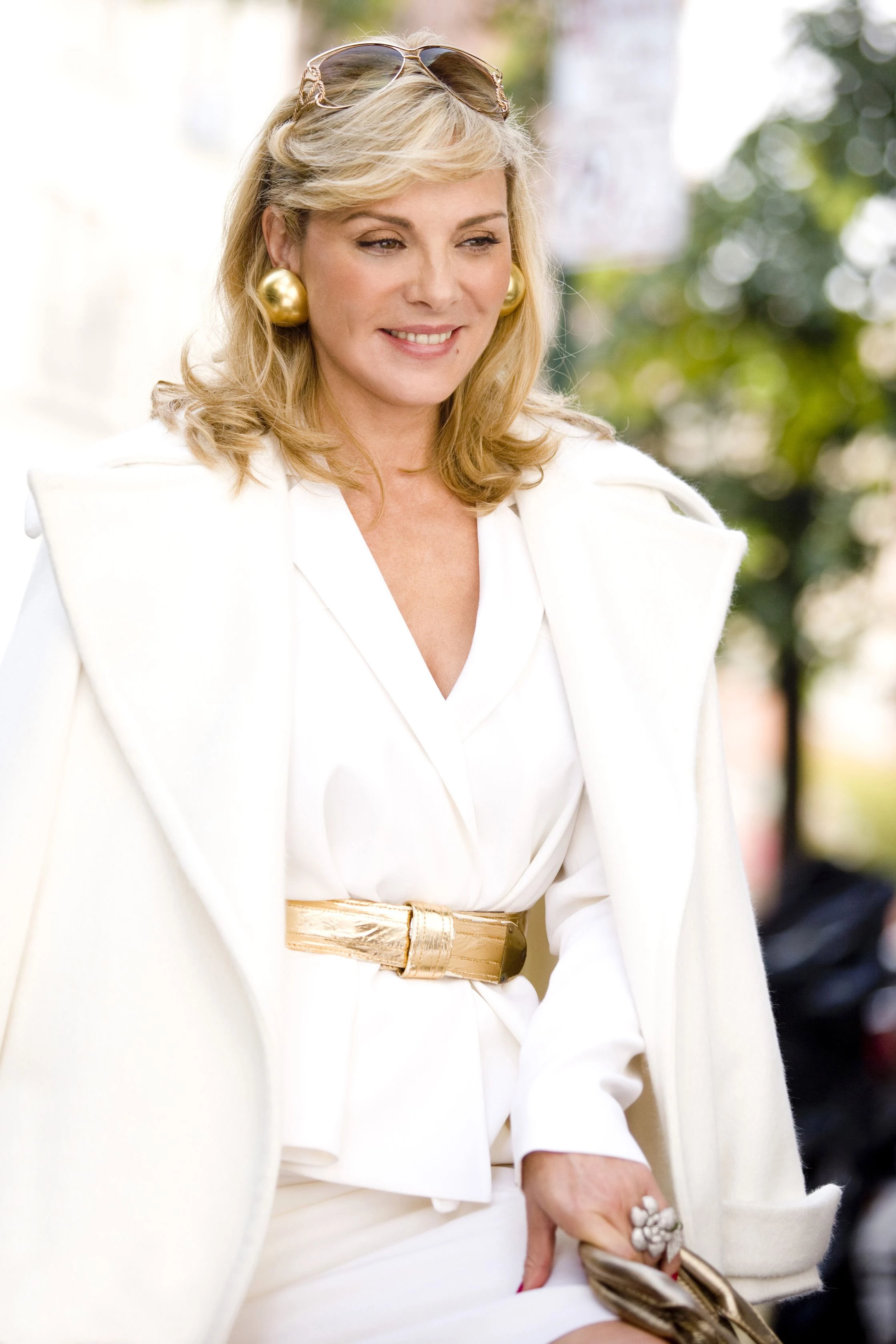 Kim Cattrall as Samantha Jones from Sex and the City
My friends and I sat at a low-ceilinged bar so we could see everyone who passed by. We chose a long table with chandeliers and vases full of lush peonies. It ran along a corridor that led from the main entrance to several other rooms in the back of the bar. As people passed by, our group, which included women in their 30s and 40s, looked around for people to flirt with. It was quite fun at first. Then my friend, who was about my age, and I looked at each other. Everyone around us was attractive, but 15 or 20 years younger than us.
This is a familiar refrain for many women over 40, both in queer spaces like that night and in straight circles. “Everyone here is too young,” I said. In response, one of the women at the table, who was in her early 30s and whom I had just met, said something that always feels like a delicious cake with a fly on it: “But you’re not going to live that long.”
Advertising.
Others started saying similar things. They wanted to say something nice, but I tried to explain: my friend and I weren’t putting ourselves down, and we certainly weren’t complaining about our lack of confidence. That wasn’t the point. We’re just not very interested in dating younger people, because we’re attracted to the qualities that often come with age: wisdom, self-awareness, a sense of humor. I’m interested in someone who already knows who they are. Not someone who’s still wandering through a maze of mirrors in search of their true self.
When women older than you are told, “You're not going to live that long,” that phrase is ageism. It's based on the assumption that aging is a bad thing, so a woman should be happy when she's told she looks younger. But that's not the only problem. It's like we're expected to swallow the double-bottomed compliment and politely say thank you. I don't want to play the younger version of myself. At 20, I was neurotic. At 30, I felt like I should be wise, even though I wasn't. At 40, I know better how to stand up for myself. I go to bed when I want. I eat when I want. I work on things that I choose. The experience I have behind me feels like a superpower. I wouldn't trade a year of that experience.
If we had come to the bar not to flirt, I would probably suggest talking about these phrases. We often say them automatically, but behind them are deep beliefs about age, beauty, and aging. It would be useful to understand this not only for the sake of a larger goal like combating ageism, but also because at some point these women will face it themselves. “But they say it as a compliment,” another friend said. I replied, “It’s like when a man says, ‘Nice tits,’ and then tells you off for being offended.” “But it’s sexism,” she said. “And it’s creepy.”
I agreed. But I had to explain to her why another so-called compliment also makes you uncomfortable. The thing is, at that moment you understand: someone has carefully examined your body and face, compared them to a conventional standard of beauty, and this standard is still considered youth. Then you are told that meeting this standard is good and desirable. This is what seems strange, because youth rarely has much to do with self-acceptance. So the opposite conclusion is drawn: aging is “bad”, and its signs, such as wrinkles or gray hair, are considered unattractive. And you are, in effect, praised for the fact that you supposedly managed to avoid these signs or hide them well.
The moment you finally reach an age where you understand yourself better, you are thrown back into a state of waiting. As if your current life hasn't quite begun yet. As if you have to wait again until you are thin enough, young enough, attractive enough, good enough. Because, God forbid, a woman will truly feel her own power precisely when that power appears in her. “And all this because they told you that you wouldn't live that long?” my friend asked skeptically. “Yes,” I replied. “Because there is good and bad in youth. Just like there is in aging.”
When I was working on my book She Wanted More, I spoke to a range of women aged between 40 and 70 about why it’s important to address these issues. I’m not condemning people who have plastic surgery. But it’s still worrying to see how quickly the industry is growing. One of the main drivers of this growth is the demand for what the British Association of Aesthetic Plastic Surgeons (BAAPS) calls “facial rejuvenation.” This category includes facelifts and eyelid surgery. Sometimes I wonder if the phrase “you’re not going to live that long” will lose all meaning. Not because we’re finally leaving ageism behind. But because cosmetic procedures will become so commonplace that it will be almost impossible to tell someone’s age by their appearance.
We also need to ask ourselves what systems we are supporting with these beliefs. When I spoke to psychologist and author Jodi Day, who works extensively on the topic of women's rights after 60, she helped me understand one important thing: youth is often taken as synonymous with sexual desirability. It's truly grotesque to think about this now, in this day and age. As women, we often don't realize that we are supporting systems that limit us.
After so many conversations with women about strength and joy, it’s hard not to see how it all distracts us from what’s really important. When my friends and I talk about older women who inspire us, it’s never just about their looks. Rather, we’re captivated by their energy, their inner freedom, and what they embody. Often, it’s their ability to live their own way, to change, to start over, and to never lose their joy.
Technology issues, physical frailty, loneliness—these are not necessarily things that come with age. But if we continue to automatically talk about aging as something bad, something to be feared and avoided, rather than embraced, it can become a self-fulfilling prophecy. And there are many other, much better ways to support and value each other.
“So how could you say it without it sounding like an insult?” my friend asked. I thought about it and replied, “A younger woman once looked at me and said, 'I hope I'm this cool when I'm your age.'” I paused. “Let's just say it didn't offend me.”
Based on material from vogue.co.uk