
 Share
Share
The 2026 Met Gala, the Costume Institute's ball, thundered at the Metropolitan Museum of Art in New York . Vogue UA selects the most daring looks that go far beyond the usual: they exude tension, theatricality, and a conscious desire to shock the viewer. Behind each of them is a different idea, brilliantly realized by the beauty teams.
Rachel Sennott
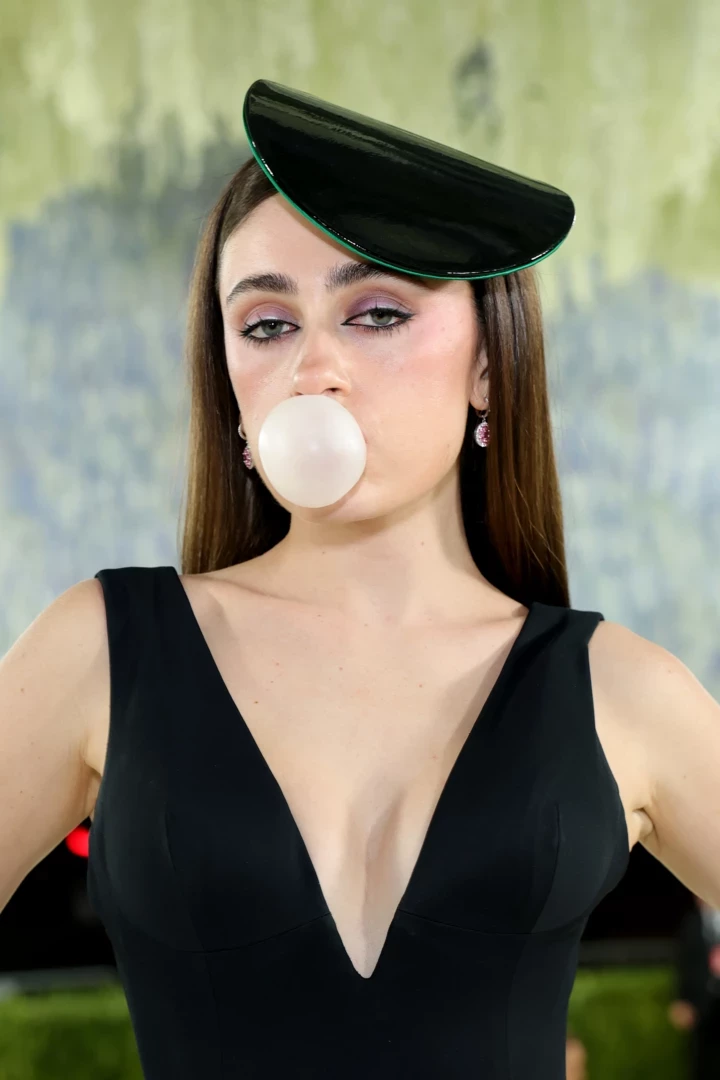
Rachel Sennott appeared at the Met Gala 2026 in a geometric Marc Jacobs dress, complementing it with a beauty look that also became a teaser for the return of Marc Jacobs Beauty after a nearly decade-long hiatus. The centerpiece of the look was a new eyeliner. Makeup artist Lilly Keys built the makeup around the idea of “soft rebellion”: a slightly blurred lilac shade on the eyelids had a romantic, slightly nostalgic mood.
Marc Jacobs Beauty is expected to return in June. But the look will be remembered for the giant bubbles that Rachel expertly blew throughout the evening. It's an unexpected, yet brilliant and witty ending to the look.
Simon Ashley
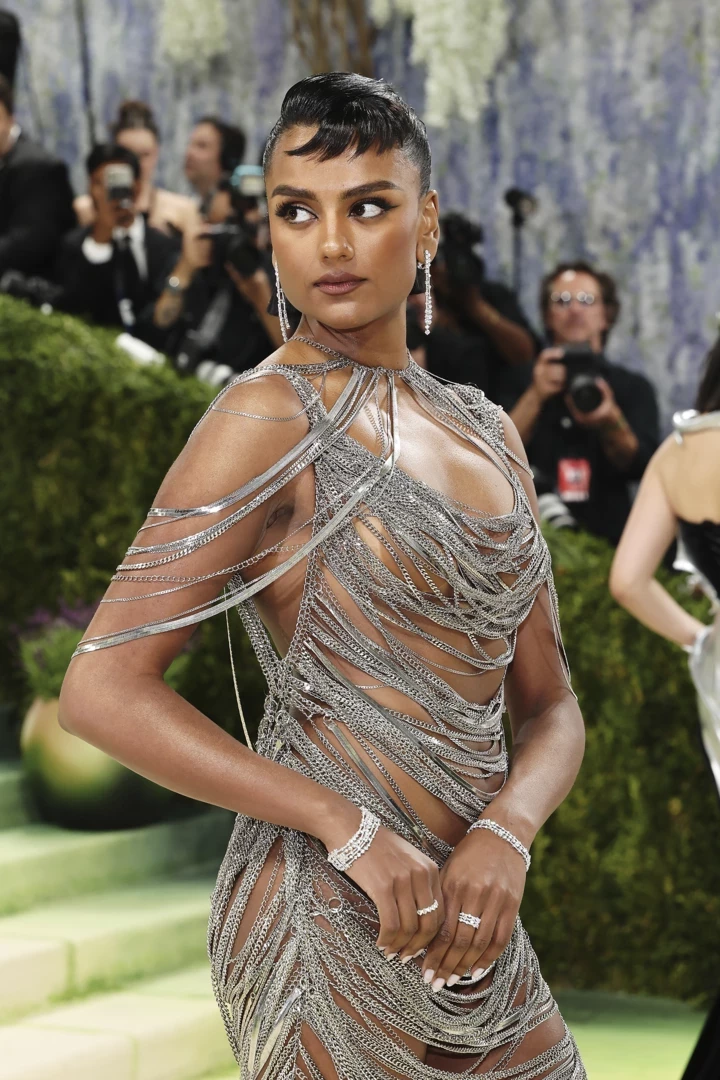
Simone Ashley, star of The Devil Wears Prada 2 (where she plays Miranda's assistant), showed up at the 2026 Met Gala in a Stella McCartney gown made entirely of draped silver chains. The actress's beauty look was a nod to Audrey Hepburn's iconic looks: bold stilettos by makeup artist Alex Babski in partnership with L'Oréal Paris; her signature short bangs (fake, of course) by Peter Lux.
An idea worth borrowing for summer is shimmering body oil: Simone's skin was covered in it.
Advertising.
Sarah Paulson
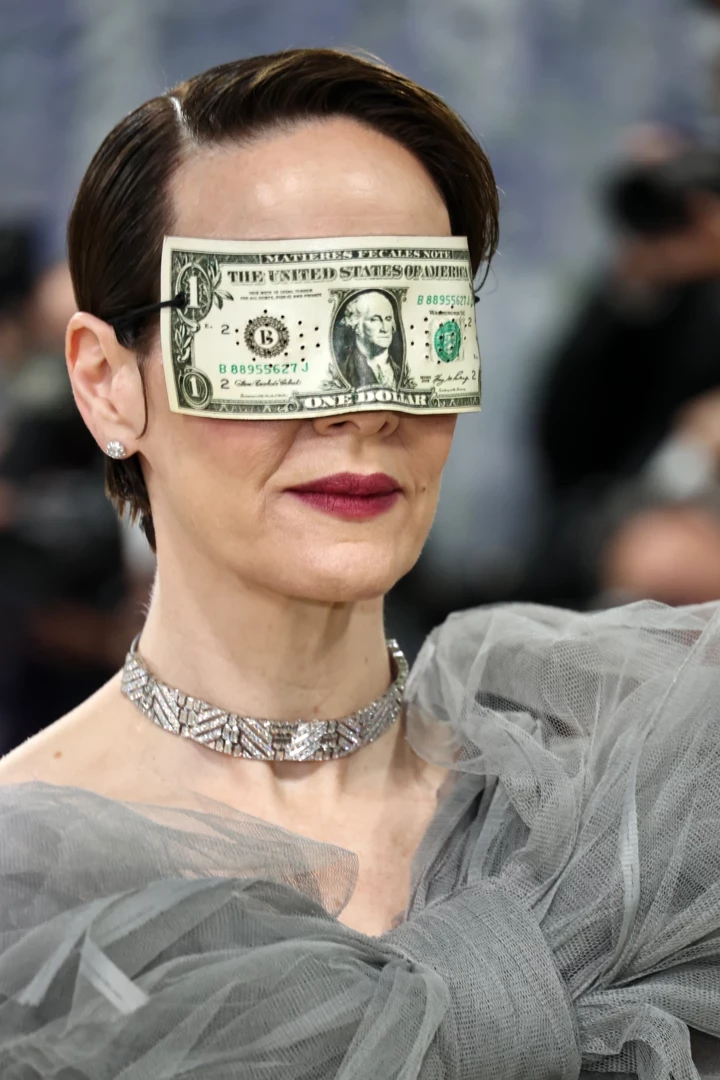
The actress appeared at the ball in a tulle Matières Fécales dress, complemented by a dollar bill, pinned on. like a sleep mask. This satirical statement appealed to the Matières Fécales collection itself and literally meant “blinded by money”. Makeup was done by Australian-born makeup artist Gita Bass, and hair was styled in a flawless hairstyle by stylist Bridget Braeger.
Yseult
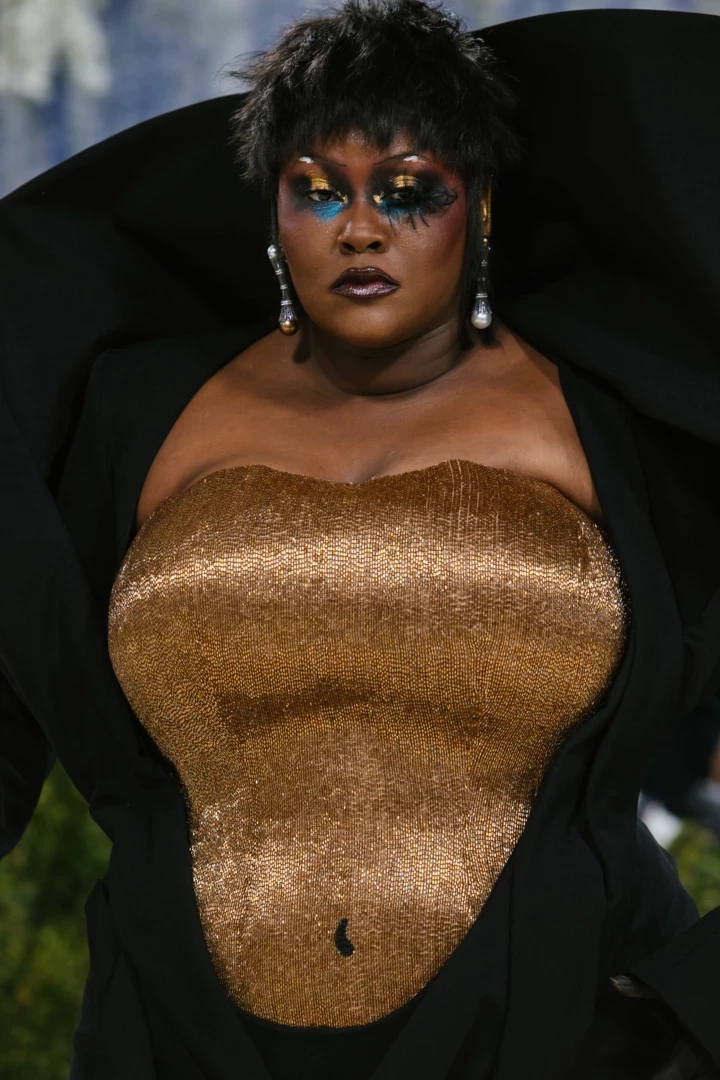
French rapper Isolt, dressed in Harris Reed, hid her face behind a mask, but underneath it, the look was flawless, with an accent on eye makeup in shades of yellow and blue glitter. This was the work of makeup artist Naima, who is an ambassador for Fenty Beauty. The short, sloppy haircut (which was securely covered by a hat, but still appeared in some shots) was created by star stylist NaivashaIntl, known as the Curl Queen.
Jordan Roth
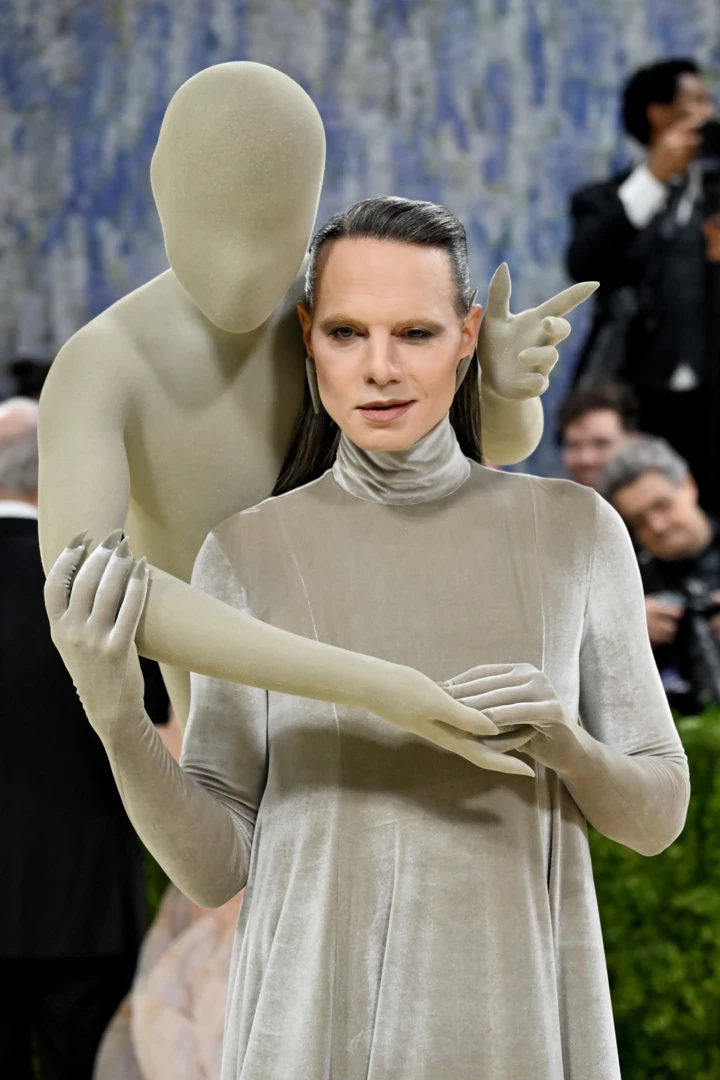
Producer Jordan Roth appeared in a Robert Wun outfit that created the illusion of a second body — like another “uninvited” guest who had sneaked into the event. Such a gesture can easily be read as an ironic comment on the very nature of the Met Gala — a highly private event with a strict access system. Against the backdrop of the cost of a ticket, which reaches approximately $ 100 thousand, the appearance of an “additional” character within the framework of a single image is a subtle play on the theme of privilege and access.
Cardi B
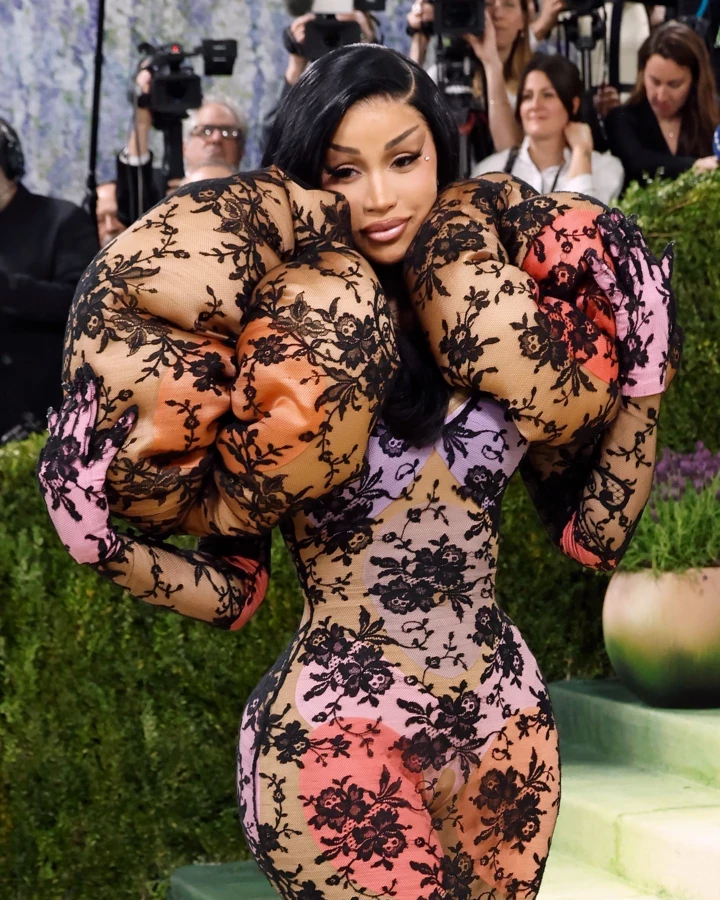
Cardi B chose a Marc Jacobs outfit that could have evoked associations with the movie “Substance” because it imitated a body altered by interventions. The star's makeup – straight eyebrows and arrows directed towards the temples – was created by makeup artist Tina Wagenblast, and the glossy hair was entrusted to the star's stylist Tokyo Stylez.
Teyana Taylor
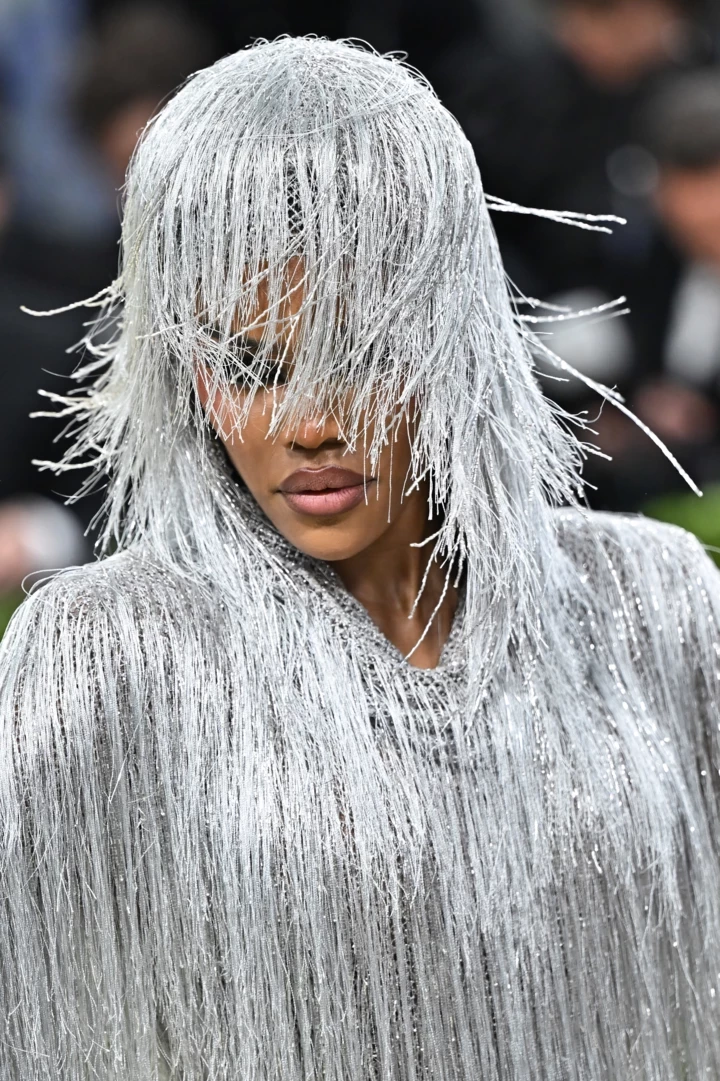
Star of the Oscar-winning film “One Battle After Another,” newly minted Revlon ambassador Teyana Taylor chose a silver fringed dress from Tom Ford by Haider Ackermann for her appearance at the Costume Institute Ball. The silver fringe imitated flowing bangs, and makeup by makeup artist Yeika Oliva emphasized the cold metallic mood of the look. And a real homage to Tina Turner.
Janelle Monáe
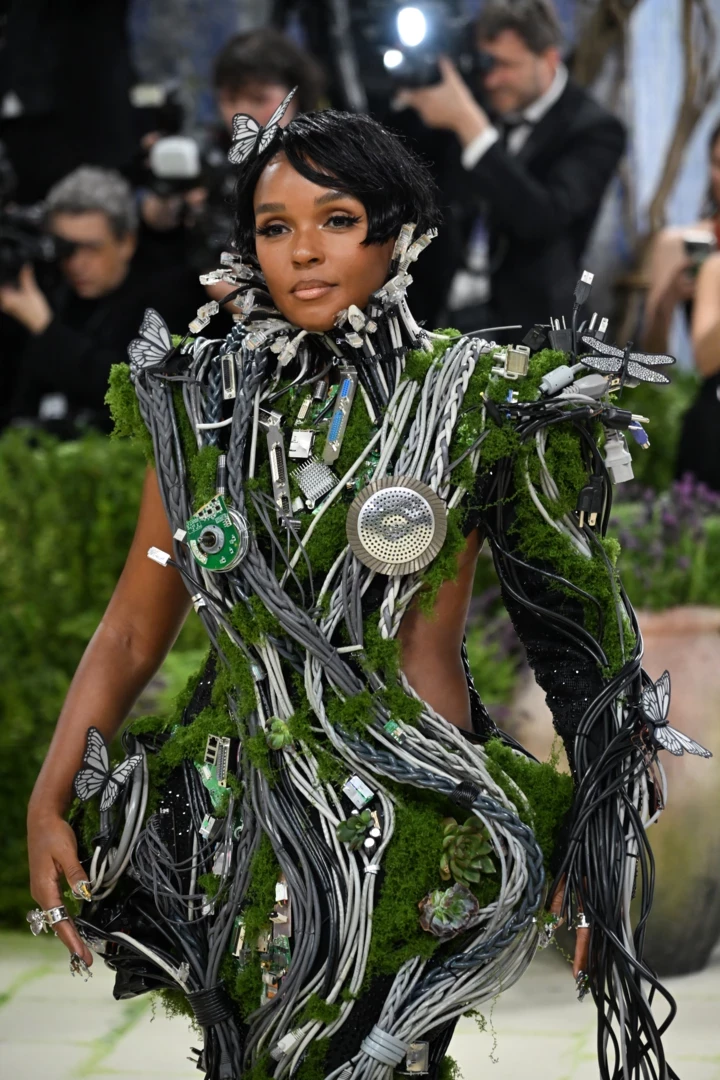
“Living moss, 8 succulents, 4 moving butterflies, 2 flying dragons, 5,000 black crystals, a motherboard, 230 electrical wires, cables, wires,” is how Janelle Monáe describes her eco-futuristic look. The butterfly-adorned hairdo was created by Nikki Nelms, and the makeup, featuring a trendy, accentuated lip line, was designed and executed by makeup artist Kita Moore. This look is Monet's homage to her futuristic alter ego, Cindy Mayweather.
Maria Zardoya
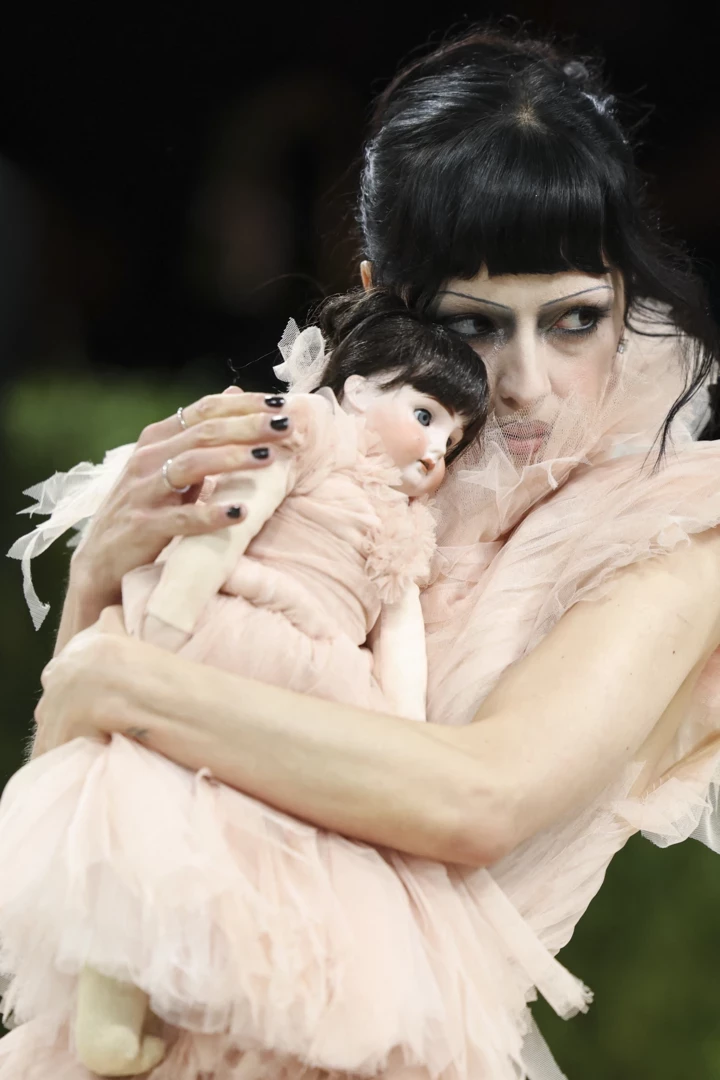
“When I was little, my cousins and aunt in Puerto Rico called me la muñeca de porcelana – 'the porcelain doll'. They would dress me up, and I really liked it. For my appearance at the Met, I wanted to symbolically bring my family with me,” says American singer Maria Zardoya in her Instagram post.
So she decided to “bring a younger version of myself to the Met Gala.” According to the singer, the porcelain doll, created in the early 20th century, which she held in her hands, personifies “a girl who ran barefoot and played with chickens in the backyard of a house in the Puerto Rican hinterland.”
Makeup in the spirit of the 1920s using YSL Beauty products was created by makeup artist Sandy Nicha, and the luxurious hairstyle was invented by Japanese-born stylist Chika Nishiyama.
Vera Wong
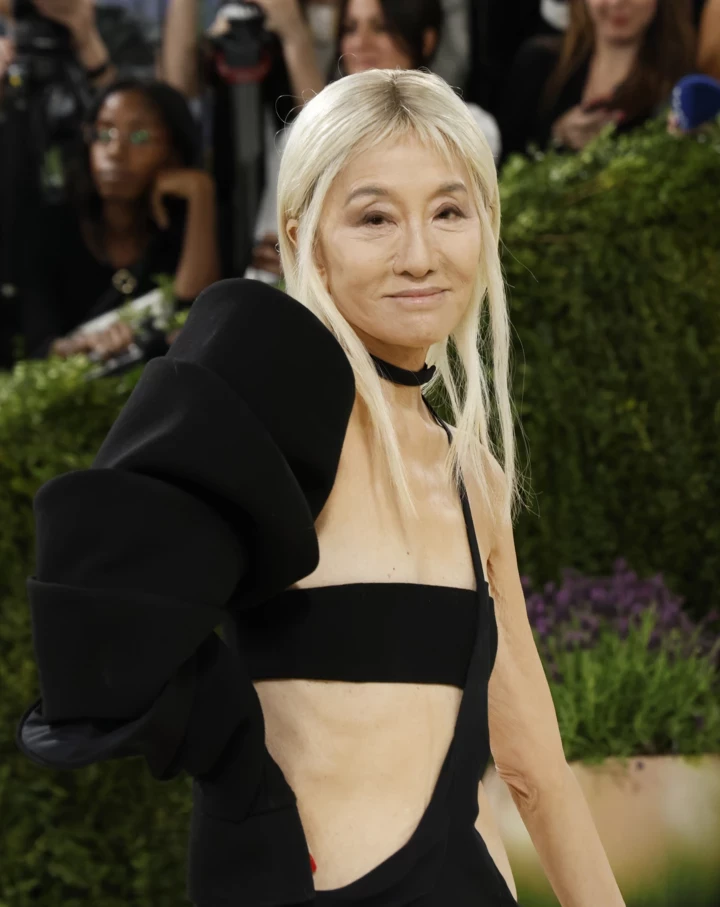
76-year-old Vera Wang came to the Met Gala almost in her own image: a slender figure, an open dress (Vera Wang Couture), long locks (unexpectedly – lightened to an icy blonde). Every time this woman appears on the red carpet, I want to make a wish: “To be like Vera Wang when I grow up.”
Katy Perry
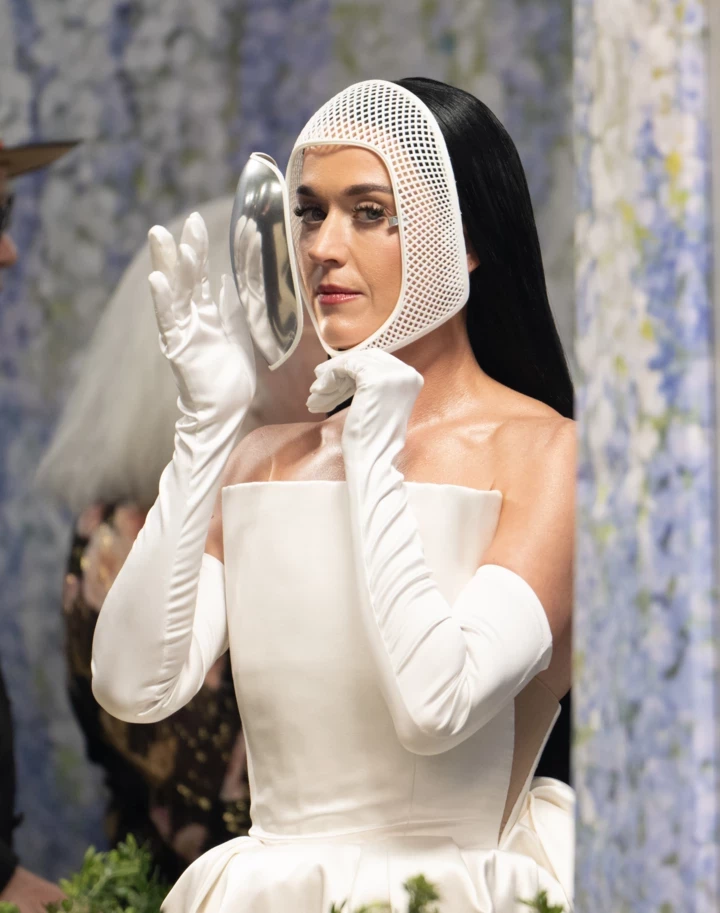
Fencing mask, grills, six-fingered glove: Katy Perry, who hasn't been making many appearances lately (or rather, this is her first major outing since 2022), is making fun of the future that's already here. Yes, the extra finger is a reference to a common AI “glitch” that, until recently, couldn't accurately depict human limbs.
Katy Perry's fencing mask, created specifically for her Stella McCartney dress by Miodrag Huberinić, was designed as a literal and symbolic reflection that invites the viewer to reflect: the perception of others is often a projection of one's own inner world – and at the same time can hide the truth.
Hamish Bowles
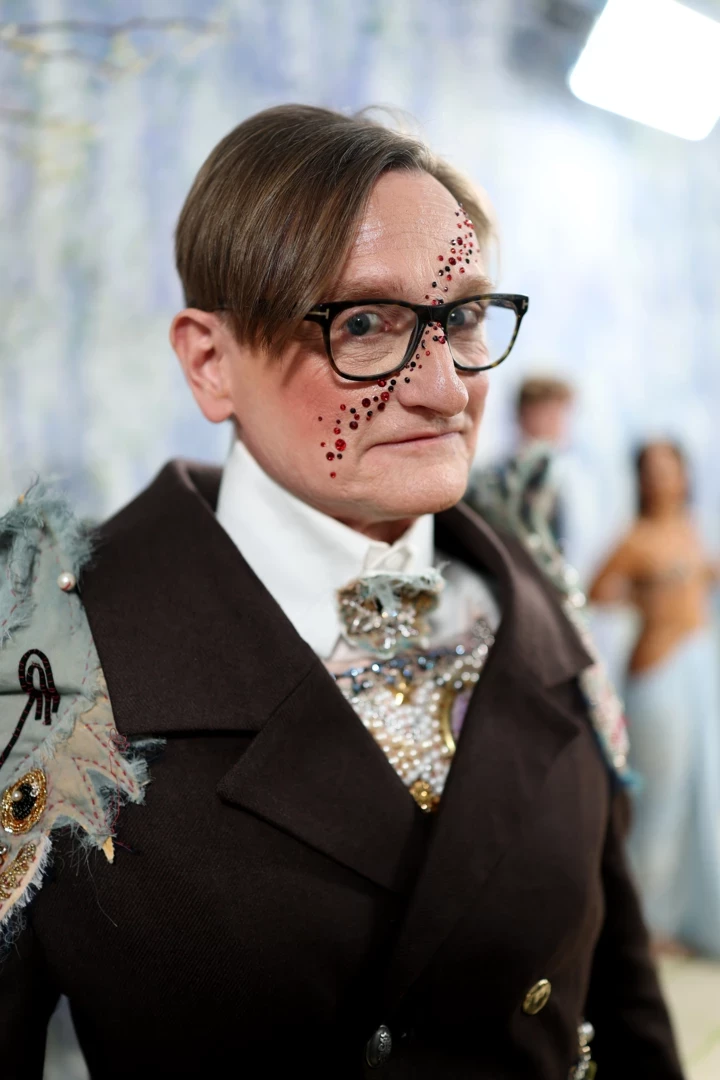
The fashion historian and Vogue editor appeared at the 2026 Met Gala wearing a Charles Jeffrey Loverboy suit, inspired by both the Victorian era and older cultural codes. The look was based on 16th-century drawings of Pictish warriors who covered their bodies with ornaments of predatory animals and birds – these motifs were reinterpreted and transferred to the silhouette of the suit in the style of the 1830s.
The beauty part of the look was no less expressive: the makeup, created by makeup artist Nico Haagenson, – a scattering of rhinestones and bright blush – emphasized the decorativeness and theatricality of the look.
Heidi Klum
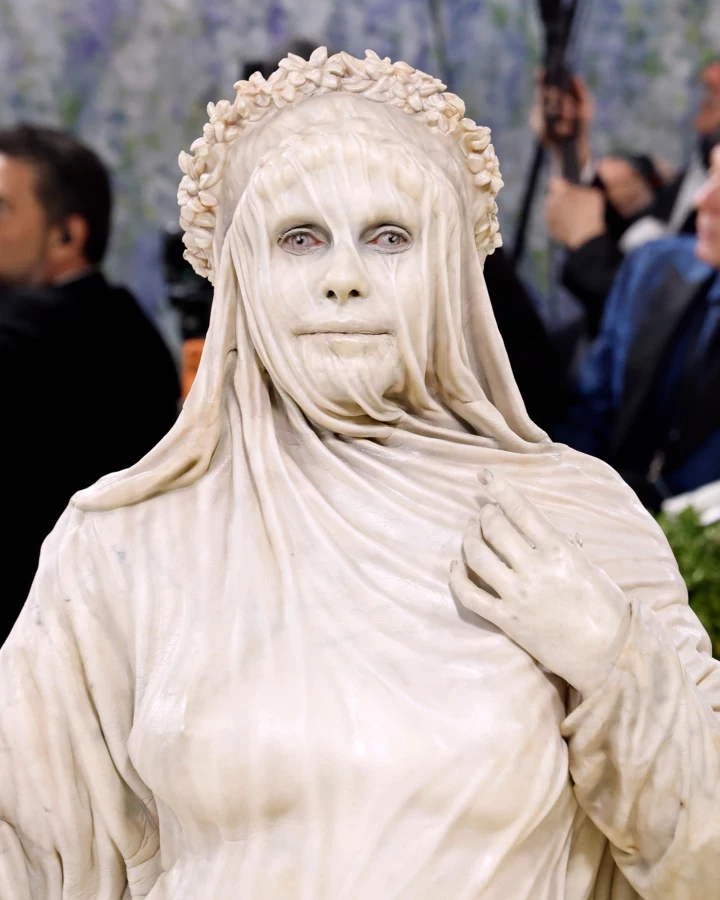
The model appeared at the 2026 Met Gala in a look inspired by Raphael Monti's “Veiled Vestal Virgin” sculpture – one of the most famous examples of the “marble illusion”, where the fabric seems to shine through the stone. The look was created by the brilliant plastic makeup artist Mike Marino, a three-time Oscar nominee and winner of several Emmy Awards for makeup work in films. He transformed latex into an accurate imitation of carved marble.
The folds of the “fabric”, the contours of the face and even the texture of the surface have been recreated with almost surgical precision: the body is not simply draped, but “frozen” in the material. The image works on the edge of illusion: it simultaneously conveys fragility, strength, movement and complete immobility.
Gwendoline Christie
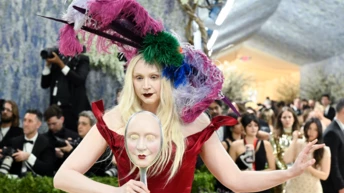
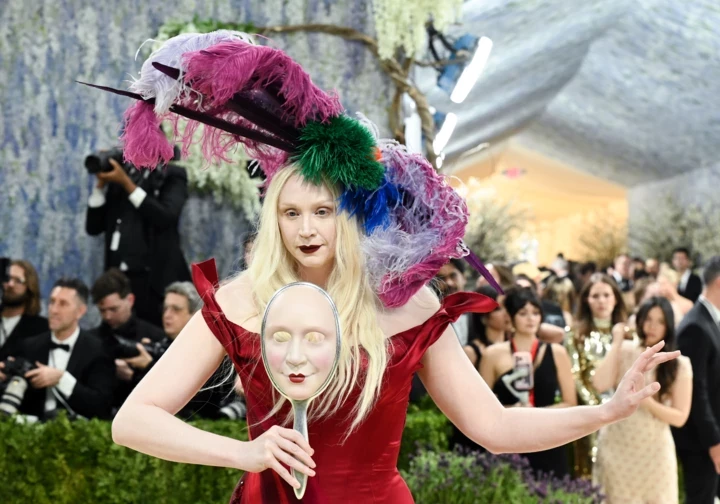
The actress appeared at the 2026 Met Gala in a Giles by Giles Deacon gown. The cinched-in silhouette and mermaid skirt were reminiscent of John Singer Sargent's portraits, while the colored diagonal stripes were reminiscent of Ira Cohen's “hallucinogenic” photographs. Gwendolyn's own face mask was created by artist Gillian Wearing.
The mask works simultaneously as a mirror, a shield and a double, blurring the line between face and image. It does not hide, but multiplies identity, – describes Christie's idea. The headdress, created in collaboration with Stephen Jones, is an explosion of ostrich and pheasant feathers, painted in a complex red range with a reference to Titian's painting.
Kim Kardashian
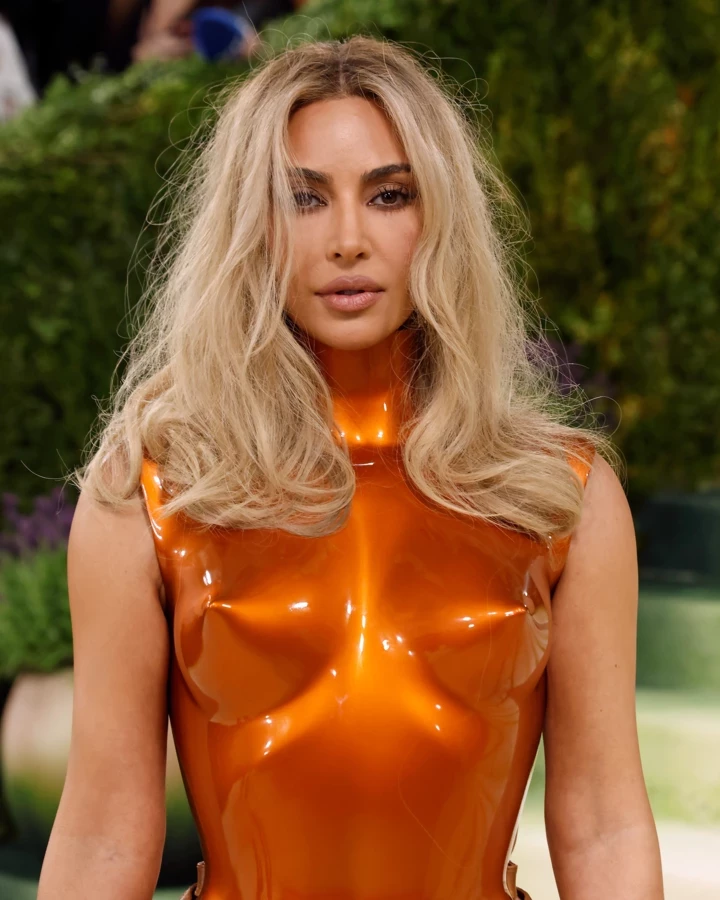
Kim Kardashian wore a look created in collaboration with British artist Allen Jones and creative director Nadia Lee Cohen at the 2026 Met Gala. The centerpiece was a rigid corset-bustier, molded from the body shape of a 1960s model. It was finished in an auto body shop to achieve its signature gloss and density.
The material and form directly refer to Jones's work – in particular the Body Armour series, where the body is treated as an object, almost like a sculpture or fetish artifact. The pointed shape of the breasts, the outlined stomach and navel emphasize the idea of an artificial, constructed body. The platinum blonde with soft waves contrasted with the hard, deliberately glossy surface of the corset.