

This time, it's all personal… It's almost impossible to walk through Costume Art, The Met's massive fashion exhibition, and remain an indifferent observer. The visitor inevitably becomes part of the exhibition, seeing their own face on the flat mirror surface of the faceless mannequin heads. They were created by sculptor Samar Hejazi. This interactive element turns a visit to the museum into a small journey of self-discovery. At the same time, it makes the exhibition an experience that cannot be completely replicated in digital format. This is especially important now, when people are increasingly being replaced by machines, and anxiety about artificial intelligence is becoming almost ubiquitous.
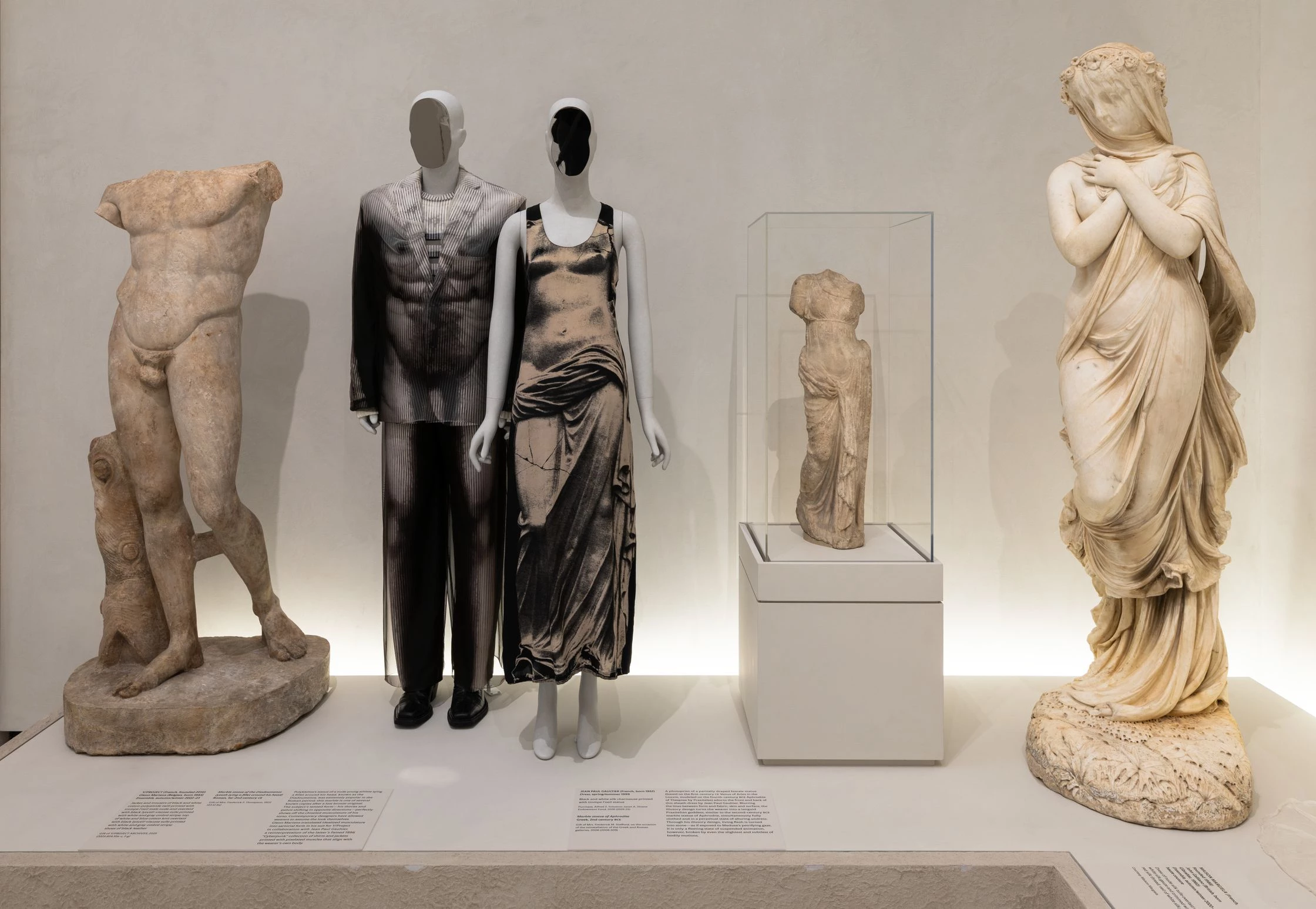 Glenn Martens's looks for Y/Project and Jean Paul Gaultier among classical sculpture in the Naked & section
Advertising.
Curator Andrew Bolton, who conceived Manus x Machina, an exhibition about the harmonious coexistence of humans and technology, ten years ago, is ahead of his time again. This time, he talks about materiality in a world that increasingly reduces everything to the flat screen. After all, what could be more material than the human body?
“The whole exhibition is built around body typologies. These are the bodies you see throughout the museum when you encounter the artwork,” Bolton explains. What you won’t see anywhere else at The Met are mannequins with different body types, modeled after specific people. These mannequins were created specifically for the Costume Art exhibition.
Same date, new place
With the opening of the new permanent Condé M. Nast Galleries near the Great Hall, the Costume Institute’s exhibitions have found a beautiful new home. One of the main advantages of this space is that exhibitions can be shown here for longer.
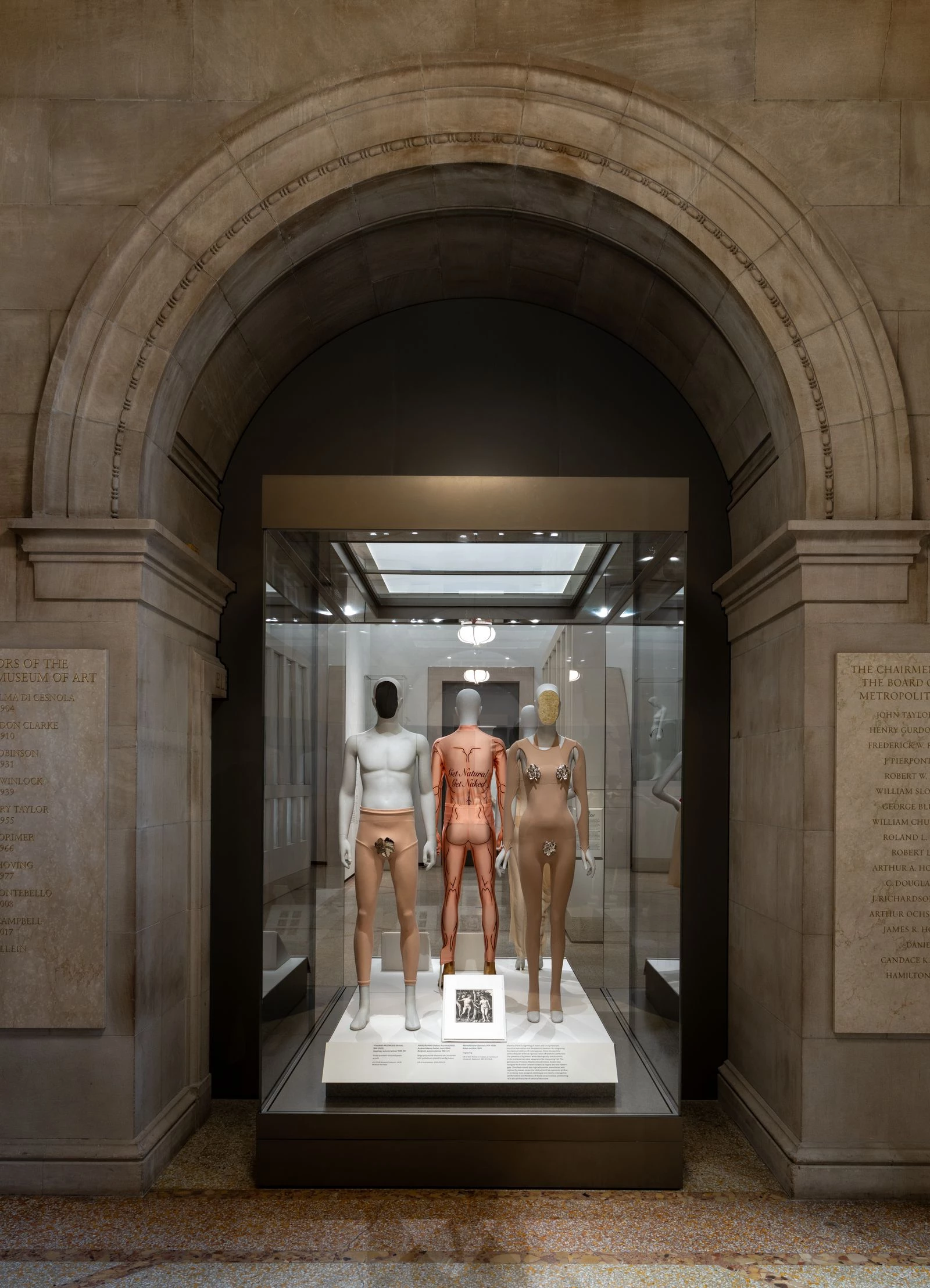 The exhibition teaser is a showcase that opens in the Great Hall and presents images that reveal the idea of Naked &
Fashion’s association with femininity, and therefore with frivolity, has long distanced it from high art. “There’s always been a certain ingrained sexism around fashion as a discipline,” says Bolton. “But I think fashion has been excluded from the history of aesthetics to some extent precisely because of its proximity to the body.” The secondary status of clothing is also influenced by the notion that it is, as he puts it, “something decorative, illustrative or supplementary.” Clothing also has a nature of its own. It is tactile, made for the human body, and ultimately comes to life only on it. Painting and sculpture, by contrast, are usually seen as more self-contained art forms. They are more often associated with intellectual contemplation. The mind-body divide is another established notion that Bolton wants to overturn.
Starting points
We have now outlined Bolton's vision and focus on the human body as a link between art and fashion. This is important at a time when technology threatens to devalue and displace people, although the curator himself did not state this as his main goal.
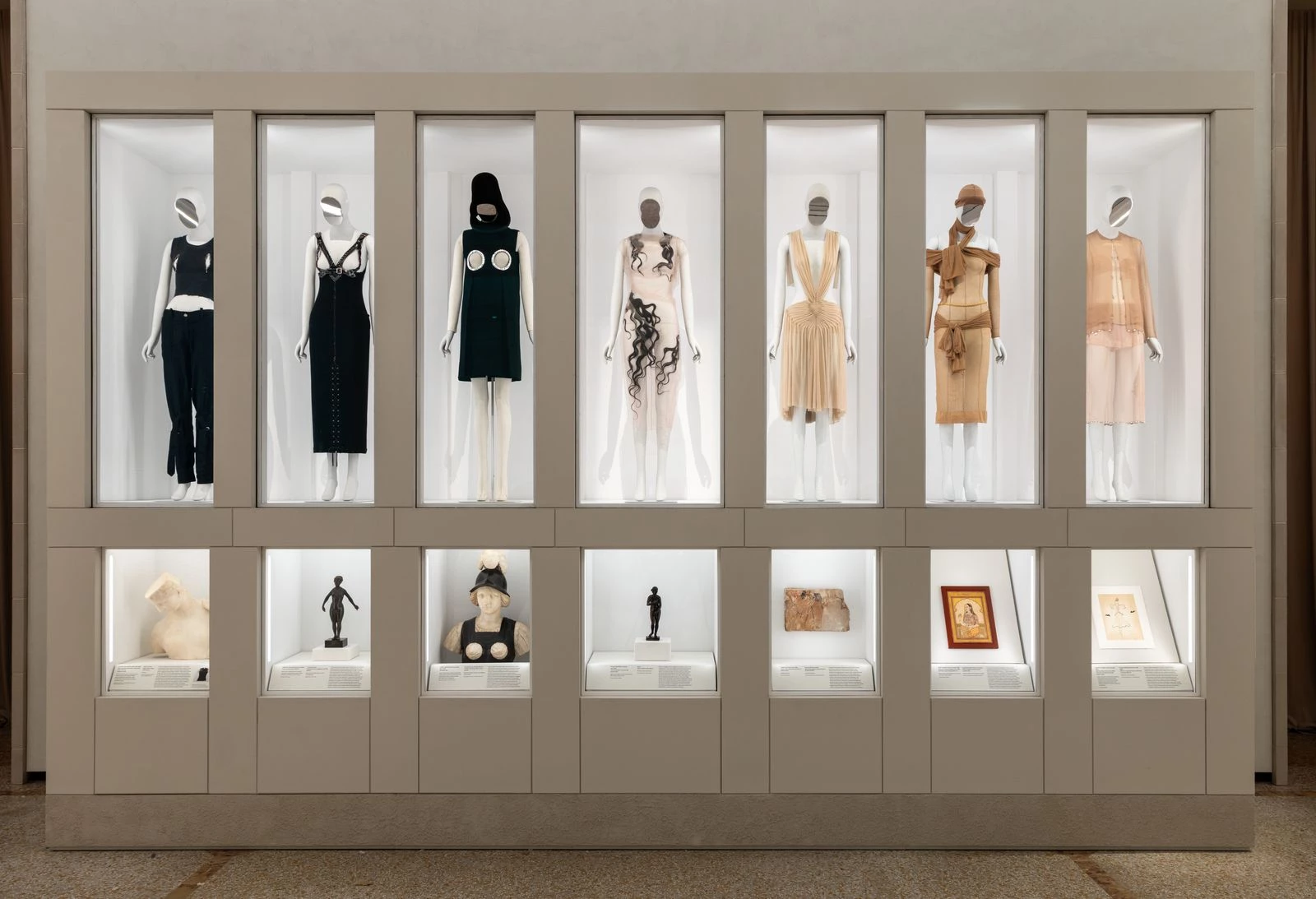 Photo: © Anna-Marie Kellen / The Metropolitan Museum of Art
The Costume Art exhibition is built on oppositions. The main one concerns the division between art and fashion. The curator reveals this idea through what he calls typologies of bodies. There are two main groups. They are related to form and function. The first is called Diversity in Bodily Being, that is, “diversity of bodily being.” This is a more academic way of talking about difference. This is where the sections Pregnant, Corpulent and Disabled are located, dedicated to the pregnant body, the full body and the body with a disability. The second group, “Bodily Being in Its Universality”, that is, “bodily being in its universality”, considers the very structure of the body. It is about blood, bones, muscles, as well as aging and mortality, which concern every person.
The exhibition begins with a glass display case leading from the gallery into the Great Hall. It is dedicated to Naked & Nude Body, that is, the naked and naked body. The first section focuses on things that reveal the body through transparency or exposed skin. Transparency is represented by Vivienne Westwood's flesh-colored leggings. They are placed next to Albrecht Dürer's engraving “Adam and Eve” from 1504. The second group includes Rudi Gernreich's monokini from 1964. At one time, it broke the taboo and exposed the breasts. It also shows a candid image by Jean Paul Gaultier with suspenders. It was in it that Madonna showed her breasts under her cone-shaped bra at the 1992 AmFAR charity event, organized to raise funds for the fight against AIDS.
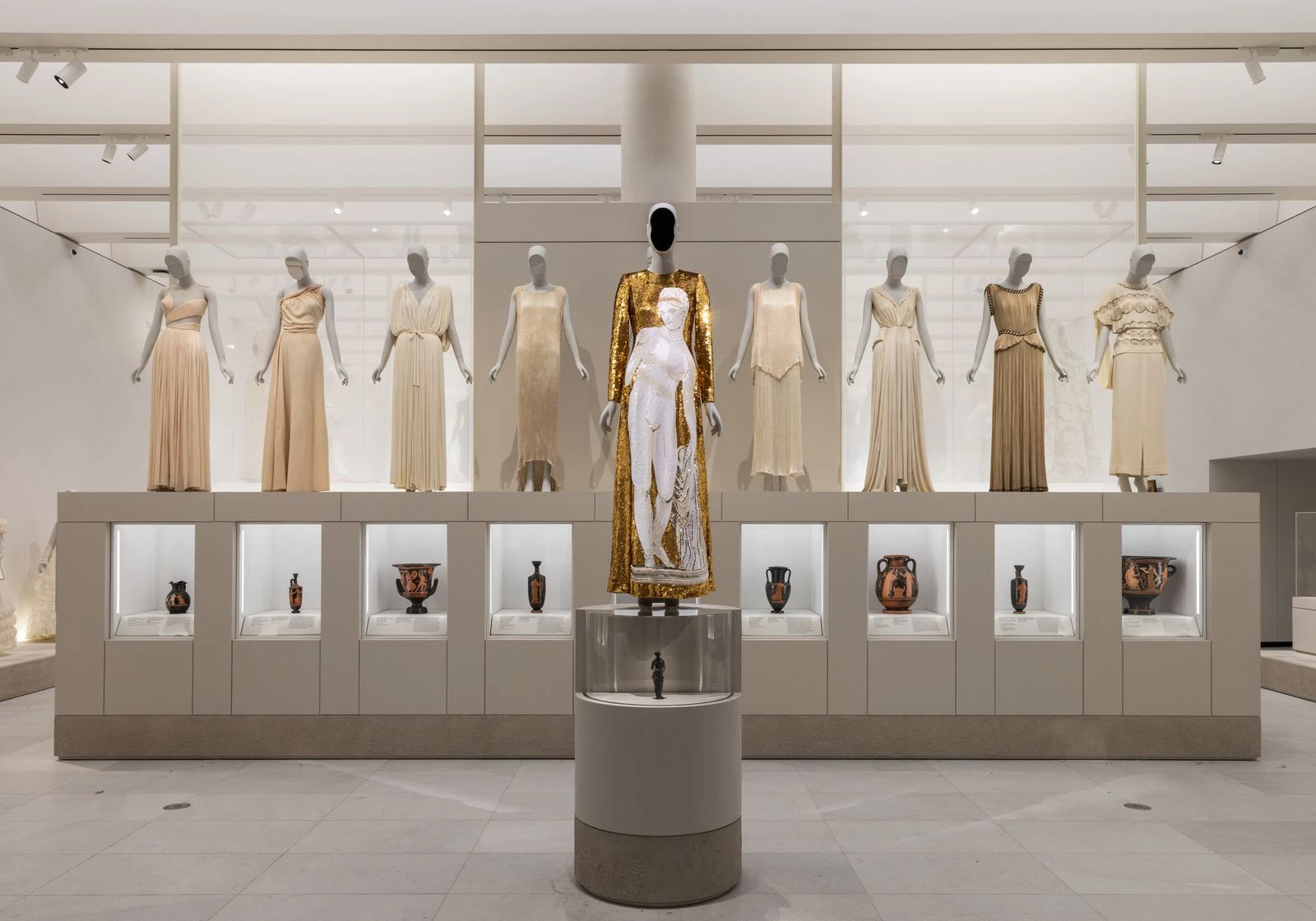 Goddess-style dresses in the Naked & section
The very concept of nudity can only be understood in relation to the opposing idea of the clothed body. This means that fashion works like a tempting apple that changes our perspective. Furthermore, the naked body should not be perceived as the body in its natural state. As Bolton writes, “even when the body is depicted undressed, it is never naked, for it is clothed in the physical and cultural ideals of a particular time and place.” The body always embodies the ideals of the era in which it is depicted.
The most dramatic part of the exhibition is dedicated to the Classical Body. On raised columns, like caryatids in ancient architecture, a row of goddess dresses by Madame Grès, Fortuny and other designers stands. Below them, in illuminated display cases, Greek urns are placed. Even in 2026, ideals of beauty still have a mythical character. The balance and proportions that the ancient Greeks and Romans idealized are still the measure of beauty. Draped things that softly repeat the natural lines of the body are contrasted here with images with a rigid construction. They do not repeat the body, but rather impose on it the idea of an ideal physical form.
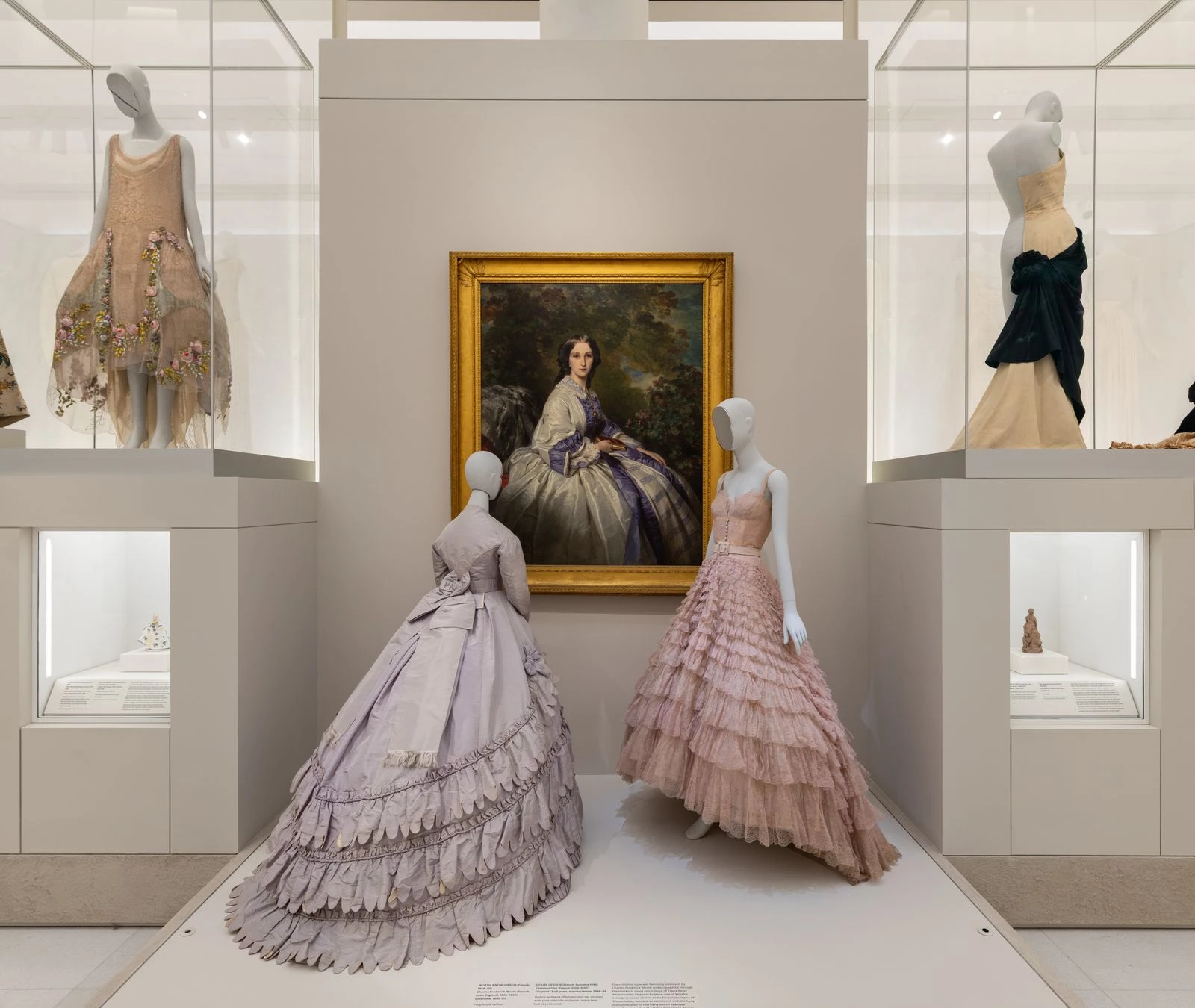 The Abstract Body section features a combination of petticoats and structures that altered the silhouette of the body. Photo: © Anna-Marie Kellen / The Metropolitan Museum of Art
A transparent fabric partition allows the visitor to see from the Classical Body section into the next section. According to Bolton, it is “about how the female body was restricted for the sake of a certain ideal of beauty, characteristic of a particular time and place.” He calls this section Abstract Body, that is, an abstract body. It shows how the female figure was changed with the help of shape-forming clothing and structures: corsets, hoops and tourniquets. In this way, the female body was given unnatural outlines. There is a lot of historical stuff in this section. This section is particularly convincing in showing how fashion was used to physically and aesthetically control the female body.
In our era of supposedly free clothing, women’s bodies are no longer restrained by corsets, but by laws. For example, in the US, the decline in birth rates has coincided with restrictions on access to contraception and abortion. This narrative is complicated by the idea that a woman’s place is in the home. Today, this notion is adopted or even imposed by the TikTok phenomenon tradwifery, i.e. the aesthetic of the “traditional wife.”
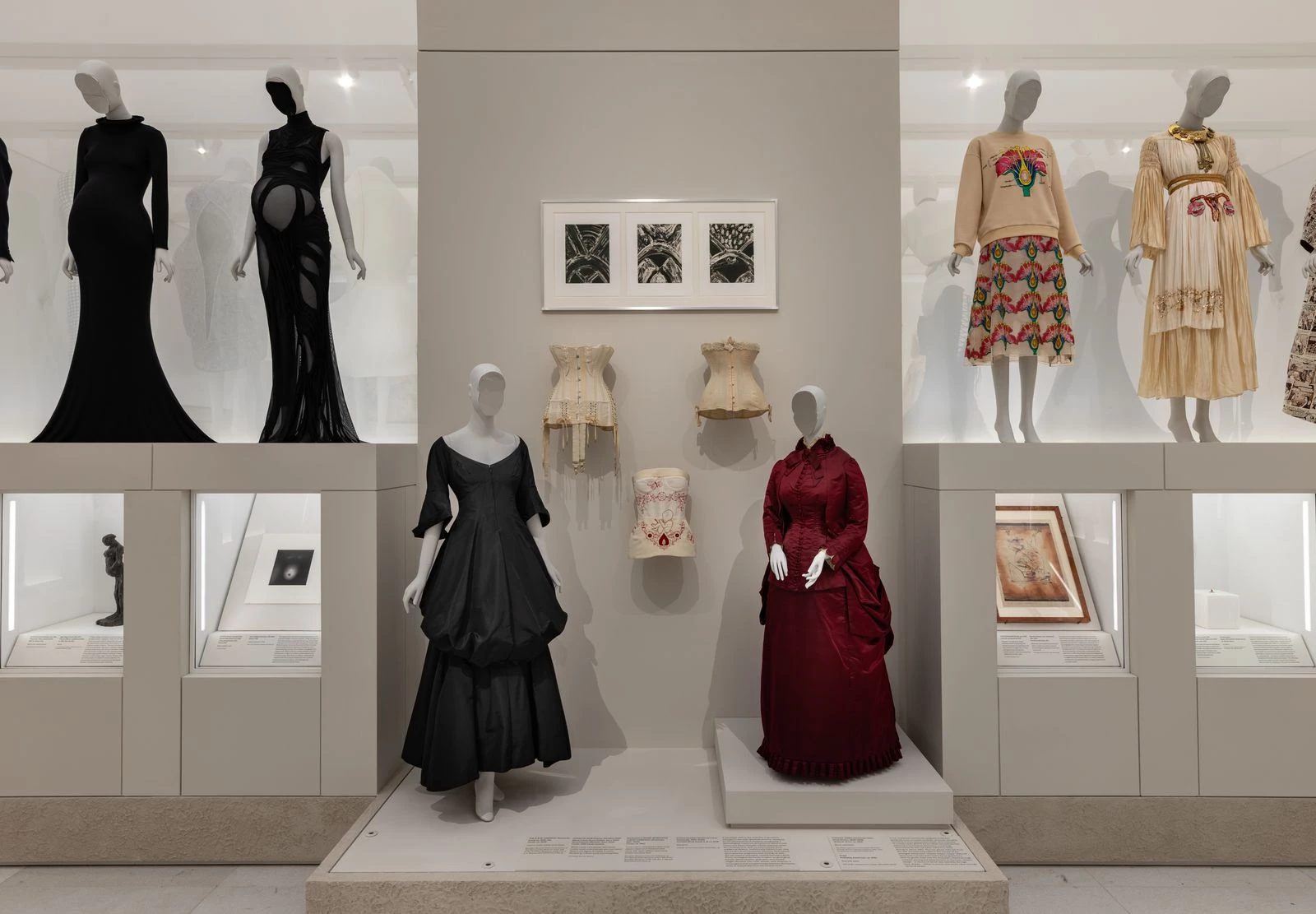 Pregnant Body section. Photo: © Anna-Marie Kellen / The Metropolitan Museum of Art
In contrast, the designers featured in the Reclaimed Body section define beauty by their own rules. They create clothes for pregnant bodies, plus-sized bodies, and bodies with disabilities. These are the bodies that have long been marginalized in society and in museums. Among the most striking examples are Rei Kawakubo's work for Comme des Garçons and Durand Lantinck. Both designers add volume to the body and force it to change shape in bizarre ways. In these images, exaggerated bumps and bulges defy anatomical rules.
At first glance, visitors looking at a Van Gogh painting might think that the common theme here is flowers. On the sides of the canvas are pieces by Yves Saint Laurent and Jonathan Anderson for Loewe, featuring the artist's irises. But the connection between them goes deeper. “They all have mental health issues,” Bolton explains. There's Yves Saint Laurent, who had mental health issues. Jonathan, a big advocate for neurodiversity, as you know, has severe dyslexia.”
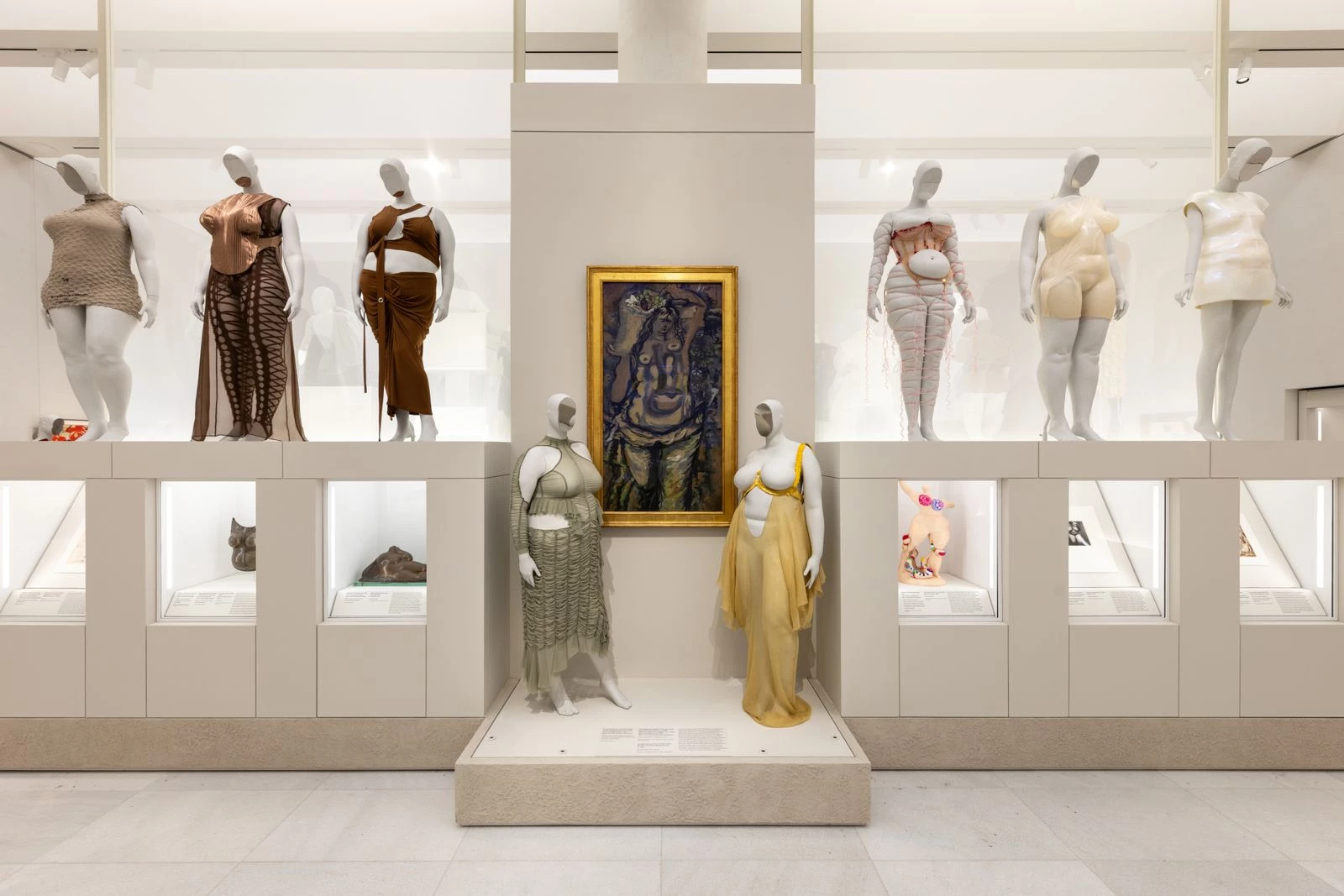 Corpulent Body section, dedicated to the full body. Photo: © Anna-Marie Kellen / The Metropolitan Museum of Art
In Sleeping Beauties, the Costume Institute’s 2024 exhibition, Bolton expanded our perception of fashion through smell and touch. These are two senses that artificial intelligence, at least so far, has not been able to replicate. Here, tactility is linked to disability. For example, Braille is integrated into Angela Wanjiku’s dress, and Chet Lo created his spiky knitwear in collaboration with a nonprofit organization that works with the blind and visually impaired.
A view from the inside
Moving into the lower-ceilinged galleries takes us from the individual to the collective. As Bolton puts it, “We all have blood flowing through our veins, we all have hearts and lungs, we all have skin… we all age, we all die.” Mesh pieces with tattoo prints by Martin Margiela, Jean Paul Gaultier, and others are the highlights of the Inscribed Body section. And Olivier Theiskens’ 1998 dress, with its soft wool base and red vein embroidery, illustrates the idea of the Vital Body. It is a body connected by fine vessels through which blood flows. Anatomical Body focuses on pieces that reveal the muscles and internal structure of the human body. A good example is a Thom Browne linen dress, half embroidered in red in a way that resembles a medical drawing.
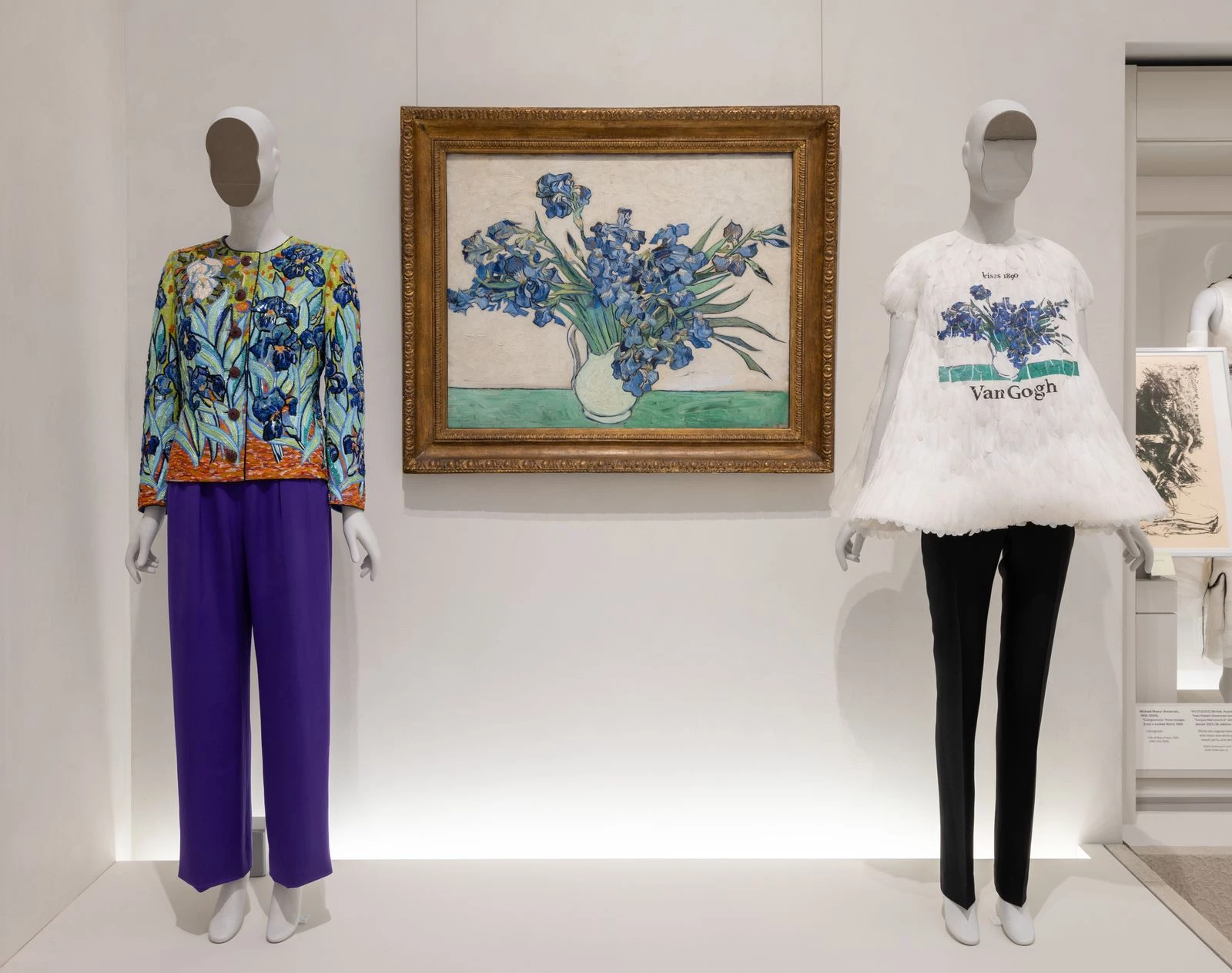 A painting by Vincent Van Gogh alongside images by Yves Saint Laurent and Jonathan Anderson for Loewe. Photo: © Anna-Marie Kellen / The Metropolitan Museum of Art
The exhibition concludes with sections on the Aging Body, the Mortal Body, and finally the Epidermal Body. Batsheva’s sweater, which reads “Hag,” represents the first. The Thom Browne skeleton dress worn by Caroline Trentini at the 2019 Met Gala represents the second.
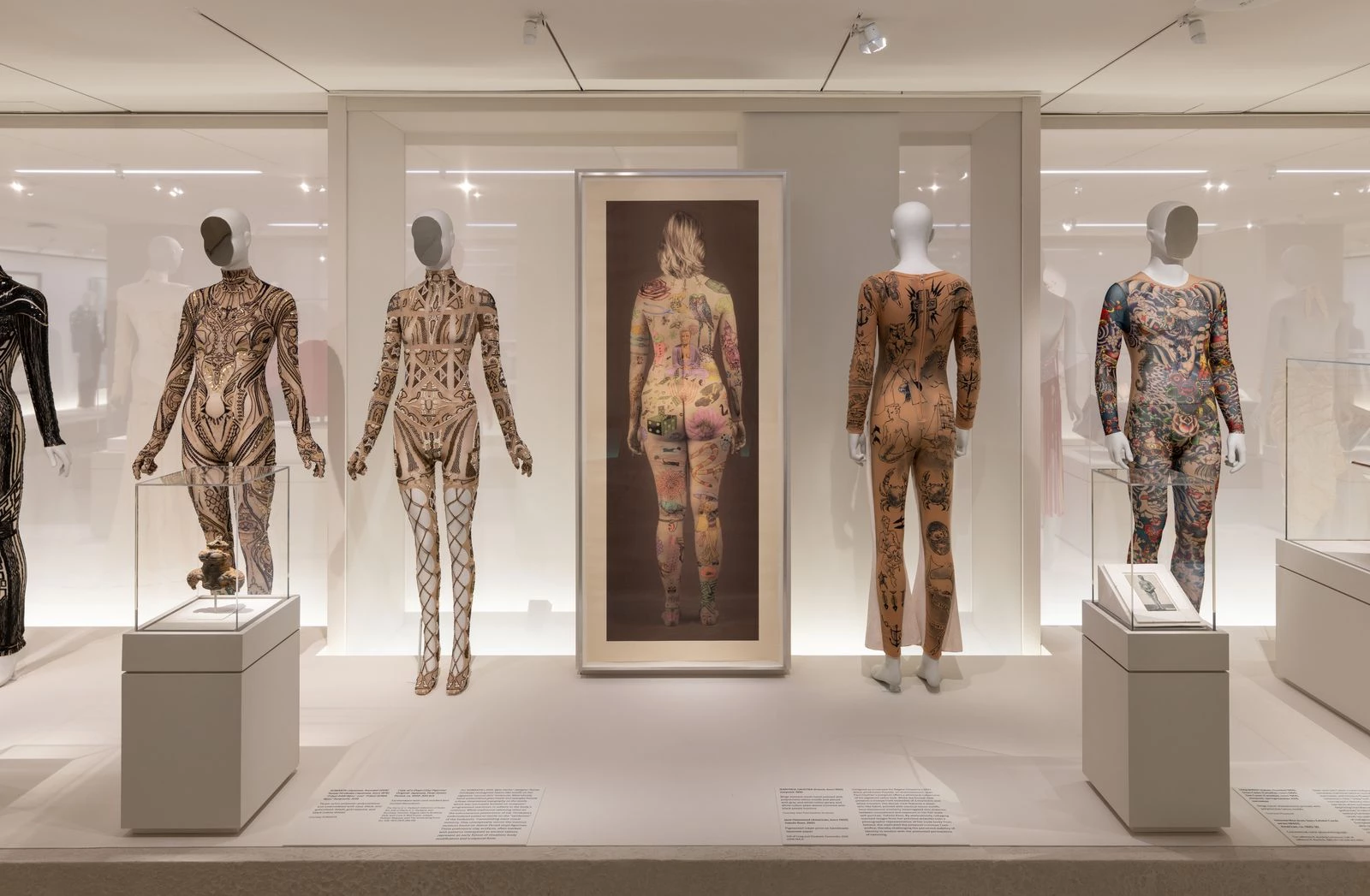 Photo: © Anna-Marie Kellen / The Metropolitan Museum of Art
The Book of Ecclesiastes states that “death comes to all.” Over time, designers have addressed the inevitability of death through memento mori: skulls, hair, and skeletal motifs. If we understand nudity through the clothed body, perhaps our understanding and enjoyment of life is enhanced by the awareness of death. Despite its eerie elements, the exhibition ends on a hopeful note. Ultimately, it is about human connection.
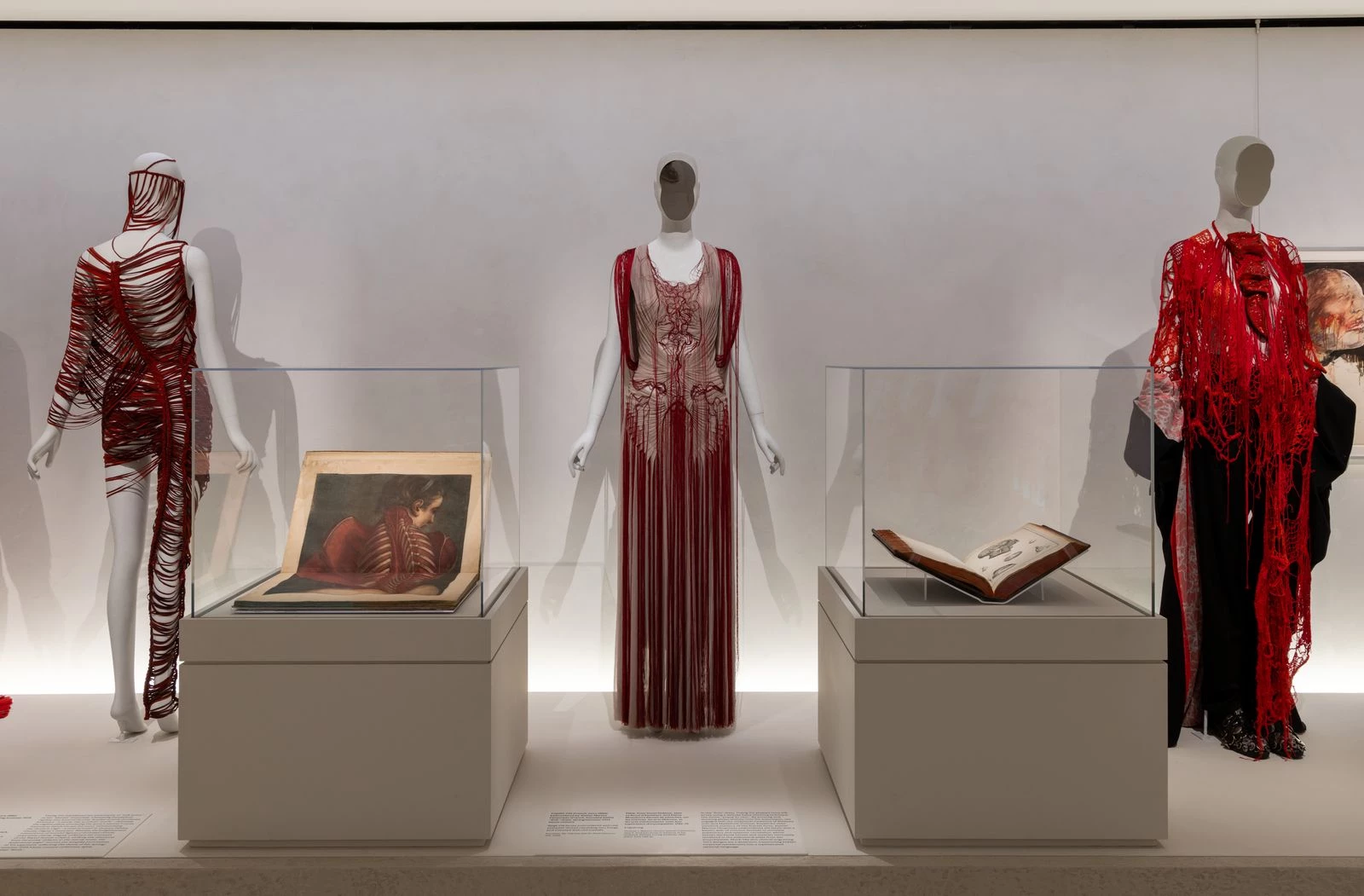 Vital Body section, dedicated to the living body. Photo: © Anna-Marie Kellen / The Metropolitan Museum of Art
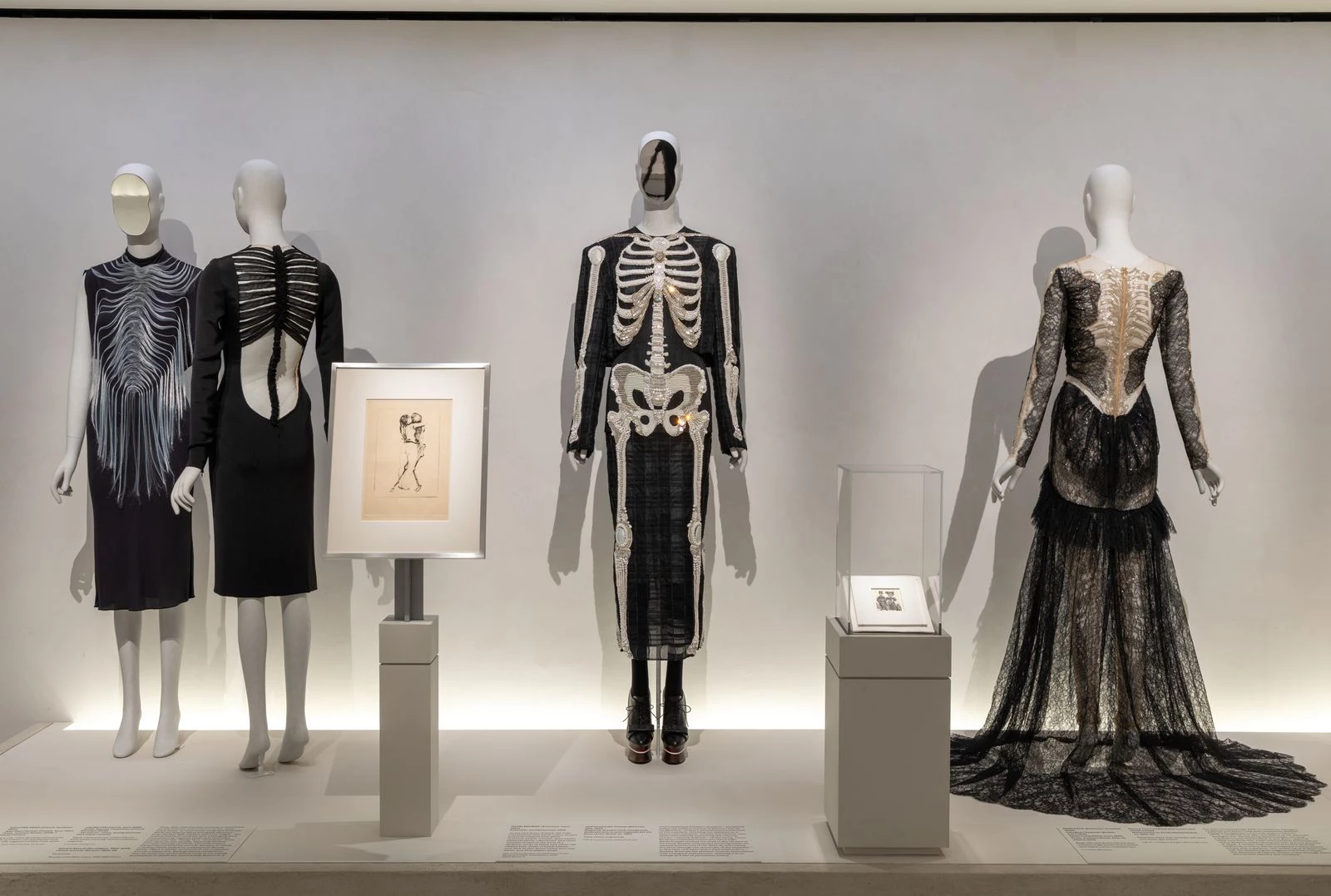 Mortal Body section, dedicated to the mortal body. Photo: © Anna-Marie Kellen / The Metropolitan Museum of Art
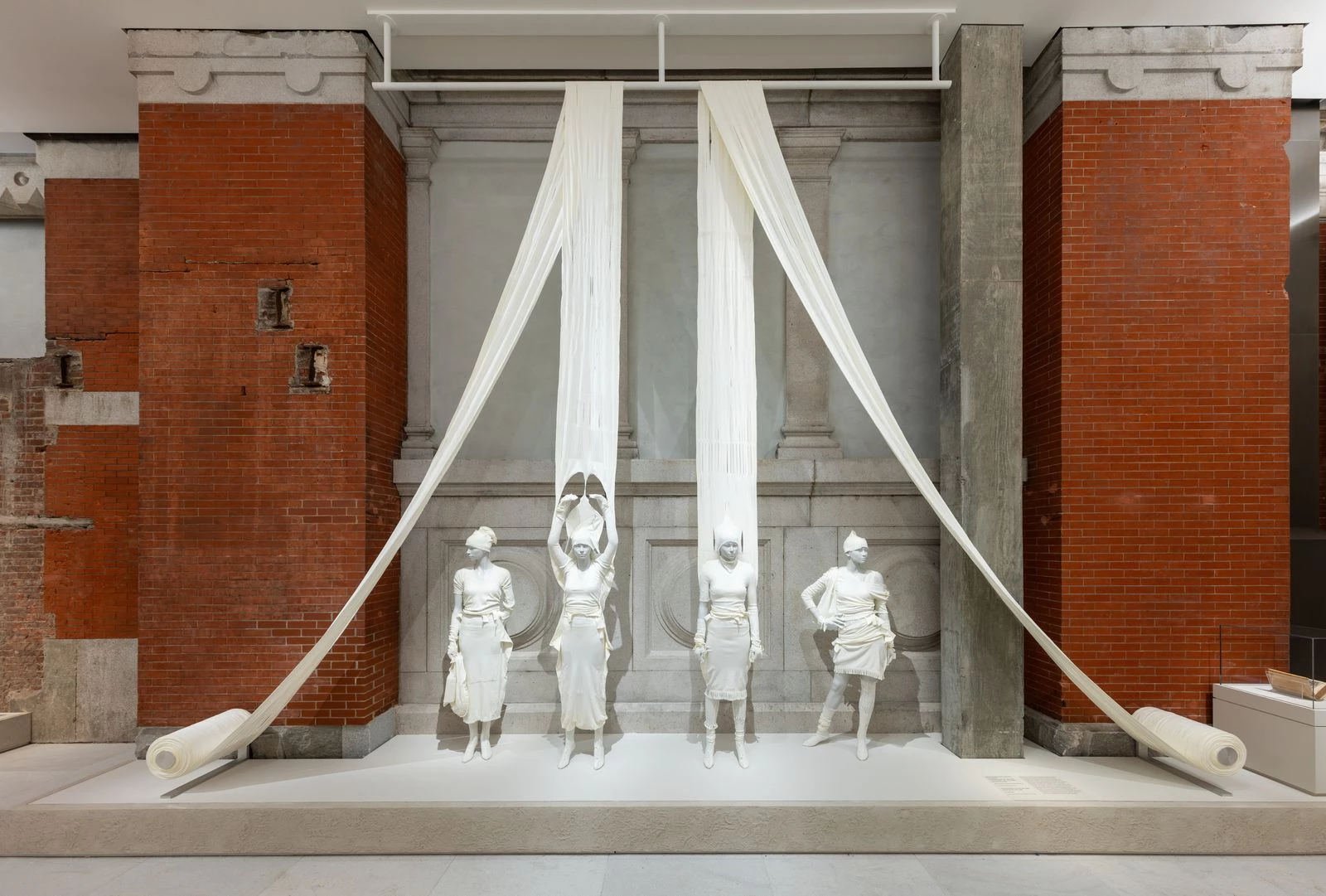 Issey Miyake designs in the Inscribed/Epidermal Body section. Photo: © Anna-Marie Kellen / The Metropolitan Museum of Art
Based on material from vogue.com