

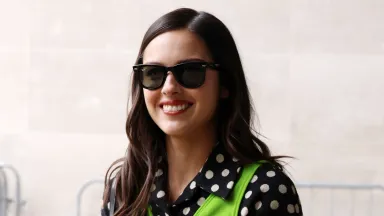
Image Credit: GC Images
Olivia Rodrigo released “You Seem Pretty Sad for a Girl So in Love,” and the title alone accomplished more therapeutic work than a significant number of relationship podcasts available online.
A man with a fabricated occupation. A desire that her love for him wasn’t so intense. The entire trajectory from elation to despair in a relationship, condensed into twelve tracks and a single, heartbreaking statement.
The internet, as it often does, has already taken sides. Assigning blame to the ex-partner. Diagnosing the former lover. Labeling Olivia as “excessive” or him as a narcissist.
My intention is to approach this differently. Because when I first encountered the album’s title, I thought: naturally, she would feel that way. That single sentence encapsulates the paradox of human affection in just eleven words. And the cyclical pattern of relating she describes? I observe couples engaging in this very dance in my office every single Tuesday.
The Paradox Embedded in the Album Title
Why do we experience profound sadness even when deeply in love? It’s because we are inherently human, possessing a fundamental need for emotional connection.
If you hold deep affection for someone, if they are exceptionally significant in your life, then any instance where they fail to provide the support you yearn for is bound to cause emotional pain. Your limbic system continuously poses a single question: am I cherished? When the response is unclear, your body registers a form of protest.
This is precisely the sentiment conveyed in the album’s initial tracks, in my opinion. A protest. An appeal. This appeal can appear as an offensive stance from an external perspective, highlighting the insincere job, the unbalanced affection, the absence. Beneath the surface, it’s a nervous system inquiring: are you present for me, does my existence hold value?
And the gentleman on the receiving end of those songs? He likely doesn’t embody the villainous persona the Twitterati envision. When an individual withdraws in a relationship, their internal system is typically communicating: please, do not perceive my imperfections, do not reveal my inadequacies, do not reject me. This defensive withdrawal is not a sign of indifference. It is rather a manifestation of fear of shame masquerading as aloofness.
In my professional experience, I have yet to encounter an emotionally distant individual who wasn’t retreating due to underlying pain. The feeling of consistently disappointing someone you care for is intensely difficult.
The Waltz Every Couple in Distress Dances
In my practice, I refer to this phenomenon as the “Waltz of Pain.” Every couple navigating difficulties engages in the identical sequence of actions.
One partner, in my classification, is the “Persistent Pursuer.” They sense the growing distance and voice their distress. They reach out, they insist, they compose searing pop anthems expressing a desire for more. The other is the “Retreating Partner.” They distance themselves when interactions become emotionally charged. Their method of self-protection is through maintaining emotional space.
The Persistent Pursuer escalates their efforts to connect. The Retreating Partner pulls further away. The Persistent Pursuer intensifies their pursuit. The Retreating Partner withdraws more profoundly into their inner world.
Both experience hurt. Both feel unacknowledged. Both are convinced the other is the source of the issue. The problem doesn’t lie with either individual; it resides within the dynamic itself.
Typically, the situation resembles a residential building. One partner occupies the luxurious penthouse of the relationship, engaging in self-care practices, confiding in friends, and internalizing messages of self-worth. The other resides in the basement, seeking solace in casual company, where the prevailing sentiment is one of inadequacy.
Initially, everyone who enters my office presents as a leading authority on their partner’s shortcomings. If I were to host a seminar next week focusing on the challenges posed by your partner, you would undoubtedly be the keynote speaker. Would you like to identify your relationship pattern before composing your own “You Seem Pretty Sad” track? Begin by examining that.
Why This Hurts More Than the Internet Lets On
Here’s the aspect that people are reluctant to acknowledge when we scrutinize celebrity breakups: no single individual is the antagonist. Everyone’s actions are understandable within their context.
When society suggests Olivia is “too much” or “demanding” for creating songs about desiring more, I feel a sense of resistance. I will not accept the label of codependency being applied to you. I will not permit the part of you that strives for love to be characterized as flawed.
The aspect of your being that most profoundly craves love is not a weakness. It is likely the most admirable quality of our human nature, that we can experience such deep sorrow when disconnected from those we hold dear. Experiencing emotional pain in love is not a sign of immaturity.
And when the internet labels her ex a narcissist for his tendency to withdraw? What served as a protective mechanism during his childhood is ill-equipped to foster intimacy in adulthood. This is not a character defect. It is a defense mechanism fulfilling the role it was assigned at a young age, still active in his thirties.
Contemporary dating culture exacerbates these dynamics. Individuals profess affections they cannot substantiate with actions. People offer reassurances they do not genuinely feel. Partners withdraw at the slightest hint of vulnerability. Women elevate their standards as a form of self-protection. Men retreat or adopt a cynical outlook. Both parties harbor negative assumptions about the other. Both feel isolated. The primary interpretation of this phenomenon, if you wish to grasp the scientific basis of relationship warning signs, is that most red flags represent protective mechanisms interacting with other protective mechanisms.
What I’d Actually Do If They Were on My Couch
If Olivia and her ex were seated before me at this moment, I would not permit them to dissect the song lyrics.
I would refrain from attempting to ascertain who inflicted harm first, or whose job was fictitious, or who loved whom less. I am disinclined to take sides. This is not because the infliction of harm is inconsequential. Rather, it is because choosing sides perpetuates the cycle.
Instead, we would collapse the entire timeline and examine the underlying system. It is entirely understandable that you pursued connection. It is entirely understandable that they retreated. It is entirely understandable that it caused pain. It is entirely understandable that you resorted to self-protection. Every element makes logical sense.
I would address them and state: you are both experiencing pain. Your actions stem not from malice, but from the intensity of your suffering, leading you to behave in ways that are guaranteed to inflict further pain upon your partner. It is no surprise that you find yourselves bound together. You poor, unfortunate souls. How profoundly regrettable for both of you that your deep affection for each other results in this predicament. It stings.
The initial step is not the acquisition of communication skills. It is not the implementation of a weekly date night. It is the transition from an individualistic mindset (“I-consciousness”) to a collective perspective (“We-consciousness”). Moving from two individuals experiencing separate forms of suffering to two individuals enduring distress together, united against the problem.
The Line Worth Screenshotting
The reason this album title is destined to resonate within our culture is its articulation of a truth that most love songs tend to avoid.
It is possible to simultaneously experience profound love and deep sadness. This is not an indication that the love is flawed. Rather, it signifies that the love is authentic, and the relational pattern you are caught within predates both of you. The sadness is not evidence of a poor choice in a partner. It is testament to the fact that you have chosen someone who holds significant importance to you.
______________________________________________________________________________________________
Figs O’Sullivan and his wife, Teale, are practicing couples therapists based in San Francisco. They are recognized relationship authorities for both celebrities and the Silicon Valley community, the co-founders of Empathi, and the creators of Figlet, our AI-powered relationship coach, which has been developed using their extensive clinical experience.