

For any theater, a premiere is an event. For Kharkiv Opera, a theater operating 30 kilometers from the front line, today it is also a choice: not to stop, not to be conservative in anticipation of “better times,” but to continue to search for a new language of communication with the audience and implement bold ideas.
On May 1, the theater will host the premiere of the ballets “Inside the Music” to the music of George Gershwin and “Bolero IR” by Maurice Ravel. Ballet researcher Katya Yeletskykh visited Kharkiv.
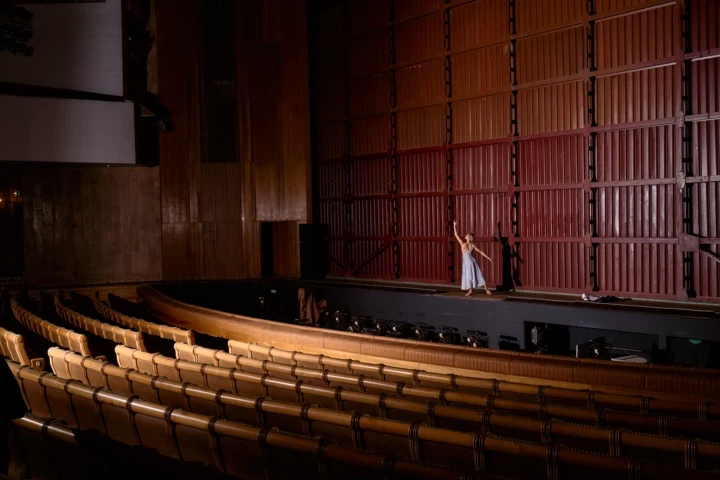
“I think that because of our proximity to the border, we feel this thirst for life like no one else. We really appreciate what we have today,” says Antonina Radievska, artistic director of the Kharkiv Opera. A bold woman of decisions, not words, sometimes sharp – in some ways very similar to Kharkiv itself – Radievska strives to implement ambitious projects and at the same time open up opportunities for young artists: so that they can grow from the first parts in the Kharkiv theater to leading soloists. The theater operates several dozen kilometers from the front line – in conditions of constant air raids, limited space and the absence of a large stage.
On May 1, two one-act ballets will be shown here – “Inside the Music” to the music of George Gershwin and “Bolero IR” by Maurice Ravel. Guests from Kyiv – leading soloists of the National Opera of Ukraine Tetyana Lyozova and Yaroslav Tkachuk – are working on the productions. This is not their first joint work as choreographers, but this performance was the first created specifically for the Kharkiv stage during the war. “Kharkiv is a city of movement. It lives despite everything, and we feel this movement in the performance itself. We did not want to create a story about the war. On the contrary, we wanted to talk about life, openness and light,” says Tetyana Lyozova.
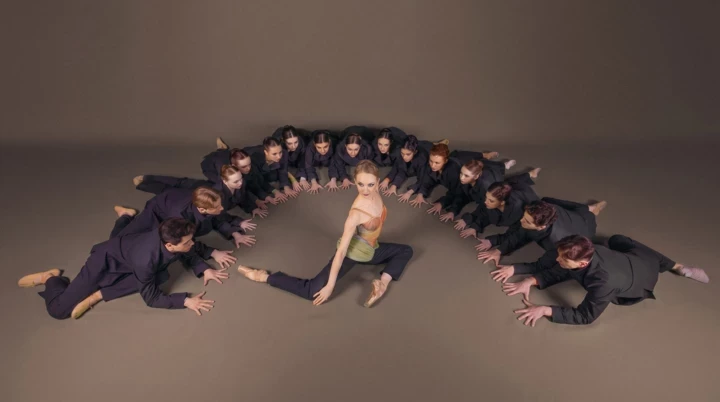
It is symbolic that the new edition of Bolero appears precisely in Kharkiv, the city of Ida Rubinstein, without whom the history of performing arts is difficult to imagine. It was at her request that composer Ravel wrote Bolero in 1928. Over time, this music became one of the most recognizable works of the 20th century: its hypnotic rhythm, gradual build-up, almost mechanical repetition and inner tension turned it into ideal material for choreographic interpretations.
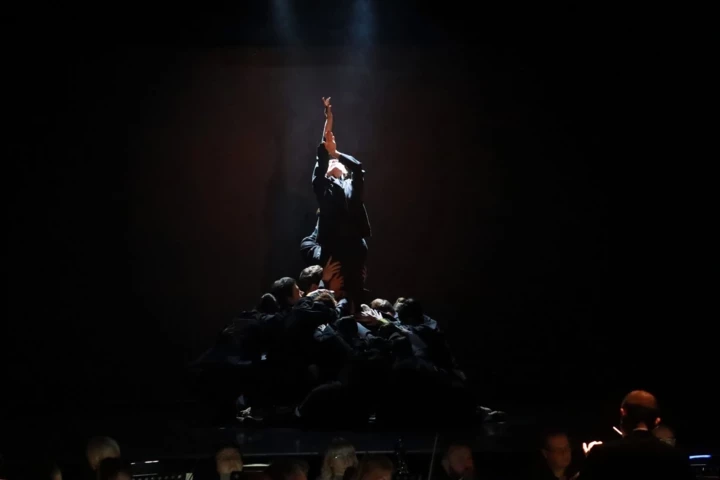
At the center of the production “Bolero IR” is the process of internal transformation: from a faceless mass to a bright individuality, from shadow to light. “Ida Rubinstein is one of the most mysterious figures of European modernism, a patron of the arts, an entrepreneur and an artist who destroyed the canons of classical ballet and created her own stage style on the border of dance, theater and performance. In our performance, her image is transformed into a symbol of energy that can change the world around. Actually, this is what Rubinstein did throughout her life,” notes Tatyana Lyozova.
The ballet “Inside the Music” is based on the music of George Gershwin, in particular the Piano Concerto in F major. The concept of the production is an attempt to see music as a living space in which rhythm, structure and internal images interact.
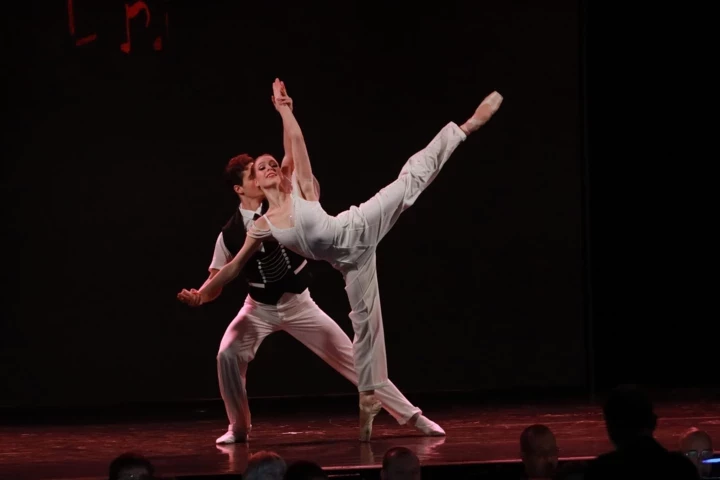
“This is a kind of visualization of the universe of music – as a musician, a spectator or any person sees it. It can be notes, keys, genres – and how they interact with each other,” explains Yaroslav Tkachuk. – If we talk about the choreographic language of both performances, then “Inside the Music” is neoclassical, and “Bolero IR” is already choreography with elements of modernism.
The Kharkiv Theater today operates on a much smaller stage, without the usual large-scale scenery and with constant aerial alarms. At the same time, it is in these circumstances that a new choreographic language is being formed – deeply connected to the reality of a city living next to the front line.
Advertising.
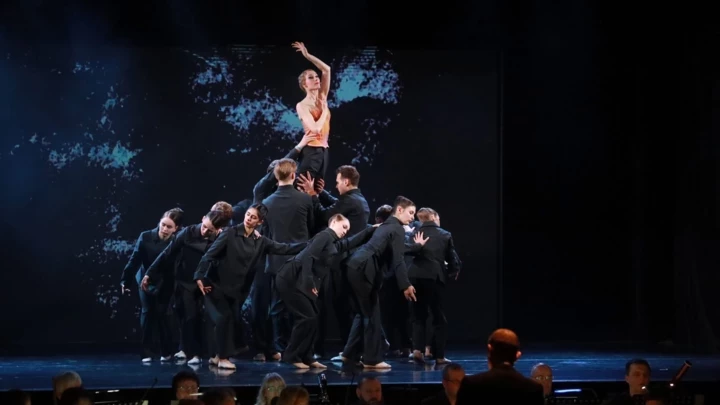
The Kharkiv National Opera is one of the largest theaters in Ukraine, with a large repertoire, opera and ballet troupes, and a symphony orchestra. Last year, it celebrated its centennial. It was in Kharkiv that the first state Ukrainian opera and ballet theater was created in 1925. From the very beginning, the most famous premieres – ballets – “Mr. Kanyovsky” by Mykhailo Verykivskyi, “Ferenji” by Borys Yanovskyi – were performed here.
After the outbreak of full-scale war, the usual theatrical life became impossible. The main stage, equipped with the most modern equipment and designed for large-scale productions, is currently closed for security reasons. “In the pre-war period, our stage made it possible to stage performances of incredible scale, for example, there were productions with the participation of 250 actors,” says the theater's chief director Armen Kaloyan.
The Kharkiv Opera has always been an important center for the city’s residents, so there was no question of stopping its work. In 2024, the Loft Stage was launched here – a new chamber space of the Kharkiv Opera, created taking into account all safety standards. The space is much smaller than the main stage: the auditorium accommodates about 400 visitors compared to 1,500 in the main one.
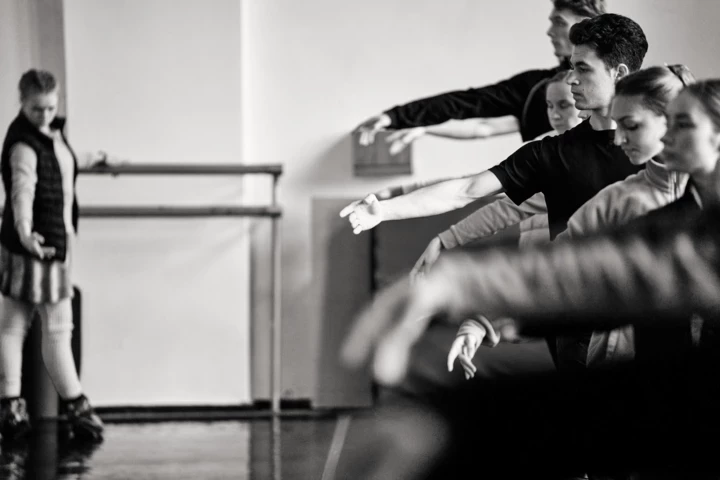
With the launch of Loft Stage, the theater's ballet troupe found itself in a completely different stage reality. Academic choreography was formed for large spaces, symmetries, depth, corps de ballet lines, and the effect of distance. Therefore, the new stage required not a mechanical transfer of the repertoire, but a careful rethinking of each performance: mise-en-scène, mass scenes, light, scenery, and the distance between the artists and the audience. In this way, the theater adapted, in particular, the ballets “Paquita”, “Notre Dame de Paris”, and “Giselle”.
“You can't even imagine what a drive it is to adapt performances to a new space and overcome new stage challenges every time. I already have a lot of ideas in my head: what else can be restored, what to stage, how to develop the repertoire further. It is important for me that the theater does not close itself on one person: new directors come, young artists appear, and we all grow together very quickly,” says Antonina Radievska, artistic director of the Kharkiv Opera ballet.
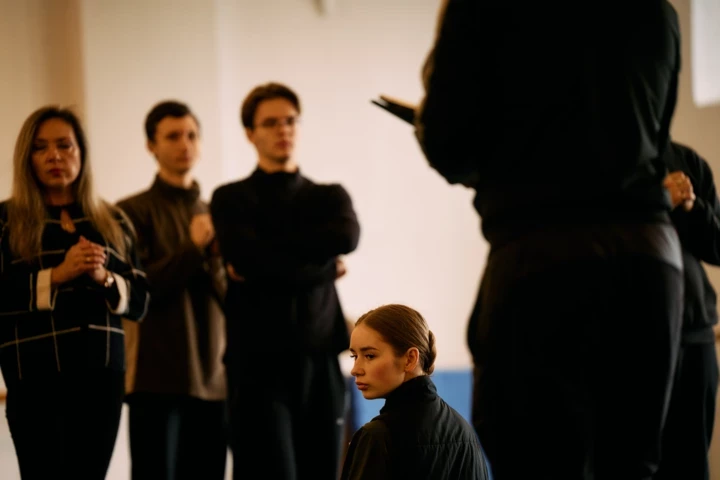
Recently, the theater has already managed to present new works, including the ballet “Dragon Songs” to the music of the modern world-famous Ukrainian composer Maksym Kolomiyets, which became one of the notable events of the military repertoire. In December last year, Katya Khanyukova, the first soloist of the English National Ballet, a Ukrainian ballerina who has been representing the Ukrainian school on the international stage for many years, performed at the Loft Stage. Her arrival in Kharkiv was not just a tour event, but a sign of support for the city and the theater.
At a time when Kharkiv is in the news primarily because of shelling, culture is giving it back a different visibility – the image of a city where artists come, where concerts are held, and where audiences buy tickets. The theater lives in the conditions that exist: between shelling, power and heating outages, it creates performances and prepares premieres, rethinks the repertoire, works with new formats, attracts artists, and welcomes audiences.
Antonina Radievska, who combines the role of artistic director and remains the leading soloist of the ballet, admits that it was fundamental for her to remain in her native Kharkiv. And there is something very Kharkiv about this – a stubborn and practical sense of responsibility for the place where you grew up.
The war forced Ukrainian theaters to prove that the scale of art is not measured by the area of the stage. And the Kharkiv Opera today is one of the strongest examples of this new theatrical resilience. Its scale now is not only in architecture or the number of seats in the hall, but in the unwillingness to give up ambitions. The theater's general director Igor Tuluzov emphasizes that the future of the Kharkiv Opera, and especially its repertoire policy, is now becoming part of a larger conversation about Ukrainian identity.
“Of course, when there is an opportunity to return to the big stage, we will quickly transfer the productions there. But the main thing now is that we all very acutely feel the need for Ukrainian cultural self-identity. This is not something imposed, but an internal need that comes from within. We see many new creative works with Ukrainian roots, with Ukrainian intonation, appearing – and this is very clearly different from what was before,” says Tuluzov. “Now it is difficult to make such large-scale plans as before the war, but our main directions are clear: Ukrainian operas, Ukrainian ballets, Ukrainian performances, as well as European trends, because we are part of European culture. It is important for us to return to touring. The European experience of our humanitarian tour “European Path”, which lasted from April 2022 to June 2024, showed that our culture is close to the audience. At first, many people came to our performances as charity events, to to support Ukraine, but later people saw the level of performance, the repertoire, the artists – and started coming as if it were a big theater. This was very important for us.”
The premiere of “Inside the Music” and “Bolero IR” summarizes this logic well: Kharkiv Opera today does not simply preserve the repertoire, but continues to create a new one. In the difficult conditions of war, each such production becomes a way to remain in the modern cultural process, to speak to the audience in the language of the time, and at the same time to maintain a connection with one's own identity.
Text: Katya Yeletskykh, author of the project about Ukrainian ballet Ballet maniac