

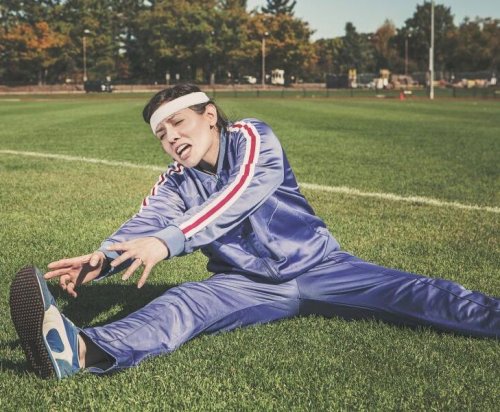
In this case, we won't be discussing professional sports, which are often accompanied by injuries and involve extreme stress on the body, quickly wearing out the body and ruining health. Instead, we'll discuss sport as a necessary element of modern life.
The concept of “sport” began to emerge many centuries ago, when it was more of a ritual for men to prove their right to power. Thus, sport became a male domain.
The ancient way of life implied a strict division of functions between men and women. Hunting, hunting, defense, war, and danger were the responsibilities of men, while childbirth, childcare, and maintaining the home were considered women's responsibilities.
And the value of both, especially at the time of starting a family, was determined by their ability to meet the above-mentioned conditions. A woman's value was determined by her attractiveness, so as to attract a man for reproduction, and her health, so as to bear healthy children and, crucially, the strength to raise them. A man, on the other hand, was required to possess physical strength, often extreme endurance, and quick reflexes, so as to be able to provide for his family. Accordingly, the struggle for a place in the sun, especially before marriage, for women consisted of a constant desire to prove that she was the most beautiful (and this was only necessary during the breeding season), while for men, it was determined by their strongest and most agile qualities—an attribute he was obliged to demonstrate daily until his children were grown and capable of providing for him.
Thus, the arrangement described above was a mutually beneficial undertaking, the goal of which for both was the survival of the family and the provision of a comfortable old age. Perhaps it was then that the concept of the “institution of the family,” based on vital functions, began to emerge.
It's always been this way, but what about now? When we no longer need to chase down a mammoth and plow hectares of fields to feed ourselves, when there's no need to reproduce as much as possible in our youth to avoid starvation in old age? When did children cease to be a means of survival?
A woman has become more than just a mother for a man's children; he wants a person who is valuable in her own right. Someone who is attractive, charming, shares interests, and demonstrates mutual understanding, among other things. Children are a large part of the family, but no longer the only one.
And many women still find this difficult to comprehend. By focusing on their children, they completely stop caring about themselves, and consequently, about their man's interests. And then come the great disappointments and revelations when families break up.
Where does this awareness come from, when women have always been concerned only with how to quickly and affordably marry while still naturally beautiful and young? And instead of maintaining their beauty, women were more concerned with embellishing what nature had given them. But nature, having given them, successfully took away everything natural after childbirth. And previously, this suited women perfectly; there was no longer any need to worry about appearance.
But today, it's difficult to keep the right man by relying on “ancient” behavior and beliefs. Now, a woman needs to be attractive both after marriage and after having children. So let's take a look around, see what we have, and what to do with it.
The education system and social norms preach that women's physical development should be limited to the absence of excess fat and a good figure, and that only until they give birth. After that, other concerns arise, because children are the most important thing for a woman. And from childhood, girls, future women and mothers, are instilled with behavior patterns that 100% guarantee problems in the future.
Dressing them in gorgeous dresses and adorning them with incredible bows, parents often turn their children into dolls, forbidding them from running and jumping with the other children, because “…only boys behave like that, and you're a girl, look at yourself!” At this age, a child, looking at themselves, doesn't yet fully understand what's being said, but by trusting their parents, they gradually begin to develop an understanding of “correct” behavior.
While boys actively play football, volleyball, hockey, and other active games during their school years, girls, at best, limit themselves to dodgeball and the almost forgotten “pioneerball.” Around age 12, after watching too many TV series and reading women's magazines, girls learn that sports are uncool and for men. Many parents encourage their new beliefs, buying into the girls' perceived illnesses and desire to avoid physical education, begging teachers to excuse their children from excessive physical activity. Meanwhile, magazines are brimming with a variety of fashionable color trends in clothing, advertising cosmetics and diets, but not physical fitness.
Perhaps those who consider sport unfeminine are right. Let's assume that's true. Here's a typical picture.
By the age of 10-12, girls stop running and jumping actively, and their high levels of physical activity cease. They begin to believe that sports are not for them. At the same time, however, a powerful hormonal shift occurs, which, among other things, manifests itself in the active deposition of fat on the hips and abdomen. While a teenager's increased metabolism and growth spurt allow them to stay in shape for a while, later, a diet rich in fat and carbohydrates, coupled with sitting for eight hours a day while studying or working without any additional physical activity, begins to make their figure unattractive, and their endurance levels drop to near zero. After that, health problems begin. As the ancients once said, “A big belly means a lot of illness.”
Youth and natural health still allow you to persevere and somehow attract men. What happens after childbirth? Nature thanks you for fulfilling your biological function—reproduction—and leaves it up to you to figure out what will happen to your figure, your health, and how you will now attract men. Attempts to go to the gym, to the stadium, to the pool begin. But since your body isn't accustomed to the stress, and the desire to exercise arises out of desperation, injuries and disappointment occur, and ultimately, women give up and continue to gain weight and become ill.
This picture is becoming increasingly common and ubiquitous. But it's not what we want to see. I propose considering the following thesis.
Women face difficult challenges in life, so they must be prepared for difficulties and physical and mental stress. Moreover, the foundation for this readiness must be laid in childhood.
We need to promote physical beauty and health, not clothing and cosmetics, and instill in children an understanding of the aesthetic beauty of the body through its physical development. Cultivate the concept of “health” as a value.
Perhaps it's not worth “foisting” the child off on grandmothers, for whom children are always thin, and whose main mission is to fatten up their grandchildren as quickly as possible, ultimately ruining their health. Instead, consider the possibility of introducing the child to a sporty, active lifestyle from childhood through sports camps and fitness clubs, almost all of which now offer classes for children's groups.
Perhaps you, too, have hundreds of other ideas for how to make your life better and your children healthy and happy, instilling in them the beliefs necessary for life in the modern world. Let this article serve as a reminder: maybe it's time to make a change?