

 Share
Share
Today, the beauty services market offers many procedures for creating a stable root volume: Boost Up, Pumping, Ecovolume, etc. The search query “hair pumping” is constantly growing. What are these procedures, what are their advantages and disadvantages, and whether Boost Up, Pumping, Ecovolume are safe for hair, answer the famous Kyiv stylist, founder of the MaximKulikov salon Maxim Kulikov and co-founder of the hair Help clinic, president of the All-Ukrainian Association of Trichologists Denis Prokopovych.

Advertising.
Marketing vs. reality
The fashion for creating a permanent root volume periodically returns, only the names change. In fact, this is a well-known “root chemistry” from the 90s, as the then style icons called it.
“Boost Up, Pumping, Ecovolume – the names sound different, but their essence is the same,” notes Maksym Kulikov.
He says the procedure is especially popular in Asia, for people with heavy, straight hair. Both Boost Up, Pumping, and Ecovolume use perm products. “Yes, they may be more modern, softer, with added care ingredients, but it's still a chemical change to the hair structure,” explains Maksym.
The composition of the preparations is applied to the root zone, artificially raised – using a pile, bobbins, spiral-shaped curlers, etc.

Main problem: One-way street
Maksym says that the biggest mistake customers make is believing that this is a “temporary” service that will solve the problem of lack of volume once and for all.
“It is important to remember,” emphasizes Kulikov, “that anything that changes the structure of the hair is an irreversible change. The mark will remain on the strand forever until you cut it. Let the curl become softer over time, the hair will no longer be as smooth, even and silky as before the procedure. Even keratin straightening on top of pumping will only visually hide the problem, but will not restore the damaged structure.
Why does “pumping” become an aesthetic problem after a month?

Human hair grows on average 1 cm per month. And therein lies the main drawback of basal volume, warns Maxim:
- Shifting the emphasis : Within 4-5 weeks, the volume drops lower. What was supposed to lift the hair from the roots becomes a strange crease at the ear level;
- Visual defect : If the procedure is not done along the parting, the artificially created bends will eventually start to show through the length. It is difficult to straighten even with a hairdryer, and it creates an untidy look;
- Impossibility of correction : It is impossible to do the procedure every month, because the master will inevitably get on already treated hair – and thereby eventually destroy it. “Correction” is possible once every 3-4 months, but what to do with the hair that has “slipped” during this time?
Who really needs this?
“I'm not a fan of radical changes to the hair structure,” says the hair stylist. “However, he names isolated cases where the procedure is justified:
- Very thin and sparse hair that is critically lacking in thickness;
- Special cases where there is simply no other way to get in shape.
“For the majority of clients, this procedure is unnecessary and even risky,” warns Maksym.

Alternative path to volume
Instead of “burning” the roots with chemicals, Kulikov advises working with what nature has given, using professional tricks:
• Correct haircut: Competent hairstyle architecture will create volume where it is needed, without unnecessary effort;
• Coloring: Light highlighting dries the hair structure, making it visually and physically more voluminous. At the same time, you get a beautiful color without the effect of “chewed” hair;
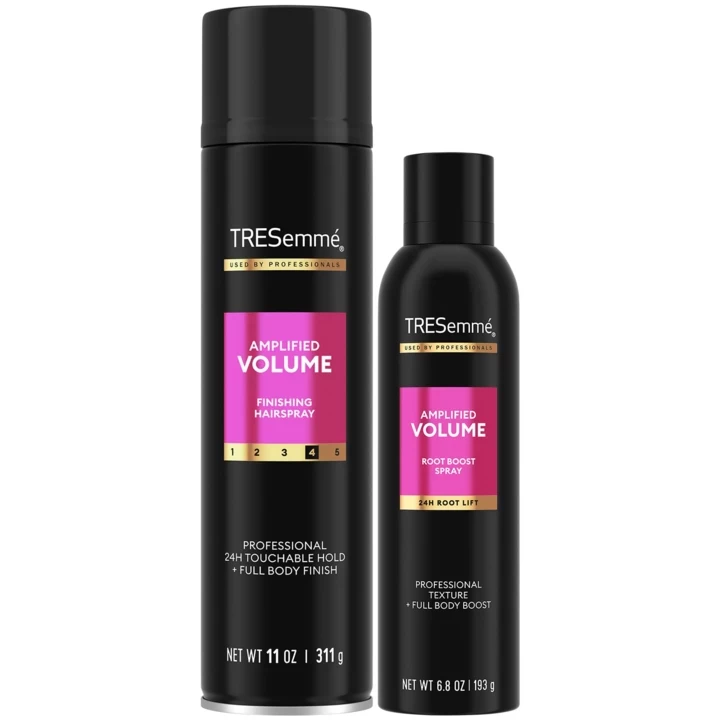
• Styling: Modern products allow you to achieve a natural effect without extreme chemical interventions.
“Real skill is finding an approach to your hair type, not trying to break its structure. Choose health and naturalness – it's always in fashion,” concludes the star master.
Trichologist's opinion
“I am cautious about such a hair styling method as hair pumping,” says Denys Prokopovych, co-founder of the hair Help clinic and president of the All-Ukrainian Association of Trichologists:
Firstly, it involves additional mechanical tension, which can disrupt microcirculation in the perifollicular zone, cause increased sensitivity of the scalp, and, if used regularly, carry the risk of fibrotic changes in the future.
Secondly, this method increases the risk of hair breakage: mechanically artificially lifting the hair against the natural direction of growth creates excessive tension in the shaft and attachment area of the hair, where it is physiologically most vulnerable. In the long run, this can weaken the hair, cause damage to the ends, and worsen its quality in general.
Given this, such styling techniques should be used sparingly, taking into account individual characteristics and scalp condition, as well as adhering to gentle care approaches.