

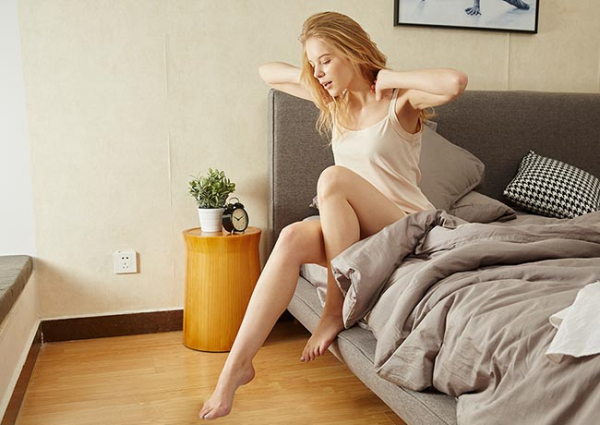
What do we usually say when we're suddenly irritated by someone else? “They're off their feet.” And everyone around us nods sympathetically. “On the wrong side of the bed” is a familiar feeling for many. But who's to blame? Most often, it's… the alarm clock. Yes, a regular, harmless (as long as it's silent) alarm clock.
The alarm clock has become a part of our lives for a long time, and we can't imagine a morning without its ringing sound. Most modern people feel helpless without one: “What if I don't have an alarm clock? I'll be late for work!” But experts say that if someone can't get by without an alarm clock, it means they're not sleeping properly: there are some shortcomings in the quantity or quality of their sleep that can and should be addressed.
Indeed, an alarm clock is a device for creating artificial stress. It screeches and triggers the fear of being late in our brain. This fear triggers a surge of adrenaline, which pumps us up and prepares us for the next rousing moment. However, waking up every time “to an alarm” is not a good idea.
By rudely interfering with our natural sleep patterns, alarm clocks perpetuate sleep deprivation and prevent us from getting that final, longest dose of REM sleep, which lifts our mood and makes us feel rested. So, by forcibly depriving ourselves of our rightful dose of REM sleep, we constantly wake up on the wrong side of the bed.
Now let's think about waking up every morning on vacation, when you owe no one anything and get out of bed simply because you've slept as much as you wanted and are well-rested. Is there a difference? It's significant. This is the kind of awakening you should strive for, so you can wake up with pleasure, and not to the sound of your home's “fire alarm.”
If the presence of an alarm clock is a definite morning stressor, try a “Break the Alarm Day” whenever circumstances permit. The goal is to see if you can wake up at the right time without the alarm. If so, your sleep is perfectly fine. If not, consider how to improve your sleep.
The most important piece of advice, without which all other attempts to improve sleep are pointless, sounds quite banal: get enough sleep! But here's the stumbling block: determining your daily sleep norm isn't so simple. Sleep needs vary from person to person, so knowing average figures (8 hours, as doctors insist) won't help you. At this stage of scientific development, only you can determine your own sleep intake norm through simple experimentation.
Determining whether you're getting enough sleep is simple: you wake up refreshed without an alarm clock and don't feel sleepy during the day (except for afternoon drowsiness).
So, let's conduct an experiment:
♦ If circumstances allow, sleep as much as you can – a little or a lot, but get up without an alarm clock.
♦ Keep a diary of the hours you spend in the arms of Morpheus. Remember: if you've been chronically sleep-deprived, you'll initially sleep more than you need. But after a few nights, this will pass. That's why this self-examination should be conducted on vacation, not on the weekend: otherwise, you'll only disrupt your normal rhythm, and on Monday morning, getting up will be excruciatingly painful and out of sorts.
♦ Analyze the information, determine your average sleep time independent of the alarm clock (discarding the first few days of getting used to it) – this way you will determine your need for sleep.
♦ Free your bedroom from stress: don't lie in bed for more than 20 minutes after waking up. Otherwise, the bed will feel like an instrument of torture, designed to pull you deeper into its depths.
♦ Keep your bedroom free of extraneous activities, reserve it only for sleep and love. Don't work in bed, don't eat, and don't watch TV.
Oddly enough, even without an alarm clock, people aren't late for work they love. The conclusion is clear: if you want to sleep well, find a job you love.
There are those lucky people who sleep however and wherever they can—in train station waiting rooms, in train compartments, on overnight buses, in cruise ship cabins, outdoors, with or without a sleeping bag—and feel normal and refreshed no matter when they wake up. Then there are the unlucky ones—those who consider themselves highly dependent on circadian rhythms and consider themselves “larks” or “owls.”
For a night owl forced to live on a lark's schedule, mornings become torture. Moreover, others will quickly accuse you of laziness and label you a sleepyhead. Don't argue with them: this isn't a vice, but simply a quirk of your biological clock.
Try to establish a suitable schedule for yourself, waking up late—after all, your well-being is more important than anything else. But if you can't live happily as a night owl, you'll have to reset your body clock and become a morning person. Don't be surprised, it's entirely possible. How?
♦ Bathe in the morning light: When you wake up, go outside for 15-20 minutes for a run or walk the dog.
♦ Set up electric illumination at home: when you wake up in the dark, turn on the chandeliers, lamps, and sconces so that the light invigorates you (the same measure, but in the evening, will help the “lark” to restore optimal performance).
♦ Maintain the same regime on weekends, otherwise you will have to set everything up again on Mondays.
♦ In the evening, before bed, prepare everything you'll need for the morning—things that are usually scrambled for with cries of, “Where did it all go?!”—clothes, keys, makeup, bag, work papers and documents, and breakfast. This will allow you to shift your work routine in the right direction for half an hour and make any morning, even the most gloomy, enjoyable, without rushing or the fear of being late.
Have pleasant dreams and equally pleasant awakenings!