

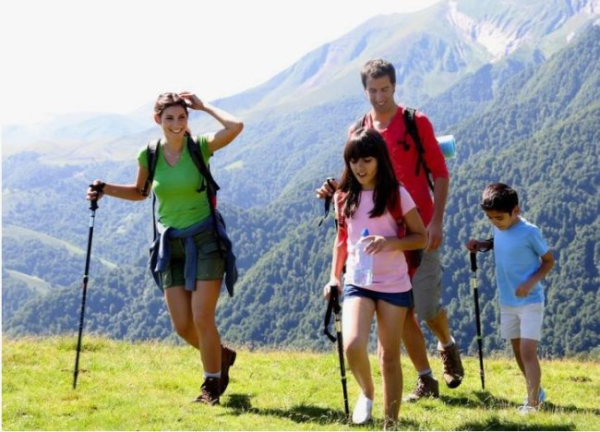
The phrase “active recreation” has gradually become commonplace. It's mentioned in advertisements for sporting goods stores, recreation centers, water parks, travel agencies, and numerous clubs offering various interests: equestrian, hiking, water sports, even music. Are all these active activities truly capable of relieving fatigue after work and can they be considered relaxation?
What does history say?
The idea of active recreation was first raised in the 19th century. It was advocated, in particular, by the renowned Russian physiologist Ivan Petrovich Pavlov. Although engaged in intellectual work by profession, he was a proponent of active physical training. His favorite activities were:
- gymnastics;
- cycling;
- cross-country skiing;
- walking;
- game of gorodki.
The academic introduced many people in his circle of friends to regular physical training, urging them at every opportunity not to miss the slightest opportunity to feel the “muscular joy” after physical exertion.
The academician's beliefs about the benefits of active recreation were based on deep knowledge in the field of human physiology and reflex mechanisms.
The phenomenon of active rest also interested other scientists. In particular, the concept of active rest was introduced into the physiology of work activity thanks to Sechenov's research, which demonstrated that absolute rest, typical of passive rest, does not have the same impact on restoring performance as a change in activity that engages previously unused body systems.
After the effectiveness of active rest was proven, the concept became an official term. So-called physical activity breaks were added to the work and rest schedule, recommended to be taken two hours after the start of work, as well as in the afternoon after lunch. The duration of such breaks should not exceed five minutes.
Today, active recreation refers to activities that necessarily involve physical activity but do not lead to fatigue or exhaustion. Moreover, this activity must be fundamentally different from a person's primary occupation.
How does this work?
The concept of occupational hygiene includes strong recommendations to alternate mental activity with physical activity.
In particular, brisk walking helps relieve fatigue in people engaged in mental work and leading a predominantly sedentary lifestyle. It restores normal blood circulation in areas of the body that become congested during sedentary work, engaging the relevant muscle groups.
Physical activity releases a number of biologically active substances into the bloodstream that have a positive effect on mood and restore vitality to the body. The result is a significant reduction in fatigue and an improved mood. And a positive mood makes you work better.
Even a short 5-7 minute break filled with physical activity is enough to restore blood circulation, reduce emotional and mental stress, activate cerebral blood flow, and prevent the onset of fatigue.
Increasing lung ventilation during such short physical exercise breaks promotes increased brain activity, which is very important for people engaged in mental work.
What type of active recreation should you choose?
The undeniable advantage of active recreation is the lack of age restrictions and the wide range of choices. It's not a sport, there are no standards or strict boundaries. It's simply an opportunity to relieve pent-up fatigue and gain new, exciting experiences.
The range of active recreation types and activities is incredibly extensive, allowing you to choose an activity to suit every taste:
- hunting;
- fishing;
- hiking;
- alpine skiing;
- speleology;
- equestrian sport;
- sailing;
- swimming;
- diving;
- cycling tourism;
- nature hikes;
- going out to pick mushrooms or berries;
- morning or evening jogging;
- walking;
- cross-country skiing;
- all the same “towns”;
- many others.
You shouldn't choose based on the advice of colleagues or friends, or just for company. Every person is unique, so you should decide for yourself what type of active recreation is right for you and will help you regain your physical fitness and emotional well-being.
Health should be the primary criterion for choosing. Physical activity should be measured based on this criterion. Then, any activity will be beneficial.