

A new edition of Balzac, a story about the adventures of a young Ukrainian woman, a whimsical novel that won the BBC Book of the Year 2025 award: especially for Vogue Ukraine, writer and journalist Anastasia Levkova selects books that are suitable for this spring.
Advertising.
“Laetitia Chicken and All Her Fictional Lovers She Lied to About Her Father,” Vera Curico
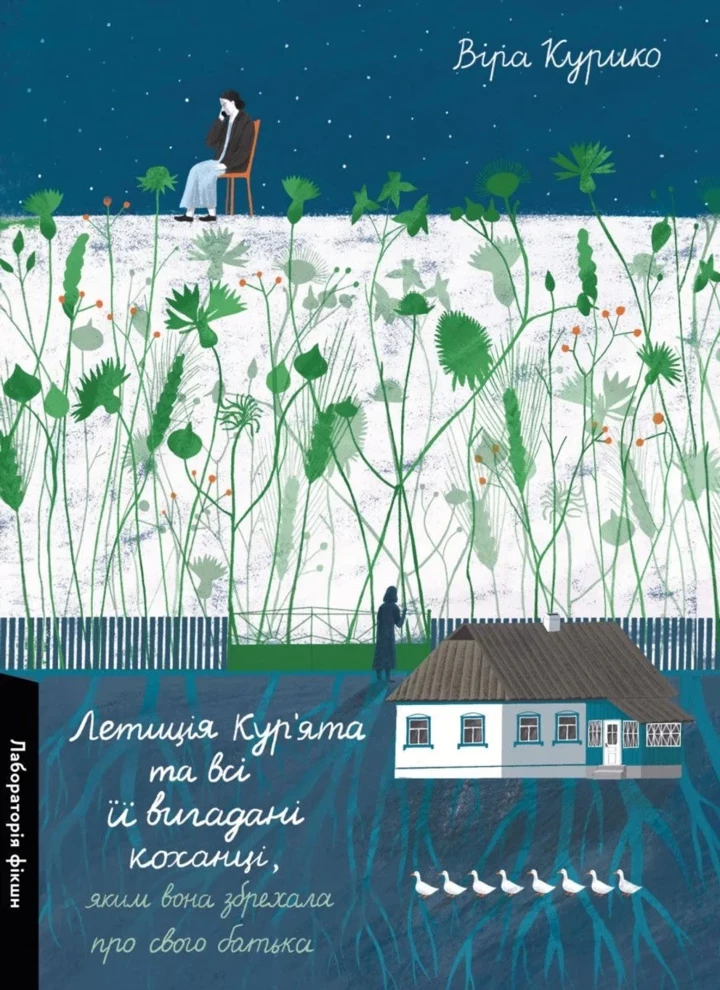
A talented reporter, editor-in-chief of a publishing house, and a truly extraordinary young woman to whom all these events could have happened, she wrote her first novel.
If you don't know the year of publication of this book and open it at random, it might seem like a novel from the 90s – chaotic love affairs, different beds and endless conversations. You open to another page – and you understand: this is a book about family, outside of a specific time, about how we drag behind us the closets with the skeletons of our parents and grandfathers all our lives – what if one of them is also a madman? You open it again – and there is no doubt: our time, wartime. And this book is not about men who come across on the way, but about the one who started this path – about the father.
The father has been a soldier since the ATO, so this novel is also about the war. At the same time, it does not traumatize with descriptions of shelling, torture, or captivity. Such writing about the war is probably the only possible one today – so as not to re-traumatize: a significant part of the events is caused by the war, but the fighting itself is only outlined here with strokes, details, and mentions. The fact that the action takes place in the Chernihiv region (partly in Uzhhorod) is not decisive: this book exists outside of space and time.
There is a lot of irony and subtle self-irony, witty dialogues and humor – despite the drama. This makes the novel easy – it can be read over a weekend. And at the same time, it is multi-layered: biblical images (Old Testament, apocryphal), his own interpretation of Homer's “Odyssey”, intertwined with the story of his father, allusions to myths and world masterpieces. At these moments, the text seems to drag on – and it becomes clear that it is impossible to fully comprehend it from the first reading: it is revealed in rereadings and conversations.
“Laboratory”
“My flag was written by a cat”, Lena Lyagushonkova
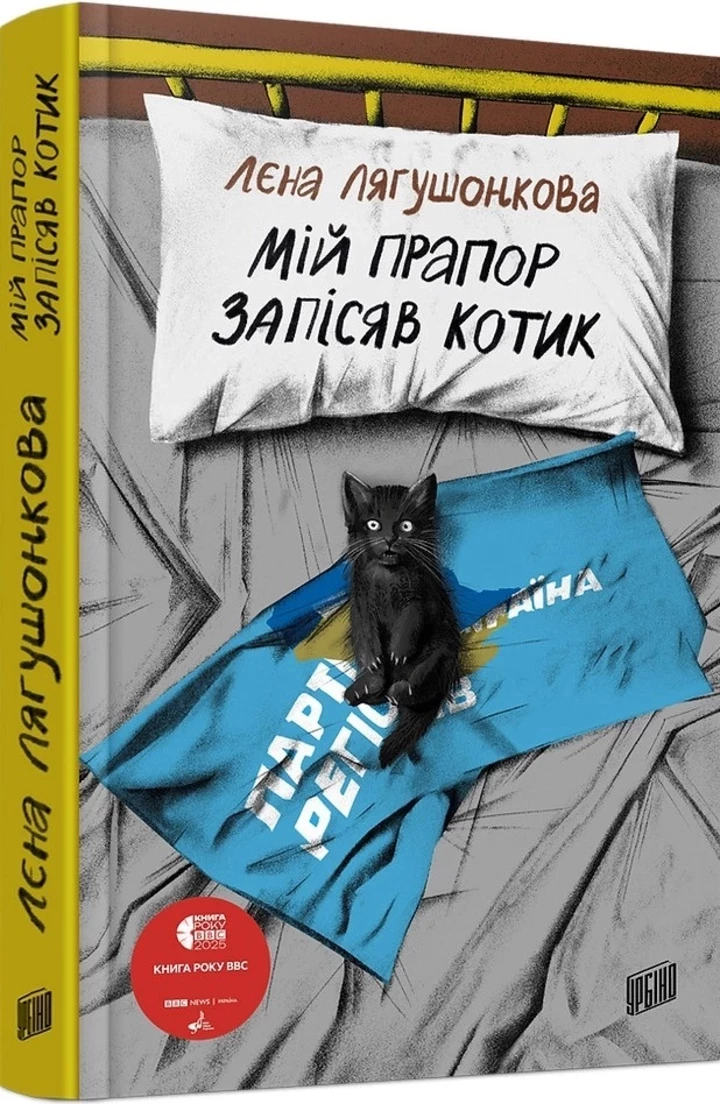
The girl grows up in a Luhansk village in the late 80s and 90s. She grows up in the 2000s and enters the university in Luhansk. Her mother gave birth to her late (at thirty-two), so she constantly finds some kind of sore in her daughter and takes her to charlatans and psychiatrists. Her father loses her in a public place – probably so that he doesn’t have to take care of her daughter anymore. Her grandfather is a Jewish womanizer. Her grandmother was in a psychiatric hospital. Her neighbor carries buckets of shit all over the city, and this is part of her income.
Unlike the previous one, this story is not ironic, but sarcastic. Sarcasm – in every sentence, black humor – across the page, political incorrectness – as an author's move, fully justified in this style. “My Flag…” could be a stand-up story, if not for such a volume. The author is a playwright, whose plays receive awards, they are staged in Ukraine, Poland, Germany; after all, this novel was also based on a play.
This book is virtually plotless (except for mystical tales told by random acquaintances): here the story unfolds over the course of the heroine's growing up. And at a certain stage, the sarcasm becomes boring; in the story about the grandfather's youth, the reader begins to get confused about who is who, and there are still three hundred pages ahead. However, the hope of seeing in the descriptions of people and places the reasons for what our country, or rather, its individual regions, have found themselves in in 2014 motivates one to read further. After all, as in Balzac, here the personal takes place against the backdrop of the public or immediately is it. Political (and military) motives are woven here with a thin, unobtrusive thread. For example, in the mentions that the “Tornado” battalion was stationed in a certain hospital in 2015. Or when the teenage heroine is asked what she will be when she grows up, and she replies that she will go to Chechnya to cut off the heads of the federals. Or when she looks at the Russian children in Venice and imagines how they will pay reparations.
However, the hope of finding reasons here is a trap. They are not here. To find them, one should read books about Russia, not about Ukraine: couldn't something like what happened in our east or south have happened anywhere? Despite the fact that the book about Luhansk Oblast and the chronotope here are important, numerous reviews show that many readers recognized in it their childhood, their hatred and their region, its norms and customs of those times. And therefore, this book is about generations. Perhaps that is why it received the BBC Book of the Year 2025 award.
“Urbino”
“Radio Aphrodite”, Oleg Kryshtopa
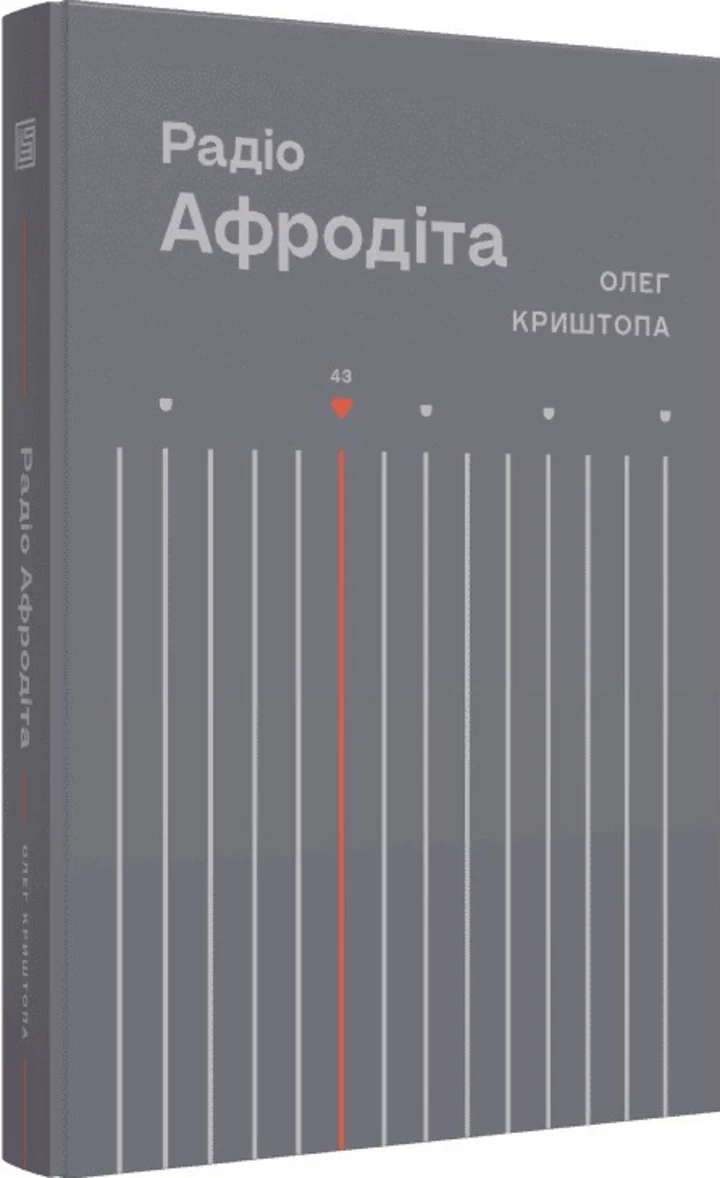
It is best to write about war after the war. Oleg Kryshtopa – a journalist, writer and TV presenter, author of several programs, including “History for Adults” – does exactly that. It is not his fault that a new war broke out while his research process was ongoing.
For many years, Kryshtopa has been researching the life of Albert Hasenbroucks, a Belgian who served in the UPA as a radio operator and told the world about the struggle of Ukrainians against the Nazi and communist regimes in three languages – English, German and French. What brought him to Ukraine? Why did he join the underground army that fought against both the Germans and the Russians? Was there love here? Who did he remember, wrapped in a fur coat in a cold hiding place? How did he end up in the Gulag and what helped him survive? Kryshtopa finds answers in documents, conversations with Hasenbroucks’ granddaughters, testimonies of contemporaries and his memoirs – those that have been partially preserved, despite the fact that his widow burned them.
Other people were also involved in the radio network, including women – even those who gave birth to children during these turbulent times. These people and the UPA in general are discussed in a book written in a fascinating reportage style. It creates vivid images – you want to supplement them with details, photographs, stories, and look for more. But there is no information about many of these people in the public domain – and this only enhances the value of the author’s work.
At the same time, it is not just history. Kryshtopa works freely with the genre: the present appears alongside the past. The text includes fragments of his own experience – episodes of the current war: an explosion near his home, a conversation with a Chechen battalion commander fighting on the Ukrainian side, a trip to a camp for Russian prisoners of war.
All this is one thread: the UPA is just one segment of it, and the current struggle against Russia is another. This year, in March, “Radio Aphrodite” brought the author the Shevchenko Prize.
“The Library of Babylon”, 2025
“A Double Life”, Alain Claude Sulzer
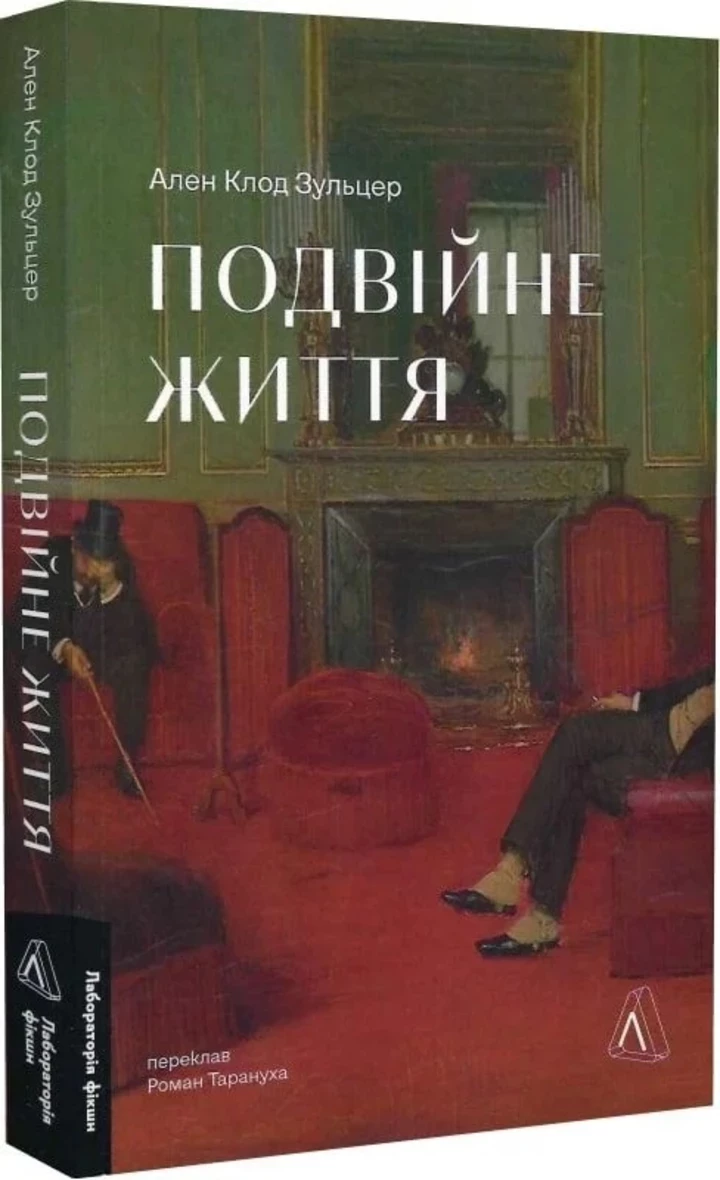
Edmond and Jules Goncourt were 19th-century French writers, contemporaries of Flaubert. The most prestigious French literary prize is the Goncourt Prize: it was established after the brothers' death, in accordance with the will of one of them.
Swiss German-language author Alain Claude Sulzer has written a novel about brothers. More precisely, about brothers, famous artists, and their housekeeper Rosa, who could have remained completely unknown, but nevertheless…
What will the reader see in this novel? The closed world of brothers, almost a couple, focused on each other and on writing. The detailed description of Jules' illness – syphilis, which led to the loss of speech, and later his mind. The hidden life of a servant – inconspicuous, but irreplaceable: rape in youth, quiet devoted work, alcoholism, love, a child from an emotionally unavailable man and a brief feeling of happiness, followed by a fall.
Sulzer is a Swiss writer, but he translates from French, this culture is close to him. As in many French texts, he reveals private life – dependent on both social background and internal passions and the collapse of the soul. Balzac, Zola, Flaubert, the Goncourts themselves, later – Sagan – all wrote about this. Of the modern authors – Muriel Barbery, David Foenkinos. In the depiction of public life, the Ukrainian reader will find something very close in Sulzer – the beginning of the First World War is concisely presented: moving from the upper floors to the lower ones, escaping from bombings, searching for food.
Sulzer's writing is uneven: the chapters about the maid are smoother, more stylistically refined, and more captivating. The parts about the artists, on the other hand, are a bit strained—a seasoned reader will notice the seams. However, Rosa's death and the revelation of her second life are presented too straightforwardly and concisely, without the proper emotional depth. On the other hand, the description of Jules's last months—or rather, of Edmond's feelings as he gradually and painfully loses the person closest to him—is truly powerful. Perhaps because it is based on his diary?
This book encourages us to turn to the Goncourts themselves: their diary, which they kept together during Jules's lifetime, and their literary prose. After all, the story of Rosa, a woman who really worked for the brothers, is also based on one of their novels, the most scandalous.
“Laboratory”
“Lily of the Valley. The Priest of Tours”, Honoré de Balzac
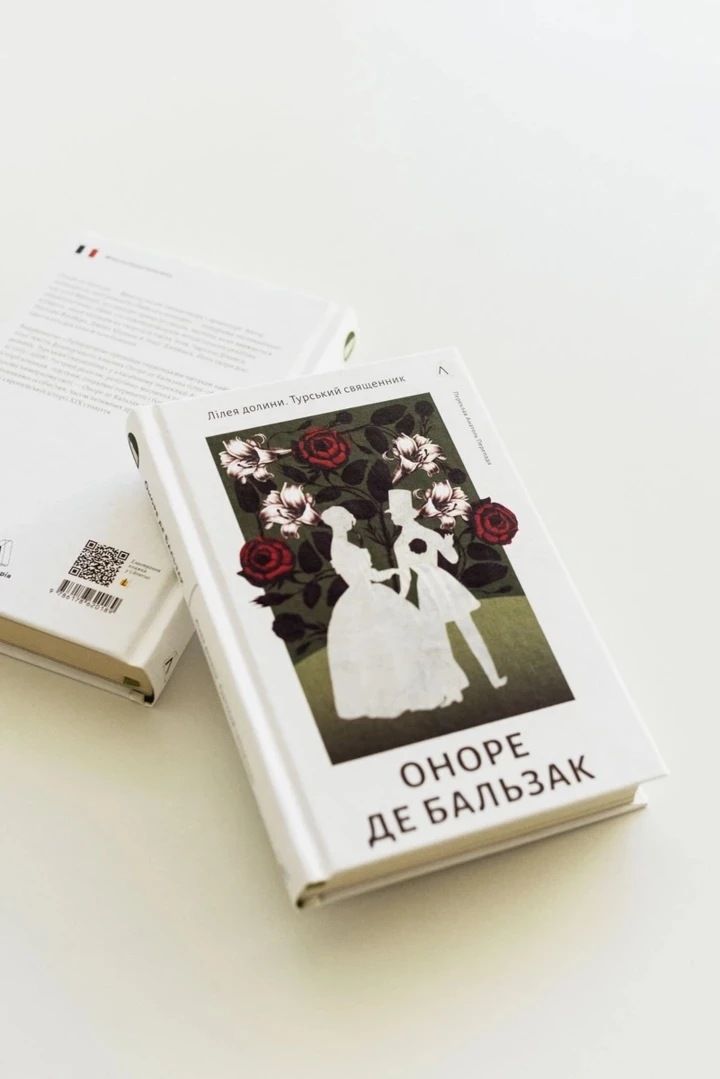
Modernity can evoke a desire to delve into the past – but not the turbulent one that led to the present, but one that is distant in both time and space. Escapism through literature is perhaps its best form.
Let us turn, therefore, to foreign classics. Balzac's two novels in one book – “Lily of the Valley” and “The Turkish Priest” – are exquisite writing about human pain and passion, those that do not change over the centuries. Indifferent, stingy parents and a lonely child growing up among strangers. Formation. Falling in love. The inability to be together because of the marriage of the chosen one. The choice is not in favor of feelings, but of duty. The suffering of the hero and heroine. The tragic ending. All this is against the background of the social hierarchies of that time.
“Lily of the Valley” received a wide range of reviews – from devastating criticism to admiration. Balzac insisted that it was not an autobiographical novel, but if you know his life from childhood, you can understand that he was partly deceitful in this statement.
The same edition contains another work – a story about the clergy environment of the French province of the early 19th century, where the pains and aspirations of the heroes unfold mainly around property. Some may be annoyed by this, others, on the contrary, fascinated by it: the slowness of the writing, the vast landscapes and interiors, the elaborate portraits in a courtly style. Some will sigh: they don't write like that anymore. And they don't talk like in these dialogues. The consolation is that it can still be read.
The book's bonus is a translation by the outstanding Anatol Perepadi. If you want to enjoy rich, refined Ukrainian, this is the place for you. If you want to expand your vocabulary, too. Every page is full of lexical pearls.
“Laboratory”