
 Share
Share
At the 2026 Oscars, Kate Gowley won the Best Costume Design award for her work on Guillermo del Toro's drama Frankenstein. We tell you how the film's lavish gothic costumes were created.
Legendary costume designer Kate Hawley is no stranger to creating looks for blockbusters. Over the past 20 years, she has worked on a number of high-profile projects, including Guillermo del Toro's Pacific Rim and David Ayer's Suicide Squad, and has created a number of exquisite costume dramas, including del Toro's lavish Crimson Peak and Juan Antonio Bayona's Emmy-nominated series The Lord of the Rings: The Fellowship of the Ring. This time, she has teamed up with her beloved Mexican director for her most ambitious and striking project yet: Frankenstein, a reimagining of Mary Shelley's gothic classic.
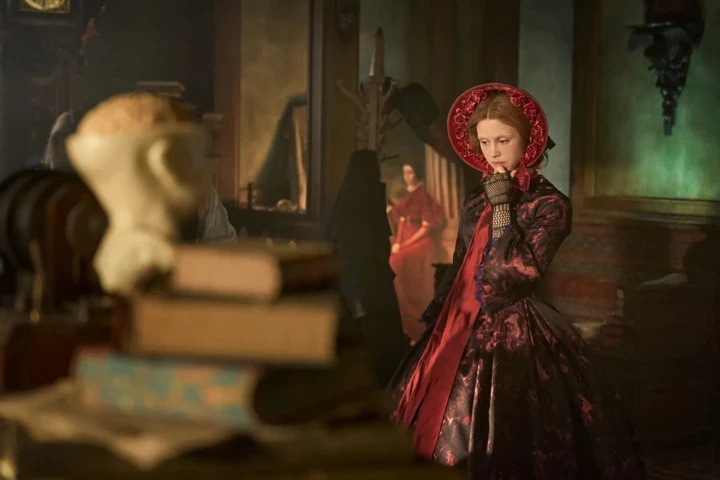
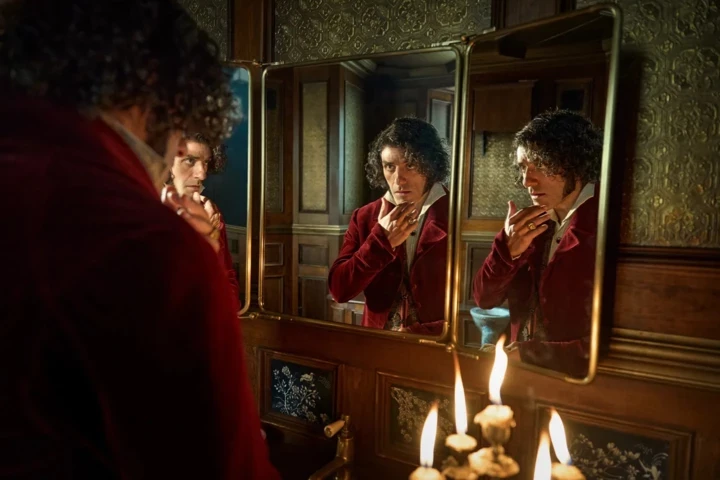
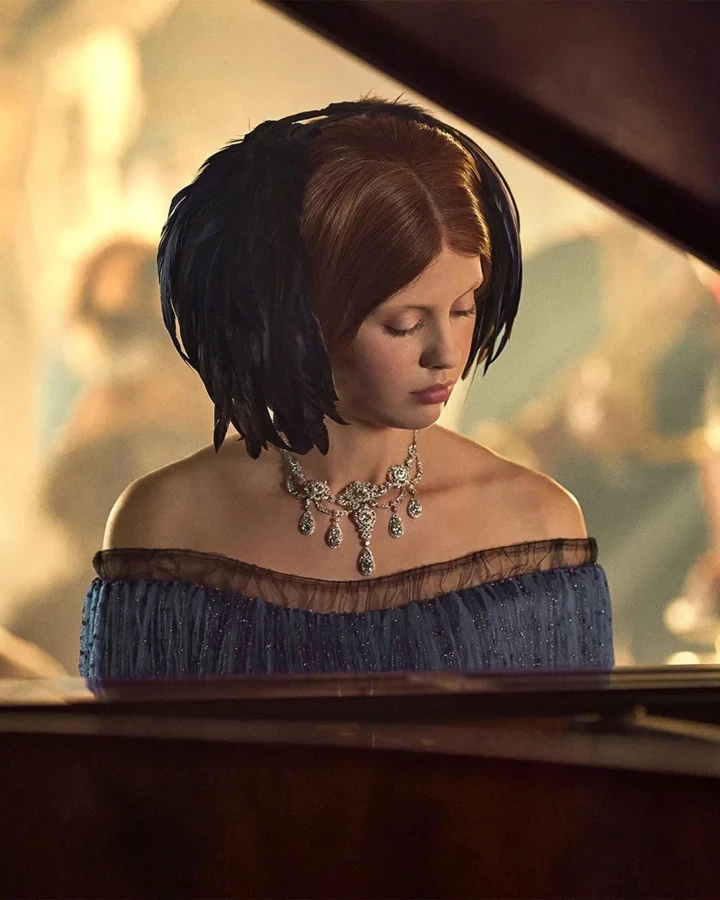
In this film, Hawley achieves the seemingly impossible: she dresses the reckless scientist Victor Frankenstein, played by Oscar Isaac, in luxurious velvet coats and breathtaking jewelry. Mia Gott, as Elizabeth, the object of his passion, wears silk ball gowns with a solar system pattern; luxurious bright veils; feather hair ornaments resembling halos; fans framed by tulle; rare Tiffany & Co. archival jewelry; and appears in a multi-layered and ethereal wedding dress. But none of the images distract from the main thing – the grandiose story of a visionary who tries on the role of God and thereby condemns himself to death. On the contrary, Hawley's works only immerse her deeper into del Toro's magical world.
Advertising.
It seems that the Oscar nomination for Gowley was inevitable, and the victory was more than deserved, although the competition was fierce: among the rivals were last year's winner Paul Tazewell (“Wicked: Part 2”), Ruth E. Carter (“Sinners”), Malgosia Turzanska (“Gemnet”) and Miyako Bellizzi (“Marty Supreme”).
In the work on “Frankenstein” the collaboration between the director and the costume designer was very active. In del Toro's work, the influence of the horrors of the British Hammer film studio and the films of the Italian film director Mario Bava is felt – all those wonderful references to the 1960s, bright and emotional. There are cross-cutting themes that run through a number of his films – “Pan's Labyrinth”, “Devil's Backbone” and others – and in each new story he seems to rethink them anew. When he met Kate Gowley, he looked not at her sketches or portfolio, but at her bookshelf. There were albums by the photographer Joel-Peter Witkin, painters Caravaggio and Goya. And he said: “We can work together.” A common visual language is what played a decisive role.
Del Toro is very careful with color in his films—he wanted Victor's childhood scenes to be red, black, and white. But the color story also evolves. At the beginning, the viewer sees a world of ice and snow—white, cream, blue. “We interpreted white as a symbol of death,” recalls Gowley. “We didn't use black—just layers of purple, green, and blue to create deep, rich colors. We were always looking for the right tone, thinking about how far we could go in each scene.”
Hawley recalls the unexpected challenges of her work. At one point, del Toro and cinematographer Dan Laustsen decided they would shoot scenes only by candlelight. “We needed to create rich colors, and the dim light just killed them,” recalls the New Zealand costume designer. “With Mia Gott’s first blue dress, we had a hard time figuring out—the rich silk in the shot was dead. And then we added layers of gray-toned fabric—and it worked perfectly in the camera.”
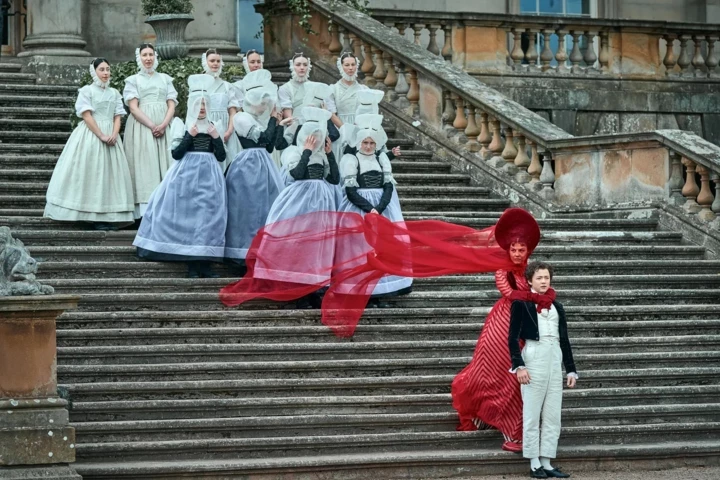
Sometimes Guillermo would say, “Kate, go bigger, go bigger!” Then she would add a veil to the scene for dramatic effect. But the director wouldn't stop: “I want a full crinoline!” It looked amazing, although it was problematic: the set designers had to widen the doors so that Mia Gott could pass through. The costume designers were worried that the volume of the dress would swallow the actress, but no – she was incredible in the shot.
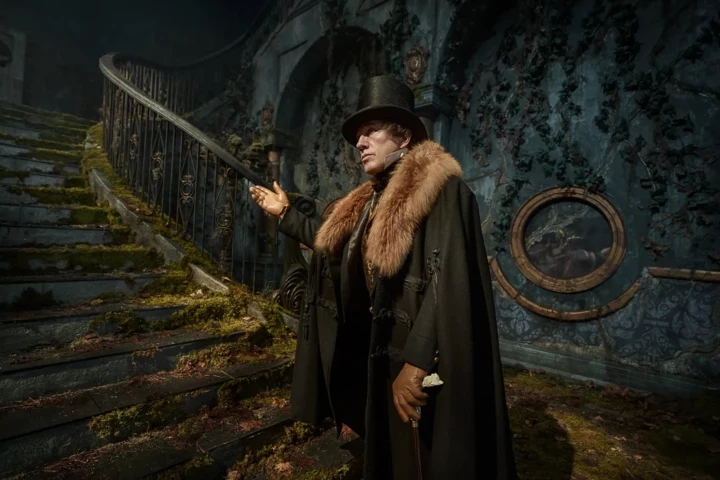
At other times, on the contrary, it was necessary to reduce the scale to focus on the details – and here the palette helped a lot. For example, Garlander (Victor's patron, played by Christoph Waltz) has his own colors. But in Elizabeth she is constantly changing – it is a metamorphosis. Her colors reflect the other characters. Through Victor's eyes, she first appears almost like an angel. Then her outfit repeats the red color of Claire's coffin – Victor's mother – from the funeral scene. She seems to slip away, becoming a memory of all women. “My job as a costume designer is to serve the director and the text,” concludes Hawley. “And here I had two texts – the script and the novel – and both are deeply emotional. We all cried. Guillermo jokes that I always cry.”
The story told in Frankenstein is truly moving to tears. It has a desperate sense of loneliness: cold, bony trees, melancholy, and the Creature (a creature created in the human image by Dr. Victor Frankenstein) who is born from a multitude of other people's body parts and their memories. “It's a kind of classic phantasmagoric dream,” says Gowley. “We were inspired by Caravaggio, Caspar David Friedrich – we wanted to convey a sense of memory, sadness, nature that permeates everything. That was very important even in the choice of fabrics.”
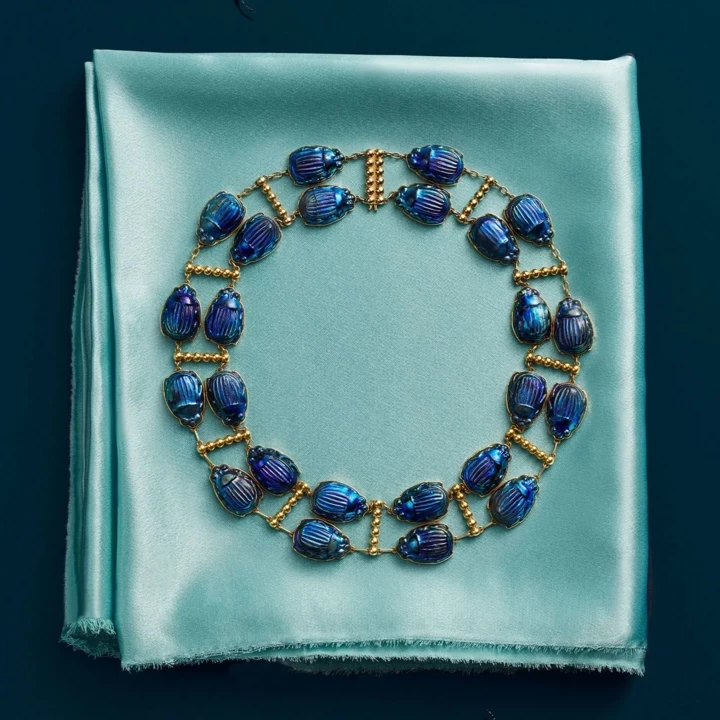
Elizabeth's dresses have fantastic patterns. The director created descriptions for each of his characters, and in Elizabeth he was one of the most detailed. She, for example, loves insects and beetles, and there is also a moment when she chooses books at the market, among which is “Natural Theology” by William Paley. This old print set the theme of the film – religion and the wonder of nature. If you look at the endpapers of Victorian books, they seem to be covered in malachite. “We tried to convey all these details in the patterns of the costumes,” recalls Gowley, “first we drew them, and then we transferred them to the fabric. We even had a collection of beetles in our studio – for inspiration.” But the clues about the heroine's passions are hidden not only in the patterns of the fabrics, but also in her collection of jewelry. The blue beetle on the Tiffany & Co. necklace that Elizabeth wears is a unique product from the early 1900s.
Actress Mia Goth saw her character as a free woman running through the fields, almost like the heroine of Wuthering Heights. But there is also another power in her. The encounter with Creation is almost a religious revelation, because he is the embodiment of nature. So some shots refer to the images of the Virgin Mary and Christ. And another detail that Kate Hawley draws attention to is that Elizabeth always seems to disappear. She is impossible to catch – she is the muse that Victor is constantly chasing. This is felt in the transparency of her fabrics and sleeves – they have something ephemeral, almost ghostly. And then there are the veils, which always cause controversy – because they hide the actress's face – but the team of artists chose fabrics that allow her features to be seen. The veils were sewn in rich colors – this added the desired wow effect.
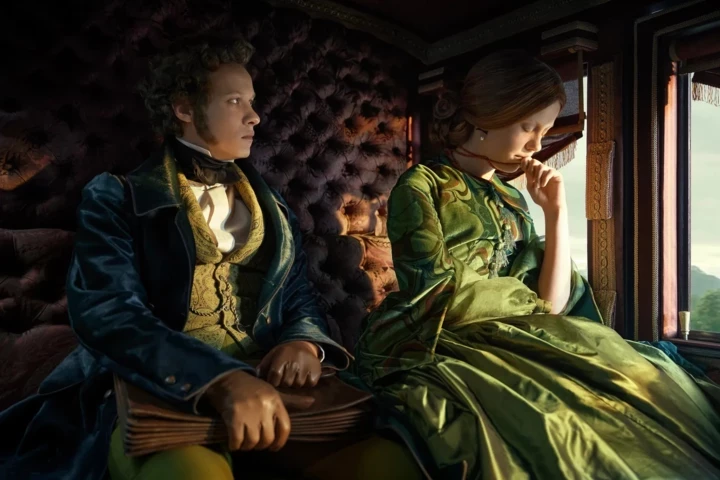
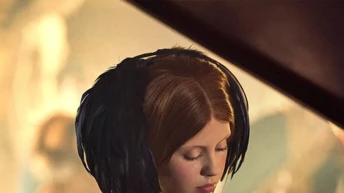
One of the striking accents in the main character's image is the feathered hair ornaments and bonnets, which echo the round shapes in the architecture found in the film. There's one yellow bonnet that Hawley made, inspired by the image of the Virgin Mary. This classic religious image is also repeated in the work of production designer Tamara Deverell – for example, in the scene with Medusa in Victor's laboratory. “Working with Guillermo is a pleasure,” says Hawley. “Everyone on the set picks up his ideas and finds opportunities to embody them in their work. I remember Tamara once running around with buckets of green moss to cover the tower – so that its color would enhance the green shade of Mia's dress.”
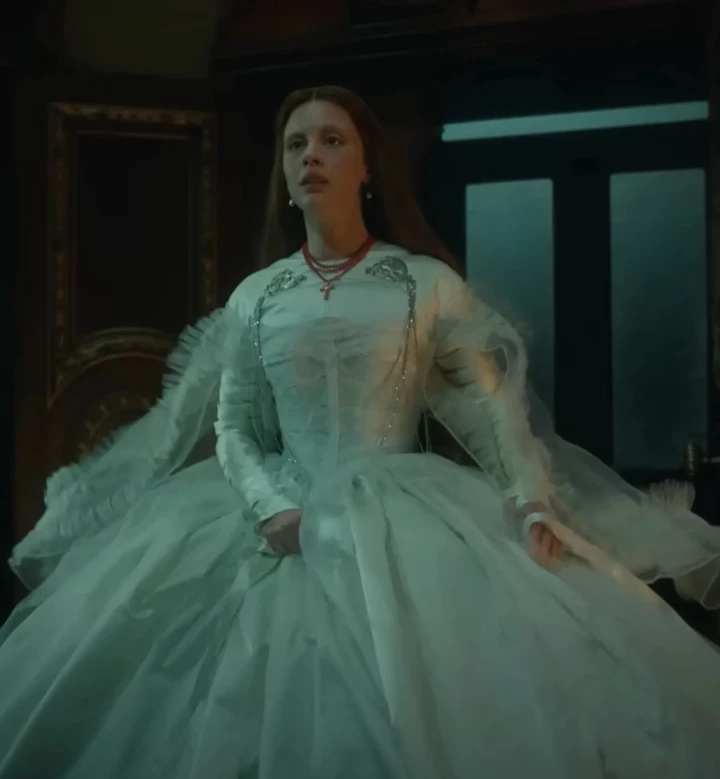
But the real masterpiece is the main character's wedding dress. “This look was extremely important: she's Guillermo's bride, not your average Victorian bride,” says Hawley. “It had a sense of the era, but at the same time – the modern aesthetic that the director was going for.” The dress is made of the finest silk, five layers of organza and a bodice made of Swiss ribbons. The ribbons on her arms are also an homage to the classic films “Frankenstein” (1931) and “Bride of Frankenstein” (1935) and a reference to the bandages on the Creature's body. The silhouette of the dress is partly inspired by Swiss-German folk costume, and it features the Frankenstein family crest. But what's most mesmerizing is the way the dress moves as Mia constantly runs up and down the stairs. There's a slight 1960s dreaminess to this look, accentuated by sophisticated makeup by Jordan Samuel and a long-haired hairstyle created by Cleona Fury.
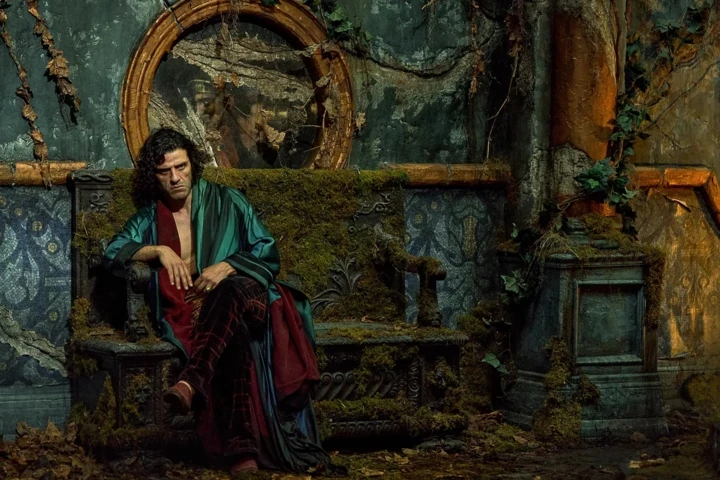
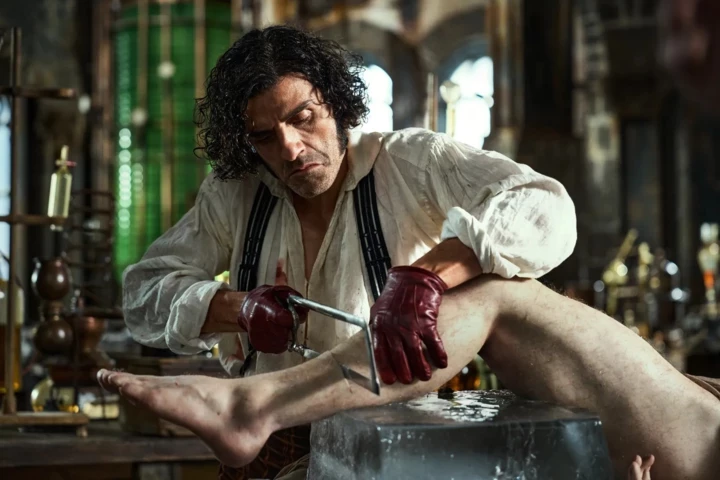
The director's visual reference for Victor's image was Mick Jagger in the 1970s. “We wanted him to walk into the lab like a rock star walking onto the stage,” says Kate. “He's a punk and a dandy. He comes from an aristocratic family, lived in poverty, and then became rich and started wearing things with a slight disregard for the rules. It's like Francis Bacon or Picasso – they wear clothes for creativity, not for show. He works with blood, with organics – and all of that comes through in his costumes. My favorite look for Victor is the robe. It definitely suits Oscar Isaac.”