

Let's begin our brief “creative” analysis with the fact that in ancient times, there was no such thing as excess weight in society. Why not? For the simple reason that there were no prerequisites for obesity. Almost everyone (with very few exceptions) engaged in regular physical activity, many even to the point of overexertion.
The advent of transportation, machinery, and all sorts of labor-saving devices, while having many positive effects, also had significant downsides: people began to exercise less and less. Against this backdrop of lifestyle changes, diseases that contribute to weight gain began to develop.
At the genetic level, these traits became hereditary. Although medicine knew little about heredity at the time, it was already a cause of excess weight. The gradual shift to less healthy foods also played a role. This trend intensified with the advent of “chemical” foods in the last century.
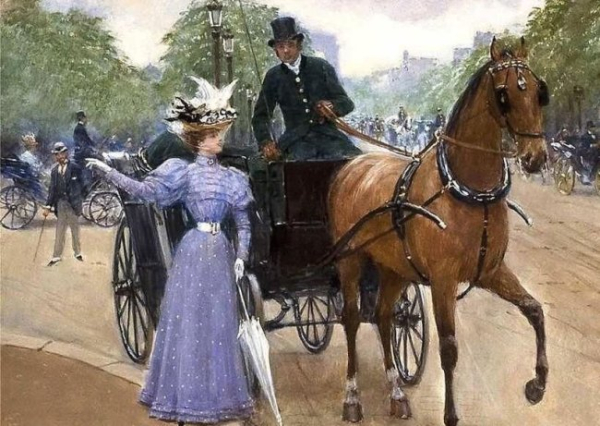
A sedentary lifestyle began to emerge in society in the early 19th century, primarily in large cities. It was there that the fashion for officials to order food delivered to their offices emerged. Many institutions later opened cafeterias directly in their offices. Thus, officials lost the opportunity to walk during lunch breaks, and were transported to and from work by horse-drawn carriage.
And yet, excessively obese officials were quite rare back then. There were strict rules for official clothing. It was made in three specific sizes, and such things as custom-made clothes didn't exist back then: officials had to “fit” into standard clothing based on their own size. This forced them to restrict their diet.
Among the common people, social expectations regarding figure size allowed for a healthy weight, but within reasonable limits. Maintaining an acceptable weight was done to save money on food and clothing. To achieve this, a mark was made on the belt around the stomach, up to which the belt was normally tied. If the belt had to be loosened further than the mark, people began to abstain from food.
To create the appearance of slimness, young ladies wore body-shaping corsets. The fashion for them came to Russia from France, but they didn't last long, as they offered no solution to excess weight and were expensive.
To maintain a healthy figure, herbal remedies that curbed appetite were widely used. Preference was given to mixed teas with honey, which effectively created a feeling of fullness even with a small amount. It was also common to drink very hot tea, which caused profuse sweating. Sweating is an energy-consuming process for the body and is considered akin to physical labor. And since tea was drunk frequently, people sweated a lot.
Let's not forget the role of the banya. Every home had one. They heated it so hot that the steam would take your breath away. And then they whipped your body with birch twigs until it was red. And this is a very effective method for losing weight or keeping it off.