

The right to vote and run for office, to drive a car and serve in the Armed Forces, to lead states and receive a decent education — most of these opportunities are taken for granted by modern women, but behind each of these achievements stand decades and hundreds of years of hard work by our sisters and colleagues. Let's figure out what March 8 really means.
Advertising.
How it all began
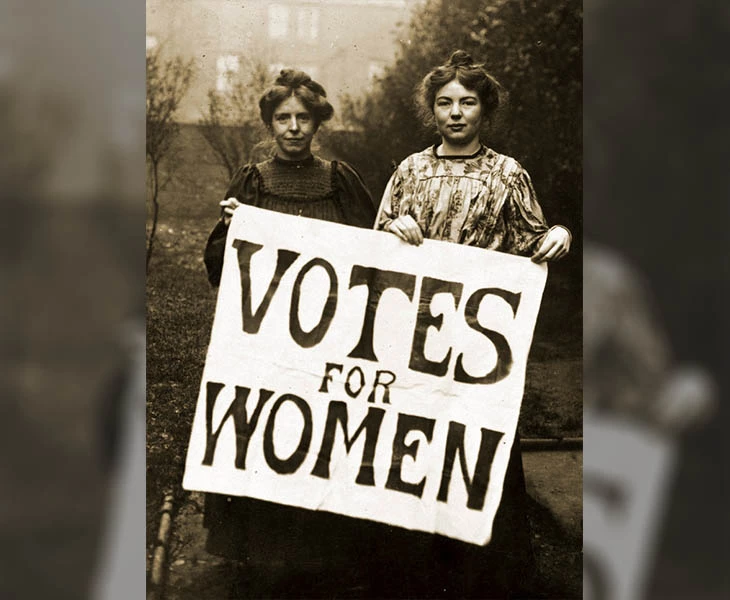
The first women's marches, advocating for equal working conditions with men, took place in the mid- 19th century and swept from London to New York. They were attended mostly by factory workers, as well as suffragettes , whose main goal at the time was to win the right to vote for women around the world.
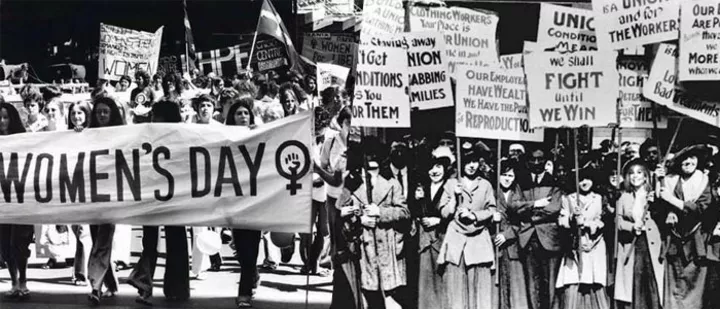
The key premise of the modern holiday was the 1908 rally in New York: it was a march of social democratic women who took to the streets to fight for the right to vote, as well as a reduction in the working day from 16 to 10 hours and equal working conditions with men. A year later, the United States had its own national International Women's Day.
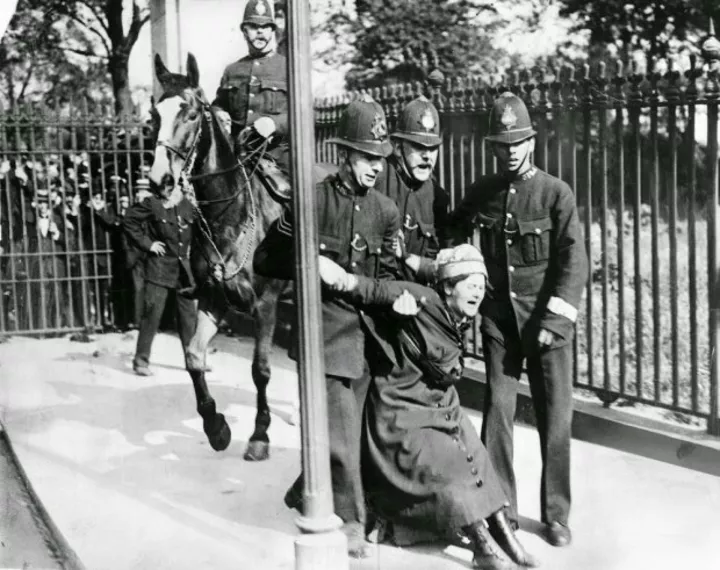 London, 1857. Arrest of a suffragette rally participant
In 1910 , the International Socialist Conference was held in Copenhagen, which played a significant role in popularizing March 8. It was then that the German socialist Clara Zetkin suggested to her colleagues to establish March 8 as International Women's Day, so that this year women around the world could take to the streets and remind them of the need to fight for their rights. The holiday was established by analogy with International Labor Day on May 1.
Clara Zetkin's idea quickly bore fruit. By 1911, International Women's Day was celebrated in many European countries, and in 1917, women received the right to vote in Australia, New Zealand, Denmark, and Norway.
In the history of the Soviet Union, this day has always been associated with the events of the February Revolution. After all, on February 23, women took to the streets of what was then Petrograd in the old style, holding posters with the slogan “Bread and Peace.” Women of the Russian Empire demanded the right to vote, equal pay, and peace. The whole world knows what these rallies led to – the tsar abdicated, the communists came to power, and women received the right to vote.
But the propaganda machine of the Soviet Union grossly distorted the meaning of this day, gradually reducing it to a primitive holiday of femininity, the attributes of which for many years became postcards, tulips and “attention to the schedule”. The Soviet Union preferred to remain silent about the meanings and the struggle for rights, so later in the post-Soviet countries a distorted perception of March 8 was entrenched for many years. But this approach is completely alien to the modern civilized world, so we suggest turning to the basic principles of this day, which are prescribed by the UN.
What does the UN think about March 8?
The UN gave this day its proper meaning in 1975: it invited all countries to choose any day of the year and make it the Day of Struggle for Women's Rights. It became March 8. Moreover, every year the UN chooses a theme to which March 8 is dedicated – usually it is the issue that currently requires special attention. In particular, in 2002 the main issue was the fate of Afghan women, in 2017 – “Women in the Changing World of Work”, and in 2021 – “Women's Leadership: Moving Towards an Equal Future in the World in Times of Pandemic”.
From people who are skeptical about this holiday, you can sometimes hear the question: how exactly are women's rights limited, because you, for example (addressing the interlocutor) can vote, enter university, and generally do whatever you consider necessary. This is a misconception related to a lack of information.
Here is what the UN Office in Ukraine says on this matter:
“Despite the progress made, many challenges still remain. Due to discriminatory social norms that define what women should and should not do, women around the world continue to suffer from violence and discrimination simply because they are women. Global statistics show that they do three times more unpaid care and domestic work than men, and receive 16 percent less pay for the same work than men. Only 1 in 4 leaders in the world is a woman. Women are still underrepresented in political leadership (for example, in Ukraine, only 20.8 percent of women are in parliament), and their role in science is also undervalued.”
This list can, unfortunately, be continued by every woman in the world who, one way or another, more often or less often, faces discrimination or restrictions, or, what is worse, manifestations of moral or physical violence.
A brief history of the feminist movement in Ukraine
The feminist movement developed in Ukraine simultaneously with the world one, its activity fell on the end of the 19th-20th centuries. Among the activists of emancipation in Ukraine there have always been intellectual writers. In particular, the beginning of the movement is associated with the name of the writer and public figure Natalia Kobrynska, who founded a women's society in 1884 in Stanislaviv (now Ivano – Frankivsk ) and was engaged in education. Kobrynska, together with Olena Pchilka, published the first women's literary almanac, and the key field of work was primarily women's education.
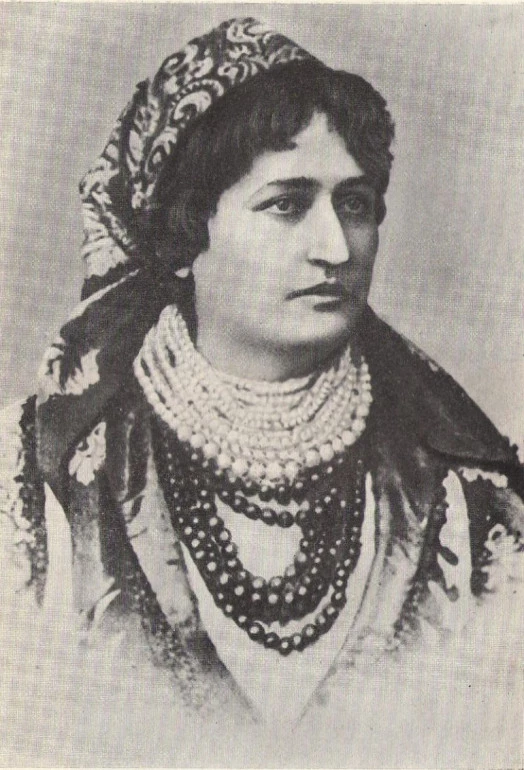 Natalia Kobrynska
Speaking about the development of emancipation in Ukraine, it is impossible not to tell more about Kobrinska's colleague – the writer and mother of the outstanding poetess Lesya Ukrainka Olga Kosach , known by the pseudonym Olena Pchilka. Olena Pchilka advocated for women's freedom, for the right to have their own voice and access to higher education. She became the first corresponding member of the All-Ukrainian Academy of Sciences. She also headed the magazine “Ridnyi Kray”. When the Poltava authorities closed the magazine in 1907, Olena Pchilka moved the editorial office to Kyiv. Both Kobrinska and Pchilka, and later Lesya Ukrainka and Olga Kobylyanska, became the authors of many fundamental articles on women's rights and Ukrainian feminism, although it is worth understanding that at that time many contemporaries of these great women considered their views too radical.
In 2005, Ukraine adopted the law “On Ensuring Equal Rights and Opportunities for Men and Women.” It contains many important theses — for example, that during an interview in Ukraine, you cannot ask a girl about her plans for marriage and whether she plans to become a mother in the near future. At the same time, labor law is still very conservative overall: in Ukraine, there is a list of professions prohibited for women.
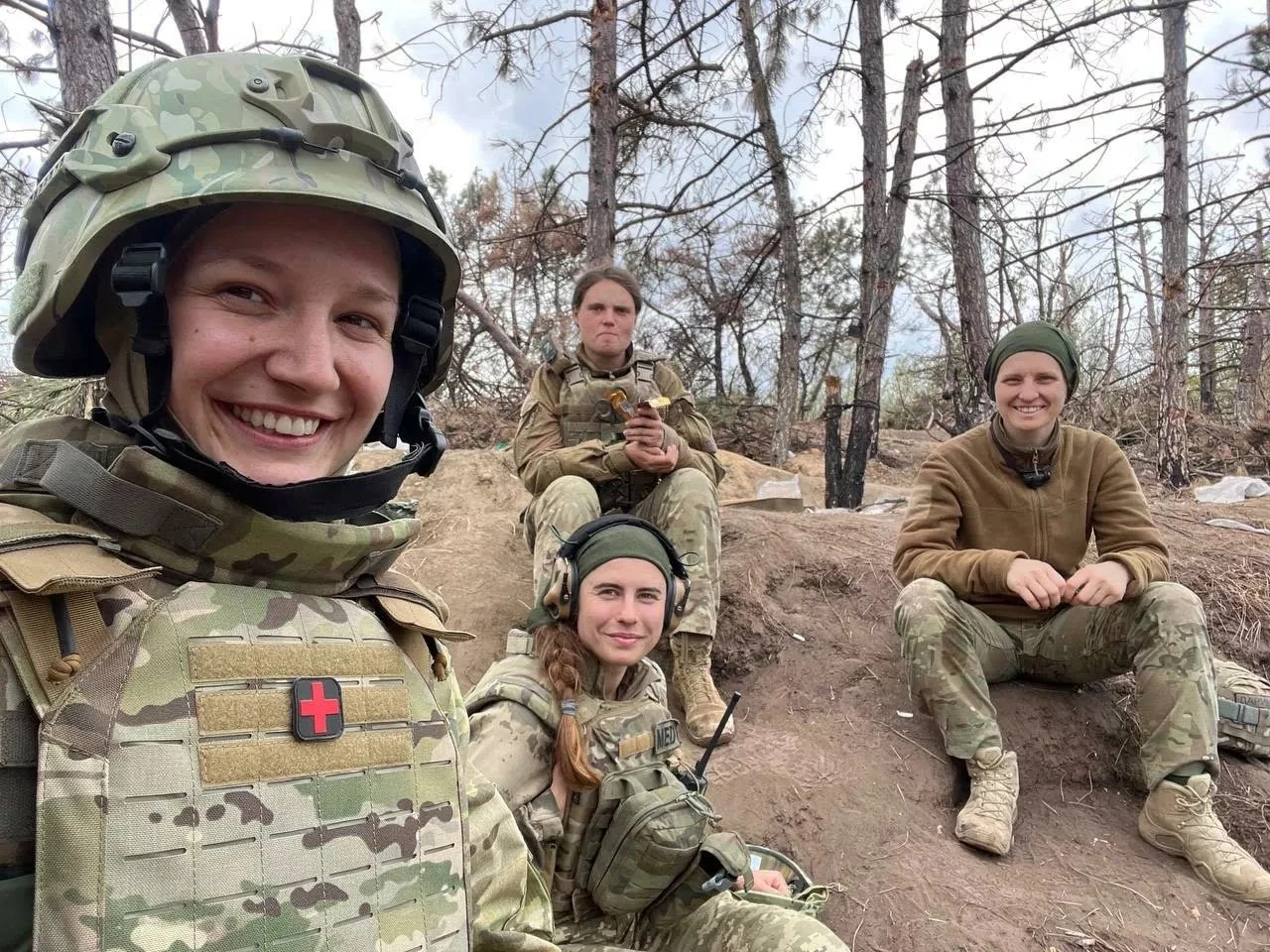 Kateryna Pryimak, co-founder of the Women's Veterans Movement
The war that has been going on since 2014 has only exacerbated this issue, as for a long time a woman could not hold a combat position in the Armed Forces. There are known cases from 2014 to 2018 when women were stormtroopers and liberated cities in the Ukrainian East, but were listed as seamstresses in their documents.
A major role in the shift was played by activists of the “Invisible Battalion” – an advocacy project that originated as a study by sociologists from the Kyiv -Mohyla Academy on women's participation in war and later grew to national proportions. Its main drivers were Maria Berlinska (today Maria heads the “Center for Support of Aerial Intelligence “), Kateryna Pryimak and Andriana Arekhta (today – co-founders of the “Women's Veteran Movement”, military personnel ). The years of work of the “Invisible Battalion” were crowned with a historic event for the country: the Verkhovna Rada adopted a number of amendments to the laws on equal rights of men and women during service in the Armed Forces of Ukraine , and Ukrainian women were able to have a military specialization.
Today, approximately 50,000 women serve in the ranks of the Armed Forces, fighting for the most important and cherished right of all Ukrainians — to live in a free and independent country.
Why you should attend the Women's March
The last decade has seen a real boom in Women's Marches around the world, which have become an opportunity for modern women to once again highlight the problems of violence, discrimination, and the prevalence of offensive stereotypes. In Ukraine, the March was organized by the NGO “Women's March”, headed by human rights activist Olena Shevchenko, whose work in 2023 was recognized by the whole world – Olena was included in the list of women of the world by Time magazine.
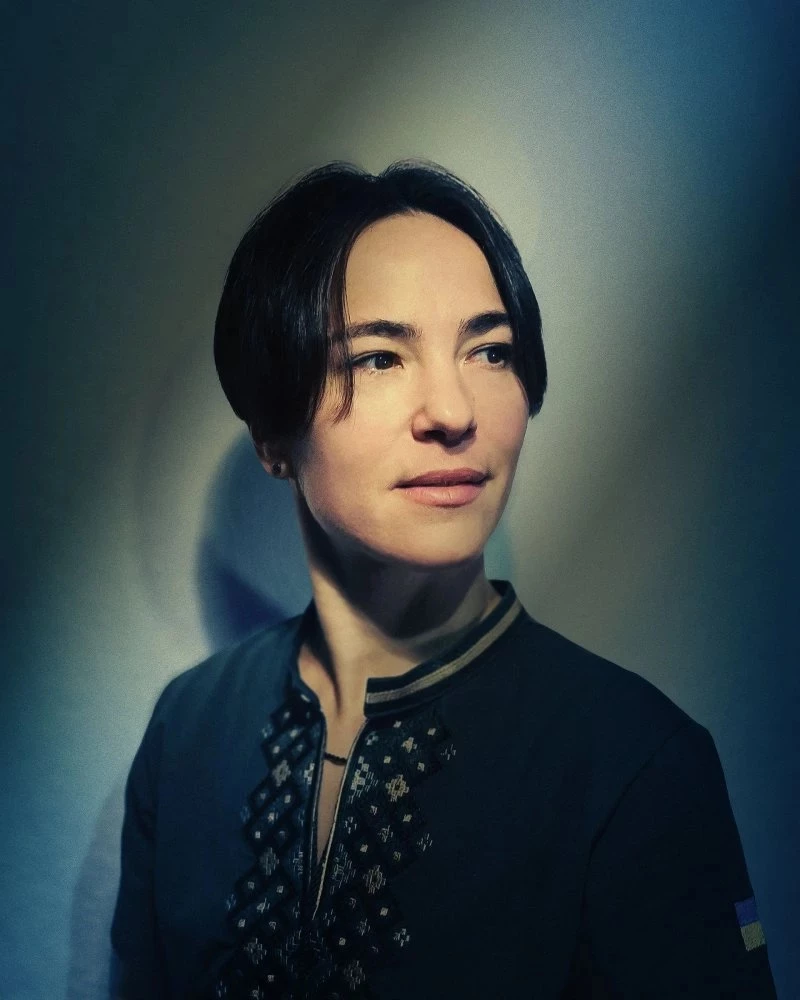 Human rights activist Olena Shevchenko, photo by Time
“Every year on March 8, we hold marches in different cities of Ukraine to draw attention to the challenges faced by various women in Ukraine,” says the Women's March team. “In recent years, the Women's March team has paid a lot of attention to the ratification of the Istanbul Convention on Preventing and Combating Violence against Women and Domestic Violence. With the beginning of Russia's invasion of Ukraine, we launched a humanitarian hub to help women who found themselves in crisis situations due to the war.”
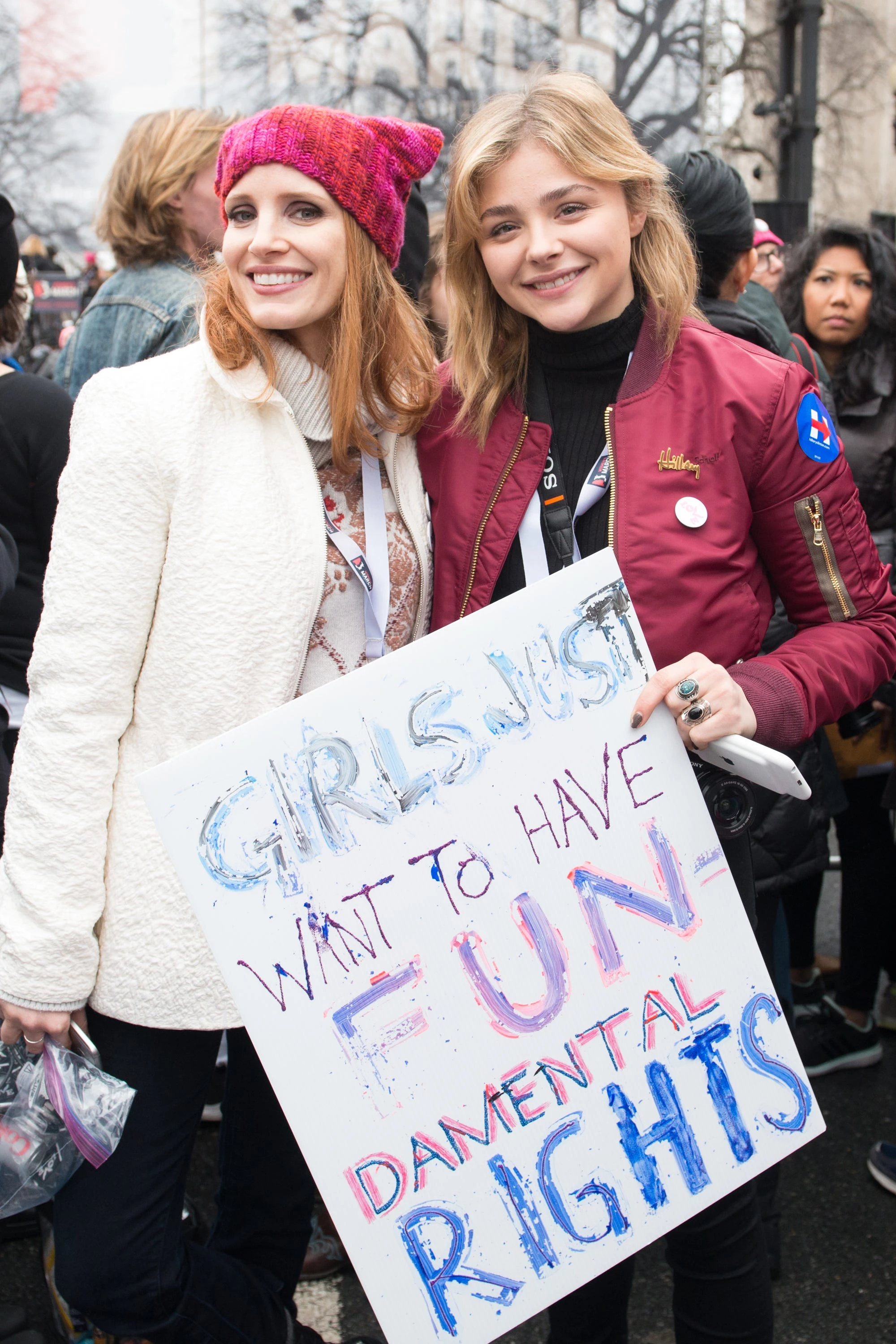 Jessica Chastain and Chloe Grace Moritz at the Women's March
Why specifically go to the Marches? The answer is again found in the comments of the UN in Ukraine.
“Society still 'tells' women in Ukraine what to do and who to be, through unspoken expectations or even overtly. Just think about the last time you or your friend or colleague was told to get married, have children, or advised to 'dress like a woman', etc. Women should not face sexism, discrimination and violence just because they were born female. According to a 2019 OSCE study, two-thirds (67 percent) of women reported psychological, physical or sexual violence by a partner or another person. Half of the women who were affected did not tell anyone about the most serious incident of sexual violence against them after it happened.”
The material uses data from the website of the United Nations in Ukraine.