

 Share
Share
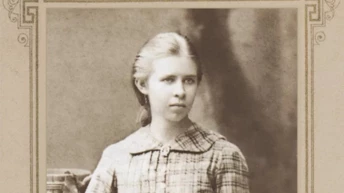
On February 25, we celebrate Lesya Ukrainka's birthday. There are many clichés about the writer: that she is “almost the only man” in all of Ukrainian literature, or that she is an unfortunate sick girl. However, in reality, Lesya Ukrainka is an author of European level, a writer without whom it is impossible to imagine Ukrainian literature, a source of topics and ideas that one wants to think about in 2026.
Advertising.
The intellectual legacy of Larisa Kosach is something that we continue to embody to this day, and some of her ideas even today sound incredibly innovative. Of course, the facts of her biography are intertwined with her creativity, but it all begins with texts: poetry, prose, translations, and drama. Lesya Ukrainka appears in various roles, and the first uncensored complete edition of her works — 14 volumes of texts and expert comments by scholars — helps us to reveal these roles.
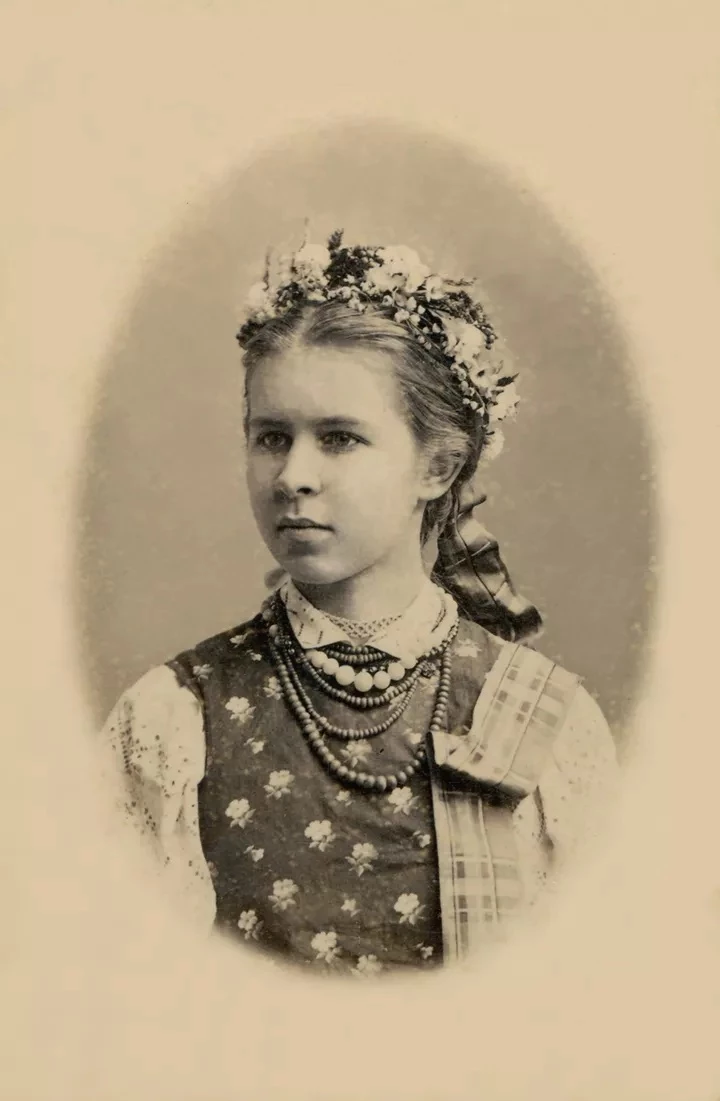
How to approach and where to start getting to know Lesya Ukrainka? The co-authors of the best podcast about culture “Untitled for Now” – literary critic Anastasia Yevdokimova and Deputy Minister of Culture of Ukraine Bohdana Layuk-Neborak – tell us especially for Vogue.ua.
Poem “Word, why aren't you a firm cry”
Lesia Ukrainka's main tool is language. She constantly works with texts that she writes herself, which she reads, comments on, and translates. Since new Ukrainian literature, written in colloquial Ukrainian, appeared only 100 years before the writer (in 1798, with the appearance of Kotlyarevsky's “Aeneid”), there is indeed a lot of work to do.
In the poem “Word, Why Are You Not a Hard Krytsa” Lesya Ukrainka writes about her own effective means of fighting for Ukrainian national ideas and against Russification – the word. For her, it is a sword and a dagger. The metaphor of the word as a weapon is also adopted by the modern poet Kateryna Kalytko, who writes: “Here is your language, woman. Shoot with it.”
Poem “Wave”
In one of his articles, Ivan Franko called Lesya Ukrainka “a weak, feeble girl,” and since then the disease has hung over her biography like the sword of Damocles. She really had tuberculosis since childhood (then a terrible and incurable disease), so she traveled a lot – went to sanatoriums and medical resorts.
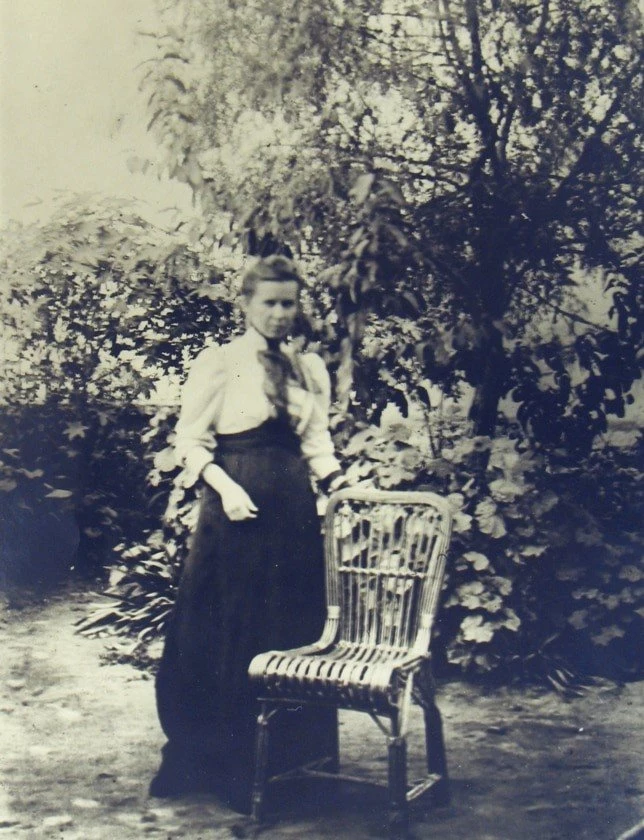 Lesya Ukrainka in Egypt, 1910
All myths about this aspect of the author's life are debunked by literary critic Tamara Gundorova in her latest book “Lesya Ukrainka. The Books of the Sibyl,” which discusses illness as an element of the writer's life, as a metaphor for the entire turn of the century.
Lesia Ukrainka's work includes many texts about travel and the sea coast, including the cycles “Journey to the Sea” and “Crimean Memories”. Without a doubt, an important text is “Wave”, written during another trip to Yevpatoria. This is a poem about a wave that moves, like human life: sometimes it recedes and subsides, then it rolls in with new force, then it reaches the seabed, then it breaks out loudly. And the rhythm of the poem is like the rhythm of a sea wave.
Poem “Your letters always smell like withered roses”
Of the 14 volumes of the complete edition of Lesya Ukrainka's works, which was published in 2021, 4 volumes are letters. For modern readers, it is a truly fascinating adventure to read the correspondence of intellectuals, delving into the context of the era, into communication rules and customs, into the interests of the interlocutors. In her letters, Lesya Ukrainka was open and sincere, she shared emotions and impressions, so the letters help us imagine what she was like.
The writer corresponded with an influential political figure, her uncle Mykhailo Dragomanov, with her despotic mother, children's writer Olena Pchilka, with the main feminist of Galicia, Ivan Franko, with her good friend, writer Olga Kobylyanska, and many others.
Lesya Ukrainka dedicated the poignant text “Your letters always smell of withered roses” to her correspondence with her beloved husband, Serhiy Merzhynsky, which explains the true essence of letters in that era.
 With mother Olena Pchilka
Poem “I would like to embrace you like ivy…”
The poem “I would like to embrace you like ivy…” explores the story of destructive love between two subjects, one of whom cannot exist without the other, needs his support. A modern reading of the text was proposed by the leader of the “Boombox” band, Andriy Khlyvnyuk, drawing attention to the fact that in this intimate poetry the characters do not have genders, and therefore each reader can imagine themselves in the place of any of them and, thanks to Lesya Ukrainka, understand more about the possible configurations of interpersonal relationships.
Dramatic poem “Obsessed”
When her beloved Serhiy Merzhynsky dies, a new hypostasis of Lesya Ukrainka is born – a playwright. In one night at Merzhynsky's bedside, the writer writes “Obsessed” in one breath. It is both a drama and a way of confessing love at the same time. In the drama, she identifies Serhiy Merzhynsky with Christ the Messiah, and herself with the disciple Miriam, who wanders after her teacher in the desert. Lesya Ukrainka turns to the Christian myth and inscribes in it an individual, human feeling – the obsessed and humble Miriam, who has experienced great love.
Modern writer Oksana Zabuzhko fantasized about the relationship between lovers in the poem “Through the Looking Glass. Mrs. Merzhynska”: Lesya Ukrainka gets married, lives in Kyiv, walks with a stroller and a child along Prorizna, and meanwhile she sees and hears a voice screaming “Miriam”, because without the tragic loss of her beloved, the playwright would not have been born.
Story “Conversation”
In the story “The Conversation” Lesya Ukrainka shows a strong female character, a sick actress, whom a young poet admires. The actress tells him the story of her life and what caused her illness: the circumstances of a love that she could not let go of. The woman was in love with a man, a theater critic, who did not have enough income to start a family, while at the same time suggesting that the successful actress give up her career and marry him. She offered him that she would earn money for them by working in the theater and touring, but the man resolutely refused, as if it were a humiliating offer. The actress left her lover, and he married her instead.
In the dialogue, the characters subtly dissect stereotypes about what male and female roles are and what dignity is in a relationship for both, as well as what revenge is on the one you loved and whether it will come back to you. Conflicting emotions and a new perspective on relationships are what interests Lesya Ukrainka.
Maurice Maeterlinck “The Inevitable”, translated by Lesya Ukrainka
Lesya Ukrainka, her brother Mykhailo, and a group of children of Ukrainian intellectuals and aristocrats founded the Pleiades circle, a society of young like-minded people who read new texts, discussed them, and studied foreign languages in order to create translations of the best literature into Ukrainian. At that time, Lesya translated Heine and Goethe, and at her brother's request, she compiled a list of works of world literature that she considered necessary to translate.
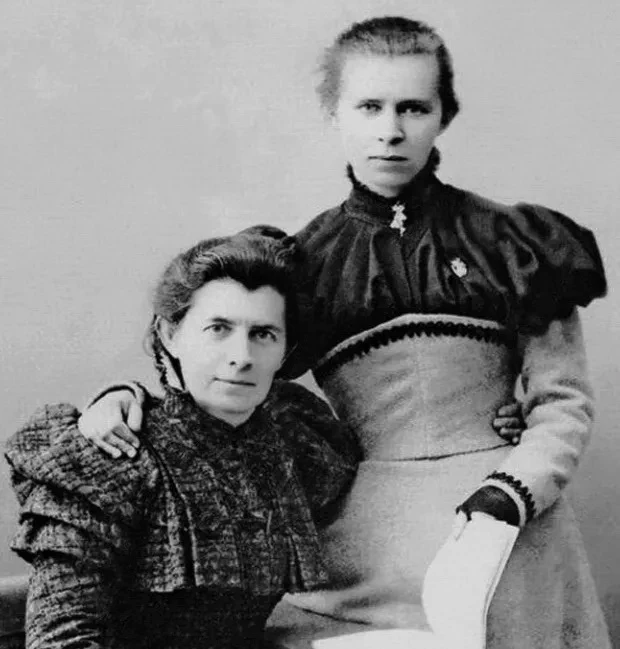
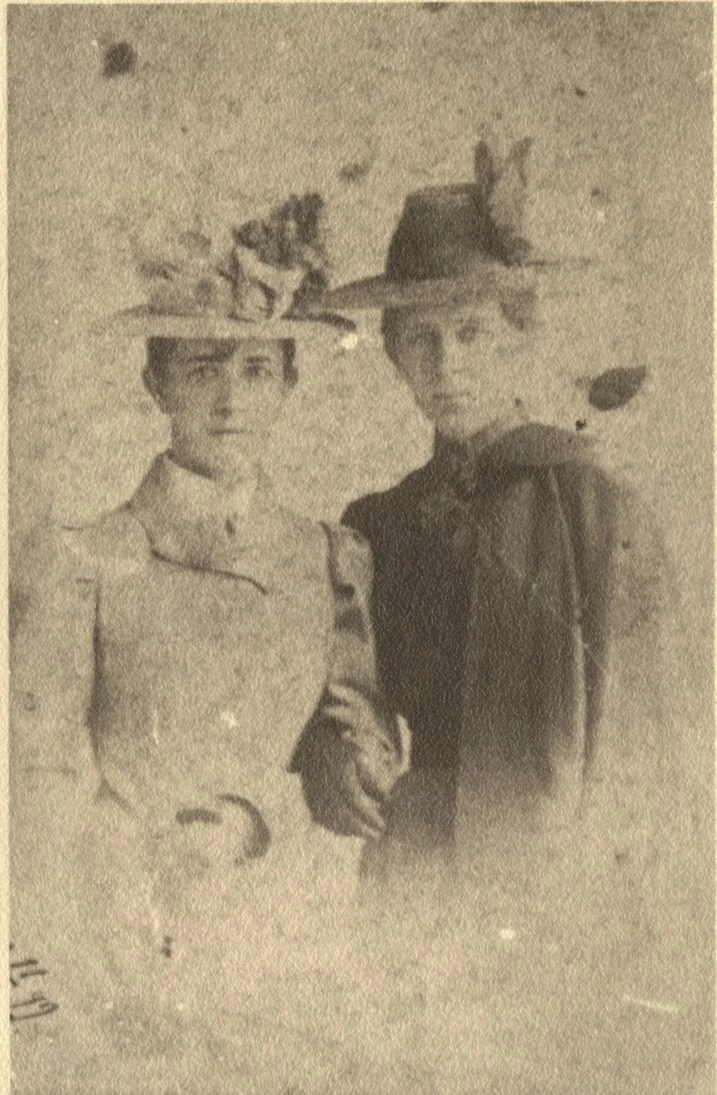 Olga and Larisa Kosach. Berlin, 1899.
Lesya Ukrainka has translated throughout her life, including authors such as Gogol, Hugo, Mickiewicz, Byron, and others. The translations of Maurice Maeterlinck, a Belgian playwright, are an attempt by the author to introduce the voice of symbolism and early European modernism into the discourse of Ukrainian literature. Offering the drama “The Inevitable” for publication in the literary and scientific publication “Visnyk”, Lesya Ukrainka writes: “Let your laudatory editorial staff overcome their well-known aversion to “modernists” and read my translation, I am sure that this original and finely written work cannot fail to attract the attention of even an “outsider reader”. I am not an absolute (far from it!) admirer of Maeterlinck and “modernism” in general, but in three of this author's dramas I truly see new elements of the play, combined with great talent. I actually have one of these dramas to submit.”
Drama “Blue Rose”
Lesia Ukrainka's only dramatic prose work is “The Blue Rose.” The drama tells the story of a femme moderne — 25-year-old Lyubov Goshchynska, who is disappointed in social life and her own talents. This is a story about the psychology of female fear. But what is Lyubov afraid of? Of herself. And also — of inheriting her mother's madness. Lyubov tells a psychiatrist: “I stood there until the day began to dawn; then I went to bed. And I had such a bad dream… I had a dream of fear, a feeling of fear for no reason.”
“The Blue Rose” is a modern drama. Lesya Ukrainka read “A Doll's House” by Henrik Ibsen, she knew this new type of heroine, so feminism for the writer is a feature of modern culture.
Drama “The Stone Master”
Lesya Ukrainka tells the story of the seducer Don Juan from the perspective of a woman, modifying the recognizable plot and showing what the will of a strong heroine can be. In drama, the author constantly turns to universal plots not only to present them in Ukrainian literature in the Ukrainian language, but also to show how old narratives can still work. The world around the writer is changing, the era of modernism is coming, and this is clearly visible in the author's texts. For example, Lesya Ukrainka tells the story of the Trojan War not from the perspective of a male warrior, but through the eyes of a woman, the soothsayer Cassandra. Similarly, in “The Stone Master”, the author shows in the bright Donna Anna a complex image of a woman who does not perform the function of the weaker sex and drives the plot.
Handbook “Ancient History of Eastern Peoples”
The Kosach family archive was organized by Lesia Ukrainka's younger sister, Olga Kosach-Kryvyniuk. It was she who compiled a detailed chronology of Lesia Ukrainka's life, and it was for her that the writer wrote the manual “Ancient History of Eastern Peoples.”
Since Lesya Ukrainka was teaching her younger sister, she created a course in ancient history for her. Her uncle, historian Mykhailo Drahomanov, suggested historical sources, which 20-year-old Lesya Ukrainka used to write about the Persians, Babylonians, and Egyptians. Of course, historical research has come a long way since then, but Lesya Ukrainka’s textbook is still extremely interesting — she retells complex historical works in a popular science way for her 13-year-old sister, writes about customs and religion, and describes rituals and political upheavals.
Photo : Lesya Ukrainka Literary and Memorial Museum in Zvyahel