

On February 21, one of the main awards in the Panorama section of the Berlin Film Festival went to the Ukrainian film “Traces.” The documentary film by directors Alisa Kovalenko and Marysa Nikityuk, which tells the story of women who survived violence during the Russian-Ukrainian war, won The Panorama Audience Award for Documentary, which is voted for by the audience.
Advertising.
At the Berlinale, film critic Elizaveta Sushko spoke with the authors of the film specifically for Vogue.ua.
This is not the first time for both directors to participate in the Berlinale: Alisa Kovalenko's film “We Will Not Fade Away” was presented at Generation 14plus in 2023, and Marysa's feature film “When Trees Fall” was presented at Panorama in 2018. But for the first time, the directors, who are very different in style and previous works, worked together to create a documentary “time stamp” about one of the most sensitive topics of modern war – sexual violence by the Russian army.
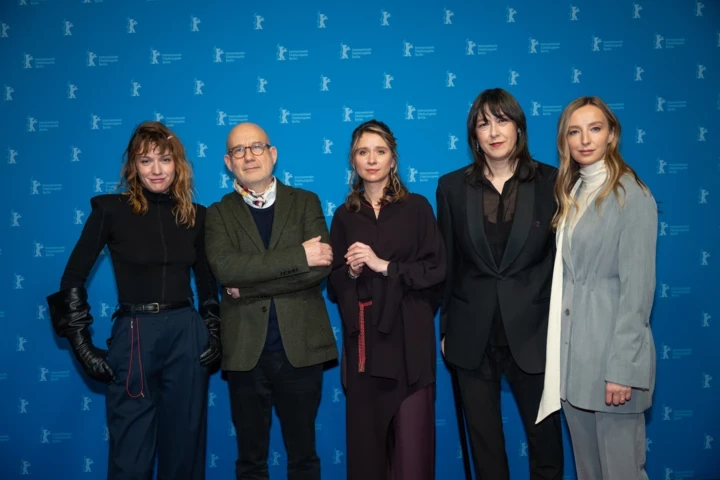
This story is personal for Alisa: in 2014 she was captured by Russian forces and suffered abuse. She says she asked Marysa, as a friend and colleague, to join the project at a time when the testimonies of the film's heroines, other women, “started to haunt her.” According to Alisa, it had to be someone outside of that experience, but from the world of cinema.
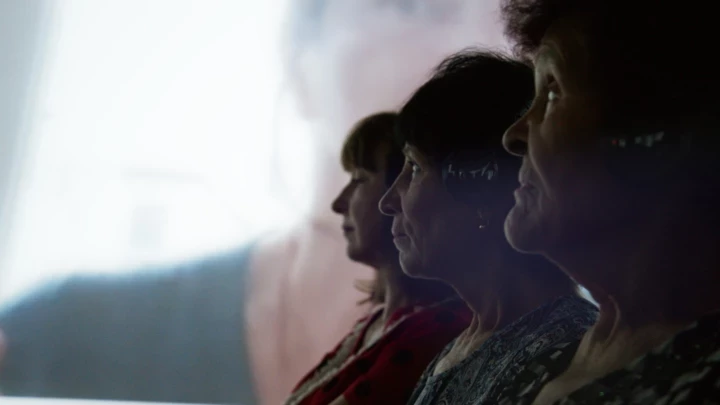
The film “Traces” collects six stories of Ukrainian women who have experienced sexual violence in Donbas, Kherson, and Kyiv regions as a result of the Russian invasion since 2014. They are all part of the organization “SEMA Ukraine”, which unites Ukrainian women who have suffered from sexual and gender-based violence as a result of Russia's armed aggression against Ukraine.
At the premiere in a Berlin cinema, Ukrainian filmmakers, foreign colleagues, journalists, ordinary viewers and the heroines of the film gathered – Ukrainian women of all ages who once united to talk about their experiences. That evening, one of them, 76-year-old Mefodiyevna, as she is called in the film, asked the audience a counter-question when asked how sisterhood helps her move on. She said: “We know you are tired of hearing about war. We are even more tired of it. Why is this important to us? Why do my great-great-grandchildren hear drones and missiles? Why did these women at such a respectable age go through such humiliation?”
This is not the only political statement of this premiere – the event was attended by UN Honorary Ambassador and co-founder of the NGO “Masha Foundation” Masha Efrosinina in a black dress by the Gasanova brand with a red inscription all over the body “Russian Genocide Through The Body”. “Masha Foundation” is collaborating with the film team on an impact campaign to combat stigma and offers rehabilitation to the film's heroines.

“I watched the film several times, and each time it was a polarizing emotion. On the one hand, paralyzing horror, on the other, absolute admiration for the strength of women who dared to tell their stories. And if they went through this and found the strength to testify, then the least I can do is support them and use my voice so that everyone can hear their truth,” says Masha Efrosinina.
Alisa Kovalenko, a documentary filmmaker, is best known for making films about her personal experiences. In 2014, she joined the army, and her own war diaries were eventually transformed into documentaries “Alisa in the Land of War” and “With Love from the Front.” “Traces” is no exception: Alisa was the first woman in Ukraine to testify about her experiences of conflict-related sexual violence and has been working in the human rights field for over 8 years.
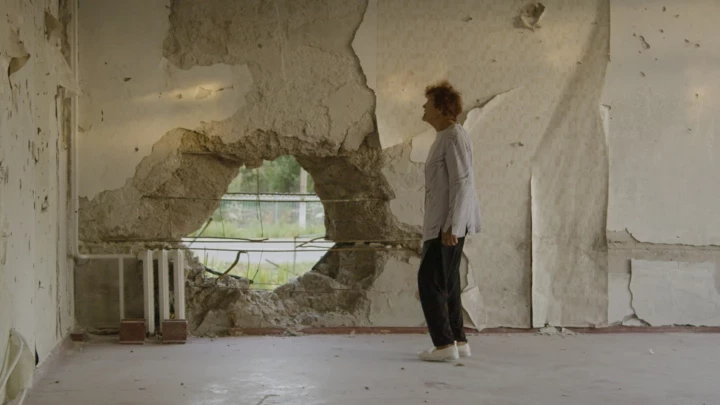
The film does not focus on the harsh and merciless details of women's testimonies. It tells the stories of heroines from a subjective position who are trying to find new support. Within themselves, the organization, in shared experience and sisterhood. “It was important for me to try to find poetry in how to tell this story. Often, human rights cinema is carried away by human rights. I wanted to go deeper,” said Alisa Kovalenko.
“We initially considered a hybrid form of storytelling, but during the work it became clear that this project is not only about cinema, but also about advocacy of the topic,” says co-director Marysia Nikityuk. “In this wounded reality, it seemed important to us to maintain maximum documentary honesty and be close to the heroes from beginning to end.”

As a result, the authors managed to create a cinematic statement where poetry does not destroy reality and truth. The film draws parallels between the heroines' experiences and nature, which goes through various cycles of renewal. This form was sought for a long time, say producers Olga Bregman and Natalia Libet, in order to finally balance all the horrors and unspeakable pain that one feels when hearing about stories of sexual violence.
The directors, who collaborated on the basis of their own friendship and desire to support each other in a difficult topic, managed to create a film that unites: in hatred of Russians, in sisterhood, in the desire to talk about their experiences, no matter how terrible this experience may be. The film motivates to act, to help those around them.
This was also spoken about after watching by Marina Er Gorbach, director of the film “Klondike”, which was awarded the Ecumenical Jury Prize at the 2021 Berlinale.
“I bought a ticket for “Footprints” on the very first day it went on sale and thought I would sit somewhere near the exit of the hall and, if I suddenly felt that I couldn't watch the film, I would just leave so as not to disturb anyone. Then, sitting in a chair in the cinema hall, I decided that I would just close my eyes during the most difficult moments. However, none of this was necessary. The film is not at all victim-oriented – it is about women with incredible souls. The only thing I really wanted to do after watching it was to give them a long applause and hug.”
This is also evidenced by the main Panorama award that “Footprints” received at the festival, a first for Ukrainian cinema. The film was recognized as the best film in the “Panorama” section by 26,500 viewers, who left it their high rating.