

The winners were announced at Sundance, and the festival once again confirmed its status as the main laboratory of modern cinema. This year, the main awards went to “Josephine” with Channing Tatum in a touching role, the deep and very uncomfortable Kosovo drama “Shame and Money” and the documentary masterpiece “Hold the Mountain”. The work “The Alien” with Domhnall Gleeson attracted special attention from the NEXT program for its innovative approach.
This year, the festival opened with stories about childhood trauma, family secrets, patriarchal restrictions, and the power of communities that support each other in the most difficult moments of life. Journalist and communications expert Olga Samofalova talks about the best films especially for vogue.ua.
Advertising.
“Josephine” (Josephine)
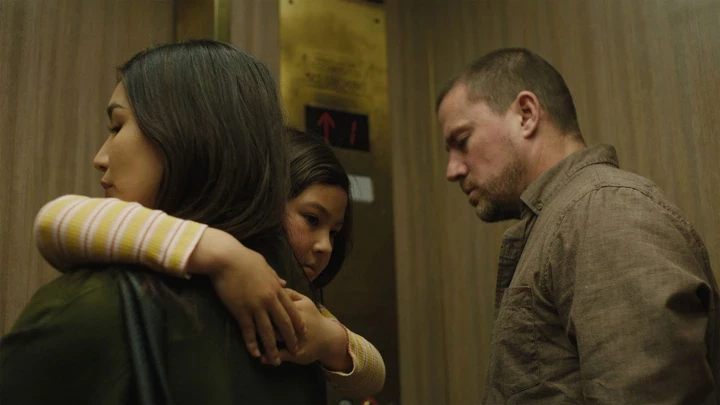
“Josephine” tells the story of an eight-year-old girl who witnesses sexual abuse in a park in San Francisco and tries to understand the experience through the prism of a child's perception. The film is based on the personal experience of Beth de Araujo: a similar incident happened to her at the same age. “Josephine” is a real triumphant of the festival: the film received the main jury prize and the audience's grand prix.
During an emotional speech at the awards ceremony, de Araujo spoke through tears: “Rape is incredibly difficult to talk about. Even the word itself makes people turn away. But silence only increases the shame and isolation of survivors, leaving them alone with the consequences of the trauma.” The director emphasized that true solidarity with victims begins with a willingness to have difficult conversations and decisive action. Recalling that one in four women and one in six men experience sexual violence, she called rape culture systemic – deeply rooted in the idea of the right to dominate through force – and warned against its dangerous normalization at the highest levels of power: “I know you are scared; so am I. But now is the time to find the courage – to hold on to those close to you and to act together. Together we are stronger.”
“Wicker” (Wicker)
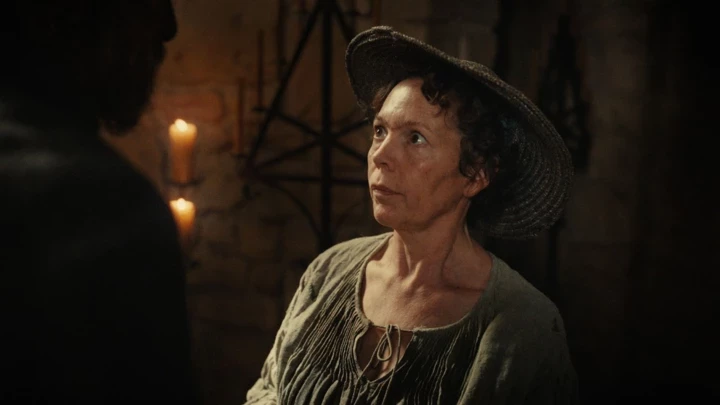
This is the story of a woman who decides to live by her own rules, not the script imposed by society. In a world where obedience, patience, and gratitude for marriage are expected of her, the heroine chooses her own path and tries to answer the main question: what makes her truly happy?
Through the form of a fairy tale and gentle, sometimes ironic humor, the directors explore the patriarchal restrictions that define the role of women in the family and society, as well as their right to their own desires. The film is based on the short story The Wicker Husband (2008) by Ursula Wills-Jones and tells the story of a fisherwoman who is branded by the village as “unfit”: a recluse without a family, with a body that does not fit into the idea of a feminine norm. She earns a living by gutting fish – her hands always smell of the sea, and her dress is covered with scales. And yet she becomes the only woman in the village who knows what she wants and orders herself the perfect, albeit wicker, husband.
“The Incomer”
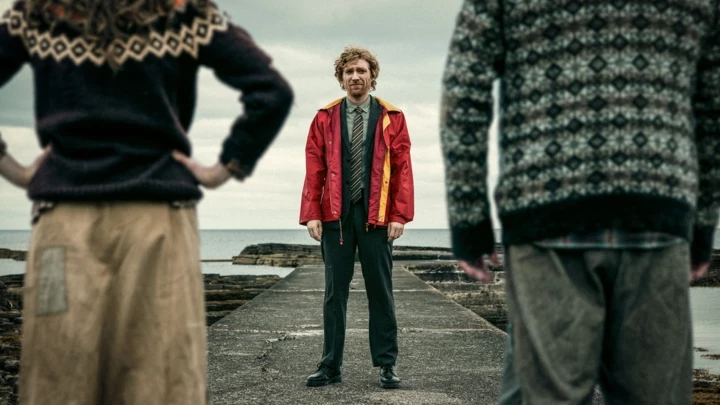
“The Alien” won the NEXT Innovation Award for “a bold and original comedic narrative that skillfully weaves Scottish folklore with contemporary life.”
Set on a remote Scottish island, Louis Paxton's feature debut follows a brother and sister whose lives revolve around hunting seabirds, communicating with mythical creatures, and defending the island from mysterious mainland “aliens.” Their world is disrupted by a clumsy council worker (Domhanal Gleeson) who tries to take them to the mainland.
“The film is based on my family's Orkney heritage and the folklore of the Scottish archipelago,” explains Paxton. “While the story is full of humor and adventure, it is primarily about identity and the stories we tell each other.”
This sincere, mysterious and eccentric story explores isolation, heritage and the power of human connections that help change and find new paths in life. Magic, folklore, family trauma, fears and love are intertwined here with subtle absurd humor. A special role is played by the animation of Selina Wagner, who literally brings to life the legends of the island – seagulls, aliens and the threat brought by the mainland – with a pencil.
“Buddy” (Buddy)
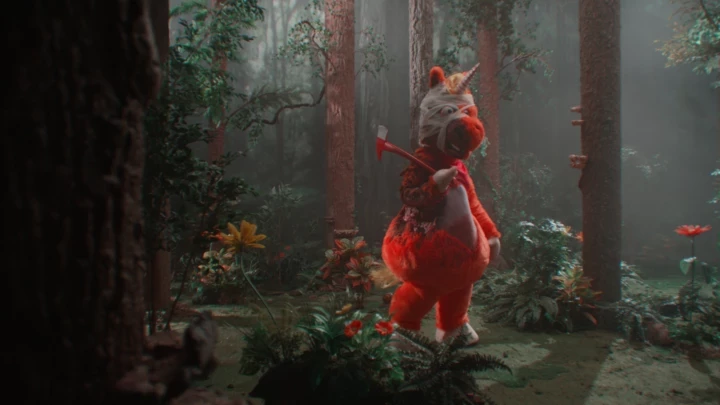
The American horror thriller “Buddy” immerses the viewer in the eerie world of the cult children's show of the late 1990s. The host of the program is the tyrant Buddy, a bright orange unicorn with a purple heart on his chest, who lives in a bizarre clubhouse. One day, the boy disobeyed Buddy and disappeared without a trace, leaving behind his favorite book, covered in blood. Now the children are trying to escape from this “ideal” world, which actually hides dark rules. After watching the film, children's shows will no longer seem innocent.
“Union County” (Union County)
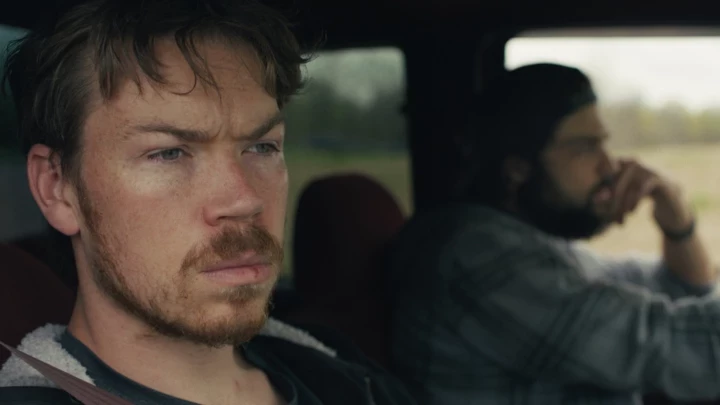
A low-key drama about life on the edge. Set in rural Ohio, where the opioid crisis has long been commonplace, the story centers on two brothers as they struggle to emerge from the shadow of past mistakes and find support in a community that still believes in second chances.
Director Adam Mix works on the border between fiction and documentary, using local, non-professional actors. “I came back to Union County to understand the place my family calls home,” Mix says. “I saw people seeking support, eager to get back to normal, and an incredibly strong community with a deep respect for human dignity.”
A special role in the film is played by Annette Deao, a social worker who plays herself. Every week she comes to the county jail to offer the inmates a chance at recovery and a new start. And every week someone, like the main character Cody, says, “Yes, I'll try my best.” It is with this stubborn hope that “Union County” begins.
“The Gallerist” (The Gallerist)
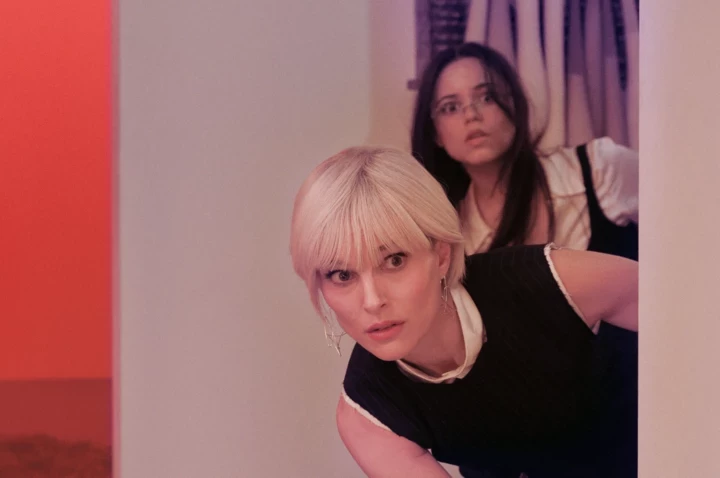
A dark comedy-thriller about an eccentric gallery owner who dreams of conquering the art world at Art Basel Miami. Her attempt to promote a young artist's work turns into a shocking plan with a dead body, and the heroine finds herself in a labyrinth where art, ambition and moral boundaries merge into one. A sharp, witty and slightly scary story explores human desires, fears and the desire to be noticed, showing the price of creativity and what we are ready to do for success and recognition. “The Gallery Owner” became one of the brightest discoveries of “Sundance”: the film combines a sharp plot, satire on the modern art world and deep questions about ambition, compromises and the price of creativity.
“In the Blink of the Eye”
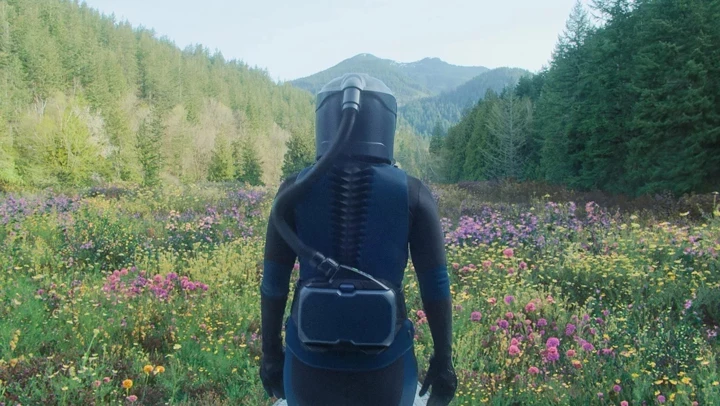
Two-time Oscar winner Andrew Stanton (WALL-E, Finding Nemo) creates an elegant triptych that reflects on the nature of humanity through three time periods: a Neanderthal family, a modern couple, and a scientist on a spaceship. All of them struggle to survive, protect their children, and preserve civilization.
The film poetically captures the small, intimate moments that make up everyone's life. Through love, loss, and the need for connection—with oneself, others, nature, and technology—Stanton reminds us that human aspirations remain constant regardless of the era.
“A film about the entire existence of humanity!” says the director. “Our needs for connection and family relationships remain constant at all times. In the Blink of the Eye is definitely full of hope for the future and convinces: even in the darkest times, light always finds a way.”
“Shame and Money”
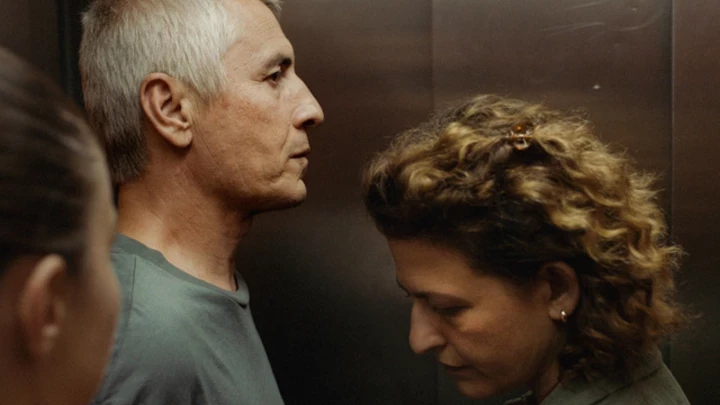
This is a harsh and sincere story about a family from Kosovo, whose life is turned upside down by their younger brother. He sells the cows that fed the whole family and flees to Germany. The parents and three daughters are forced to start everything from scratch in a city where it is difficult to find work and housing. Shaban gets a job as a cleaner, Hatice takes care of wealthy relatives, and the family lives on their mother's last savings. Despite the difficulties, they try to maintain their dignity and inner peace, although the help of wealthy relatives only brings humiliation.
The film won the World Cinema Grand Jury Prize: Dramatic for its powerful and universal portrayal of human dignity.
With this story, the director created an alternate version of his parents' lives, starting from the house he grew up in. The only change is that the action takes place in modern-day Kosovo, a country that has been struggling to find its place in an ultra-capitalist world for the past twenty years.
To prepare for filming, the director studied the local housing stock and labor market, and talked to people looking for work and a roof over their heads. Along with financial difficulties, there was always shame — in front of others and in front of themselves.
“Even your own mother doesn't love you if you're penniless,” said the man who stands on the same street every day, offering his services as a day laborer. He was embarrassed, as if the phrase had accidentally escaped him. These words set the tone for the entire film.
“To Hold a Mountain”
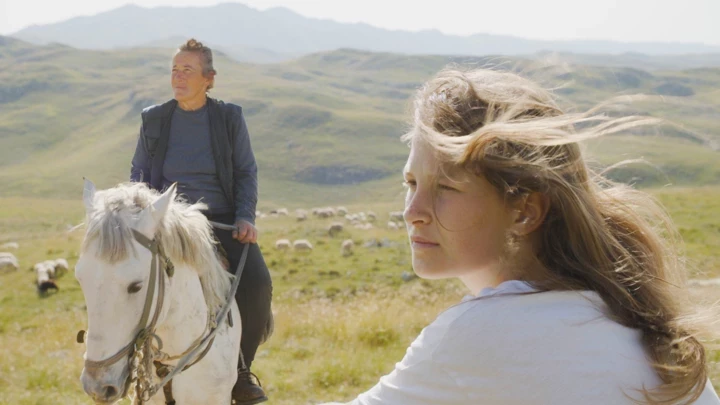
The documentary, which won the World Cinema Grand Jury Prize: Documentary, tells the story of a shepherdess mother, Gara, and her 13-year-old daughter, Nada. Every summer, they return to their ancestral pasture in Montenegro to tend their cattle, gather herbs, and live in harmony with the mountain they call “Mother.”
But their peaceful existence is threatened: the government plans to build a NATO military training ground on the Sinyaev Plateau. Gara becomes a leader in the fight to preserve the mountain, while Nada's growing up and the violence around her force her to rethink her past and future.
“We discovered this place in 2017 – the second largest pasture in Europe, at an altitude of 2000 meters,” say the directors. “We met Gara and Nada just when we learned about the plans to turn the mountain into a training ground. From the first meeting, it became clear: their lives are part of a larger story. For more than seven years, we lived with them, collecting moments that convey the power of this place and its people. Gara and Nada embody mothers and daughters over the centuries who have nurtured their land. The film explores the connections between women and the land, patriarchy, militarization, duty and love.”
“Take Me Home”
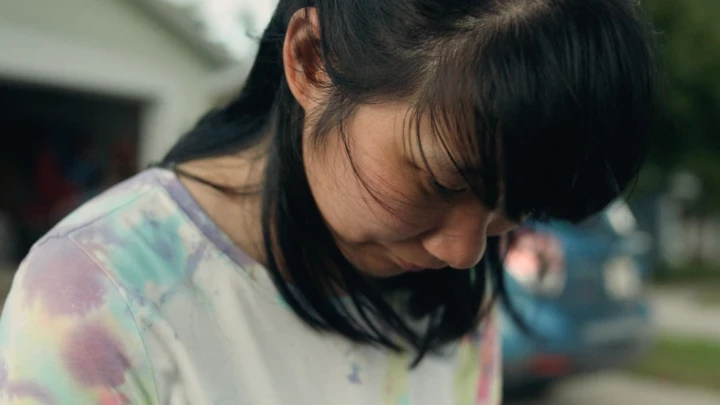
The film, which won the Waldo Salt Screenwriting Award: US Dramatic, follows Anna, a 38-year-old adopted Korean woman with cognitive impairment, as she cares for her elderly father with dementia, trying to balance caring for her family with her own life.
The film delicately reveals the daily labor of love and fatigue, as well as the gaps in the American healthcare system that leaves people with disabilities and their families alone with crises.
“This project was born from my personal experience – the world is not made for my sister Anna, who has cognitive impairment. I did not want to make a film about “overcoming” disability. I was interested in how expectations, relationships and the environment can support a person or hinder them. We worked on the film in the same way that a family takes care of each other – with improvisation, trust, humor and constant adaptation. Through a specific story, a universal truth is revealed: the complex, contradictory, but deeply human nature of love and responsibility.”