

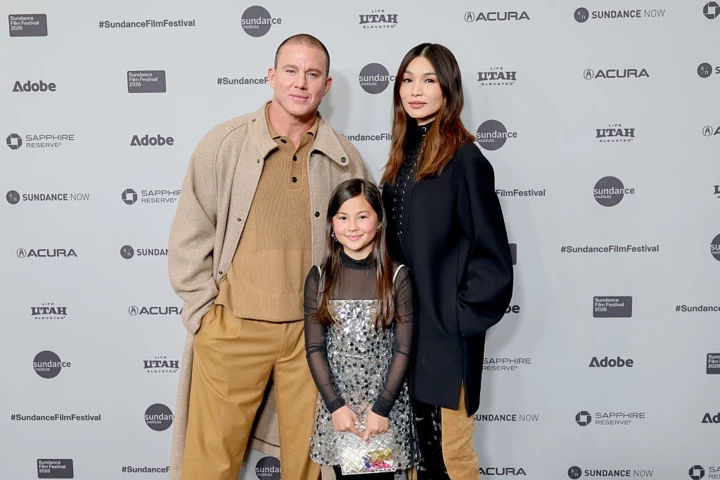
Sundance Film Festival, a packed Eccles Theater in Park City, Utah. One and a half thousand spectators, standing ovations, and tears – this is how the world premiere of the film “Josephine” took place, telling the story of an 8-year-old girl who witnesses an act of violence. Her parents were played by Channing Tatum and Gemma Chan. The premiere of the film was attended by communications specialist and journalist Olga Samofalova especially for Vogue Ukraine.
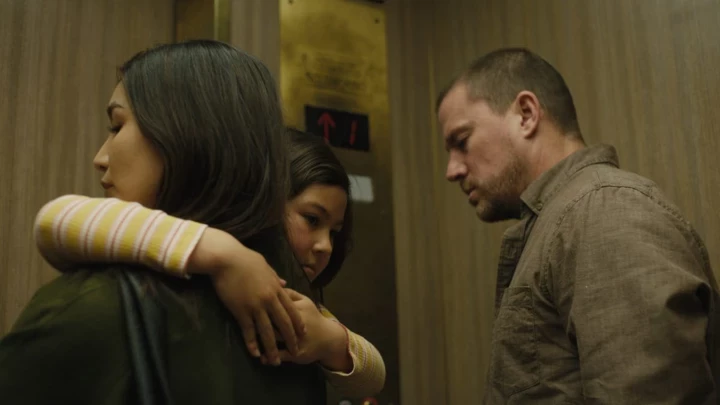
A film that director Beth de Araujo has been working on for over a decade, Josephine emerged as an uncompromisingly honest, intimate, and bold statement about childhood trauma. It was an immediate sensation and a favorite at Sundance 2026.
“I started writing this film in 2014. Or maybe when I was eight,” said the film's director, Beth de Araujo. She was eight years old when she witnessed the violence, and the trauma stayed with her for the rest of her life. However, she didn't fully come to terms with it until she was twenty, when she sat down to write the script for the incident. For the director, “Josephine” is an attempt to return to an experience that had had neither a name nor an explanation for years. “I decided to make “Josephine” an extreme version of what I was feeling: a film about female fear, seen through the eyes of an eight-year-old girl.”
The film tells the story of a couple (Channing Tatum and Gemma Chan) and their daughter Josephine (newcomer Mason Reeves), whose family faces trauma and legal action after the girl accidentally witnesses a sexual assault in San Francisco's Golden Gate Park.
The film opens with a scene of a morning jog: a father and daughter are racing through an almost empty park while the city is still asleep. Josephine speeds up, then suddenly changes direction, jokingly trying to escape from her father and hide among the trees. Her gaze falls on a strange girl who is entering a public restroom. Behind her is a boy. Screams break the silence. The girl is pushed to the ground. She tries to resist. Josephine freezes – not understanding what is happening. Unconsciously, she takes a step closer. The victim comes to her senses – their eyes meet. The attacker stops.
Point of No Return. The world of an eight-year-old heroine is crumbling. In an attempt to regain a sense of security, she begins to act impulsively, while the adults around her prove powerless to calm her down. Beth de Araujo creates a tense, deeply compassionate portrait of a child who is confronted for the first time with fear and anger – feelings that cannot be escaped or fully understood.
From the beginning, the director saw the story solely from the child's perspective, from the moment of the crime to the announcement of the verdict. “I tried to remember what seems monumental when you're eight,” she says. “The first memory of you and your father laughing heartily. The inner struggle and fear that you carry with you into every room. And a mother who is silent about her own experiences, trying to protect you.”
“Josephine” is a film about fear that forms long before we can call things by their proper names. When you don't even know how to spell the word rape, but you already have to live with the experience of violence that stays with you forever.
The spotlight is on Mason Reeves, whose acting largely sets the tone of the film. This is her first film appearance, and the offer of the role found her at a farmers market in San Francisco. “When I come to visit my parents, we usually go to the market every Sunday,” says Beth de Araujo. “That day, I took the film flyers with me and saw Mason running to buy dates for his mother. I asked, “Who's your dad or mom?” She looked at me with a slight suspicion – as if she thought, “Why? Did I do something?” – and pointed at my mother.
I went up to her and said, “Hi, I'm looking for a girl to play Channing Tatum and Gemma Chan's daughter.” Usually the response I get is an incredulous, “Yeah, sure.” But I added, “No, this is a real project. We start in six weeks.” Her first audition blew me away. There was something really special about it.”
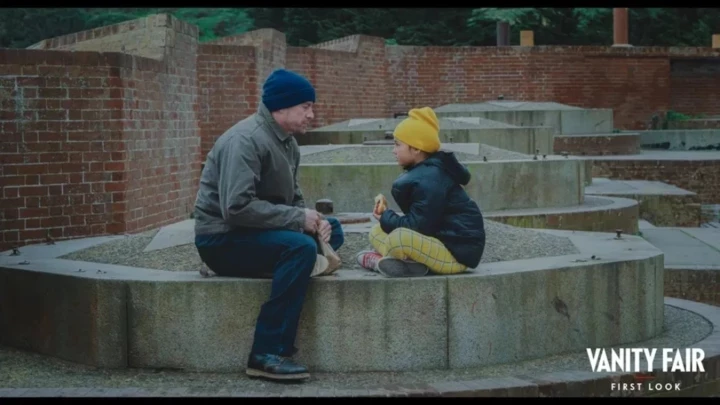
At the premiere screening, Mason was not in the audience during the violent scenes – her parents took her out so as not to traumatize the child. At the same time, Mason's memories of the set are devoid of drama. When asked what she liked the most, she did not hesitate to mention the scene in Fort Point with Channing Tatum: “In every take, I had to eat a donut, and I did not want the jelly filling. So I only ate the outside part and gave the jelly to Channing.”
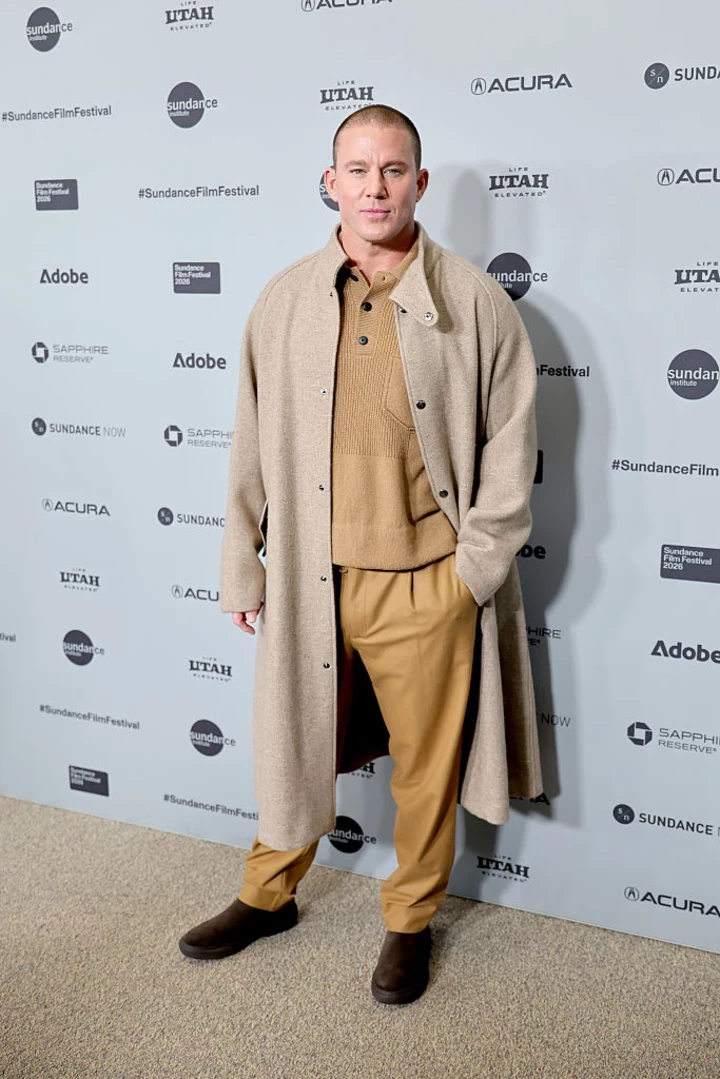
In an interview with Ukrainian Vogue, Channing Tatum told how the experience of fatherhood influenced his work on the film: “Although this film is very complex and serious, the filming process itself – especially when there is a seven-year-old child nearby who has never acted before – required taking care of her off-screen as carefully as on-screen. I perceived this almost as a separate job – no less important than acting – because it was fundamental for me that Mason felt safe and comfortable throughout the entire process. Sometimes I had to yell at her, scold her, be tough. But I had to make it clear: 'I am an actor dad now. This is not your friend Channing.' My biggest worry was that she would not think that I was really angry with her.
As the father of a 12-year-old daughter, I often wonder: is there one right way to raise children? There is probably a wrong way, yes, but I'm not sure there is a perfectly right way. My approach to parenting is very different from the way my parents raised me. The characters in the film also have different perspectives on parenting, but they are just trying to do their best in a very difficult situation.”
Advertising.
Tatum's reflections on fatherhood echo the central theme of “Josephine”: “No one is going to fix anything for you. You have to do it yourself” is the film's leitmotif, harsh and deeply honest. It offers no consolation, but it opens up space for choice where there seemed to be none.
In addition to starring, Tatum also served as a producer on the film: “I wanted to protect this story. One, to make sure we had enough resources to tell it properly, and two, to make sure no one interfered with the author's vision. Making a movie is hard, but making a truly great movie is even harder. I think my role was to be the big bad bully in the room and make sure no one touched my girl.”
“This is the first time I've seen the movie, by the way. I cried five, six, seven times – that doesn't happen very often,” Tatum shared.
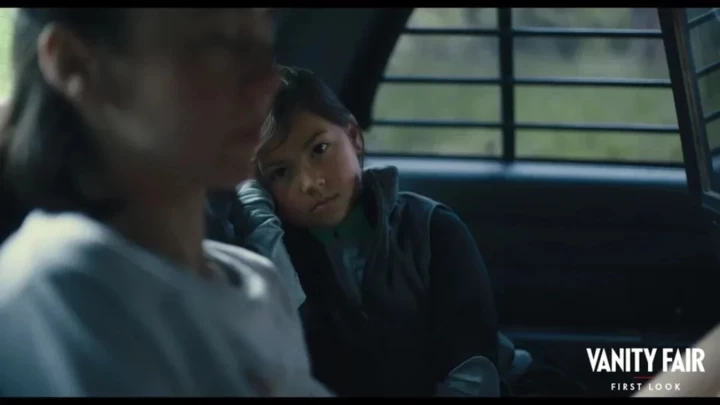
Last year, The New York Times asked in one of its publications: “Does Channing Tatum know how good he is?” After “Josephine,” that question disappears. This is, without a doubt, the strongest role of his career.
Greta Zozulya's cinematography deserves special attention. The camera literally “absorbs” the viewer into Josephine's world, forcing her to feel every fear physically. Zozulya admitted in a conversation with Vogue that her last name remains a mystery to her: “I think I have Ukrainian roots, but it's some kind of mystery. No one can really tell all the details of our family.”
The film debuted in the US Dramatic Competition at Sundance and will soon be screened at the Berlin International Film Festival.