

Ahead of the release of Bridgerton Season 4, costume designer John Glazer and his associate designer Henry Wilkinson discuss the show's costume aesthetic, inspired by the romantic comedy Shakespeare in Love and the style of Anna Wintour.
Advertising.
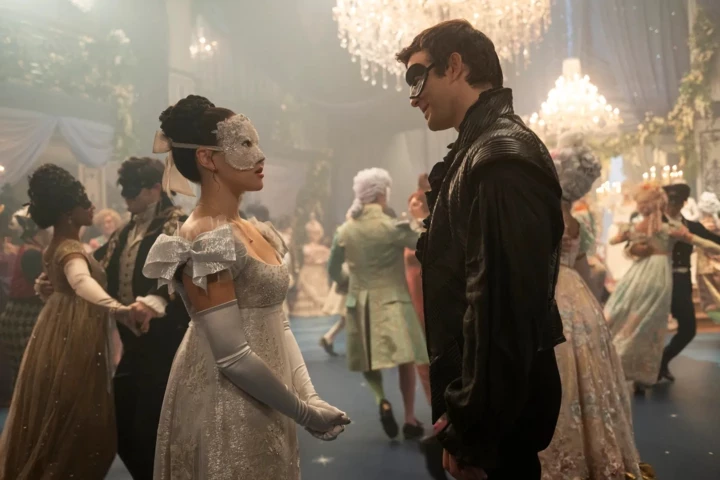
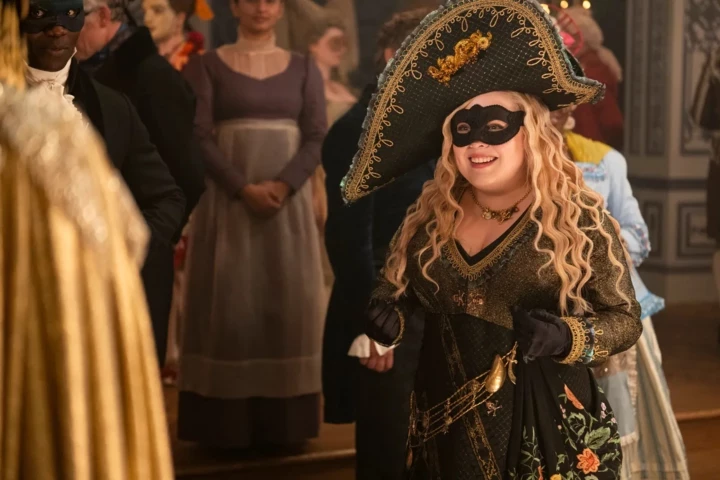
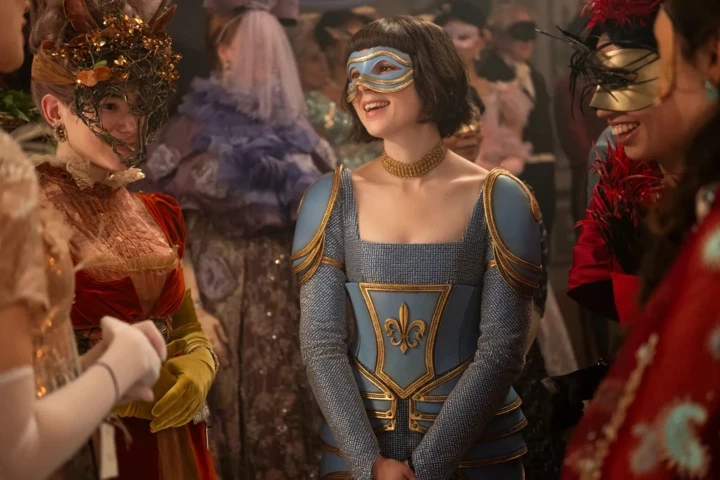
The fourth season of Bridgerton opens with a scene that instantly sets the mood for the entire sequel: a lavish masquerade ball, where each character appears in a symbolic image. Eloise Bridgerton (Claudia Jesse) is like Joan of Arc; her mother, Lady Violet Bridgerton (Ruth Gemmell), is the enchanting Titania, the fairy queen from Shakespeare's A Midsummer Night's Dream; her son Colin (Luke Newton) and daughter-in-law Penelope (Nicola Cochran) are in pirate costumes; and Lady Danbury (Ajoa Ando) appears as a gilded Zeus. Amidst this carnival, a silent stranger in a silver mask stands out, whose excitement and restraint speak for themselves: she is an uninvited guest at this celebration.
The name of the new heroine of the season is Sophie Beckett (Yerin Ha). She is a maid in the house of her stepmother, the cold Lady Araminta Gun (Katie Leung). When Araminta, together with her own daughters – the caustic Rosamund (Michelle Mao) and the clumsy Posey (Isabella Wei) – goes to the ball, Sophie sneaks out after them, borrowing a sparkling dress and mask that she sewed for one of her stepsisters. It is on this night that Benedict Bridgerton (Luke Thompson) – the second son of the family, who is still unmarried, draws her attention. But at midnight, Sophie disappears, and Benedict, fascinated to the point of madness, decides to find the mysterious stranger at all costs. Thus is born a romantic story in the spirit of Cinderella, whose identity the heroes will have to unravel until the very end.
The visual world of this story was created by costume designer John Glaser, an Emmy-winning designer who collaborated with Ellen Mirojnik on the costumes for the first season and designed the outfits for last year's episodes. After previous seasons, full of spring-summer lightness, the palette shifted to warm, rich tones. The colors became deeper, less contrasting. Black gave way to navy blue, white almost disappeared – even men's shirts were sewn in pastel shades. “We no longer shoot costume scenes against the background of a bright green lawn – now it's warm autumn leaves,” says John Glaser.
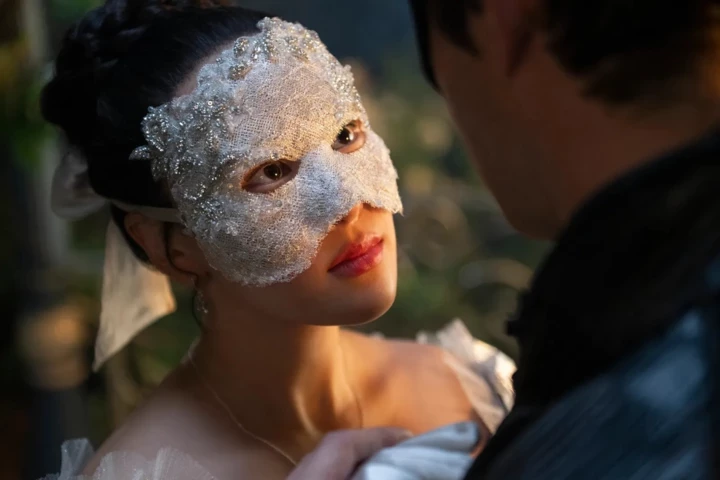
The central image of the season was Sophie's ball gown – the only one in silver, so it is impossible not to notice it. The outfit is at the same time romantic, mysterious and restrained enough not to reveal the origin of its owner. Unlike the original book, where the heroine got an outfit for the ball from the attic, in the series the dress has an almost timeless look. “It had to be sexy, delicate and a little vintage. The only thing that gives the heroine away is her Jimmy Choo shoes,” jokes Glazer. The mask, on the contrary, had to add mystery: it had to be tight and cover almost the entire face, and at the same time seem as if Sophie had made it herself.
For most of the season, Sophie appears not in the glamour of a ball, but as a maid, in simple, pretty dresses and Benedictine-style attire. Even her uniform, however, is made of more luxurious fabrics than historical reality would allow. “If she wore real maid clothes all the time, it would be unbearably sad,” Glazer explains. If you look closely, not a single maid in Bridgerton is actually dressed like a real maid of the time.
At the end of the season, Sophie gets her own evening gown—but it too is remade from a dress from the trunk. This restraint is not accidental: the character’s image is not yet visually complete, and her identity is hidden not only from Benedict, but also from the viewer.
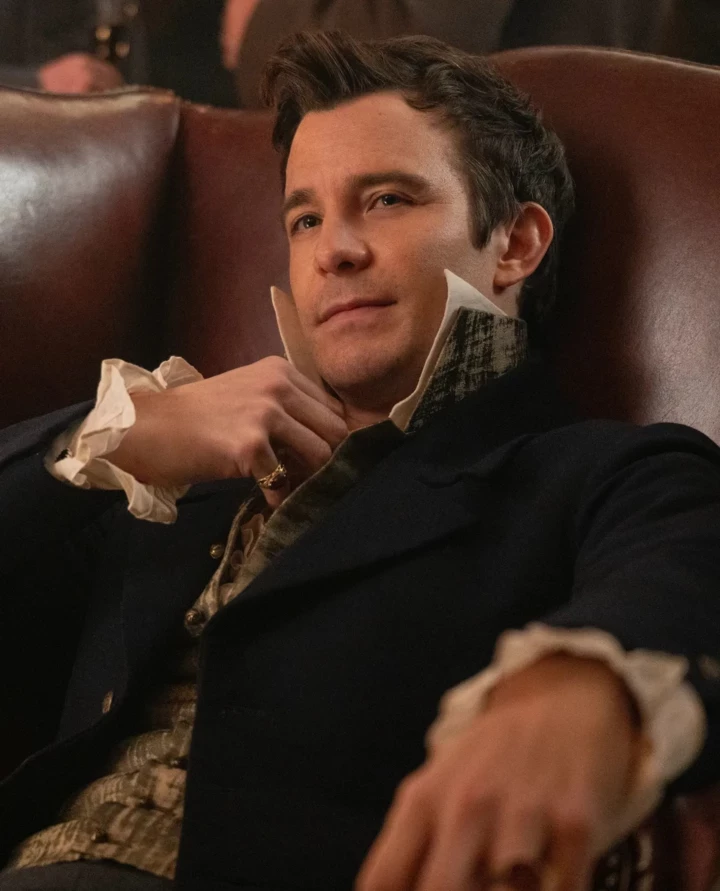
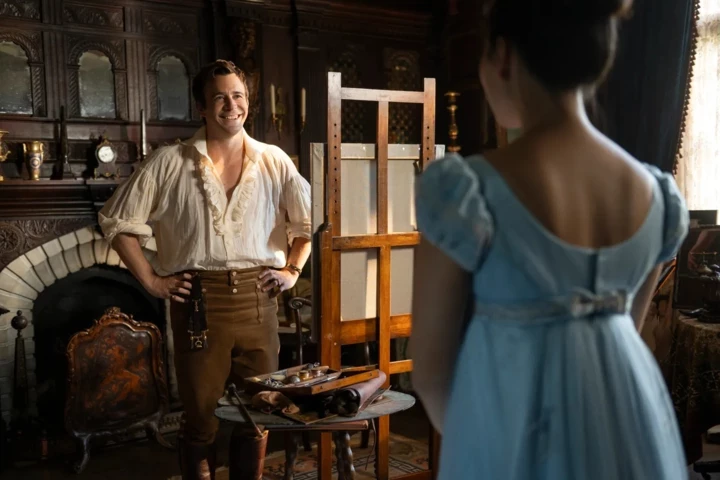
Benedict's wardrobe also undergoes a transformation in season four. The silhouette is softer and the clothes are more relaxed compared to other male characters on the show. There's something about him that's reminiscent of Joseph Fiennes in Shakespeare in Love—a romantic, an artist, a man on the cusp of a new phase in his life. “He's no longer courting debutantes, he's discovering a new world,” says Glazer.
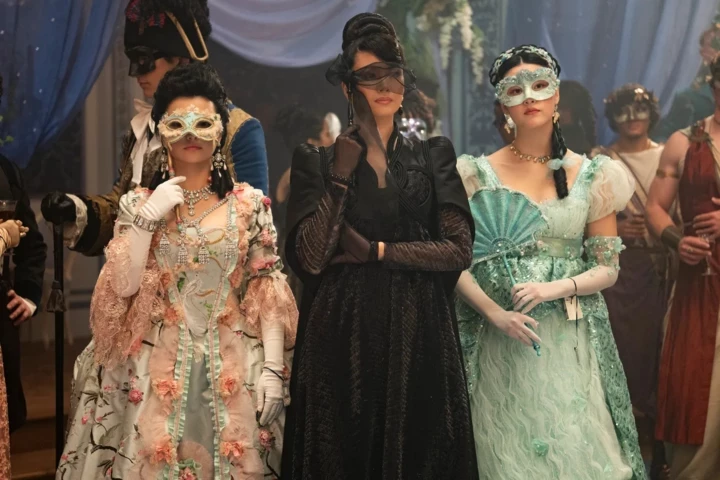
A sharp contrast to Sophie and Benedict is created by Lady Araminta Gunn. Despite her widowed status, her wardrobe is one of the most complex and glamorous of the season. The silhouettes do not fit into the canons of the Regency, combining features of the 1820s and 1970s. Textures, shine and a completely covered body work as protective armor. “We did not want the viewer to associate her black clothes with dark forces. She is not evil – she is just incomprehensible,” emphasizes Glazer.
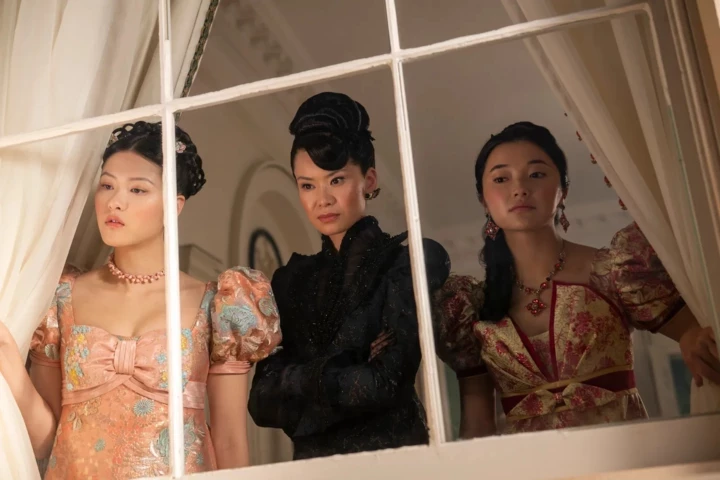
According to showrunner Jess Brownell, Araminta's character resembles Anna Wintour – a strong and restrained woman who knows exactly what she wants. At the same time, Brownell insisted that in the scene with Araminta's shoe collection, the shoes were not only black, but also pink, red, purple – as a hint of her eccentric taste. The character chooses black demonstratively.
Rosamund and Posey continue this feminine image. When the costume team determined that Araminta was a conventional Anna Wintour, it became obvious: she was the one choosing the daughters' outfits for high society. Their milliner was definitely not the same as the Bridgertons. Rosamund and Posey wear fashionable sculptural outfits: the colors may be soft, but the shapes are hard. It is immediately clear from the silhouettes that these are Araminta's daughters. Even when they are dressed in the same fabric, the difference between them is obvious: one wears the front side, the other the back. One is softer in character, the other is harder. The costume designers' references reach a wide variety of eras – from the Regency period, in which the events of the series unfold, to the 1950s-1970s of the 20th century. This approach was used deliberately: the wardrobe of the women of the Gunn family should be noticeably ahead of its time.
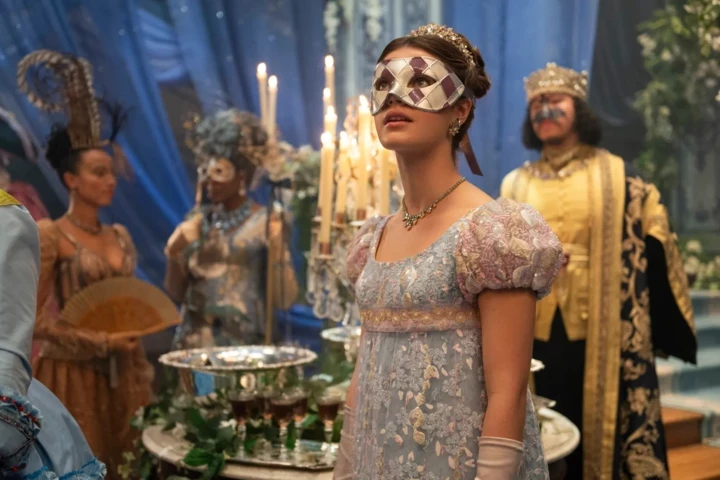
The masquerade ball becomes the culmination of this fashionable universe. Its theme is “Midnight in the Woods”, inspired by Shakespeare's “A Midsummer Night's Dream”. It is here that the most daring images appear: Heloise as Joan of Arc, Rosamund with the legendary diamond necklace, like Marie Antoinette, Posey as a gentle mermaid, Monricci as Antony and Cleopatra, Penelope and Colin as a pair of pirates.
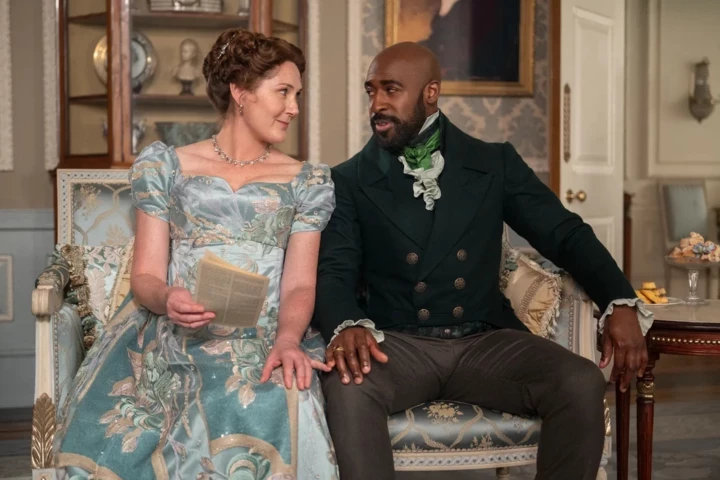
Lady Violet as Titania deserves special attention. Her images become more sensual throughout the season, as does she, who finally allows herself new feelings. “As the story progresses, she becomes sexier, more tender, and makes an extraordinary impression,” says Glazer. Even the younger Hyacinth noticeably matures: her outfits remain romantic and girlish, but they already feel a desire for self-expression.
The fourth season of Bridgerton is not just a new love story, but a carefully constructed visual narrative in which the costumes are as important as the characters' dialogue. According to John Glazer, in the second half of the season, viewers will be introduced to another favorite character – the one the designers especially love to dress. However, this is a secret that is being kept behind closed doors in the dressing room for now.
The first four episodes of the fourth season of “Bridgerton” will be released on Netflix on January 29, with the next four on February 26.