

The men's fall-winter 2026/2027 season outlined a redistribution of influence and authority within the fashion industry. The focus was not on things as such, but on the figures that shape the perception of menswear today. Ralph Lauren's show became a key marker of this process: the designer aroused the greatest interest of the Vogue Runway audience thanks to the authority formed by decades of consistent work. Thus, experience, stability and trust become the main criteria for influence.
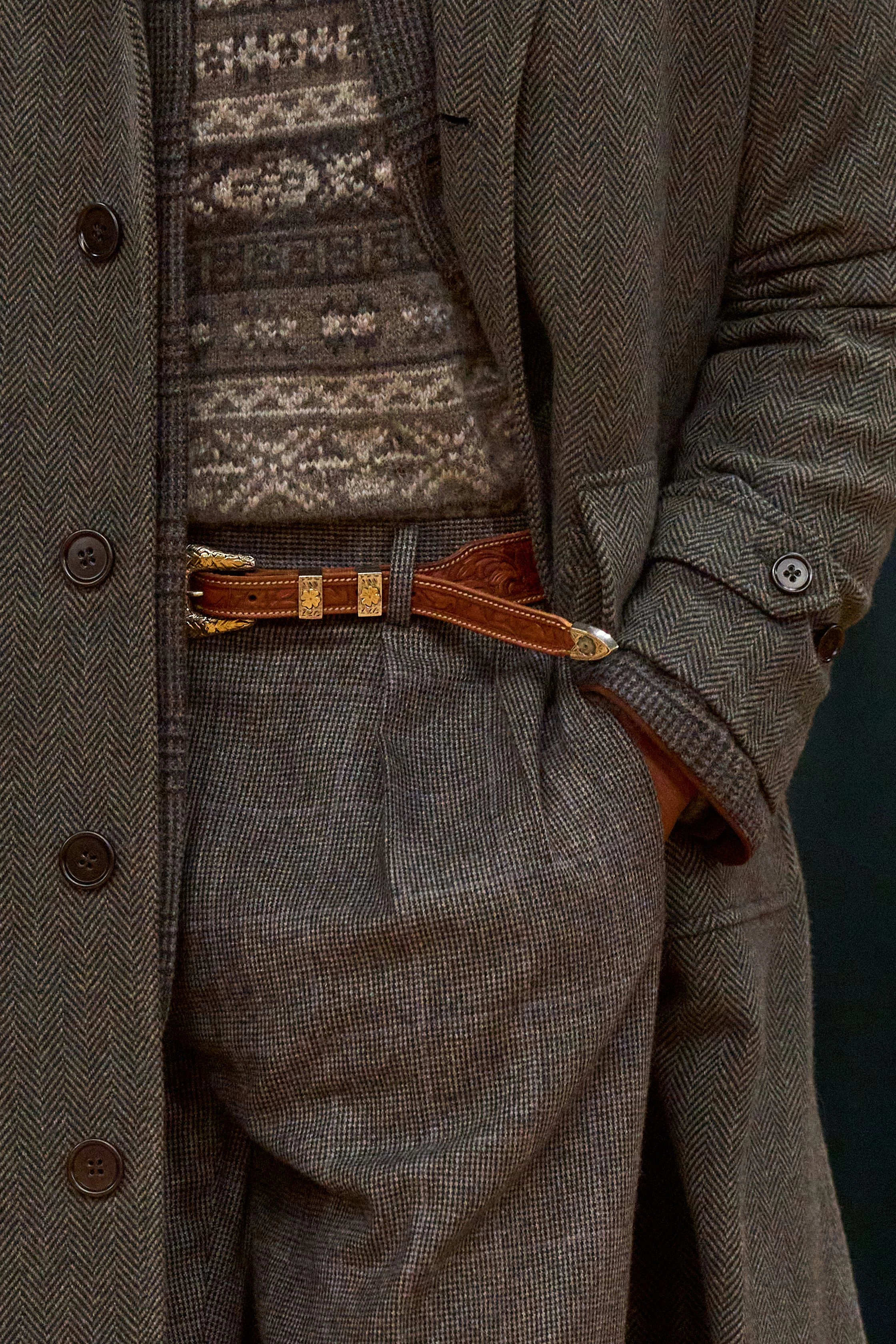 Ralph Lauren fall-winter 2026/2026
Advertising.
Ralph Lauren’s decision to hold a full menswear show for the first time in two decades, combining the Polo and Purple Label lines in one show, was one of the key moments of the season. At a time when many brands are focused on fast formats and visual noise, Lauren offered a holistic vision of menswear, built on consistency and experience. The show shifted the focus from trends to authorship and long-term thinking. At the same time, consumers are increasingly attentive to designers who have shaped their own language over the years, rather than reacting to seasonal impulses.
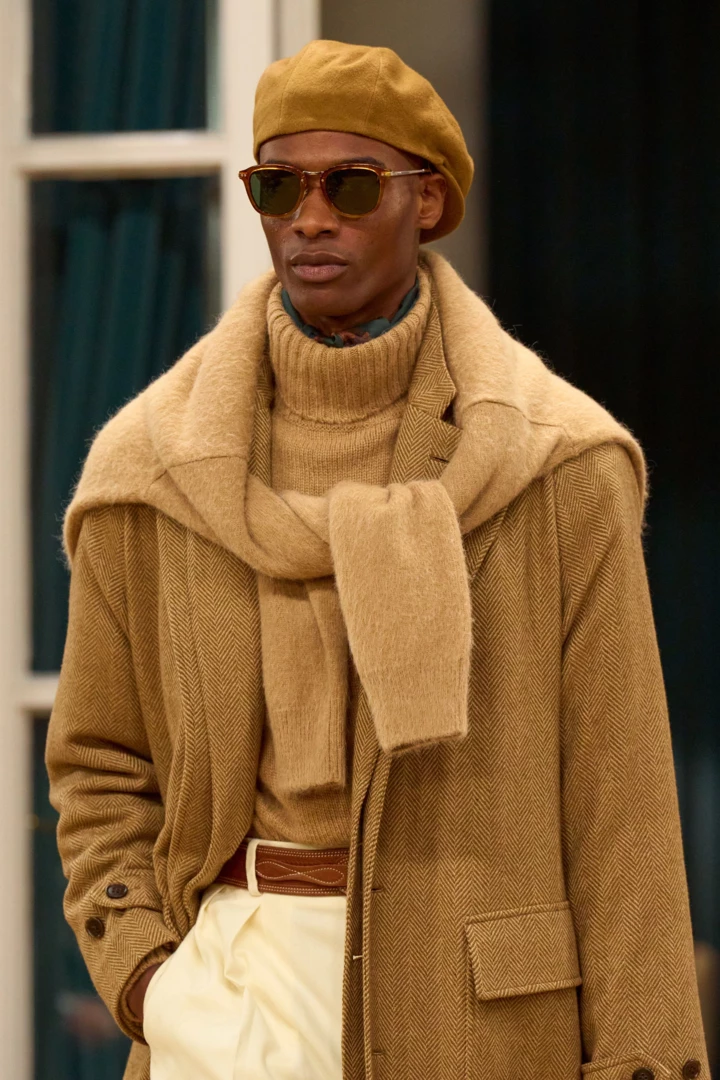 Ralph Lauren fall-winter 2026/2026
At the same time, this season did not become conservative. On the contrary, it turned out to be shaky at the level of meanings. Over the past few weeks, no single stylistic direction has formed: skinny jeans coexisted with oversized trousers, elegance with punk, and restraint with demonstrative frankness. Designers did not look for universal answers and did not try to formulate a single image of a man. Instead, they showed him as a complex and contradictory figure, which can no longer be reduced to a single archetype. It is this fragmentation that has become the most accurate characteristic of the season.
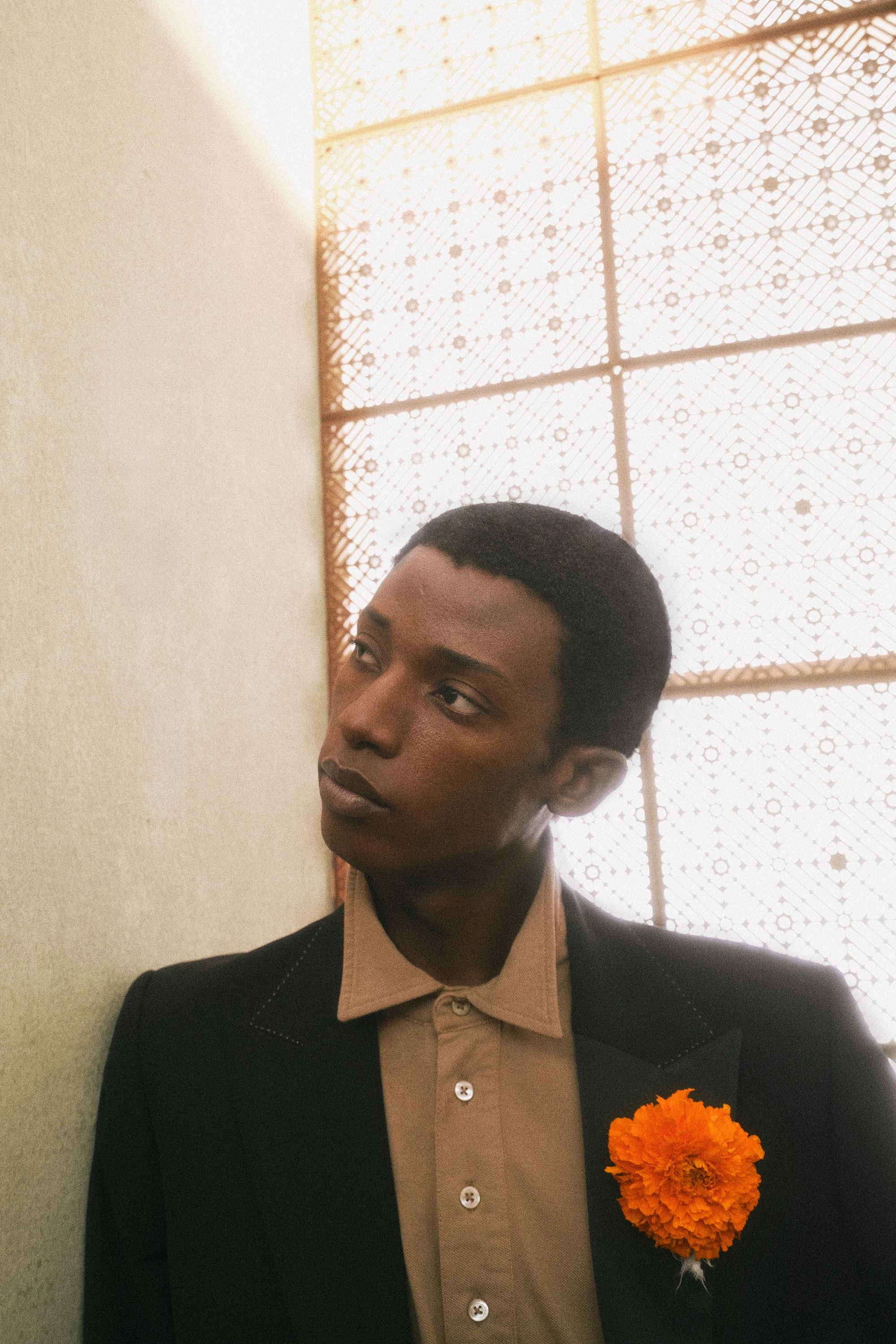 Wales Bonner fall-winter 2026/2026
The key difference of the autumn-winter 2026/2027 season is that men's fashion has gone beyond cautious decisions. Designers allowed themselves risk, irony, excess and even absurdity as working tools. In the context of instability, political tension and identity crisis, the most convincing collections chose complex, indirect solutions instead of safe formulas. And they are the ones who today determine where the industry will move next. Next are the key collections that most accurately captured this shift.
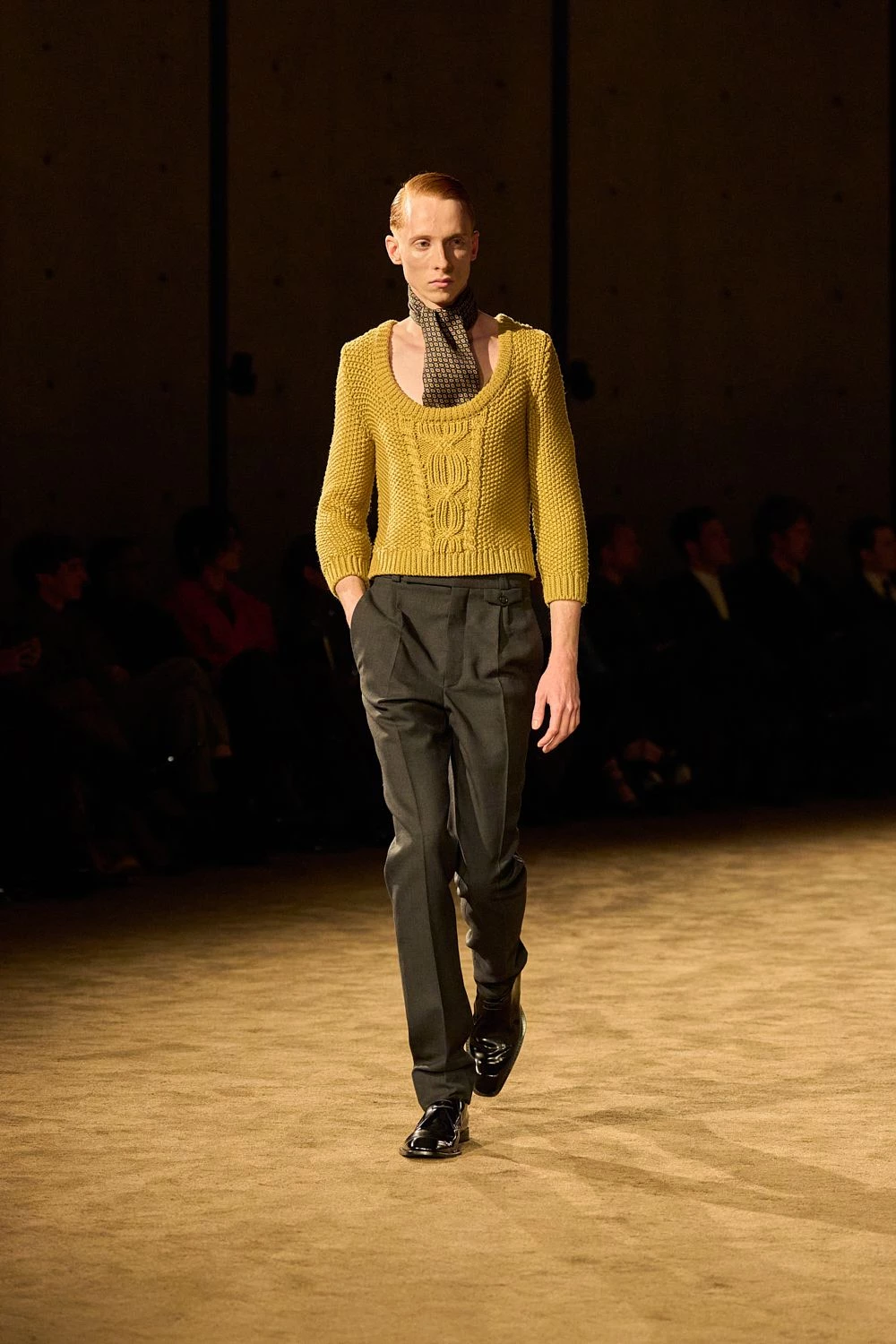 Saint Laurent fall-winter 2026/2026
Dries Van Noten
Dries Van Noten's Fall-Winter 2026/2027 collection is one of the most precise and consistent works of the season in terms of design approach and emotional depth. For Creative Director Julian Klausner, it is a careful work with the archives of the brand's founder Dries Van Noten, focusing on its key pillars: color, pattern and knitwear as carriers of the House's identity.
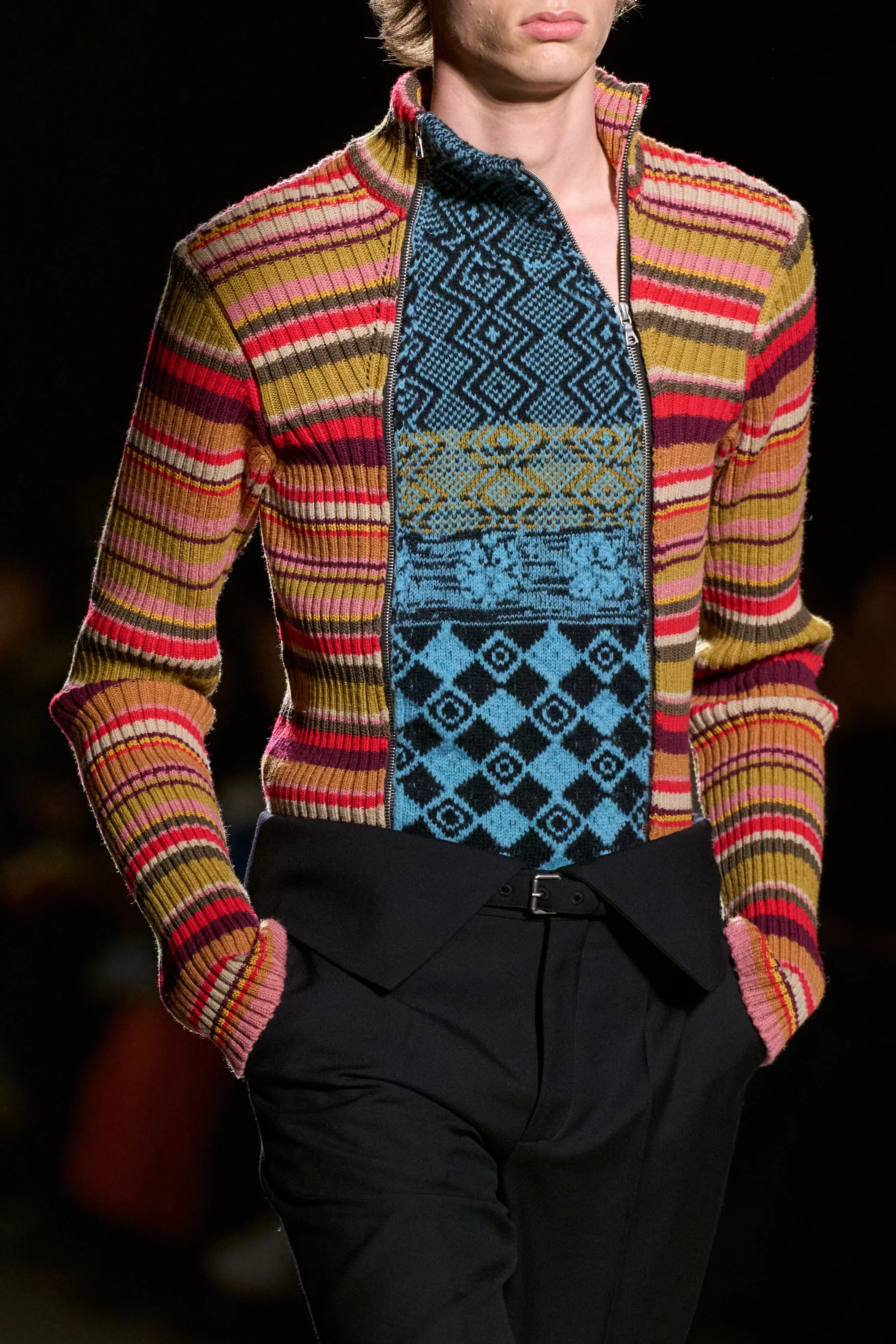 Dries Van Noten fall-winter 2026/2027
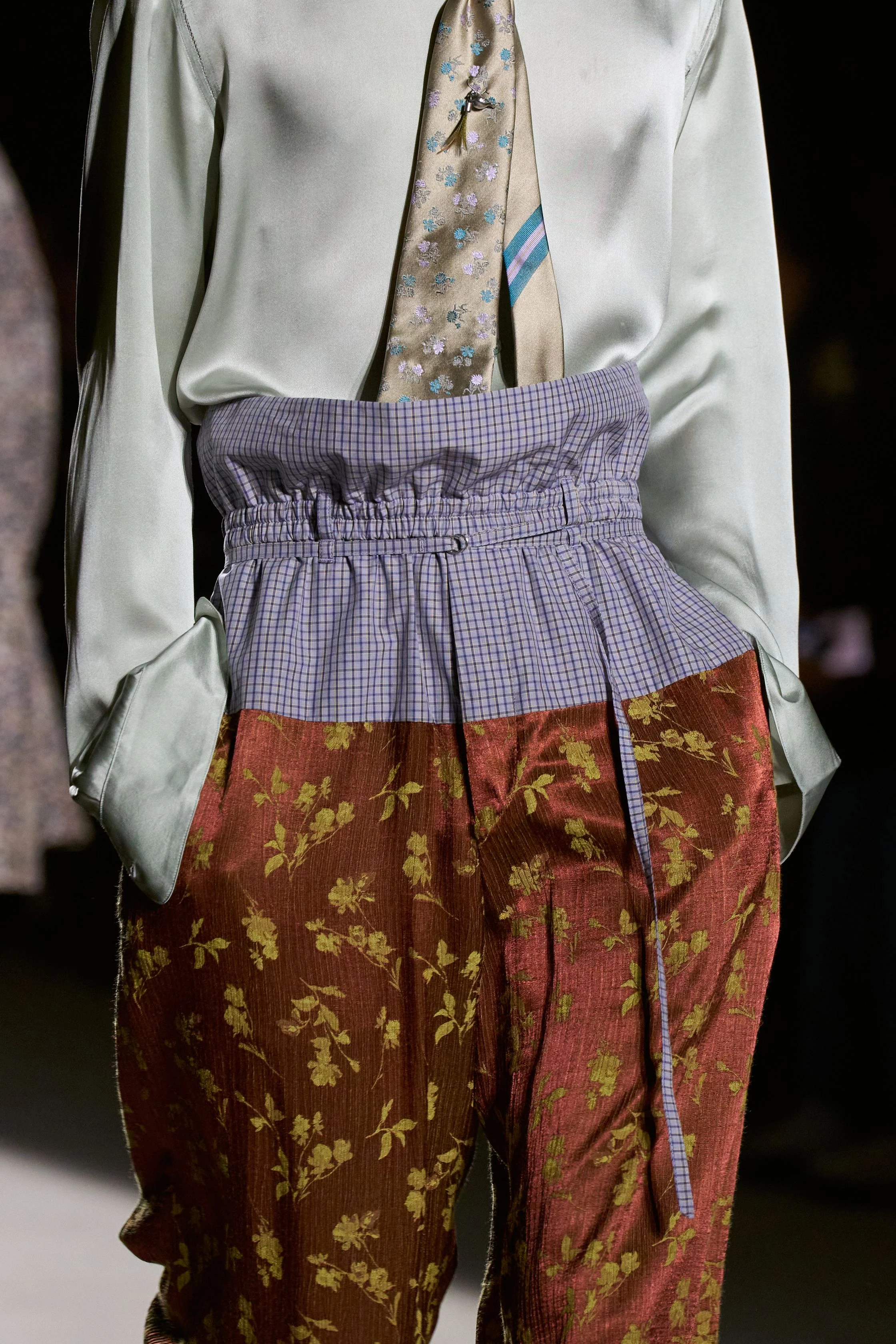 Dries Van Noten fall-winter 2026/2027
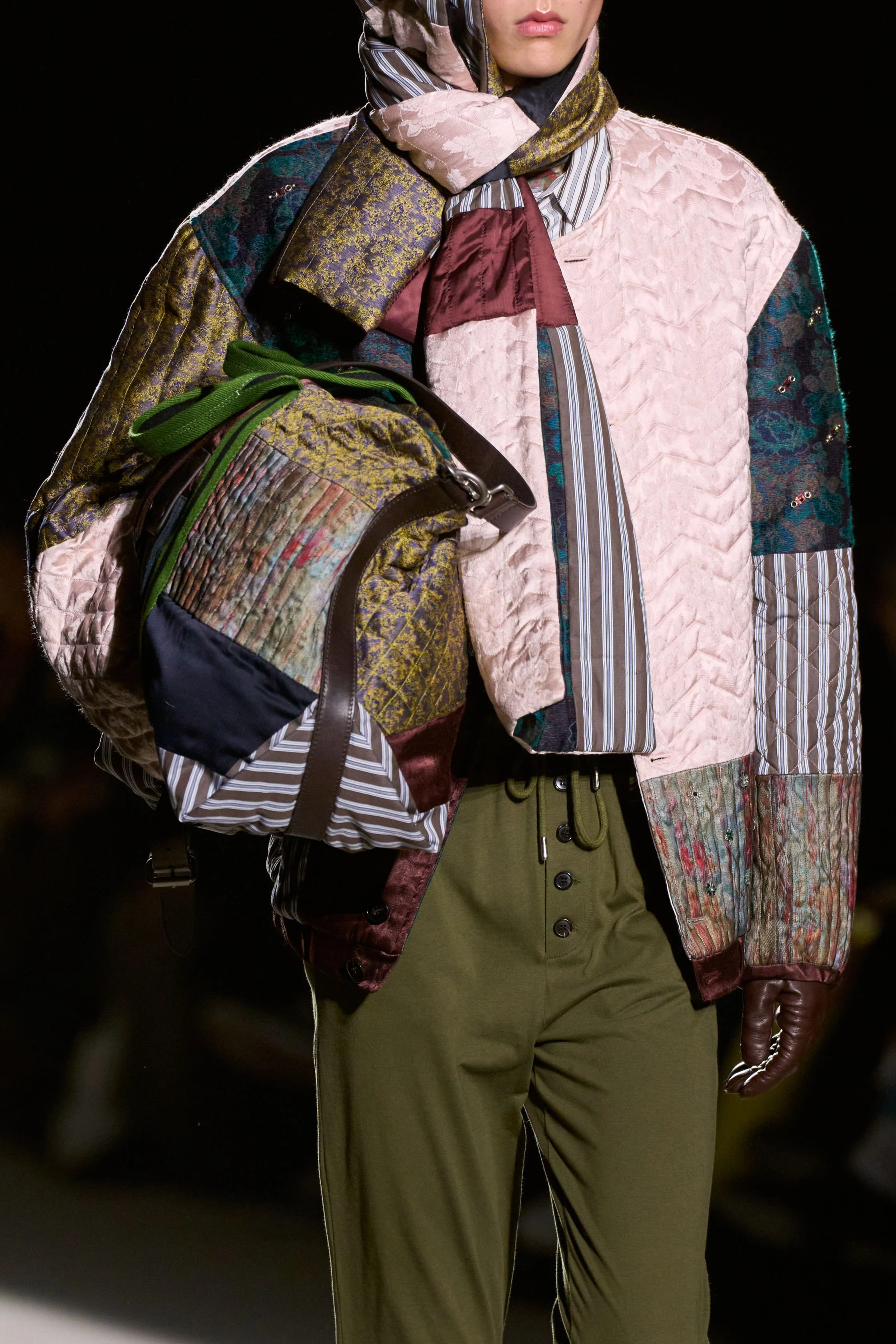 Dries Van Noten fall-winter 2026/2027
At Dries Van Noten, everything is the opposite: knitwear becomes the basis of the collection. It is he who sets the rhythm, proportions and overall mood. Sweaters, vests and scarves are thought out so that they can be worn in different ways: removable parts and functional designs allow you to transform the thing and adapt it to different looks. Outerwear also plays an important role in the collection. Coats and parkas with expressive prints, jacquard fabrics and complex textures look bold and confident against the background of a season in which most brands choose restrained, neutral solutions.
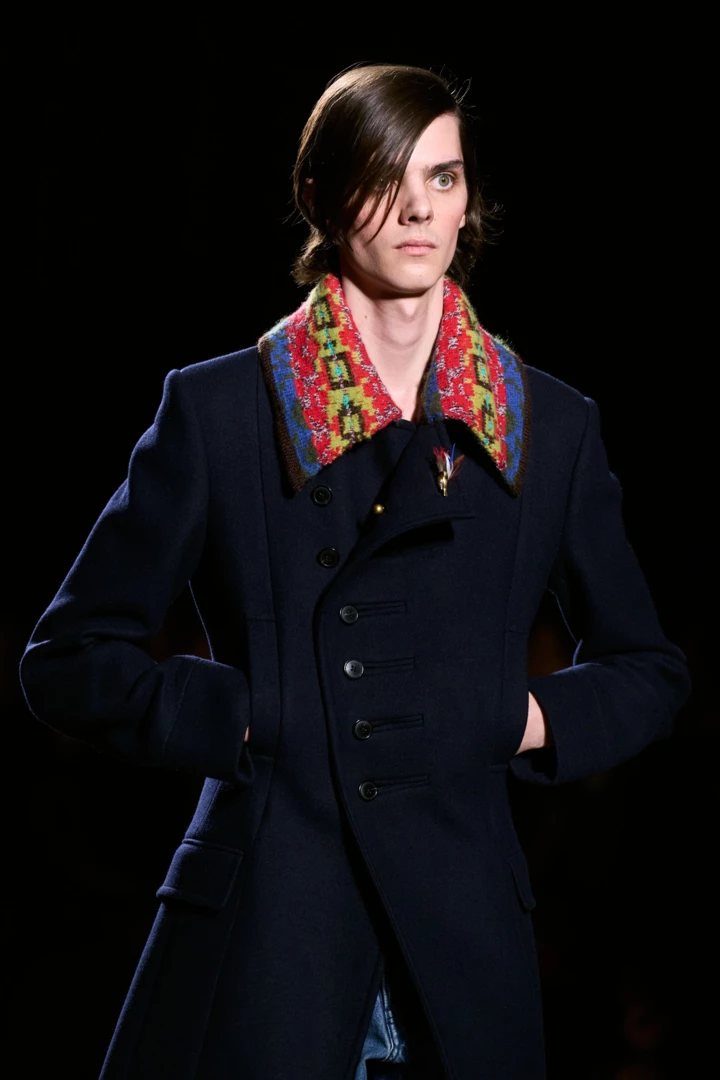 Dries van Noten fall-winter 2026/2026
Dior Men
The Dior Fall-Winter 2026/2027 collection clearly outlines Jonathan Anderson's authorial approach to menswear as a tool for self-expression. It is based on traditional Dior men's items: jackets, suits, coats and tailcoats. Anderson reinterprets them by changing proportions, shifting lines and combining familiar elements in new ways.
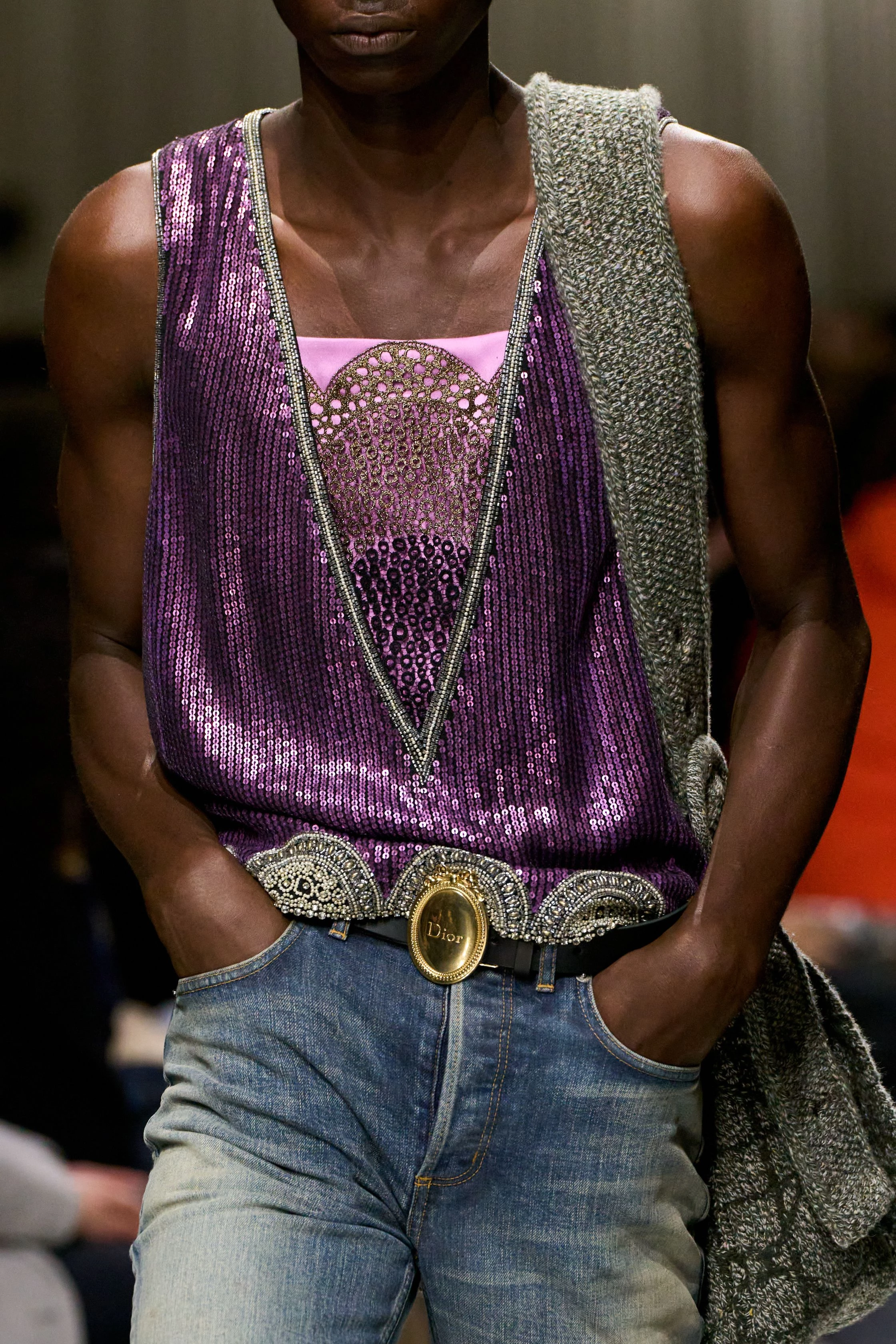 Dior fall-winter 2026/2027
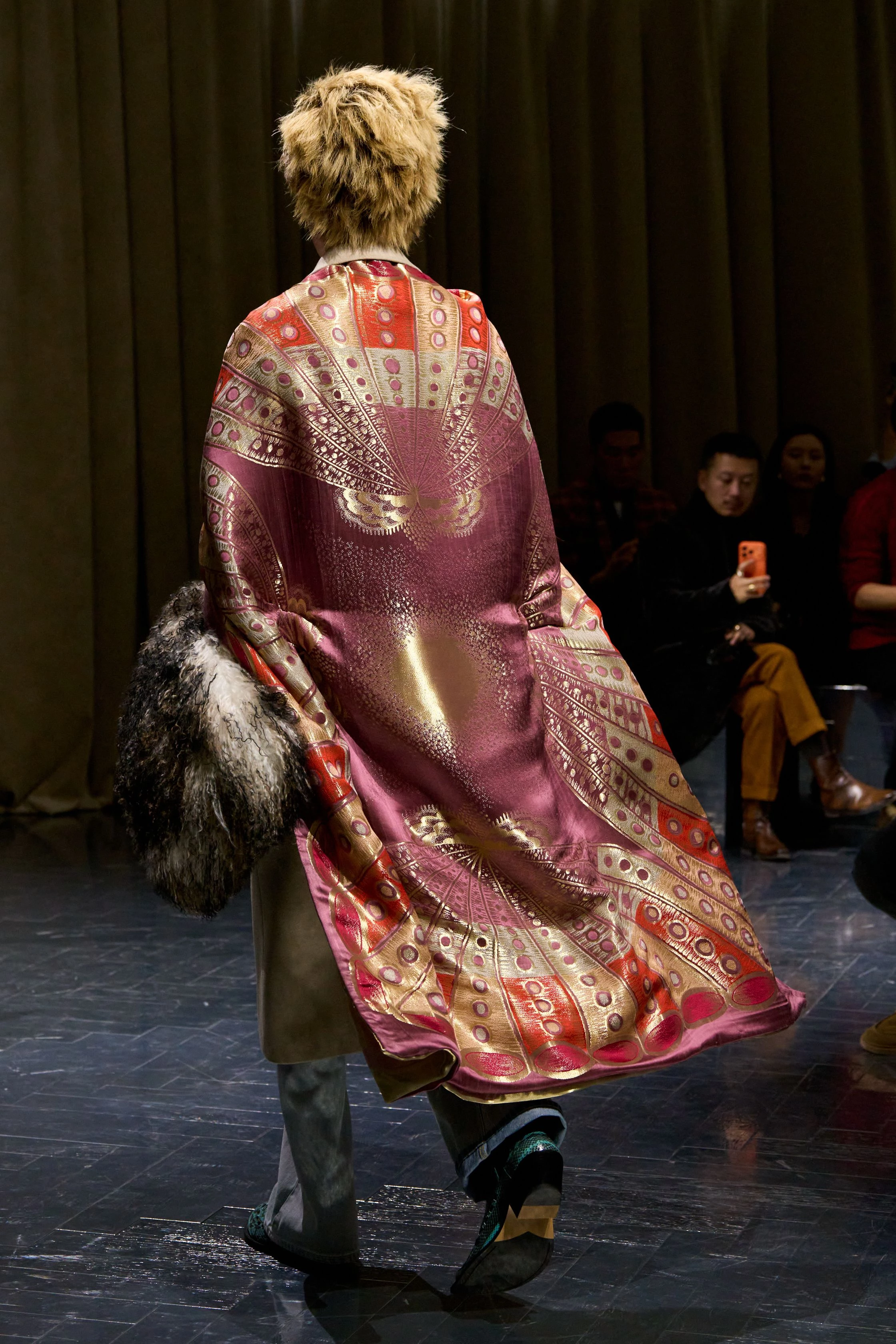 Dior fall-winter 2026/2027
In this collection, the designer turns to the legacy of Paul Poiret, a French couturier of the early 20th century who radically redefined the form in clothing. Anderson does not quote him, but adopts his way of thinking – he works with scale, theatricality and a combination of different eras in one image. This approach is manifested in shortened jackets, transformed tailcoats, elongated sweaters. Materials work on the general idea of the collection. Fabrics with patterns, jacquard, parkas with cape elements and voluminous emphasize the scale and construction of silhouettes.
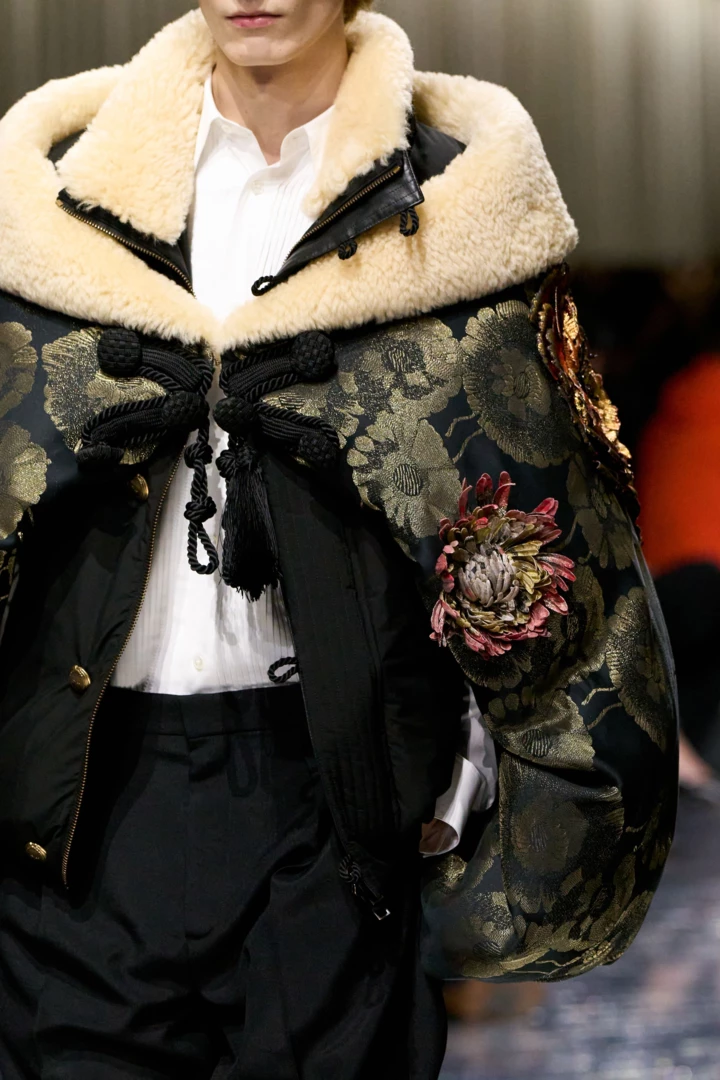 Dior fall-winter 2026/2027
Egonlab
The Egonlab Fall-Winter 2026/2027 collection marks the brand's return to its roots of risk and a clear, authorial stance. It's a conscious relaunch after a period of more cautious, less risky collections.
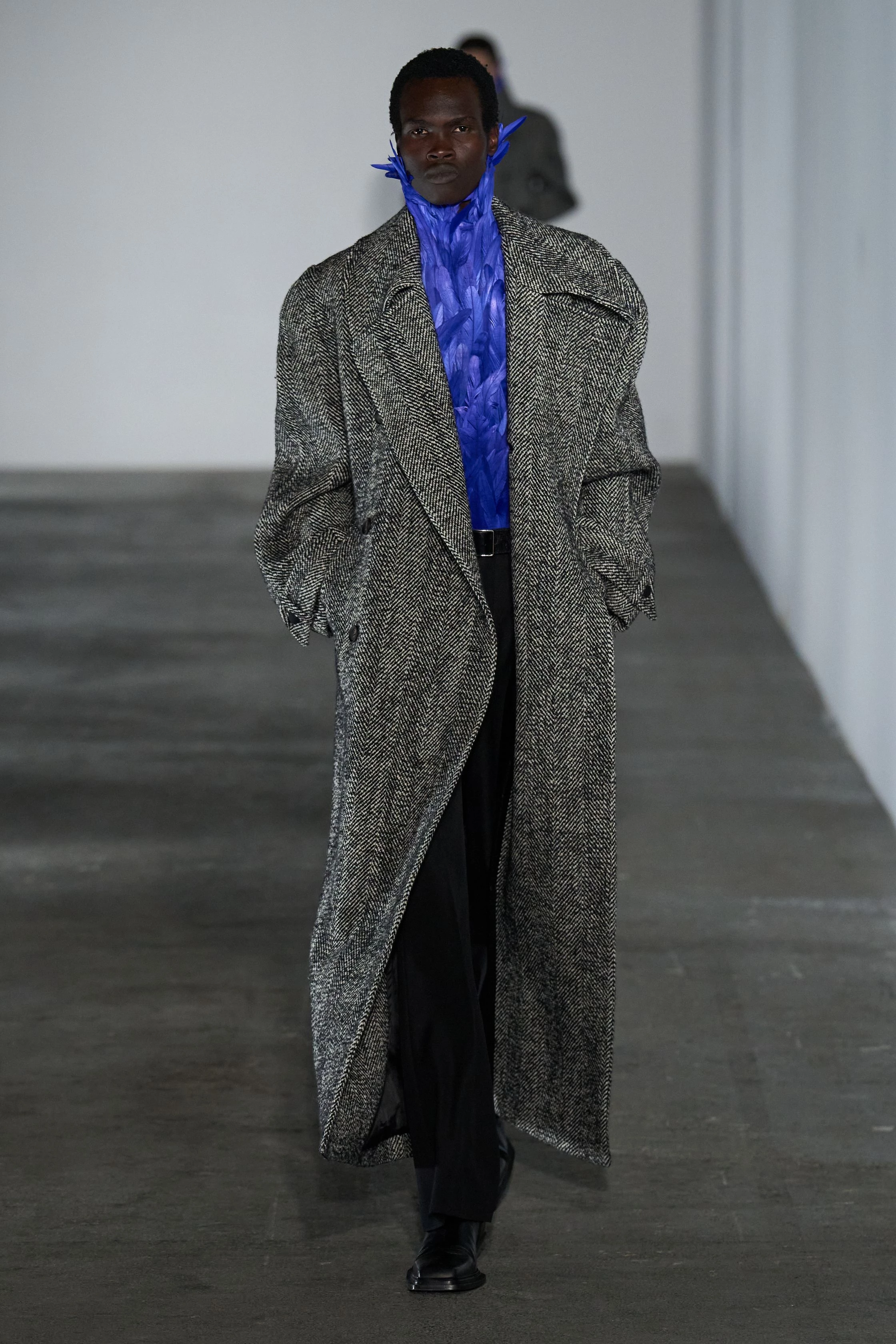 Egonlab autumn-winter 2026/2027
Texture plays a key role in the collection: tweed, leather, feathers, shiny surfaces and treated synthetics. Artisanal techniques and complex work with materials in this collection are used not for effect, but for the construction of form. Textured fabrics and optical solutions in suits emphasize the cut and fit. With this collection, Egonlab returns to a clear design language and shows what can be both bold and commercially viable.
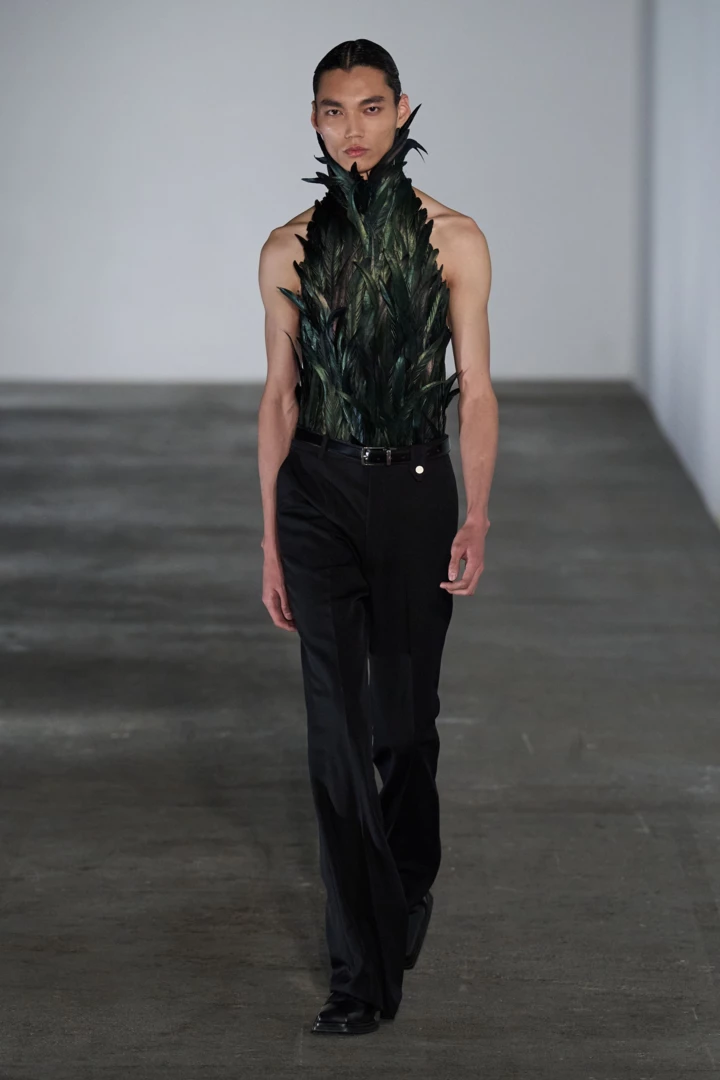 Egonlab autumn-winter 2026/2027
Hed Mayner
Hed Miner was invited to Pitti Uomo 109, an event traditionally associated with classic menswear and impeccable tailoring. Miner's invitation was a symbolic gesture: the fair, which for decades had championed the idea of “proper” menswear, gave the center stage to a designer who consistently works with a different approach to form and proportion.
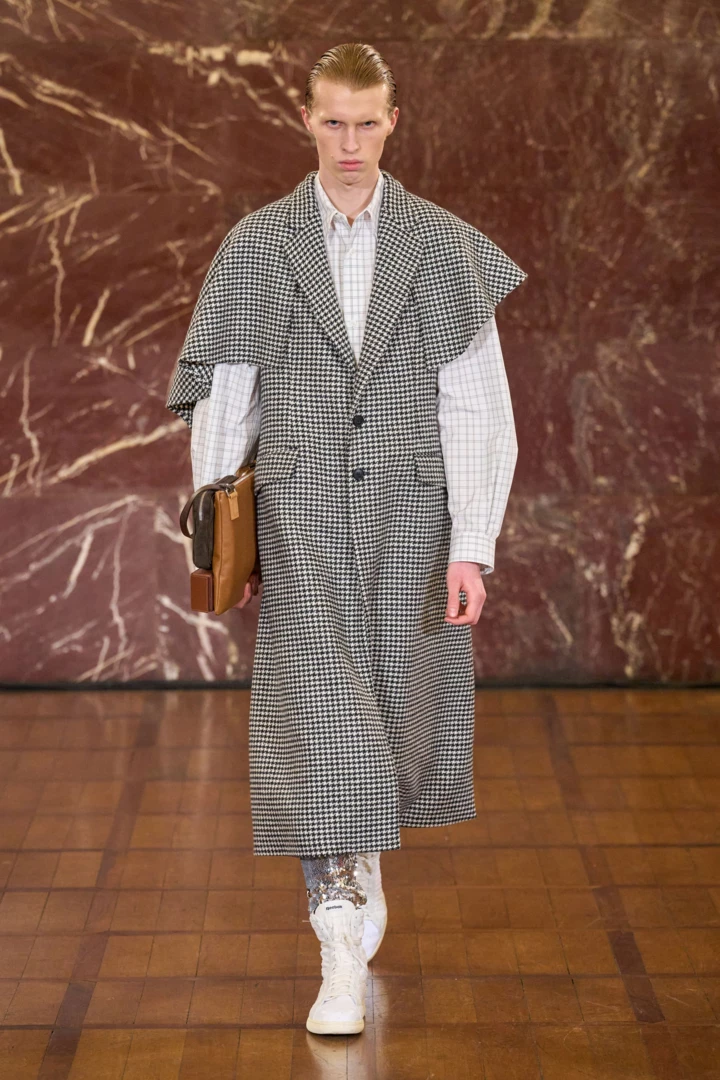 Hed Mayner fall-winter 2026/2027
The silhouettes of the Hed Mayner autumn-winter 2026/2027 collection are built on exaggerated proportions: voluminous shoulders, offset sleeves, cocoon-like shapes, asymmetry. The clothes fit loosely, but at the same time remain well-constructed. The collection uses classic fabrics together with unusual materials – metallic elements, pleated suede, velvet, sequins and faux fur. Mayner works with classic men's wardrobe – coat, suit, shirt – but offers a different way of existing these things in a modern context.
Prada
Prada's men's fall-winter 2026/2027 collection is built on careful work with form, material and condition. Miuccia Prada and Raf Simons work with a classic set of things – coats, trench coats, shirts and jackets – and consciously do not try to radically rethink them. Instead, the designers focus on how these things look after use: wrinkled cuffs, frayed seams, patina on the skin, patterns that show through the fabric become a full part of the design, rather than defects.
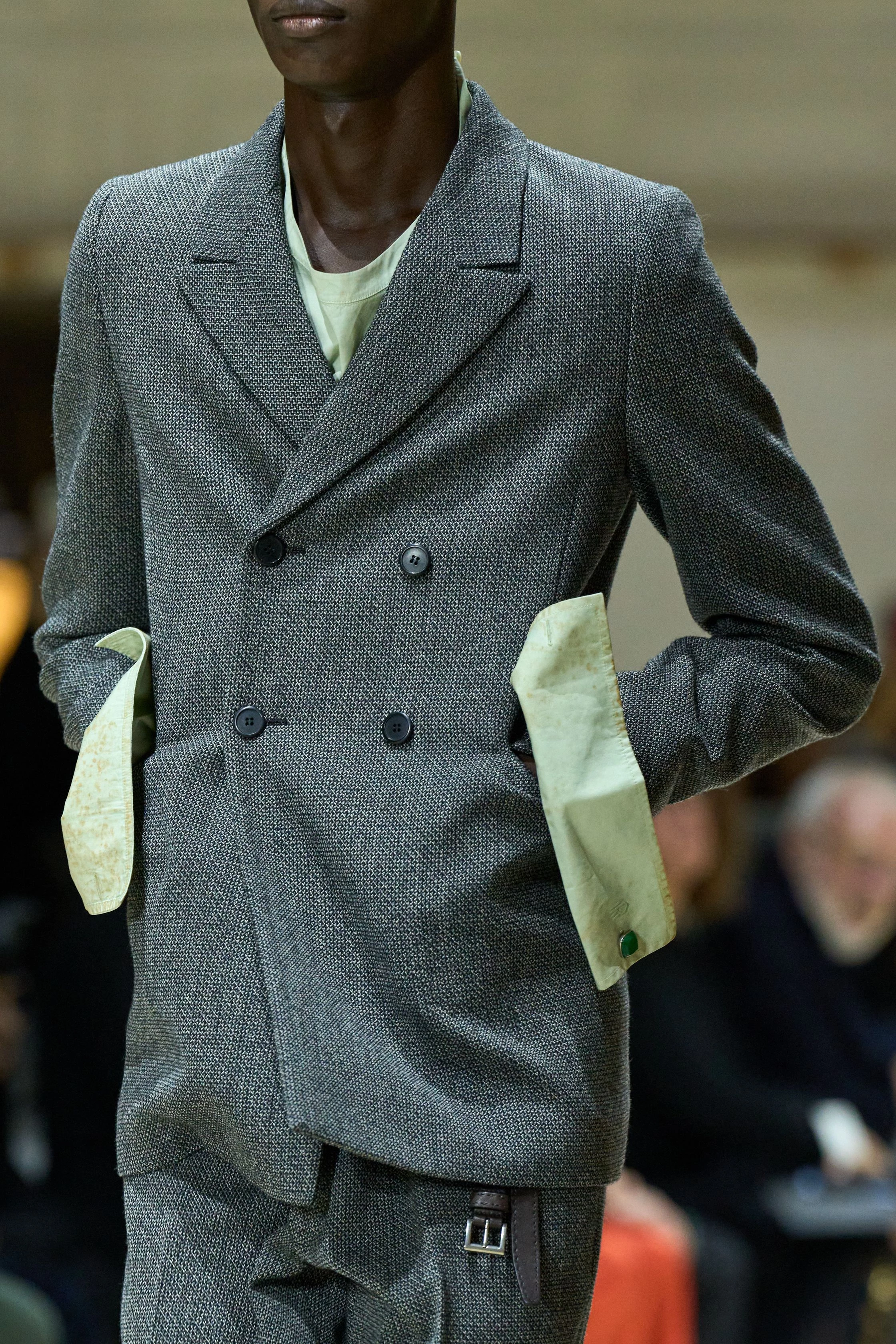 Prada fall-winter 2026/2027
The silhouettes of the collection are elongated and restrained, without excessive volume. Outerwear is combined with shortened technical capes and cloaks, creating a clear system of layering. The color palette is built on complex, muted shades – eggplant, green, brown, gray and dirty pink. The collection does not appeal to trends and does not work with the effect of novelty. Prada offers a collected, rational approach to menswear, where form, material and traces of wear exist as a single system.
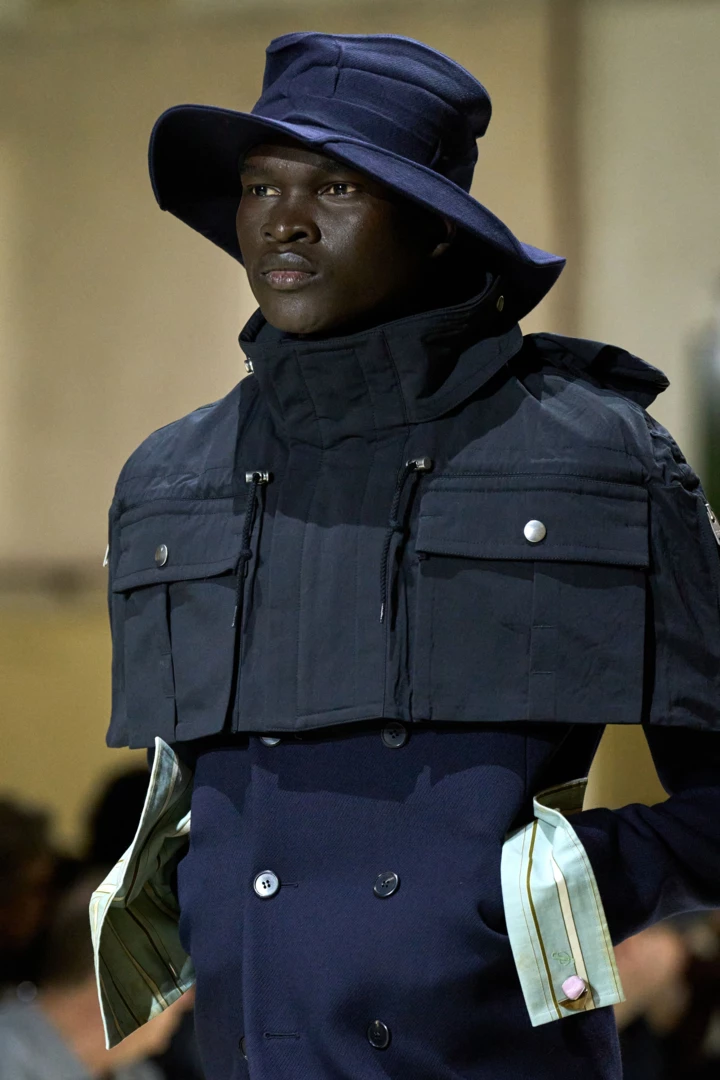 Prada fall-winter 2026/2027
SOSHIOTSUKI
The SOSHIOTSUKI Autumn/Winter 2026/2027 collection, presented at Pitti Uomo, was the brand's first full-fledged launch outside of Japan. For Soshi Otsuki, this show was the moment when he first clearly demonstrated his own approach.
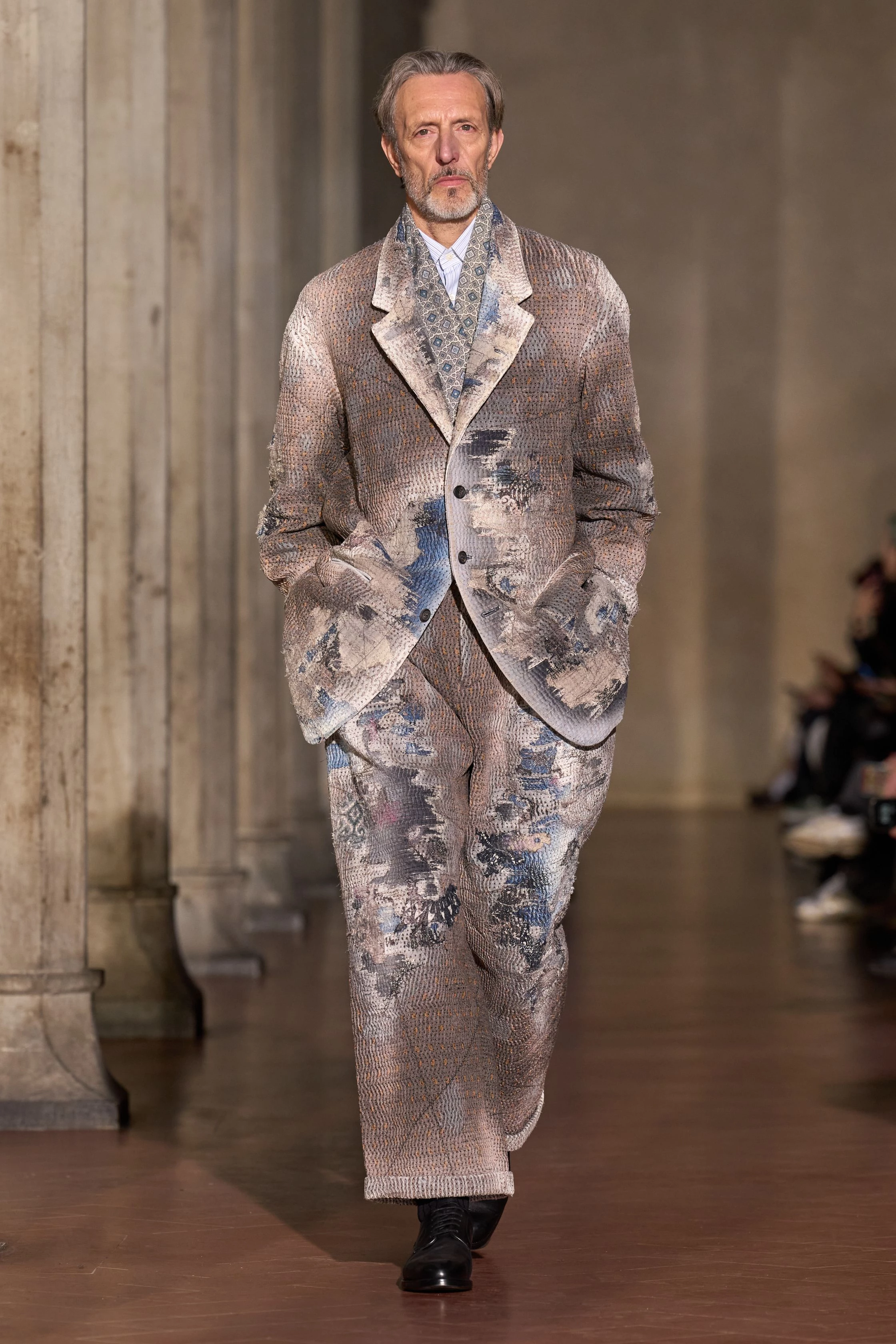 SOSHIOTSUKI autumn-winter 2026/2027
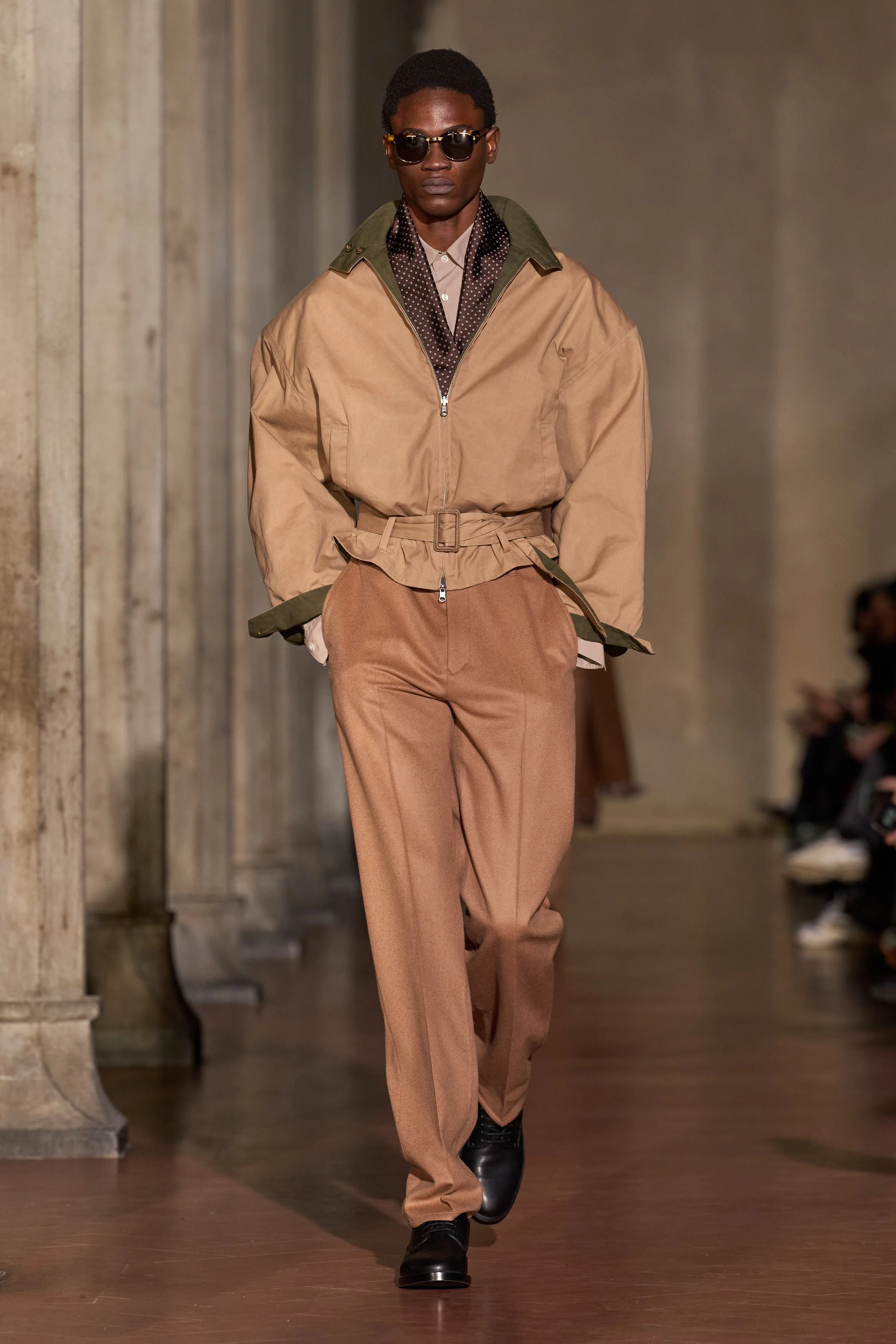 SOSHIOTSUKI autumn-winter 2026/2027
The basis is a classic men's suit, which Otsuki treats as a flexible structure. Enlarged lapels, shortened cardigans, trousers with an excessive number of pleats and belt loops change the proportions, but do not destroy the logic of the cut. Materials and colors play an important role in the collection. Complex shades of gray, obtained from black and beige, dense corduroy, leather and knitwear form a holistic and multifaceted silhouette. The collection exists between Japanese and European traditions, without copying either of them.
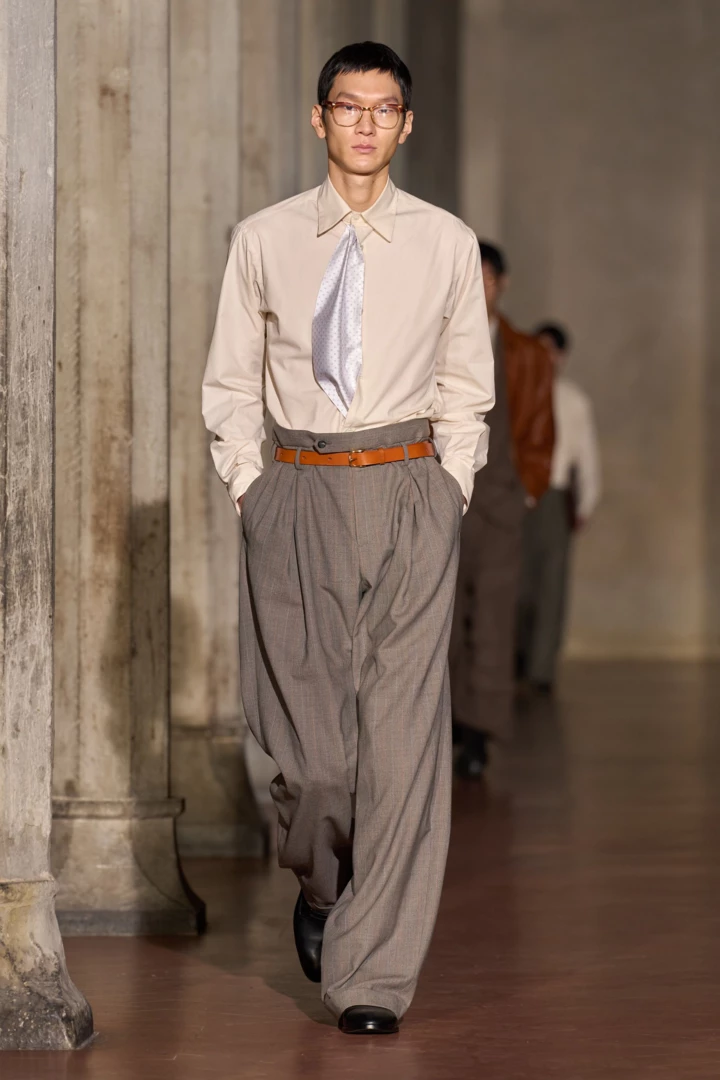 SOSHIOTSUKI autumn-winter 2026/2027