

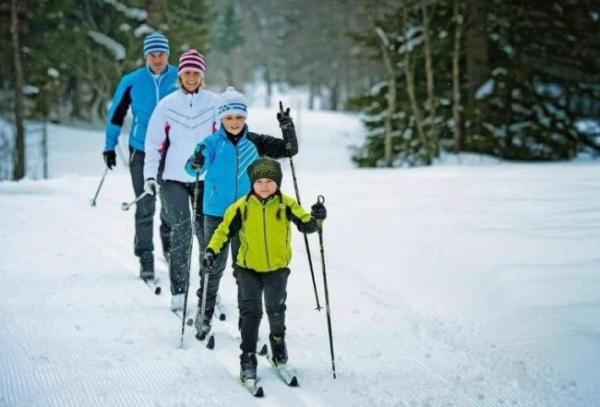
Skiing is a rare example of a sport that begins not in the stadium, but at home. It doesn't require an audience, a referee, or a starting gun. All you need is snow and the desire to move forward.
The history of skiing begins not with sport, but with necessity. Initially, humans simply wanted to walk where otherwise they could only stand. Archaeologists find images of people on skis that are thousands of years old. In northern Europe, Siberia, the mountainous regions of Asia—wherever winters are long and the snow deep—skis were a means of survival. They didn't speed up life, they made it possible. Hunting, travel between settlements, delivering news—all depended on the ability to glide.
Skiing is remarkably honest. It doesn't hide effort behind technique. Every step is the result of your work. Yes, there are equipment, waxes, and techniques, but at the core, it's still the person pushing with poles and shifting their weight from foot to foot. Skiing isn't about a sudden burst, but about duration. It requires patience, the ability to manage your energy, and listening to yourself.
There are many types of skiing, but they all have one thing in common: a dialogue with space.
Cross-country skiing is a conversation with distance. You don't conquer the trail, you negotiate with it. It sets the pace, and you accept it or resist it.
Alpine skiing is a different language: speed, gravity, instant decision-making. Reflexes, trust in your body, and a willingness to make mistakes are crucial.
There's also ski touring —beyond sport, beyond the stopwatch. People who go into the forest without the goal of breaking a record, but with a desire to be in motion. This is perhaps the most underrated form of skiing. There are no spectators, but there's a sense of rightness. The crunch of the snow, your breath, the footprints you leave behind, all of which matter to you.
Skiing offers a unique physical challenge for the body. It works everything at once, yet gently. The heart works, the muscles engage, and breathing finds a rhythm. There's no impact, no sudden stops. That's why it's so popular with people who want to preserve themselves, not just achieve results.
Interestingly, skiing tolerates almost no fuss. On skis, you can't be constantly distracted. Your phone quickly becomes unnecessary, and music becomes distracting. It's akin to meditation, only without the posture and silence.
Competitive skiing is a world unto itself, with its own drama. There's strategy, competition, technique, and tactics. But even at the highest level, a sense of movement's primacy remains. Winning isn't about the cleverest, but the one who has bested the course. Skiing isn't about a spectacular finish, but about consistency. A mistake early on will almost always come back to haunt you later.
Skiing also has a cultural layer. For some, it's school gym classes, for others, Sunday outings, and for still others, television broadcasts of the Winter Olympics. Skiing is a quiet presence in life, without any grand proclamations. It doesn't demand admiration, but it easily becomes a habit.
Skiing as a winter sport is valuable precisely because of its unobtrusiveness. It doesn't promise instant transformation or sell the image of a “new you.” It offers a simple deal: you move, and the world moves with you. In snow, in cold, over long distances, without applause. And perhaps this is why skiing has remained with people for so long—from ancient hunters to those who today venture into the forest simply because winter is here and their feet remember how to glide.