

Everyone is talking about the “inverted food pyramid” right now. What is it and what diet is now considered healthy, says food therapist and nutritionist Anastasia Holoborodko.
The USDA (United States Department of Agriculture) has updated its food model standards. For the first time since 2011, the standards have changed their appearance – now it is no longer the “plate”, widely known as the Harvard plate. The model returns to the shape of the pyramid, but this time – upside down.
Advertising.
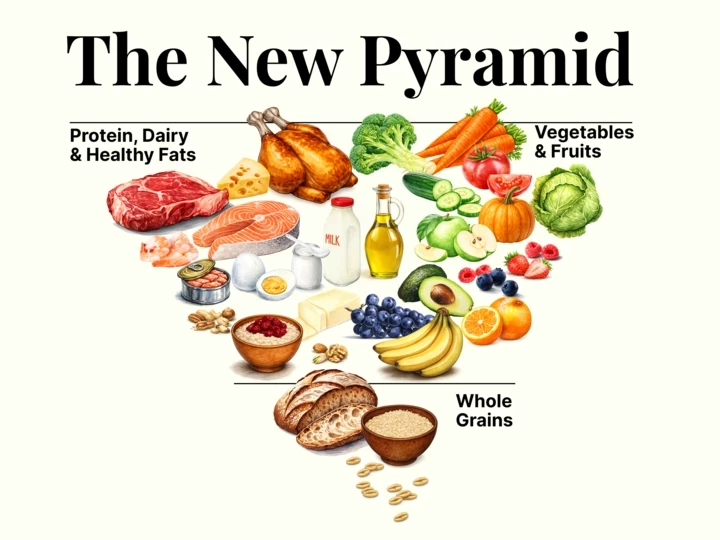
The food triangle now has a slightly Masonic look, but the idea is clear: from more to less. That is, from proteins, fats, whole plant foods, fermented foods – to a small amount of grains, flour, sweets and alcohol. Previously, the basis of the diet was carbohydrates – mainly grains.
A new “upside down” sign seems to be urging: finally give up avocado toast and oatmeal in favor of protein food – at least for breakfast
The inverted pyramid essentially acknowledges that we’ve been underestimating the basics for too long. If you don’t have enough complete protein in your diet, your body will start to function less well, no matter how many “healthy” alternatives you add. The same goes for your microbiome: without fermented foods, your system simply won’t come together.
What doctors have long warned about is also being officially discussed: ultra-processed food is the main enemy of health. Hence the obvious shift towards whole foods (e.g., whole vegetables and fruits, fish, eggs, legumes, fermented foods) as the basis of daily nutrition.
In parallel, there is a quiet but noticeable renaissance of animal protein and fats, instead of alternatives (soy, legumes) – as a return to the physiological norm.
Animal fats (butter, egg yolks) have been officially rehabilitated; instead, refined grains are being relegated to the periphery of the diet.
To sum up the changes, there really haven't been any revolutions. It's more of a course correction: fewer complex designs and more simple, understandable products that benefit the body.