

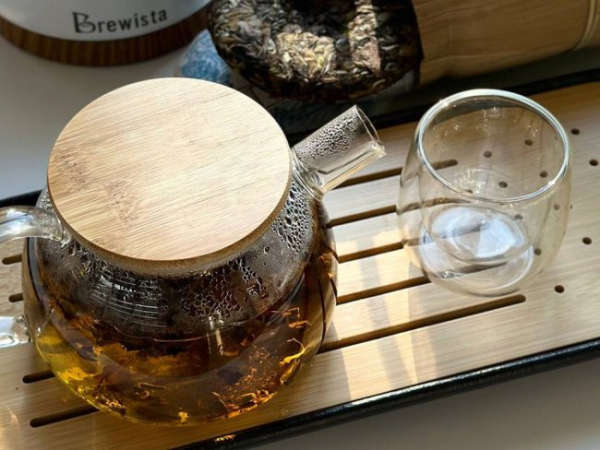
Pu-erh tea is one of the most mysterious and talked-about drinks in the world. Many legends have grown up around it. Let's find out how pu-erh tea really benefits men's health, what myths should be debunked, and what facts deserve attention!
What is Pu-erh and why is it unique?
Pu-erh is a post-fermented tea native to China's Yunnan province. Unlike most other teas, which are best enjoyed fresh, pu-erh only improves with age, like a fine wine. Its uniqueness lies in its special production technology and lengthy fermentation process, which can last for years and even decades.
There are two main types of pu-erh. Sheng pu-erh, or raw pu-erh, is produced using the traditional method: the leaves are sun-dried and pressed, after which the tea slowly ferments naturally. Young sheng pu-erh produces a light infusion with herbaceous and floral notes, while aged pu-erh develops a refined, deep flavor. Shu pu-erh, or cooked pu-erh, emerged in the 1970s in response to growing demand. It undergoes accelerated artificial fermentation, resulting in a dark tea with an earthy, woody flavor and a distinctive aroma.
The history of pu'er tea dates back approximately three millennia. According to Chinese chronicles, the tea was produced as early as the Tang Dynasty in the 7th to 19th centuries. Interestingly, pu'er owes much of its current character to a coincidence: green tea from Yunnan was transported by caravan to Tibet, pressed for ease of transport. The journey took weeks, and temperature fluctuations caused condensation to form on the surface of the tea. This initiated natural fermentation, which gave the drink entirely new properties.
The Benefits of Pu-erh Tea for Men's Health – What Science Says
Pu-erh tea is not only a pleasant beverage but also a healthy product, as confirmed by scientific research. The data on its effects on men's health are particularly interesting.
- The cardiovascular system receives significant support from regular consumption of pu-erh tea. Clinical studies conducted at several universities in the United States and Europe have shown that regular consumption of pu-erh tea significantly reduces the risk of developing atherosclerosis. This is explained by pu-erh's ability to lower bad cholesterol and triglyceride levels in the blood. Researchers from specialized tea centers in Guangzhou have confirmed that pu-erh tea is effective in normalizing blood pressure, which is especially important for men over 40, when the risk of hypertension increases significantly.
- Pu-erh tea has also proven effective in preventing serious illnesses . Thanks to its high content of unique fermentation products—theabronins—pu-erh helps reduce systemic inflammation in the body. This has a positive effect on circulation, including the pelvic organs. This is important not only for overall longevity but also for maintaining healthy male reproductive function.
- Metabolism and weight are another important topic for modern men. Pu-erh tea stimulates digestion, boosts metabolism, and promotes fat breakdown. European nutritionists note that pu-erh tea improves cellular sensitivity to insulin, which helps the body use energy more efficiently and prevents the accumulation of visceral fat. Tea helps eliminate toxins and excess fluid, reduces appetite, and maintains energy throughout the day without the sudden spikes that occur with coffee or energy drinks.
- Cognitive functions also receive a boost. Pu-erh contains caffeine combined with theabronines and gamma-aminobutyric acid (GABA). These compounds have a gentle effect on the central nervous system, providing a stable tone without unnecessary anxiety. This improves concentration, memory, and the ability to absorb information. For men engaged in intellectual work or working under high stress, this is a real find. Pu-erh does not jitter the nervous system, but rather provides stable performance for several hours.
Debunking Myths: Tea Intoxication and Other Misconceptions
There are so many myths surrounding pu-erh tea that it's sometimes difficult to distinguish reality from marketing hype. Let's explore the most common misconceptions.
Myth number one: pu-erh tea is as intoxicating as alcohol. This is one of the most common misconceptions. Indeed, drinking high-quality pu-erh tea produces a special state known as tea intoxication or Cha Qi. However, this has nothing to do with alcohol or drug intoxication. Pu-erh does not contain ethanol and has no psychotropic effects. The tea state is characterized by mental clarity, mild euphoria, a feeling of alertness and relaxed focus all at once. The Chinese describe it this way: tea makes us so sober that we experience all the beauty and ease of life. Unlike alcohol, which dulls reactions and clouds the mind, pu-erh tea clarifies perception and helps us focus. This state is caused by biochemistry—theine (tea caffeine), theabronines, and polysaccharides combine to produce a harmonizing effect without harming health or causing a hangover.
Myth two: Pu-erh tea gives you a buzz and a high. This crude slang is often used by people expecting a narcotic-like effect from pu-erh. In reality, this is a banal commercial myth, created by unscrupulous sellers to attract a specific audience. High-quality pu-erh tea invigorates, improves mood and productivity, but does not produce any buzz. If dizziness, nausea, or a rapid heartbeat occur after drinking the tea, this is a sign of improper brewing (too strong or too long) or low-quality product. The normal reaction to good pu-erh tea is a pleasant feeling of alertness, clarity of thought, and calm concentration.
Myth three: Only aged pu-erh tea has its benefits. Aged pu-erh is indeed prized more highly and has a softer, more refined flavor. However, young tea also has beneficial properties. The difference lies in the nuances of its effects: aged pu-erh is gentler on the stomach and produces a deeper meditative state, while young pu-erh is more invigorating and refreshing. Pursuing age alone makes no sense if you drink tea for health, not as a collector's item.
Myth #4: Pu-erh is addictive. Some pu-erh lovers jokingly call themselves tea addicts, but this is nothing more than self-mockery. Pu-erh does not cause physical or psychological dependence. Yes, many people get used to drinking it regularly because they enjoy the taste and the effect, but this is not an addiction, but a preference. You can stop drinking pu-erh at any time without any negative consequences.
Interesting facts about pu-erh that are worth knowing
Pu-erh is not just tea, but an entire culture with a rich history and amazing characteristics.
➤ The Tea Road. In ancient times, pu'er was such a valuable commodity that it was used as currency. Along the Tea Road, tea from Yunnan was transported to Tibet and exchanged for horses. One sturdy horse was worth fifty kilograms of tea. The journey took months, and it was during these caravan journeys that the tea matured, acquiring its characteristic flavor through natural fermentation in the changing temperatures and humidity.
➤ Long-lived tea. Unlike most teas, which lose quality over time, pu-erh only improves. Collectible specimens aged fifty to seventy years are sold at auction for exorbitant prices. The oldest officially registered pu-erh tea tree, discovered on Mount Da Hei Shan in 1961, is several hundred years old. These patriarchal trees provide the raw material for elite varieties that are not available in regular stores.
➤ Pu-erh can be steeped multiple times. The same tea leaf can withstand seven to twelve steepings, and each time the flavor is revealed in a new way. The first steeps produce a bright, rich taste, the middle steeps are the most balanced, and the final steeps become softer and sweeter. This makes pu-erh economical and turns tea drinking into a meditative experience.
➤ Pressed forms with a history. Pu'er is produced in various shapes: Bing Cha (cake), Tuo Cha (nest), Zhuang Cha (brick), Xiao Fang (small cube), Xiao Bing (small cake), etc. Pressed pu'er is much easier to store and transport than loose pu'er, which is why the tradition of pressing continues to this day. Each shape has its own history and purpose. For example, the cake shape originated when tea was transported by horse through the Tibetan mountain passes. Loose leaves took up too much space and turned to dust from shaking. Therefore, tea was steamed and pressed with a stone. The round shape, without sharp corners, prevented the bags from falling, and the flat cakes stacked perfectly on top of each other, saving space.
➤ Yunnan Province is the only birthplace of pu'er tea. True pu'er tea is produced only from leaves harvested within the province. The province's name translates as Cloudy South, which accurately reflects its climate – the combination of southern warmth, high humidity, and mountainous terrain creates ideal conditions for tea tree growth. Entire forests of wild pu'er trees can be found here, some of which have been growing for a thousand years.
How to drink pu-erh tea to get the benefits
To ensure that pu-erh tea is truly beneficial, it is important to follow a few simple rules.
Avoid drinking pu-erh tea on an empty stomach—the tea's enzymes stimulate gastric acid production, which can cause discomfort, heartburn, or stomach pain. The best time to drink pu-erh tea is thirty to forty minutes after a meal. This will aid digestion and protect the mucous membranes.
Avoid steeping the tea too strongly, especially if you're just starting out with pu-erh. Always rinse the tea before steeping to remove any dust and prepare the leaves for brewing. Steep pu-erh tea for 10-30 seconds, depending on the type. Over-steeping can cause the tea to become too astringent and bitter, potentially causing discomfort such as dizziness, nausea, and heart palpitations. Remember that the taste and benefits of pu-erh tea depend 90% on the quality of the water. Use soft, filtered or bottled water to avoid a metallic taste.
Avoid drinking pu-erh tea before bed. Although its effect is milder than that of coffee, pu-erh contains enough caffeine to interfere with sleep. The optimal time is morning and early afternoon. Two to three cups a day are sufficient to reap the benefits without overdoing it.
Choose high-quality tea. Cheap pu-erh of dubious origin may contain mold, foreign matter, or be made from low-quality tea leaves. Good pu-erh tea has a clean, unfussy aroma, whole leaves without excess dust or debris, and a clear, cloud-free infusion. When exploring different varieties and flavors, many find it easier to start with loose pu-erh tea—it makes it easier to dose the brew and experiment with the strength. Buy tea from reputable sellers who can confirm the origin and year of production.
Who should be careful?
Despite its benefits, pu-erh tea is not suitable for everyone. People with hypertension should drink it in moderation and avoid strong brews, as caffeine can raise blood pressure. Those with kidney stones or other serious kidney conditions should consult a doctor. If you have a stomach ulcer, gastritis, or other inflammatory conditions in the digestive system, it's best to temporarily abstain from pu-erh tea.
Sober calculation: pu-erh in the arsenal of a modern man
Pu-erh tea is truly beneficial for men's health, as scientific research confirms. It supports the cardiovascular system, helps prevent serious diseases, and improves metabolism and cognitive function. However, don't treat it as a panacea or expect miraculous effects from intoxication. Pu-erh tea is part of a healthy lifestyle, a pleasant ritual, and a way to take care of yourself without harming your body.
Try some quality pu-erh tea, practice brewing it correctly, and listen to how it feels. Perhaps this ancient Chinese tea will become your trusted ally in maintaining health and well-being for years to come.